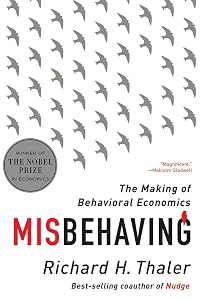
Misbehaving: The Making of Behavioral Economics
by Richard H. Thaler
On This Page
Description
"Traditional economics assumes rational actors. Early in his research, Thaler realized these Spock-like automatons were nothing like real people. Whether buying a clock radio, selling basketball tickets, or applying for a mortgage, we all succumb to biases and make decisions that deviate from the standards of rationality assumed by economists. In other words, we misbehave. More importantly, our misbehavior has serious consequences. Dismissed at first by economists as an amusing sideshow, the show more study of human miscalculations and their effects on markets now drives efforts to make better decisions in our lives, our businesses, and our governments"--Amazon.com. Argues that economical trends cannot be predicted as much as thought, mainly because humans are so unpredictable, and reveals how behavioral economic analysis opens up new ways to look at everything from household finance to assigning faculty offices in a new building. show lessTags
Recommendations
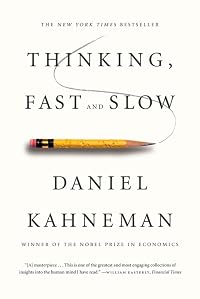

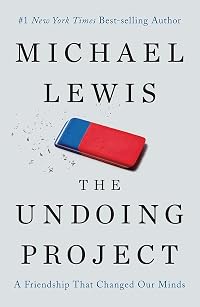
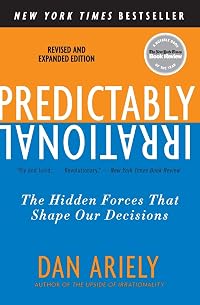
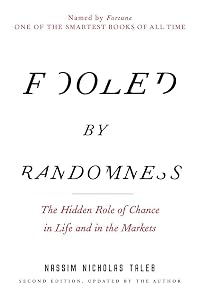

Member Recommendations

Member Reviews
Misbehaving is a charming journey through behavioral economics, as told by one of its founding fathers recounting his academic career. Thaler co-authored Nudge with Cass Sunstein, and worked closely with Daniel Kahneman (Thinking Fast and Slow, Nobel Prize) and Amos Tversky. Thaler has a charming modesty given his esteemed company. His own Nobel came after this book was published.
The basic premise of behavioral economics is that economic theory is perfect--when applied to non-existent beings Thaler deems Econs who are perfectly rational. Real Humans make decisions based on a host of supposed irrelevant factors (SIFs), which cause divergence from the predictions of economic theory. Through subtle experiments and data analysis, behavioral show more economics can find these anomalies.
Loss aversion is one of the major supposedly irrational factors. We tend to want to hold on to what we want, as demonstrated in a rather elegant experiment that compared trading rates in a group of students between tokens which could be redeemed for money and coffee mugs. No one has an emotional attachment to tokens, and so trading was close to rational. But people value a university branded coffee mug ($5 at the campus bookstore) even if it was randomly given to them, and are loath to trade.
Loss aversion shows up in the "irrational" attachment of wine collectors to their bottles over cash, sunk costs of attending events that are already paid for, and riskier behavior in people who are ahead and see themselves as gambling with the house's money, or are behind and looking for any chance to end the day without a net loss.
Another SIF comes from discount rates. A hamburger today is worth more than one tomorrow. An Econ discounts at a consistent exponential rate, while Humans have a variable rate, for example 10% next year, 30% two years from now, 50% for everything past that, and varying discounts rates create unexpected patterns of behavior where preferences can change.
Even supposedly objective experts, like investment fund managers are vulnerable to SIFs. Thaler and his collaborators found cases where the exact same stock traded at nonsensical prices, like an effective negative number, or with trivially available arbitrage. While this may seem like free money, the market can remain irrational longer than you can remain solvent, and some arbitrage traders have gone broke. The best investment advice is to not look at your portfolio too often, about once a year is proper, and do value investing on stocks who's low price-earnings ratio indicate an eventual reversion to the mean.
Finally, nudges can have public policy benefits, in what Thaler deems "libertarian paternalism", where default choices are also good choices. Humans are lazy, unlike Econs, and will save more in retirement plans or be organ donors if those programs are opt out rather than opt in. No one's choices are being infringed, but better defaults create better publics.
For a dry topic, Thaler writes with humor and joy, gleefully explaining how a student who "didn't show much promise" helped to invent a new field and won the highest awards in his field. show less
The basic premise of behavioral economics is that economic theory is perfect--when applied to non-existent beings Thaler deems Econs who are perfectly rational. Real Humans make decisions based on a host of supposed irrelevant factors (SIFs), which cause divergence from the predictions of economic theory. Through subtle experiments and data analysis, behavioral show more economics can find these anomalies.
Loss aversion is one of the major supposedly irrational factors. We tend to want to hold on to what we want, as demonstrated in a rather elegant experiment that compared trading rates in a group of students between tokens which could be redeemed for money and coffee mugs. No one has an emotional attachment to tokens, and so trading was close to rational. But people value a university branded coffee mug ($5 at the campus bookstore) even if it was randomly given to them, and are loath to trade.
Loss aversion shows up in the "irrational" attachment of wine collectors to their bottles over cash, sunk costs of attending events that are already paid for, and riskier behavior in people who are ahead and see themselves as gambling with the house's money, or are behind and looking for any chance to end the day without a net loss.
Another SIF comes from discount rates. A hamburger today is worth more than one tomorrow. An Econ discounts at a consistent exponential rate, while Humans have a variable rate, for example 10% next year, 30% two years from now, 50% for everything past that, and varying discounts rates create unexpected patterns of behavior where preferences can change.
Even supposedly objective experts, like investment fund managers are vulnerable to SIFs. Thaler and his collaborators found cases where the exact same stock traded at nonsensical prices, like an effective negative number, or with trivially available arbitrage. While this may seem like free money, the market can remain irrational longer than you can remain solvent, and some arbitrage traders have gone broke. The best investment advice is to not look at your portfolio too often, about once a year is proper, and do value investing on stocks who's low price-earnings ratio indicate an eventual reversion to the mean.
Finally, nudges can have public policy benefits, in what Thaler deems "libertarian paternalism", where default choices are also good choices. Humans are lazy, unlike Econs, and will save more in retirement plans or be organ donors if those programs are opt out rather than opt in. No one's choices are being infringed, but better defaults create better publics.
For a dry topic, Thaler writes with humor and joy, gleefully explaining how a student who "didn't show much promise" helped to invent a new field and won the highest awards in his field. show less
Нобелевку часто дают за открытия, совершенные в прошлом. Свежеиспеченный лауреат по экономике Ричард Талер свои отмеченные премией исследования по поведенческой экономике продолжает по сей день, что неудивительно: обычные люди ведут себя и думают совсем не так, как предписывается научными моделями, и нестыковки на каждом шагу. В этом году на русском вышло сразу две книги Талера. Это, по сути, show more автобиография американского исследователя и история развития того направления, у истоков которого он стоял и за которое ему, собственно, и дали заветный приз. Невероятно интересно читать о том, как досужий интерес и неортодоксальный взгляд на вещи пробивают себе дорогу ко всеобщему признанию.
Дорога эта не была устлана розами, и Талер честно признает, что по части экономики его учителя больших надежд на него не возлагали. Тем не менее знакомство с двумя другими «белыми воронами» экономики Амосом Тверски и Даниелом Канеманом (последнему тоже дадут Нобелевскую) помогло увидеть, что их новый взгляд, похоже, является предвестником сдвига парадигмы во всей науке. Будущие лауреаты и блестящие умы в книге повсюду: во взаимодействии с ними создавалось новое направление. Помните, эксперимент с детьми и печеньем на силу воли? Его создатель тоже был среди повитух. Но не только на студентах-старшекурсниках обкатывались новые озарения — Талер опробовал свои догадки на реальных бизнесах, работая консультантом и решая конкретные проблемы вроде той, что лучше, ежедневные низкие цены или регулярные акции-скидки? Описанные с юмором кейсы из всех областей, где происходят финансовые транзакции и принимаются стратегические решения, — от правительств и спортивных команд до новых феноменов вроде Uber — показывают, почему поведенческую экономику недооценивать не стоит и почему за ней будущее.
Талер скромно признает, что ничего сверхнового они не изобрели, они просто раскрыли глаза и стали задавать правильные вопросы. Лучше всех экономическое поведение людей, как полагает автор, раскусили фермеры, выставляющие свои продукты у обочины с коробочкой для «честной оплаты». Нюанс в коробке, прибитой к столу, — деньги в нее положить можно, но обратно их не достать. Люди не склонны плутовать, но, если расслабишься, можешь недосчитаться монет. show less
Дорога эта не была устлана розами, и Талер честно признает, что по части экономики его учителя больших надежд на него не возлагали. Тем не менее знакомство с двумя другими «белыми воронами» экономики Амосом Тверски и Даниелом Канеманом (последнему тоже дадут Нобелевскую) помогло увидеть, что их новый взгляд, похоже, является предвестником сдвига парадигмы во всей науке. Будущие лауреаты и блестящие умы в книге повсюду: во взаимодействии с ними создавалось новое направление. Помните, эксперимент с детьми и печеньем на силу воли? Его создатель тоже был среди повитух. Но не только на студентах-старшекурсниках обкатывались новые озарения — Талер опробовал свои догадки на реальных бизнесах, работая консультантом и решая конкретные проблемы вроде той, что лучше, ежедневные низкие цены или регулярные акции-скидки? Описанные с юмором кейсы из всех областей, где происходят финансовые транзакции и принимаются стратегические решения, — от правительств и спортивных команд до новых феноменов вроде Uber — показывают, почему поведенческую экономику недооценивать не стоит и почему за ней будущее.
Талер скромно признает, что ничего сверхнового они не изобрели, они просто раскрыли глаза и стали задавать правильные вопросы. Лучше всех экономическое поведение людей, как полагает автор, раскусили фермеры, выставляющие свои продукты у обочины с коробочкой для «честной оплаты». Нюанс в коробке, прибитой к столу, — деньги в нее положить можно, но обратно их не достать. Люди не склонны плутовать, но, если расслабишься, можешь недосчитаться монет. show less
Richard H. Thaler is one of the foremost proponents of a field of inquiry now known as “Behavioral Economics.” He achieved a degree of fame with the general public after his best-selling book Nudge, which he co-authored with Cass Sunstein. His latest book, Misbehaving, is part memoire, part history of academic economics, and thoroughly enjoyable and stimulating.
In Thaler’s view, the field of economics took a wrong turn in the mid 20th century when its practitioners attempted to make it more “scientific” than other social sciences by subjecting its precepts to rigorous mathematical models. The problem is that although mathematics is perfectly consistent, actual people aren’t.
Modern economists erected a mathematically show more elegant and consistent edifice of economic theory based on the assumption that people would act rationally in the sense that they would always maximize their economic well-being. Thaler calls the automaton-like individuals described by such theory “Econs” (as opposed to "Humans"), because early in his career he noticed that real people often did not behave like these theoretical beings. He began to collect anecdotes of situations in which most or at least many people did not act as if they rationally calculate their maximum economic benefit.
Among the “anomalies” he cites are:
•The “Sunk Cost Fallacy”--During a snowstorm, we might not drive to a concert if we had been given the tickets for free, but we tend to risk life and limb to go if we had paid for the tickets. The risk on the roads is the same, and we don't get the money back either way.
•"Endowment Effect"--People consistently assign greater value to things they possess than they might think was a reasonable price before they owned the object.
•"Mental Accounting”--People tend to put money into mental compartments and treat the money in each compartment differently, whereas Econs would make no such distinctions; the compartments are only mental constructs and are not real, but they help many Humans manage their money.
Thaler acknowledges a debt to Daniel Kahneman, the only psychologist to win a Nobel Prize in economics, for many insights into seemingly irrational behavior. He also crosses swords with, and names names, among today’s eminent economists, most of whom are members of the faculty at the University of Chicago, and with whom he has disagreed over the years. In particular, he contrasts his views with those of two Nobel laureates, Merton Miller and Eugene Fama, the high priests of efficient markets.
Misbehaving is a good introduction to behavioral economics because of Thaler’s lively wit and easy conversational style. A lay person is unlikely to get lost in the technical distinctions between Thaler’s theories and the “Chicago School” of economics. Ironically, Thaler also teaches at the University of Chicago. Persons interested in pursuing these ideas further should also read Nudge, mentioned above, and Kahneman’s Thinking, Fast and Slow.
(JAB) show less
In Thaler’s view, the field of economics took a wrong turn in the mid 20th century when its practitioners attempted to make it more “scientific” than other social sciences by subjecting its precepts to rigorous mathematical models. The problem is that although mathematics is perfectly consistent, actual people aren’t.
Modern economists erected a mathematically show more elegant and consistent edifice of economic theory based on the assumption that people would act rationally in the sense that they would always maximize their economic well-being. Thaler calls the automaton-like individuals described by such theory “Econs” (as opposed to "Humans"), because early in his career he noticed that real people often did not behave like these theoretical beings. He began to collect anecdotes of situations in which most or at least many people did not act as if they rationally calculate their maximum economic benefit.
Among the “anomalies” he cites are:
•The “Sunk Cost Fallacy”--During a snowstorm, we might not drive to a concert if we had been given the tickets for free, but we tend to risk life and limb to go if we had paid for the tickets. The risk on the roads is the same, and we don't get the money back either way.
•"Endowment Effect"--People consistently assign greater value to things they possess than they might think was a reasonable price before they owned the object.
•"Mental Accounting”--People tend to put money into mental compartments and treat the money in each compartment differently, whereas Econs would make no such distinctions; the compartments are only mental constructs and are not real, but they help many Humans manage their money.
Thaler acknowledges a debt to Daniel Kahneman, the only psychologist to win a Nobel Prize in economics, for many insights into seemingly irrational behavior. He also crosses swords with, and names names, among today’s eminent economists, most of whom are members of the faculty at the University of Chicago, and with whom he has disagreed over the years. In particular, he contrasts his views with those of two Nobel laureates, Merton Miller and Eugene Fama, the high priests of efficient markets.
Misbehaving is a good introduction to behavioral economics because of Thaler’s lively wit and easy conversational style. A lay person is unlikely to get lost in the technical distinctions between Thaler’s theories and the “Chicago School” of economics. Ironically, Thaler also teaches at the University of Chicago. Persons interested in pursuing these ideas further should also read Nudge, mentioned above, and Kahneman’s Thinking, Fast and Slow.
(JAB) show less
Thaler is one of the founders of "behavioral economics", and this book describes the evolution of that approach with wit and verve. Behavioral economics, of course, is based on the observation that real people don't behave like the rational economic actors of mainstream economic theory. For a long time, these divergences, or anomalies as Thaler calls them, were dismissed as trivial "noise" that didn't challenge the underlying assumption. But as time passed, and Thaler and a growing cohort of like-minded economists found more and more anomalies, it got harder and harder to argue that they didn't matter. At present, behavioral economics hasn't taken over the field: the classical model is still taught, and still beloved in many quarters. show more That may be because behavioral economics has nothing like the coherent and even beautiful theoretical underpinning of the classical model; an understandable reason for sticking with the assumption of rationality, but not a good one.
So where does this leave us? It should leave economics a humbler but more helpful field of study. Basing theories on observed behavior rather than on axioms about behavior should provide a more accurate description of how economic actors work, and thus lead to sounder policy prescriptions. For individuals, knowing something about behavioral economics can be very, very helpful -- knowing that many people make the wrong financial choices can help one to avoid those choices. In that regard, Thaler's discussion of investor behavior could be used as the basis of a useful checklist on investment decisions -- I will not let loss aversion make me panic, I will not overtrade, etc. etc.
The book is fun to read, as well as very enlightening. I recommend it highly, especially to anyone involved in financial markets. show less
So where does this leave us? It should leave economics a humbler but more helpful field of study. Basing theories on observed behavior rather than on axioms about behavior should provide a more accurate description of how economic actors work, and thus lead to sounder policy prescriptions. For individuals, knowing something about behavioral economics can be very, very helpful -- knowing that many people make the wrong financial choices can help one to avoid those choices. In that regard, Thaler's discussion of investor behavior could be used as the basis of a useful checklist on investment decisions -- I will not let loss aversion make me panic, I will not overtrade, etc. etc.
The book is fun to read, as well as very enlightening. I recommend it highly, especially to anyone involved in financial markets. show less
Richard Thaler is one of the founders of behavioral economics, and he gives us a clear, enlightening, and entertaining account of its origins, principles, and findings.
Traditional economics operates on the theory of the rational economic person--homo economicus, or as Thaler shortens it for convenience, Econs. For the purposes of economic theory, Econs are assumed to always make rational and fully informed choices, for maximum economic benefit. The problems should be obvious; we are rarely fully rational in our decision-making, and almost never have complete, and completely accurate, information. The more important our decisions are--career choice, marriage, retirement planning, the less likely we are to have enough information to make show more "correct" economic choices.
Over a period of forty years, Thaler and others, recognizing, sometimes dimly, sometimes clearly, that humans don't make purely rational decisions, often not even when we do have "enough" information, began to tease this out. They needed to prove not only that humans make economic decisions based on incomplete information, emotion, impulse, and what economists consider irrelevant factors, but that it matters. If the collective effect of all our individual decisions adds up to the same result as if we had made those decisions rationally, it wouldn't matter, and rational economic theory, "efficient market theory," would still be fully sufficient for economic analysis.
The book is lively, filled with stories and anecdotes, but also clear explanations of the basic principles. It's clear, and in some ways more rational than traditional economic theory that assumes human economic behavior can be accurately predicted based on a model of human behavior that resembles no human being who has ever lived. As an example of the divergence between Econs and humans, Thaler offers the example of a bowl of cashews on the coffee table before dinner. You may like cashews. You may enjoy having cashews before dinner--but you probably don't want to eat so many that you spoil your dinner. What's the sensible thing to do?
The Econ, homo economicus, who always makes completely rational decisions, just stops eating the cashews when he decides he's had enough. The ordinary, real, human being who really wants to stop eating before eating enough to spoil dinner, is more likely to take that cashew bowl and put it away, so that it's not sitting there as a temptation.
And, once you allow for the fact of real human beings rather than Econs, that's a completely rational decision. It's also one that the Econ would never understand. Either you prefer to stop eating cashews, so you do, or you prefer to keep eating cashews, so you do. No need to move the bowl!
More directly economic matters are the cab driver who works each day until he's hit his target income for the day, and then ends his work day. This means he works more hours when earning is low, and fewer hours on the days when earning is good. From the point of view of homo economicus, this is insane. It's just not worth working that many hours when pay is bad, but on the days when pay is good, he could boost his total income by working more hours! From the viewpoint of income maximization, this is completely rational, and Thaler agrees. It's a mistake not to take advantage of the high-pay days, and knock off early when the pay is bad. I'm not sure income maximization is the only consideration here, but it's quite reasonable for an economist to think it should be.
More interesting are strange anomalies in the part of the economy that, it would seem, should be most rational, the stock market. Surely most of the money in the stock market is invested or managed by professionals able to master all available information and make rational decisions, right?
Turns out, not so much. Even the professionals can succumb to irrational exuberance, over- or under-estimate value and risk, and find themselves unable to properly exploit market inefficiencies (which are not supposed to exist), even when they recognize them.
It's a fascinating, enlightening, entertaining book, well worth your time. Recommended.
I bought this audiobook. show less
Traditional economics operates on the theory of the rational economic person--homo economicus, or as Thaler shortens it for convenience, Econs. For the purposes of economic theory, Econs are assumed to always make rational and fully informed choices, for maximum economic benefit. The problems should be obvious; we are rarely fully rational in our decision-making, and almost never have complete, and completely accurate, information. The more important our decisions are--career choice, marriage, retirement planning, the less likely we are to have enough information to make show more "correct" economic choices.
Over a period of forty years, Thaler and others, recognizing, sometimes dimly, sometimes clearly, that humans don't make purely rational decisions, often not even when we do have "enough" information, began to tease this out. They needed to prove not only that humans make economic decisions based on incomplete information, emotion, impulse, and what economists consider irrelevant factors, but that it matters. If the collective effect of all our individual decisions adds up to the same result as if we had made those decisions rationally, it wouldn't matter, and rational economic theory, "efficient market theory," would still be fully sufficient for economic analysis.
The book is lively, filled with stories and anecdotes, but also clear explanations of the basic principles. It's clear, and in some ways more rational than traditional economic theory that assumes human economic behavior can be accurately predicted based on a model of human behavior that resembles no human being who has ever lived. As an example of the divergence between Econs and humans, Thaler offers the example of a bowl of cashews on the coffee table before dinner. You may like cashews. You may enjoy having cashews before dinner--but you probably don't want to eat so many that you spoil your dinner. What's the sensible thing to do?
The Econ, homo economicus, who always makes completely rational decisions, just stops eating the cashews when he decides he's had enough. The ordinary, real, human being who really wants to stop eating before eating enough to spoil dinner, is more likely to take that cashew bowl and put it away, so that it's not sitting there as a temptation.
And, once you allow for the fact of real human beings rather than Econs, that's a completely rational decision. It's also one that the Econ would never understand. Either you prefer to stop eating cashews, so you do, or you prefer to keep eating cashews, so you do. No need to move the bowl!
More directly economic matters are the cab driver who works each day until he's hit his target income for the day, and then ends his work day. This means he works more hours when earning is low, and fewer hours on the days when earning is good. From the point of view of homo economicus, this is insane. It's just not worth working that many hours when pay is bad, but on the days when pay is good, he could boost his total income by working more hours! From the viewpoint of income maximization, this is completely rational, and Thaler agrees. It's a mistake not to take advantage of the high-pay days, and knock off early when the pay is bad. I'm not sure income maximization is the only consideration here, but it's quite reasonable for an economist to think it should be.
More interesting are strange anomalies in the part of the economy that, it would seem, should be most rational, the stock market. Surely most of the money in the stock market is invested or managed by professionals able to master all available information and make rational decisions, right?
Turns out, not so much. Even the professionals can succumb to irrational exuberance, over- or under-estimate value and risk, and find themselves unable to properly exploit market inefficiencies (which are not supposed to exist), even when they recognize them.
It's a fascinating, enlightening, entertaining book, well worth your time. Recommended.
I bought this audiobook. show less
I first became interested in behavioural economics a few years ago. It’s a branch of economics that combines some psychology elements, asking the question – what if humans don’t behave rationally? What if they do things that benefit them and not others? What if they act stupidly? It’s quite a departure the basis of traditional economics – even radical. Richard Thaler is one of the pioneers of this field and this is the story of how it all happened.
The story starts with Thaler as a young economist, noting that his professors didn’t think he would amount to much. He starts working with psychologists on the fringe of what’s expected in economics, pushing the envelope on disproving the basis theories of economics that you show more would have learned in high school. But humans don’t behave like ‘Econs’, those rational, selfless beings. They can be lazy (something Thaler calls himself several times) and they make mistakes. They will travel extra to save $10 on a $500 purchase, but not on a $30 purchase (which is just bad maths). They have biases and are more willing to take risks if they are losing to even the stakes (which makes no sense). It’s an insight into how we all behave at various times – inconsistently and with varying fairness. Thaler follows this through with multiple examples and experiments as the book travels through his career. It starts with everyday issues and continues into the world of finance, looking at the stock market and other areas. (This wasn’t my favourite area of the book, maybe because I don’t work in the area but it did raise a lot of points about value and investment). There is a relatively small part about nudge economics in the UK to gently direct people into making correct choices (you can read more in the book Nudge). However, I really enjoyed the stories about the university faculty choosing their new offices and the draft for American football. All totally relatable and apply to other sports with drafts too.
Thaler writes with a hefty dose of humour. I took this book to the hairdresser and didn’t expect to be laughing so much. It’s easy to understand and read, with multiple diagrams to highlight certain experiments as well as references should you want to look anything up in more detail. It’s probably not the book to start with if you have no economics background at all, but if you know a bit about traditional economics you’ll love how Thaler pokes fun at it.
http://samstillreading.wordpress.com show less
The story starts with Thaler as a young economist, noting that his professors didn’t think he would amount to much. He starts working with psychologists on the fringe of what’s expected in economics, pushing the envelope on disproving the basis theories of economics that you show more would have learned in high school. But humans don’t behave like ‘Econs’, those rational, selfless beings. They can be lazy (something Thaler calls himself several times) and they make mistakes. They will travel extra to save $10 on a $500 purchase, but not on a $30 purchase (which is just bad maths). They have biases and are more willing to take risks if they are losing to even the stakes (which makes no sense). It’s an insight into how we all behave at various times – inconsistently and with varying fairness. Thaler follows this through with multiple examples and experiments as the book travels through his career. It starts with everyday issues and continues into the world of finance, looking at the stock market and other areas. (This wasn’t my favourite area of the book, maybe because I don’t work in the area but it did raise a lot of points about value and investment). There is a relatively small part about nudge economics in the UK to gently direct people into making correct choices (you can read more in the book Nudge). However, I really enjoyed the stories about the university faculty choosing their new offices and the draft for American football. All totally relatable and apply to other sports with drafts too.
Thaler writes with a hefty dose of humour. I took this book to the hairdresser and didn’t expect to be laughing so much. It’s easy to understand and read, with multiple diagrams to highlight certain experiments as well as references should you want to look anything up in more detail. It’s probably not the book to start with if you have no economics background at all, but if you know a bit about traditional economics you’ll love how Thaler pokes fun at it.
http://samstillreading.wordpress.com show less
I have mixed feelings about this book. I wrote a brief article about how college doesn't teach you anything, and to my horror I realized that I already learned most of what this book has to say. For someone without any background in behavioral economics, I recommend reading this in conjunction with Thinking Fast and Slow, the two books will pretty much teach you everything you need to know.
Having studied most of the points mentioned in the book (as well as reading several of the papers summarized) I enjoyed the book mainly for the anecdotes and fun tidbits (for example that the exponential discount function was first posited by the great Samuelson). The book was interesting to me in that it also served as a memoir for Thaler, show more discussing the various phases of his academic life and his work. I was pleasantly surprised to confirm that Thaler's collection of anomalies was a nod to Kuhn's theory of scientific revolutions. I also heavily agreed with Thaler's emphasis on randomized trials and use of experimental evidence over a priori axioms.
Now for the critique. Thaler seems like a bit of a braggart. He never seems to cease name dropping, and some of his claims seem overreaching. He makes it seem almost like he single-handedly set up behavioral economics. Additionally, the characterization of economists of the more rational mold seem unfair to me. Posner and Miller are reduced to stubborn silly one dimensional characters when both are accomplished and nuanced.
Thaler sets up certain classical problems such as the dividend puzzle, the equity premium puzzle and close ended funds and proclaims them solved by behavioral economics. I read the dividend puzzle paper, and while the "solution" seems reasonable, it has little to no empirical work (ironic, given Thaler's admonishment that "mainstream" economics doesn't look at evidence enough). Thaler claims to have solved the equity premium puzzle by looking at loss aversion rather than risk aversion, and argues that additionally the equity premium puzzle cannot be a risk premium because he looked at the betas of the equity and it didn't explain the equity premium. However, especially after Fama's work, there's widespread agreement that beta does not completely capture risk (it's hard to get a beta of the "market"). Thaler himself recognizes this when he discusses the Fama-French factors and the failure of CAPM. It seems disingenuous to try to refute a possible objection using a risk metric that he knows is not accurate. Lastly, Thaler criticizes Miller for dismissing his work on finding a correlation between close ended funds and small cap equity. It seems like Miller is correct, in that just because Thaler found a correlation, he shouldn't be able to attribute that correlation to investor sentiment. In other words, Thaler presents as fact what is still very controversial in the field.
Even during my studies I always found myself annoyed by Thaler's idea of mental accounting. For the record, I find the concept of mental accounting totally reasonable, and perhaps even true. However, scientifically speaking, it does not seem falsifiable. Any result that does not jive, seems to be able to be explained away, and it seems like mental accounting has little to no predictive power.
At least to me, Thaler needs to propose some empirical tests that can differentiate between behavioral explanation and other explanations. Otherwise, his explanations are as axiomatic as the "mainstream" economics he criticizes. show less
Having studied most of the points mentioned in the book (as well as reading several of the papers summarized) I enjoyed the book mainly for the anecdotes and fun tidbits (for example that the exponential discount function was first posited by the great Samuelson). The book was interesting to me in that it also served as a memoir for Thaler, show more discussing the various phases of his academic life and his work. I was pleasantly surprised to confirm that Thaler's collection of anomalies was a nod to Kuhn's theory of scientific revolutions. I also heavily agreed with Thaler's emphasis on randomized trials and use of experimental evidence over a priori axioms.
Now for the critique. Thaler seems like a bit of a braggart. He never seems to cease name dropping, and some of his claims seem overreaching. He makes it seem almost like he single-handedly set up behavioral economics. Additionally, the characterization of economists of the more rational mold seem unfair to me. Posner and Miller are reduced to stubborn silly one dimensional characters when both are accomplished and nuanced.
Thaler sets up certain classical problems such as the dividend puzzle, the equity premium puzzle and close ended funds and proclaims them solved by behavioral economics. I read the dividend puzzle paper, and while the "solution" seems reasonable, it has little to no empirical work (ironic, given Thaler's admonishment that "mainstream" economics doesn't look at evidence enough). Thaler claims to have solved the equity premium puzzle by looking at loss aversion rather than risk aversion, and argues that additionally the equity premium puzzle cannot be a risk premium because he looked at the betas of the equity and it didn't explain the equity premium. However, especially after Fama's work, there's widespread agreement that beta does not completely capture risk (it's hard to get a beta of the "market"). Thaler himself recognizes this when he discusses the Fama-French factors and the failure of CAPM. It seems disingenuous to try to refute a possible objection using a risk metric that he knows is not accurate. Lastly, Thaler criticizes Miller for dismissing his work on finding a correlation between close ended funds and small cap equity. It seems like Miller is correct, in that just because Thaler found a correlation, he shouldn't be able to attribute that correlation to investor sentiment. In other words, Thaler presents as fact what is still very controversial in the field.
Even during my studies I always found myself annoyed by Thaler's idea of mental accounting. For the record, I find the concept of mental accounting totally reasonable, and perhaps even true. However, scientifically speaking, it does not seem falsifiable. Any result that does not jive, seems to be able to be explained away, and it seems like mental accounting has little to no predictive power.
At least to me, Thaler needs to propose some empirical tests that can differentiate between behavioral explanation and other explanations. Otherwise, his explanations are as axiomatic as the "mainstream" economics he criticizes. show less
Members
- Recently Added By
Author Information

12+ Works 6,299 Members
Richard H. Thaler a professor of behavioral science and economics at the University of Chicago Booth School of Business. He lives in Chicago.
Some Editions
Awards and Honors
Common Knowledge
- Canonical title*
- Misbehaving. La nascita dell'economia comportamentale
- Original title
- Misbehaving: The Making of Behavioral Economics
- Original publication date
- 2015
- Epigraph
- The foundation of political economy and, in general, of every social science, is evidently psychology. A day may come when we shall be able to deduce the laws of social science from the principles of psychology.
-- VILFRED... (show all)O PARETO, 1906 - Dedication
- To:
Victor Fuchs who gave me a year to think,
and Eric Wanner and the Russell Sage Foundation
who backed a crazy idea
And to:
Colin Camerer and George Loewenstein,
early students of misbehaving - First words
- PREFACE
Before we get started, here are two stories about my friends and mentors, Amos Tversky and Daniel Kahneman. - Blurbers
- Knee, Jonathan A.; Tavris, Carol; Slocum, David; Sunstein, Cass R.; Wessel, David; Contestabile, Monica (show all 21); Lewis, Michael; Klein, Julia M; Schrage, Michael; Appleyard, Bryan; Reeves, John; Maurer, Tim; Jubin, Brenda; Moy, Ronald L.; Kim, Joshua; Reeves, Richard; Ritholz, Barry; Kahneman, Daniel; Shiller, Robert J.; Sutherland, Rory; Heath, Chip
*Some information comes from Common Knowledge in other languages. Click "Edit" for more information.
Classifications
Statistics
- Members
- 1,308
- Popularity
- 18,465
- Reviews
- 21
- Rating
- (4.08)
- Languages
- 14 — Chinese, Dutch, English, Estonian, Finnish, French, German, Hungarian, Italian, Polish, Spanish, Swedish, Turkish, Portuguese (Portugal)
- Media
- Paper, Audiobook, Ebook
- ISBNs
- 40
- ASINs
- 14