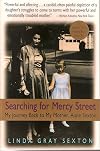
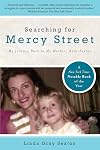
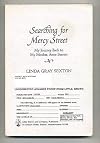
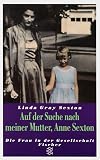
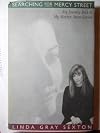
Searching for Mercy Street: My Journey Back to My Mother, Anne Sexton
by Linda Gray Sexton
On This Page
Description
Linda Gray Sexton's critically acclaimed memoir is an honest, unsparing account of the anguish and fierce love that bound a brilliant, difficult mother and the daughter she left behind. Linda Sexton was twenty-one when her mother killed herself, and now she looks back, remembers, and tries to come to terms with her mother's life. Life with Anne was a wild mixture of suicidal depression and manic happiness, inappropriate behavior, and midnight trips to the psychiatric ward. Anne taught Linda show more how to write, how to see, how to imagine-and only Linda could have written a book that captures so vividly the intimate details and lingering emotions of their life together. Searching for Mercy Street speaks to everyone who admires Anne Sexton and to every daughter or son who knows the pain of an imperfect childhood. show lessTags
Recommendations








Member Reviews
Beautifully written memoir showcasing Linda Sexton's writing talent, perhaps a gift from her mother, the poet Anne Sexton. Linda also inherited her mother's literary estate and had to deal with all of her papers at the end of her life even inexplicably deciding to release her therapy records to her biographer. She called this a "small decision"
Anne went into her therapy determined to work on her unconscious impulses and behaviors and suicidal thoughts. This was all understood to be absolutely confidential, inconceivable that it would have been violated. I find it hard to believe that Anne would have wanted her daughter to have known that she ever said that she hated her. Therapy's the place where you can say those forbidden kind of show more things. So it's the principle that she violated in releasing it but the sole responsibility lies with Dr. Orne, Anne's psychiatrist who violated her rights. Linda insists that because Anne shared so much of herself that she would not have minded and perhaps Linda does know how her mom would feel but still Anne didn't get a say in this. And besides she shared taboo information in her poetry, yes but she turned it into Art and she used metaphor mostly.
Anne went into psychotherapy to dig things up, to work with the unconscious. She was brave and honest in this work that never cured her but only seemed to make her worse. Anne even commented in those records to Orne: "What's the difference if I write poems or talk to you? It's the same thing. The last line of a poem is an insight." Anne's work was her poetry which she defended and would not give up at the expense of better mental health.
Linda gave us the viewpoint of the daughter and what she endured because of Anne's neglect and abuse, even sexual abuse which is difficult to read. It could have been less graphic for my tastes but Anne was exhibitionistic and Linda must have absorbed that trait from her. In Anne's final suicide I feel that there was a self-punishment, a self-hatred which also comes out in her poetry. She did love her daughter and her letters to Linda were beautiful and touching and heartfelt and real.
Anne was real, she had no pretense about her. She claimed she lived her life "to the hilt" despite it all. She died with her boots on, so to speak. When she killed herself she sat in the front seat of her car, Vodka in hand, garage door closed & started the ignition. I wonder if she listened to music? I wonder what her last thoughts were.
"and at the last moment
when death opens the back door
you'll put on your carpet slippers
and stride out."
-"Courage," 1974 show less
Anne went into her therapy determined to work on her unconscious impulses and behaviors and suicidal thoughts. This was all understood to be absolutely confidential, inconceivable that it would have been violated. I find it hard to believe that Anne would have wanted her daughter to have known that she ever said that she hated her. Therapy's the place where you can say those forbidden kind of show more things. So it's the principle that she violated in releasing it but the sole responsibility lies with Dr. Orne, Anne's psychiatrist who violated her rights. Linda insists that because Anne shared so much of herself that she would not have minded and perhaps Linda does know how her mom would feel but still Anne didn't get a say in this. And besides she shared taboo information in her poetry, yes but she turned it into Art and she used metaphor mostly.
Anne went into psychotherapy to dig things up, to work with the unconscious. She was brave and honest in this work that never cured her but only seemed to make her worse. Anne even commented in those records to Orne: "What's the difference if I write poems or talk to you? It's the same thing. The last line of a poem is an insight." Anne's work was her poetry which she defended and would not give up at the expense of better mental health.
Linda gave us the viewpoint of the daughter and what she endured because of Anne's neglect and abuse, even sexual abuse which is difficult to read. It could have been less graphic for my tastes but Anne was exhibitionistic and Linda must have absorbed that trait from her. In Anne's final suicide I feel that there was a self-punishment, a self-hatred which also comes out in her poetry. She did love her daughter and her letters to Linda were beautiful and touching and heartfelt and real.
Anne was real, she had no pretense about her. She claimed she lived her life "to the hilt" despite it all. She died with her boots on, so to speak. When she killed herself she sat in the front seat of her car, Vodka in hand, garage door closed & started the ignition. I wonder if she listened to music? I wonder what her last thoughts were.
"and at the last moment
when death opens the back door
you'll put on your carpet slippers
and stride out."
-"Courage," 1974 show less
daughter Linda tells of childhood with mother mad poet Anne Sexton
6.00
6.00
Regalo Jaime cumpleaños: 9.9.2018
Sep 18, 2018Spanish
Ratings
Members
- Recently Added By
Author Information

9+ Works 374 Members
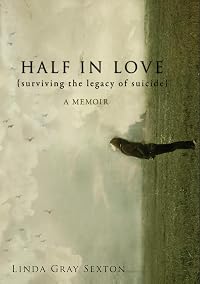
Linda Gray Sexton is the daughter of Pulitzer Prize-winning poet Anne Sexton. She has written four novels, and her second memoir, Half in Love: Surviving the Legacy of Suicide, was published by Counterpoint in January 2011. She lives in California. Visit her at lindagraysexton.com.
Common Knowledge
- Original publication date
- 1994
- People/Characters
- Anne Sexton
- Epigraph
- If I can write everything out plainly, perhaps I will myself understand better what has happened. --Sherwood Anderson "Collected Short Stories"
Now nearly all those I loved and did not understand when I was young are dead, but I still reach out to them. . . . Eventually, all things merge into one, and a river runs through it. The river was cut by the world's great f... (show all)lood and runs over rocks from the basement of time. On some of the rocks are timeless raindrops. Under the rocks are the words, and some of the words are theirs. --Norman Maclean, "A River Runs Through It" - Dedication
- For Nicholas Gray, who kept watch as I typed, with love for your love
- First words
- The letter, written on a single sheet of legal-length yellow paper, was folded several times as if it had been in an envelope.
- Last words
- (Click to show. Warning: May contain spoilers.)Here, at last, is Mercy Street.
- Original language
- English
Classifications
Statistics
- Members
- 220
- Popularity
- 147,789
- Reviews
- 3
- Rating
- (3.82)
- Languages
- English, German, Spanish
- Media
- Paper, Ebook
- ISBNs
- 6
- ASINs
- 5