On This Page
Description
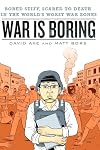
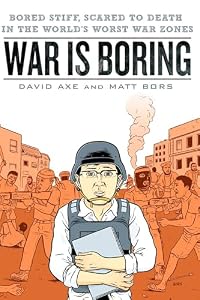
Read David Axe's blogs and other content on the Penguin Community.The war memoir as graphic novel-an utterly unforgettable and highly original look at war in the 21st century.
Street battles with spears and arrows in sweltering East Timor. Bone- jarring artillery duels in Afghanistan's mountains. Long patrols on the sandy wastes of southern Iraq. For four years, war was life for David Axe. He was alternately bored out of his mind and completely terrified. It was strangely addictive.
As a show more correspondent for The Washington Times, C-SPAN and BBC Radio, Axe flew from conflict to conflict, reveling in death, danger, and destruction abroad while, back in D.C., his apartment gathered dust, his plants died, and his relationships withered. War reporting was physically, emotionally, and financially draining-and disillusioning. Loosely based on the web comic of the same name, with extensive new material, War Is Boring takes us to Lebanon and Somalia; to arms bazaars across the United States; to Detroit, as David tries to reconnect with his family-and to Chad, as David attempts to bring attention to the Darfur genocide. Watch a Video
. show less
Tags
Recommendations


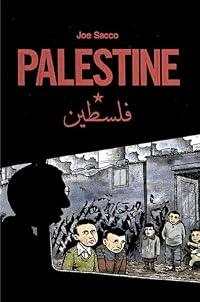
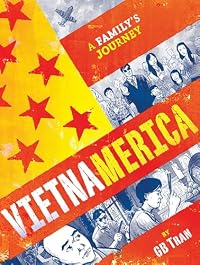
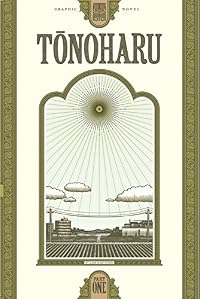







Member Reviews
Thought provoking, honest, and sometimes very gloomy. The truth ain't pretty, but I'd rather get the ugly than distant pictures of Oz. This is not a comic book, with super heroes and scantily dressed women. It is a true war memoir from a great freelance journalist, put into animation form by a talented artist in Matt Bors. If you're looking for Spiderman, go down to the quick stop with your $2.
Wow, I don't think I've disliked a graphic novel so much since I last picked up a tentacle-porn-laden manga. Maybe that's a bit too harsh, but think this bit of logic through. The title is "War is Boring". The book is about a young journalist's experiences while covering the war and chasing its high. Thus, if the book is about war, and war is boring . . . well, you can easily figure out my point. A poor choice for a title at the least and a warning to the reader at best. Honestly, it doesn't make me happy to write a snarky review of a graphic novel but the overwhelming amount of ennui on the author's part made this work a pale shade of superior efforts like Joe Sacco's GN's. I have a feeling that David Axe is a much better journalist show more than author, but in the end this graphic novel was too much about the hollow life he leads, chasing the sense of danger that comes with war journalism and not even finding fulfillment when he's "in the shit." He didn't make me want to care about it, so I didn't, and thus ends the review. show less
In the graphic novel War is Boring, war correspondent David Axe relays some of his experiences gathering information in various war zones across the globe. Finding that war is boring but peace is unbearably even more so, Axe seeks thrills by constantly throwing himself into conflict zones.
Unfortunately, I felt the book lived up to its title in some degree. The contradiction that war is simultaneously thrilling and boring is illustrated by seeing how moments of frantic panic are sometimes followed by long stretches of nothing to do or see. After witnessing intense conflict with harrowing scenes of the consequences of war, Axe would return home only to begin despising the normalcy of life and craving the excitement of chasing down war show more stories again. I found I couldn’t really sympathize with the author’s thrill-seeking needs and I really would have preferred more background or information on the wars themselves and less of his angst over why he sought out wars constantly.
That being said, the art is this book is terrific. Somewhere along the line, the wise decision was made to have far more images tell the story than text. This less is more approach with the ratio of text to illustrations was a phenomenal choice as one illustration can capture the pathos of war succinctly. I initially felt that the illustrations would have been far better if they were in full color and not gray-scale, although I did come around to them only be in black and white. Although I only felt so-so about the book overall, I might recommend it based on the illustrations alone. show less
Unfortunately, I felt the book lived up to its title in some degree. The contradiction that war is simultaneously thrilling and boring is illustrated by seeing how moments of frantic panic are sometimes followed by long stretches of nothing to do or see. After witnessing intense conflict with harrowing scenes of the consequences of war, Axe would return home only to begin despising the normalcy of life and craving the excitement of chasing down war show more stories again. I found I couldn’t really sympathize with the author’s thrill-seeking needs and I really would have preferred more background or information on the wars themselves and less of his angst over why he sought out wars constantly.
That being said, the art is this book is terrific. Somewhere along the line, the wise decision was made to have far more images tell the story than text. This less is more approach with the ratio of text to illustrations was a phenomenal choice as one illustration can capture the pathos of war succinctly. I initially felt that the illustrations would have been far better if they were in full color and not gray-scale, although I did come around to them only be in black and white. Although I only felt so-so about the book overall, I might recommend it based on the illustrations alone. show less
If you are looking for a brief history of modern conflict, this isn't it. However, it does delve into the emotions and confusion behind being a privileged American reporting on tragedy and violence around the globe. I like that the story is left unresolved.
This book does require some knowledge of many modern conflicts and has vocabulary specific to war, weapons, and journalism.
This book does require some knowledge of many modern conflicts and has vocabulary specific to war, weapons, and journalism.
One of the teens at my library had finished reading this and I asked him to tell me about it. His description was excellent and made me want to read it, so I'll borrow from him. This book is about David Axe, a war correspondent who is addicted to war. If this man has a drug, it's being in the middle of a war zone. And as you follow him on his journey from third-world country to military bases, you wonder if Axe just has a deathwish, or is really looking for a deeper meaning in all the horror that he sees.
This description really hooked me... unfortunately, I think that the description is more intriguing than the actual story. Axe has led an interesting life and witnessed countless atrocities. However, there's not a lot of depth to this show more book. We know he's struggling with his desire to be out seeing wars, trying to figure out why he feels so strongly about being in the midst of danger. But there's no great sense of discovery or any sort of epiphany, which I suppose would be fine if Axe didn't present the book that way. He acts as if we've peered deep into his soul and discovered something.
I think this book is just pulled in too many directions. Is it about his need to witness war - and perhaps to die doing something meaningful? Or maybe about the countries subject to so much war? That it's important to document these stories? Or something else entirely? I ended up feeling confused by Axe's story. The artwork often said more about what was happening and the emotions he felt than his narration ever did.
While this is an interesting story in concept, I didn't enjoy reading it. Not because of the content, but because of the lack of focus and reflection. show less
This description really hooked me... unfortunately, I think that the description is more intriguing than the actual story. Axe has led an interesting life and witnessed countless atrocities. However, there's not a lot of depth to this show more book. We know he's struggling with his desire to be out seeing wars, trying to figure out why he feels so strongly about being in the midst of danger. But there's no great sense of discovery or any sort of epiphany, which I suppose would be fine if Axe didn't present the book that way. He acts as if we've peered deep into his soul and discovered something.
I think this book is just pulled in too many directions. Is it about his need to witness war - and perhaps to die doing something meaningful? Or maybe about the countries subject to so much war? That it's important to document these stories? Or something else entirely? I ended up feeling confused by Axe's story. The artwork often said more about what was happening and the emotions he felt than his narration ever did.
While this is an interesting story in concept, I didn't enjoy reading it. Not because of the content, but because of the lack of focus and reflection. show less
So is Matt Bors the illustrator? The jacket says the cover illustrations (which are book illustrations) are by Axe.
I could see some uses for this book, say in an undergraduate class that looks at the difficulty of making meaning from trauma. However, it's not well-enough realized, and I wouldn't want to appear to endorse it. The introduction sets the tone, with his self-aggrandizing war junkie friend's assertion that middle class American life is boring and inconsequential. Not my middle class American life, buddy. My life is full of meaningful activities, love, relationships, vividness, and service, all in the context of my active awareness of my privilege as an economically secure person whose country is not embroiled in conflict. show more Generally I stop reading books that begin by insulting the general reader, but I figured, hey, it's not Axe's fault that his friend is a swaggering schmuck.
Sadly, Axe is little better, though he insults himself more actively and the reader more covertly. I'm sorry he's bored, and I'm sorry his life is never quite satisfying even when he's in a war, which is where he seems to want to be. I'm sorry that he lives with constant, simmering anger that he can't quite attach to anything. One shocking frame in this graphic autobiography expresses his dilemma when his girlfriend, another reporter, wants to travel to a war with him (when he's been calling his buddies and trying to get them to go to a war with him). He can't bring himself to tell her no, though he expresses this with an obscenity and hostility. So she's good enough to have sex with but it makes you angry when she wants to go with you because you'll have to behave better in the war? One hopes the girlfriend noticed this contempt and got out sooner rather than later.
As to Axe's musings about his reasons for wanting to be in war zones but not finding this satisfying, I found them not terribly coherent or compelling. Is it machismo? Existential emptiness? Unmentioned substance use troubles? Hard to guess. I don't know what Axe's in-person vibe is, but I imagine from this book that he's a person you edge away from at a party as he warms to his topic.
Whether he's a good war reporter/photographer, I don't know and I'm not moved to find out. show less
I could see some uses for this book, say in an undergraduate class that looks at the difficulty of making meaning from trauma. However, it's not well-enough realized, and I wouldn't want to appear to endorse it. The introduction sets the tone, with his self-aggrandizing war junkie friend's assertion that middle class American life is boring and inconsequential. Not my middle class American life, buddy. My life is full of meaningful activities, love, relationships, vividness, and service, all in the context of my active awareness of my privilege as an economically secure person whose country is not embroiled in conflict. show more Generally I stop reading books that begin by insulting the general reader, but I figured, hey, it's not Axe's fault that his friend is a swaggering schmuck.
Sadly, Axe is little better, though he insults himself more actively and the reader more covertly. I'm sorry he's bored, and I'm sorry his life is never quite satisfying even when he's in a war, which is where he seems to want to be. I'm sorry that he lives with constant, simmering anger that he can't quite attach to anything. One shocking frame in this graphic autobiography expresses his dilemma when his girlfriend, another reporter, wants to travel to a war with him (when he's been calling his buddies and trying to get them to go to a war with him). He can't bring himself to tell her no, though he expresses this with an obscenity and hostility. So she's good enough to have sex with but it makes you angry when she wants to go with you because you'll have to behave better in the war? One hopes the girlfriend noticed this contempt and got out sooner rather than later.
As to Axe's musings about his reasons for wanting to be in war zones but not finding this satisfying, I found them not terribly coherent or compelling. Is it machismo? Existential emptiness? Unmentioned substance use troubles? Hard to guess. I don't know what Axe's in-person vibe is, but I imagine from this book that he's a person you edge away from at a party as he warms to his topic.
Whether he's a good war reporter/photographer, I don't know and I'm not moved to find out. show less
Quick interesting read that is more about the inner psyche of the author than about war in general. I don't think the plot was developed as well as it could have been. But for an hour or two read, it's interesting enough and has nice artwork.
Members
- Recently Added By
Lists

Middle East and Maghreb Graphic Novels
46 works; 3 members
Author Information


Common Knowledge
- People/Characters
- David Axe
- Important places
- Chad; Somalia; Detroit, Michigan, USA; Washington, D.C., USA; Afghanistan; Lebanon
Classifications
- Genre
- Graphic Novels & Comics
- DDC/MDS
- 070.4333092 — Computer science, information & general works News media, journalism & publishing Documentary media, educational media, news media; journalism; publishing Journalism Reporting Local interests War
- LCC
- PN6727 .A96 — Language and Literature Literature (General) Literature (General) Collections of general literature Comic books, strips, etc.
- BISAC
Statistics
- Members
- 117
- Popularity
- 277,426
- Reviews
- 10
- Rating
- (2.97)
- Languages
- English
- Media
- Paper, Ebook
- ISBNs
- 3
- ASINs
- 3