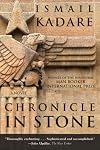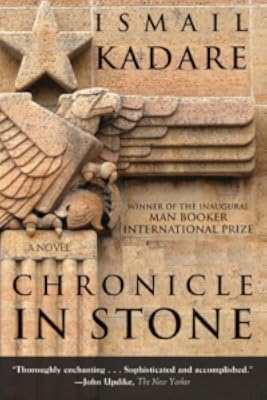
Chronicle in Stone
by Ismaïl Kadaré
On This Page
Description
Masterful in its simplicity, Chronicle in Stone is a touching coming-of-age story and a testament to the perseverance of the human spirit. Surrounded by the magic of beautiful women and literature, a boy must endure the deprivations of war as he suffers the hardships of growing up. His sleepy country has just thrown off centuries of tyranny, but new waves of domination inundate his city. Through the boy's eyes, we see the terrors of World War II as he witnesses fascist invasions, allied show more bombings, partisan infighting, and the many faces of human cruelty-as well as the simple pleasures of life. Evacuating to the countryside, he expects to find an ideal world full of extraordinary things, but discovers instead an archaic backwater where a severed arm becomes a talisman and deflowered girls mysteriously vanish. Woven between the chapters of the boy's story are tantalizing fragments of the city's history. As the devastation mounts, the fragments lose coherence, and we perceive firsthand how the violence of war destroys more than just buildings and bridges. show lessTags
Recommendations








Member Reviews
Translated from the Albanian by Arshi Pipa and David Bellos
Never has an adult written so convincingly in the voice of a child than Ismail Kadare in Chronicle in Stone. Set in a small crossroads town in southern Albania that closely resembles Kadare’s home town, Chronicle follows a dreamy juvenile boy who imagines the relationships between houses, between and among streets, between clouds and the sky. World War II air raids force the unnamed boy and his fellow townspeople out of their homes and into the citadel. Not even these visits to the dank, maze-like fortress can ground this boy’s flights of fancy. The whole novel is riveting, atmospheric, and utterly convincing.
The boy predictably idolizes the aircraft occupying the newly show more constructed airfield across the river, until a monstrous, silver behemoth arrives and asserts itself as alpha. He spends much of the novel in the company of his neighborhood’s old women, who are a funny combination of superstitious and worldly wise. In particular, his grandmother knows and understands much about the real world, and condemns a good portion of it. He watches the occupying armies come and go: Greek, then Italian, two and three times each, and they all anticipate the ultimate monstrous German forces.
He’s acquainted with two young terrorists in their twenties, partisans, as they’re called, who encourage and belittle him by turns. Their leader, another young man from the same town, called Enver Hoxha, has left to study abroad. His specific inclusion in the book has been seen as a sop to Albanian authorities to allow publication, but shadowy veiled references that hint at his rumored unorthodox sexual orientation have been cited as well.
Chronicle in Stone was first published in Albania in 1971. Its English translation wasn’t released until 1987. It balances the daydreams of a young boy with the horrific events of political and wartime violence. This balance makes it possible to view the bloody events of the novel from something of a distance; this lens also perfectly catches the modern anarchic political machinations while acknowledging Albania’s remoteness and inward—and backward—focus. It’s an intriguing construct, very rewarding, very balanced, and very strong. And the point of view gives the novel an enchanted quality. For these reasons it won the International Booker Prize in 2005. show less
Never has an adult written so convincingly in the voice of a child than Ismail Kadare in Chronicle in Stone. Set in a small crossroads town in southern Albania that closely resembles Kadare’s home town, Chronicle follows a dreamy juvenile boy who imagines the relationships between houses, between and among streets, between clouds and the sky. World War II air raids force the unnamed boy and his fellow townspeople out of their homes and into the citadel. Not even these visits to the dank, maze-like fortress can ground this boy’s flights of fancy. The whole novel is riveting, atmospheric, and utterly convincing.
The boy predictably idolizes the aircraft occupying the newly show more constructed airfield across the river, until a monstrous, silver behemoth arrives and asserts itself as alpha. He spends much of the novel in the company of his neighborhood’s old women, who are a funny combination of superstitious and worldly wise. In particular, his grandmother knows and understands much about the real world, and condemns a good portion of it. He watches the occupying armies come and go: Greek, then Italian, two and three times each, and they all anticipate the ultimate monstrous German forces.
He’s acquainted with two young terrorists in their twenties, partisans, as they’re called, who encourage and belittle him by turns. Their leader, another young man from the same town, called Enver Hoxha, has left to study abroad. His specific inclusion in the book has been seen as a sop to Albanian authorities to allow publication, but shadowy veiled references that hint at his rumored unorthodox sexual orientation have been cited as well.
Chronicle in Stone was first published in Albania in 1971. Its English translation wasn’t released until 1987. It balances the daydreams of a young boy with the horrific events of political and wartime violence. This balance makes it possible to view the bloody events of the novel from something of a distance; this lens also perfectly catches the modern anarchic political machinations while acknowledging Albania’s remoteness and inward—and backward—focus. It’s an intriguing construct, very rewarding, very balanced, and very strong. And the point of view gives the novel an enchanted quality. For these reasons it won the International Booker Prize in 2005. show less
Chronicle in Stone begins as the story of a boy and his family and neighbors living in and about Gjirokastër, Albania’s topographically “slanted” city of stone. A story that’s often refreshing and filled with good humor. Then the threat of bombing interferes and becomes curiously twinned to the “abomination” of a wedding announcement.
Wait. An abomination? Puzzled, I did a web search for Albania and marriage and while so engaged came upon the custom of burrnesha, a custom that couldn’t help but grab my attention.
Michael Paterniti writes in GQ that in Albania an ancient tradition allows a woman to choose to live as a man. She must take an oath of burrnesha,, a pledge “To dress like a man, work like a man, assume the show more burdens and liberties of a man.” But “these freedoms came with a price: The burrneshas also made a pledge of lifelong celibacy.” And for the sworn virgin, Wikipedia notes, breaking the vow of celibacy was punishable by death.
To say that this option is tied to illiberal views of women (and others) is to tell you something you’ve no doubt deduced. While the wedding in this novel was not one that violated burrnesha, the custom helps show that in Albania the consequences of departing from norms were severe and gives Kadare’s portrait of his city of stone a more bitter flavor and scarier feel, changing the story told by a mostly happy child.
It becomes even bitterer when Albanian Communists commence violence against the powers that be and the opposition is spurred to pitiless measures. Uncertainties abound, as do absurdities:
“What have they done? Why are they taking them away?” a passer-by asked.
“They spoke against.”
“What?”
“They spoke against.”
“What does that mean? Against what?”
“I’m telling you. They spoke against.”
We read a notice posted around the city:
“Wanted: the dangerous Communist Enver Hoxha. Aged about 30. Tall. Wears sunglasses. Reward for any information leading to his capture: 15,000 leks; for his capture: 30,000 leks.”
Those sunglasses . . . Worn by a man whose darkened belief, stated by the real-life Enver Hoxha elsewhere, was that “Dissenters must be exterminated like a weasel in a chicken coop.” The events that follow are dark enough for any who are caught in them.
Until the war arrived, the Gjirokastër the boy perceived was a city that despite normal disputes or antagonisms seemed a more or less integral community. The stresses of the continuing war, with its politics, force a shattering of that idea.
Unlike Chronicle’s characters, we know the history: Albania was just then poised to enter, after the war, its era of Stalinist control and the man with the dark glasses would become the nation’s leader. All that is material for another novel. If it were to be a novel by Ismail Kadare, I’d expect it to be as well worth reading as the excellent Chronicle in Stone. show less
Wait. An abomination? Puzzled, I did a web search for Albania and marriage and while so engaged came upon the custom of burrnesha, a custom that couldn’t help but grab my attention.
Michael Paterniti writes in GQ that in Albania an ancient tradition allows a woman to choose to live as a man. She must take an oath of burrnesha,, a pledge “To dress like a man, work like a man, assume the show more burdens and liberties of a man.” But “these freedoms came with a price: The burrneshas also made a pledge of lifelong celibacy.” And for the sworn virgin, Wikipedia notes, breaking the vow of celibacy was punishable by death.
To say that this option is tied to illiberal views of women (and others) is to tell you something you’ve no doubt deduced. While the wedding in this novel was not one that violated burrnesha, the custom helps show that in Albania the consequences of departing from norms were severe and gives Kadare’s portrait of his city of stone a more bitter flavor and scarier feel, changing the story told by a mostly happy child.
It becomes even bitterer when Albanian Communists commence violence against the powers that be and the opposition is spurred to pitiless measures. Uncertainties abound, as do absurdities:
“What have they done? Why are they taking them away?” a passer-by asked.
“They spoke against.”
“What?”
“They spoke against.”
“What does that mean? Against what?”
“I’m telling you. They spoke against.”
We read a notice posted around the city:
“Wanted: the dangerous Communist Enver Hoxha. Aged about 30. Tall. Wears sunglasses. Reward for any information leading to his capture: 15,000 leks; for his capture: 30,000 leks.”
Those sunglasses . . . Worn by a man whose darkened belief, stated by the real-life Enver Hoxha elsewhere, was that “Dissenters must be exterminated like a weasel in a chicken coop.” The events that follow are dark enough for any who are caught in them.
Until the war arrived, the Gjirokastër the boy perceived was a city that despite normal disputes or antagonisms seemed a more or less integral community. The stresses of the continuing war, with its politics, force a shattering of that idea.
Unlike Chronicle’s characters, we know the history: Albania was just then poised to enter, after the war, its era of Stalinist control and the man with the dark glasses would become the nation’s leader. All that is material for another novel. If it were to be a novel by Ismail Kadare, I’d expect it to be as well worth reading as the excellent Chronicle in Stone. show less
"Kronikë në gur" afirmohet menjëherë si vepër thelbësore në kuadrin e krejt krijimtarisë së Kadaresë. Është roman i hyrjes në jetë dhe në letërsi. Tregimtari është autori, që përpiqet të rishohë me sytë e fëmijës tetë vitet e para të jetës së tij. Që nga kjo fëmijëri e kanë zanafillën elementet që përbëjnë "universin Kadare". Ai fiton sensin e tij të mprehtë të fantastikes, apo të "realizmit magjik".
Pjerrësia marramendëse e rrugëve, prania kudo e gurit, banesat e çuditshme, të mëdha e të fortifikuara, kështjellaburg, që zotëron mbi disa lagje, pamja spektakolare mbi fushën e Drinos dhe malet, e gjithë kjo do të formojë e stërhollojë pak nga pak vështrimin e shkrimtarit të show more ardhshëm. Gjirokastra të fton në magji dhe, siç shkruan Kadare, "duket sikur qyteti është ngritur për të zgjuar ide të mëdha".
Ai e quan një fat të madh që e nisi jetën e tij në një mjedis të tillë: "Sa më shumë unë mësoja sekretet e artit të të shkruarit, aq më shumë bindesha që kisha patur fat të rritesha në këtë qytet më se të veçantë, që kisha dëgjuar shpjegimet e para për botën nga goja e këtyre plakave të vjetra e të mençura, veshur me të zeza, që mbanin kupën e kafesë në njërën dorë dhe tejqyrën në tjetrën". show less
Pjerrësia marramendëse e rrugëve, prania kudo e gurit, banesat e çuditshme, të mëdha e të fortifikuara, kështjellaburg, që zotëron mbi disa lagje, pamja spektakolare mbi fushën e Drinos dhe malet, e gjithë kjo do të formojë e stërhollojë pak nga pak vështrimin e shkrimtarit të show more ardhshëm. Gjirokastra të fton në magji dhe, siç shkruan Kadare, "duket sikur qyteti është ngritur për të zgjuar ide të mëdha".
Ai e quan një fat të madh që e nisi jetën e tij në një mjedis të tillë: "Sa më shumë unë mësoja sekretet e artit të të shkruarit, aq më shumë bindesha që kisha patur fat të rritesha në këtë qytet më se të veçantë, që kisha dëgjuar shpjegimet e para për botën nga goja e këtyre plakave të vjetra e të mençura, veshur me të zeza, që mbanin kupën e kafesë në njërën dorë dhe tejqyrën në tjetrën". show less
This is a multi-layered novel depicting Kadare’s hometown of Gjirokaster, an ancient stone-built city in southern Albania, built into the side of a steep hill topped by a huge fortress. It is a town occupied over time by the Romans, the Normans, the Byzantines, the Turks, and during WWII, the Italians, the Greeks (back and forth), and finally the Germans; those who stayed the longest leave various bits of their cultures and practices that give the city a rich fabric that it would otherwise never have. It was also, in a nice irony, given Kadare’s implacable opposition to totalitarian regimes, the birthplace of Enver Hoxha. The city is seen, and the story is told, by a young boy with a vivid imagination, a fascination with airplanes, show more on the cusp of adolescence but sometimes bewildered by the often harsh and unforgiving social and tribal norms, pressures and deaths imposed and avenged for slighted honour, or even the perception of a slight. Layered onto these ancient customs and superstitions are the divisions among partisans during WWII which was, in effect, not just a war of liberators, but a civil war in which, unfortunately, the Communists prevailed. The city is a mixture of Muslims, Orthodox and Christians who live separate lives and with tolerance as long as the people stay within their social groups.
This is a story about growing up in turbulent times when war and occupation have stirred the city and roused it in ways that would otherwise take generations to have any impact. It is a highly anthropomorphic novel with the city itself, planes, the sky, a giant anti-aircraft gun, clouds, houses, roofs, just about everything at one time or another given sensations and emotions. The anti-aircraft gun, a relic from the past, is fired several times, but never hits anything and Kadare muses, “What people obviously held against it more than anything else was the length of the barrel…I sometimes imagined I could read its thoughts. You often say of someone accused of misdeed that he’s retreated into his shell, or that he’s shrunk away. But that poor gun could not hide or cringe, and had to stay sticking out in full sight of all. Apparently some people took pity on it just as I did, and tried to invent excuses for it.”
For Kadare, the city and its inhabitants are almost two aspects of one reality: “Everything in the city was old and made of stone, from the streets and fountains to the roofs of the sprawling age-old houses covered with grey slates like gigantic scales. It was hard to believe that, under this powerful carpace, the tender flesh of life survived and reproduced.” Like socially mixed people, the city itself is a mixture: “The top of one house might graze the foundation of another , and it was surely the only place in the world where if you slipped and fell in the street, you might well land on the roof of a house---a peculiarity known most intimately to drunks.” The city can be changed or damaged by natural forces such as floods or earthquakes, or by the destruction of war, but otherwise it is immobile, solid, unchanging, just as are the customs and social mores of the people until they are acted upon by external forces such as war and occupation. But as strong foundations of stone can be rebuilt, so multifarious lives of personal and social relationships, life and death, of ordinary people continue despite the predations of man: “They say the war with the Greeks will be over before the first mountain snowfall. The Kailis’ daughter-in-law is pregnant again. Both of the Puses’ daughters-in-law are in their ninth month, as if they had worked it out together. Granny Hava is bed-ridden. “I won’t live to see winter, “ she says. Poor old Lady Qazim finally died too. May the earth be kind to her.”
This is a theme in much of Kadare’s writing: the immutability of human emotions, strengths and weaknesses, the force of personal and social arrangements, as the bedrock, the foundations of society, regardless of political regimes of varying cruelty and interference in ordinary lives.
An interesting, thought-provoking novel. show less
This is a story about growing up in turbulent times when war and occupation have stirred the city and roused it in ways that would otherwise take generations to have any impact. It is a highly anthropomorphic novel with the city itself, planes, the sky, a giant anti-aircraft gun, clouds, houses, roofs, just about everything at one time or another given sensations and emotions. The anti-aircraft gun, a relic from the past, is fired several times, but never hits anything and Kadare muses, “What people obviously held against it more than anything else was the length of the barrel…I sometimes imagined I could read its thoughts. You often say of someone accused of misdeed that he’s retreated into his shell, or that he’s shrunk away. But that poor gun could not hide or cringe, and had to stay sticking out in full sight of all. Apparently some people took pity on it just as I did, and tried to invent excuses for it.”
For Kadare, the city and its inhabitants are almost two aspects of one reality: “Everything in the city was old and made of stone, from the streets and fountains to the roofs of the sprawling age-old houses covered with grey slates like gigantic scales. It was hard to believe that, under this powerful carpace, the tender flesh of life survived and reproduced.” Like socially mixed people, the city itself is a mixture: “The top of one house might graze the foundation of another , and it was surely the only place in the world where if you slipped and fell in the street, you might well land on the roof of a house---a peculiarity known most intimately to drunks.” The city can be changed or damaged by natural forces such as floods or earthquakes, or by the destruction of war, but otherwise it is immobile, solid, unchanging, just as are the customs and social mores of the people until they are acted upon by external forces such as war and occupation. But as strong foundations of stone can be rebuilt, so multifarious lives of personal and social relationships, life and death, of ordinary people continue despite the predations of man: “They say the war with the Greeks will be over before the first mountain snowfall. The Kailis’ daughter-in-law is pregnant again. Both of the Puses’ daughters-in-law are in their ninth month, as if they had worked it out together. Granny Hava is bed-ridden. “I won’t live to see winter, “ she says. Poor old Lady Qazim finally died too. May the earth be kind to her.”
This is a theme in much of Kadare’s writing: the immutability of human emotions, strengths and weaknesses, the force of personal and social arrangements, as the bedrock, the foundations of society, regardless of political regimes of varying cruelty and interference in ordinary lives.
An interesting, thought-provoking novel. show less
It is often surprising to me how very different each of Kadare’s subjects are; he chooses remarkably different settings to tell his stories…though his stories often address the same issue(s). This is a coming-of-age story of a sort, taking place in Gjirokaster (Kadare’s hometown) toward the end of WWII when the town keeps being occupied and re-occupied by opposing forces. But that’s merely the setting for the childhood of our protagonist; one can’t help but wonder how much of the story is autobiographical. There are lots of stories, mostly from the viewpoint of the pre-teen narrator: his neighbors, his extended family; town characters; and aspects of the war and soldiers told by someone whose insights are intriguing despite show more the fact that there is much that he doesn’t understand. All in all, not my favorite Kadare, but an instructive story well-told. show less
This was my first Kadare read and I was underwhelmed. The blurb on the back cover describes the book as "stunning", "compelling" and "enchanting." I found those adjectives overstated. I was hoping to get some insight into Albanian culture, but there was such a hollowness about it, that hope was not realized. The story is told by a young boy, aged 10-12, during the WWII invasion by the Germans and counter-invasion by the Greeks. The narrator doesn't bring a closeness between himself and the reader, but a more distant relationship. Perhaps it is the large amount of magical realism that kept this reader from engaging. 322 pages
Chronicle in Stone, first published in Albanian in 1971 and sixteen years later in English in a translation whose author remains unidentified, describes life in a small Albanian town during World War II. The mystery of the novel’s translation was elucidated for me through an Internet search, and its story is worth telling: translated by an Albanian émigré who lived in the States and who is now dead, Arshi Pipa, the book was published without the translator’s name because he had entered into a conflict with the publisher and/or with the author, and as a consequence, he demanded to have his name taken off the translation. According to David Bellos, Kadare’s current translator into English (who was chosen by Kadare as the recipient show more of the translation prize awarded together with the Booker prize), the dispute is known as the “Pipi-Kaka quarrel.”
Chronicle in Stone has an original structure in that each chapter is followed by an alternate chapter, a short “Fragment of a Chronicle” written by the town’s official chronicler. The regular chapters are written in the first person, in the voice of a child who seems very much an alter ego of the young Kadare, a child fascinated with words, who reads Macbeth, as Kadare himself did when he was eleven, and consequently applies its human drama to his neighbors, imagining blood and crime everywhere. Not that it was hard to imagine. In this little town ravaged by history, we see characters walking down the street with severed heads under their arms; the Italian fascists hang several young Albanian rebels, the Greek occupants kill “enemies” chosen according to the whims of their spies, and the Germans indulge in the killing of hundred-year-old women.
Toward the end of the novel, the absurdity of the political situation culminates in a whirlwind-like scenario, in which within two weeks or so, the town changes hands several times: from the Italians to the Greeks, back to the Italians, back to the Greeks, the Italians, the Greeks, until finally no one is in control. Each time the Italians come, they bring along two groups of women, one of nuns and one of prostitutes. Each time the town changes hands, another proclamation by another Garrison Commander is posted and another flag is raised. Each time another flag is raised, the Albanian Gjergj Pula changes his name: to Giorgio (when the Italians come), to Yiorgos (for the Greeks) and to Jurgen Pulen before the arrival of the Germans, a name he never gets a chance to use because the Germans kill him as soon as they enter the town. Nor does he get to use “Yogura,” which he prepared in case of a Japanese invasion.
Chronicle in Stone was published in Albania during the years of Enver Hoxha, who came to power with the Communist Party after World War II, and stayed there until his death in the mid-eighties. In this context, we can speculate on the reasons for the episodic appearance toward the end of the novel of a character described by the Italian Garrison Commander as “the dangerous Communist Enver Hoxha.” Although it is known that the dictator came from the same small town as Kadare, one wonders whether his presence is indeed historically justified or whether this was the price Kadare had to pay in order to publish his novel. show less
Chronicle in Stone has an original structure in that each chapter is followed by an alternate chapter, a short “Fragment of a Chronicle” written by the town’s official chronicler. The regular chapters are written in the first person, in the voice of a child who seems very much an alter ego of the young Kadare, a child fascinated with words, who reads Macbeth, as Kadare himself did when he was eleven, and consequently applies its human drama to his neighbors, imagining blood and crime everywhere. Not that it was hard to imagine. In this little town ravaged by history, we see characters walking down the street with severed heads under their arms; the Italian fascists hang several young Albanian rebels, the Greek occupants kill “enemies” chosen according to the whims of their spies, and the Germans indulge in the killing of hundred-year-old women.
Toward the end of the novel, the absurdity of the political situation culminates in a whirlwind-like scenario, in which within two weeks or so, the town changes hands several times: from the Italians to the Greeks, back to the Italians, back to the Greeks, the Italians, the Greeks, until finally no one is in control. Each time the Italians come, they bring along two groups of women, one of nuns and one of prostitutes. Each time the town changes hands, another proclamation by another Garrison Commander is posted and another flag is raised. Each time another flag is raised, the Albanian Gjergj Pula changes his name: to Giorgio (when the Italians come), to Yiorgos (for the Greeks) and to Jurgen Pulen before the arrival of the Germans, a name he never gets a chance to use because the Germans kill him as soon as they enter the town. Nor does he get to use “Yogura,” which he prepared in case of a Japanese invasion.
Chronicle in Stone was published in Albania during the years of Enver Hoxha, who came to power with the Communist Party after World War II, and stayed there until his death in the mid-eighties. In this context, we can speculate on the reasons for the episodic appearance toward the end of the novel of a character described by the Italian Garrison Commander as “the dangerous Communist Enver Hoxha.” Although it is known that the dictator came from the same small town as Kadare, one wonders whether his presence is indeed historically justified or whether this was the price Kadare had to pay in order to publish his novel. show less
Members
- Recently Added By
Lists

The Guardian's 1000 Novels Everyone Must Read
1,005 works; 549 members

Best of World Literature
437 works; 52 members

Childhood: Books for or about children in different cultures around the wor
345 works; 18 members

THE WAR ROOM
813 works; 24 members
Author Information

180+ Works 7,900 Members
Ismail Kadare is the most prominent of contemporary Albanian writers. He has written poetry, short stories, literary criticism, and seven novels. His works have been translated and published in more than two dozen countries. An internationally known figure, he has visited and lectured in many countries. He was also a representative to Albania's show more People's Assembly. In 1990 Kadare left Albania for Paris where he became openly dissident. (Bowker Author Biography) show less
Some Editions
Awards and Honors
Notable Lists
Series
Belongs to Publisher Series
Common Knowledge
- Canonical title
- Chronicle in Stone
- Original title
- Kronikë në gur
- Alternate titles
- Chronique de la ville de pierre
- Original publication date
- 1971
- Important places
- Albania; Balkans
- First words*
- Dehors, la nuit d'hiver avait enveloppé la ville de vent, d'eau et de brouillard.
- Last words*
- (Click to show. Warning: May contain spoilers.)Elles sont là, éternelles, pétrifiées, avec les empreintes qu'ont laissées sur elles les tremblements de terre, les hivers ou es fléaux humains.
- Original language
- Albanian
*Some information comes from Common Knowledge in other languages. Click "Edit" for more information.
Classifications
- Genres
- Fiction and Literature, General Fiction, Historical Fiction
- DDC/MDS
- 891.9913 — Literature & rhetoric Literatures of other languages East Indo-European and Celtic literatures Baltic and other Indo-European languages Other Indo-European languages Albanian Albanian fiction
- LCC
- PG9621 .K3 .K713 — Language and Literature Slavic languages and literatures. Baltic languages. Albanian language Slavic. Baltic. Albanian Albanian
- BISAC
Statistics
- Members
- 650
- Popularity
- 44,693
- Reviews
- 27
- Rating
- (3.90)
- Languages
- 12 — Albanian, Catalan, Dutch, English, Finnish, French, German, Greek, Italian, Portuguese, Spanish, Swedish
- Media
- Paper, Audiobook, Ebook
- ISBNs
- 42
- ASINs
- 4