On This Page
Description
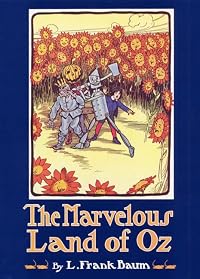
When the Scarecrow, now the ruler of the Emerald City, is driven out by General Jinjur and her all-girl army, his friends--the Tin Woodman, a boy named Tip, and Jack Pumpkinhead--try to restore peace.Tags
Recommendations
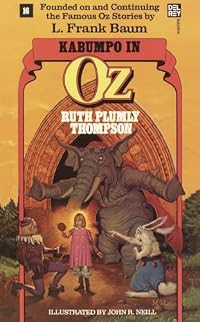

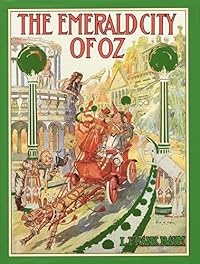
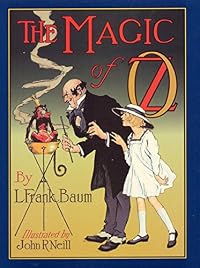
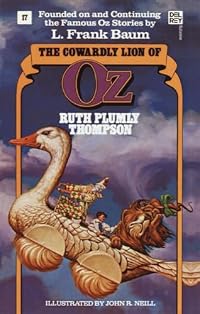
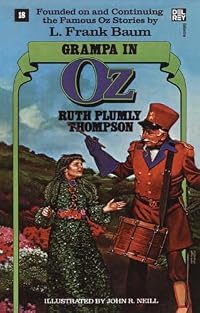

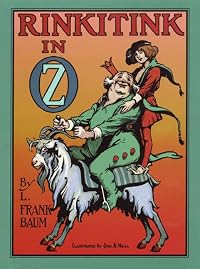

Member Recommendations
Member Reviews
When I was a child, this was my least favorite of all Baum's Oz books, but found I enjoyed it more when I returned to it as an adult. Child me disliked the fact that Dorothy doesn't appear here, and I found the plot to be a little slow (and even dull) at times. Grown-up me appreciates the satire and wordplay of this installment. I also like that this story is a little bit darker in tone than the first one. Child me liked that this story introduces Ozma and the Saw-horse, two characters that I enjoyed in later books. Child me and adult me are both slightly bothered by the fact that this book contradicts some things from the others. I understand that as Baum developed his world, he would need to change some things from the first story, show more which was originally intended as a standalone; and indeed, after he hit his stride, his subsequent books remained largely internally consistent. But this book contradicts both the first book and many of the later ones, and I found that to be a little distracting.
My biggest problem is this:The Wizard, who is such a kind man in the first book, and a great friend to Dorothy in later books, is completely out of character here. In the first book, the citizens made him their ruler, and he protected them as best he could, going up against the Wicked Witch of the West, building the Emerald City, and living a lonely life of tricks just to keep the two wicked witches away from his people. He was well-intentioned: a bad wizard, but a good man. In later books too, he learns some magic, protects Dorothy and her friends, and is close to Glinda. Here, though, he seizes the throne by force, kidnaps a child (giving her to a cruel witch who enchants her), and is pretty much evil. Could Baum have found anyone else to be the villain? Seriously, he could have had some random 3rd party hide Ozma without the Wizard (who wasn't magical anyway) ever knowing, and the story would have worked so much better. show less
My biggest problem is this:
I read my son The Wonderful Wizard of Oz, and his interest was high enough that I resolved to continue onward into the second book. (Indeed, at the time that I write this, we're a few chapters into book six.) But when I pulled my childhood edition of The Marvellous Land of Oz off the shelf, it was clear to me that the book was inadequate to our purposes. One of the big draws of the first book for my son was the profuse illustrations by W. W. Denslow, but my edition of Marvellous Land was a re-illustrated Puffin Classic from 1985. Far from having multiple John R. Neill illustrations per chapter, including color plates, it had about one crappy picture every other chapter! This was great when I was reading the books to myself at age ten, show more but I did not think it would maintain a three-year-old's interest. So I seized the excuse to upgrade my much-loved copy of Marvelous Land, and I picked up the 1985 Books of Wonder edition; the Books of Wonder editions of Baum's original fourteen are not quite facsimiles of the first editions (this one, for example, has different end papers than the original), but they are pretty close.
My son seemed to enjoy this one as much as the first. After we read about Tip building Jack Pumpkinhead, he built a version of his little brother out of household objects! There are ways in which this one is fun to read aloud. There's a good cast of characters to which I could attribute distinctive voices: cackling Mombi, dim-witted Jack Pumpkinhead, the drawling Sawhorse, the extravagant Woggle-Bug. (I think he did point out, though, that my voice for the bear in Jon Klassen's I Want My Hat Back is the same as Jack Pumpkinhead's; he didn't comment on my Sawhorse voice being the same one I use for Applejack in My Little Pony comics.)
On the other hand, I found the book less appealing on this readthrough. Wizard has a very arresting first chapter: the excellent description of gray Kansas, culminating in the cyclone. Land's is much less successful: we hear about abusive Mombi, but don't see her, and then Tip spends some time building Jack for reasons that to be honest seemed a bit dubious... and then that's it. While Wizard puts Dorothy in peril right from the beginning, by the end of the first chapter of Land, where we're going is less clear. And indeed, the whole book is like that: Tip's decision to ride to the Emerald City with Jack and the Sawhorse is pretty random; the characters leave the Emerald City to get the Tin Woodman's help, and go right back and end up in pretty much the exact same situation they were in before they left, because as one guy with an axe, the Tin Woodman is actually not much help; the flight into what seems to be our world feels pretty pointless; and then Glinda solves everything.
That lack of agency was the main problem I had with the book. When I read the Shanower & Young comic adaptation, I praised the book for its cast of misfits... but on reading the actual book again, I found that element much less successful. I feel as though Baum was attempting to recapture the magic of the original book's Scarecrow–Tin Woodman–Cowardly Lion trio, but failing. Their power comes from the way they worked together (with Dorothy) to solve problems, often in spite of their self-perceived limitations. Here so many of the characters seem to do very little. Tip occasionally has good ideas, but the Scarecrow and the Tin Woodman are pretty useless; and new characters Jack Pumpkinhead and Woggle-Bug contribute almost nothing at all. Plus everyone becomes mean and is constantly sniping at each other! Like, I want to see the misfits come together and save the day, I want to see the dim Jack Pumpkinhead suddenly prove clutch, but that very rarely happens. I think probably this is because Baum wrote the book with an eye toward a stage adaptation, and imagined some comedic banter. But in the actual book, it doesn't come off well.
I did have a new appreciation for General Jinjur. The gag about how hard the husbands have to work once the women stop working is a good one.* It seems a shame that there's no subsequent Oz book with a substantial role for here; even outside of the Famous Forty, no fan has ever written a General Jinjur of Oz as far as I can tell. Maybe I should be the one!
But, you know, the pictures are great! And Son One clearly had a good time. I was very happy we picked up the Books of Wonder edition.
* "[W]e've had a revolution, your Majesty as you ought to know very well," replied the [Emerald City] man; "and since you went away the women have been running things to suit themselves. I'm glad you have decided to come back and restore order, for doing housework and minding the children is wearing out the strength of every man in the Emerald City."
"Hm!" said the Scarecrow, thoughtfully. "If it is such hard work as you say, how did the women manage it so easily?"
"I really do not know" replied the man, with a deep sigh. show less
My son seemed to enjoy this one as much as the first. After we read about Tip building Jack Pumpkinhead, he built a version of his little brother out of household objects! There are ways in which this one is fun to read aloud. There's a good cast of characters to which I could attribute distinctive voices: cackling Mombi, dim-witted Jack Pumpkinhead, the drawling Sawhorse, the extravagant Woggle-Bug. (I think he did point out, though, that my voice for the bear in Jon Klassen's I Want My Hat Back is the same as Jack Pumpkinhead's; he didn't comment on my Sawhorse voice being the same one I use for Applejack in My Little Pony comics.)
On the other hand, I found the book less appealing on this readthrough. Wizard has a very arresting first chapter: the excellent description of gray Kansas, culminating in the cyclone. Land's is much less successful: we hear about abusive Mombi, but don't see her, and then Tip spends some time building Jack for reasons that to be honest seemed a bit dubious... and then that's it. While Wizard puts Dorothy in peril right from the beginning, by the end of the first chapter of Land, where we're going is less clear. And indeed, the whole book is like that: Tip's decision to ride to the Emerald City with Jack and the Sawhorse is pretty random; the characters leave the Emerald City to get the Tin Woodman's help, and go right back and end up in pretty much the exact same situation they were in before they left, because as one guy with an axe, the Tin Woodman is actually not much help; the flight into what seems to be our world feels pretty pointless; and then Glinda solves everything.
That lack of agency was the main problem I had with the book. When I read the Shanower & Young comic adaptation, I praised the book for its cast of misfits... but on reading the actual book again, I found that element much less successful. I feel as though Baum was attempting to recapture the magic of the original book's Scarecrow–Tin Woodman–Cowardly Lion trio, but failing. Their power comes from the way they worked together (with Dorothy) to solve problems, often in spite of their self-perceived limitations. Here so many of the characters seem to do very little. Tip occasionally has good ideas, but the Scarecrow and the Tin Woodman are pretty useless; and new characters Jack Pumpkinhead and Woggle-Bug contribute almost nothing at all. Plus everyone becomes mean and is constantly sniping at each other! Like, I want to see the misfits come together and save the day, I want to see the dim Jack Pumpkinhead suddenly prove clutch, but that very rarely happens. I think probably this is because Baum wrote the book with an eye toward a stage adaptation, and imagined some comedic banter. But in the actual book, it doesn't come off well.
I did have a new appreciation for General Jinjur. The gag about how hard the husbands have to work once the women stop working is a good one.* It seems a shame that there's no subsequent Oz book with a substantial role for here; even outside of the Famous Forty, no fan has ever written a General Jinjur of Oz as far as I can tell. Maybe I should be the one!
But, you know, the pictures are great! And Son One clearly had a good time. I was very happy we picked up the Books of Wonder edition.
* "[W]e've had a revolution, your Majesty as you ought to know very well," replied the [Emerald City] man; "and since you went away the women have been running things to suit themselves. I'm glad you have decided to come back and restore order, for doing housework and minding the children is wearing out the strength of every man in the Emerald City."
"Hm!" said the Scarecrow, thoughtfully. "If it is such hard work as you say, how did the women manage it so easily?"
"I really do not know" replied the man, with a deep sigh. show less
Of all the Oz books I've read, this is the one I remembered the most clearly, aside from The Wizard of Oz, and it was a delight to re-read it again.
Growing up, I was obsessed with the 1985 film Return to Oz, which drew heavily from this book (and the next one, I believe), and it was fun to recognize all the bits and pieces that made it into the film.
Maybe it shouldn't be that surprising since this was written during the Women's Suffrage movement, but it's quite a remarkable book to read in 2020 with several of its key plot points revolving around gender politics which surprisingly subvert the expectations that we might have of a novel written for children in 1904. There were a few moments that started making me cringe only for it it show more take a positive turn. In the end, the women are the heroes and the villains, and the men are kind of just along for the ride and happy to be there, so, honestly, I was living for it.
As a side note, it's actually incredible depressing to see how the women in Land of Oz are so compelling and given so much agency, only to remember how that awful, soulless dumpster fire of a movie from a few years ago – Oz the Great & Powerful – completely shortchanges the women in favor of Franco's insufferable, punchable-faced bro-dude of a Wizard... I'm still bitter... but I digress...
Also, Tip is also a wonderfully surprising character to find in a children's book that is over a century old, and I won't tell you why, but I've always found it incredibly fascinating and wonderful.
The book continues the quirky and whimsical yet darker tone of the books, which may surprise those only familiar with the Garland film (which I also love, but it's definitely its own thing). The returning characters' personalities and mannerisms continue to develop, and the new characters are charming and imaginative.
I've read a few others of the First Fourteen, but I don't remember them as well as the first two, so I'm excited to work my way through the rest. show less
Growing up, I was obsessed with the 1985 film Return to Oz, which drew heavily from this book (and the next one, I believe), and it was fun to recognize all the bits and pieces that made it into the film.
Maybe it shouldn't be that surprising since this was written during the Women's Suffrage movement, but it's quite a remarkable book to read in 2020 with several of its key plot points revolving around gender politics which surprisingly subvert the expectations that we might have of a novel written for children in 1904. There were a few moments that started making me cringe only for it it show more take a positive turn. In the end, the women are the heroes and the villains, and the men are kind of just along for the ride and happy to be there, so, honestly, I was living for it.
As a side note, it's actually incredible depressing to see how the women in Land of Oz are so compelling and given so much agency, only to remember how that awful, soulless dumpster fire of a movie from a few years ago – Oz the Great & Powerful – completely shortchanges the women in favor of Franco's insufferable, punchable-faced bro-dude of a Wizard... I'm still bitter... but I digress...
Also, Tip is also a wonderfully surprising character to find in a children's book that is over a century old, and I won't tell you why, but I've always found it incredibly fascinating and wonderful.
The book continues the quirky and whimsical yet darker tone of the books, which may surprise those only familiar with the Garland film (which I also love, but it's definitely its own thing). The returning characters' personalities and mannerisms continue to develop, and the new characters are charming and imaginative.
I've read a few others of the First Fourteen, but I don't remember them as well as the first two, so I'm excited to work my way through the rest. show less
Originally published in 1904, this second of L. Frank Baum's fourteen Oz novels opens in the Gillikin Country, in the north of Oz. Here a mischievous young boy named Tip chafes against the rule of his less-than-benevolent guardian, the witch Mombi. When Tip's prank, in creating a pumpkin-headed man to frighten Mombi backfires, and he is threatened with the terrible fate of being made into a statue as punishment, the young boy runs away, taking the now living Jack Pumpkinhead with him. Heading for the Emerald City, now ruled by the Scarecrow, Tip also brings to life a wooden sawhorse, and eventually meets up with a rebellious young woman named Jinjur, intent on fomenting a girls' revolt. When General Jinjur's army conquers the Emerald show more City, the Scarecrow must flee, taking Tip and his companions with him. They head for the Winkie Country, in the west of Oz, there to enlist the aid of the Tin Woodman, who rules that kingdom at the invitation of its residents. After a number of adventures - they meet a thoroughly educated Woogle Bug, are captured by General Jinjur, before subsequently escaping in a strange portmanteau creation called the Gump - the companions find their way to Glinda, who helps them to see that neither the Scarecrow nor General Jinjur are entitled to rule Oz. That honor belongs to the missing Princess Ozma, whose father was the last king of Oz. But where is Ozma, and what does it have to do with Tip…?
Although I grew up reading the Oz books, both those written by Baum, and then those written by Ruth Plumly Thompson, The Marvelous Land of Oz has never been a particular favorite of mine. I always find the story a little bit scattered, with the main characters seemingly running back and forth across Oz, and I never feel particularly attached to their struggles. I have also always found the plot involving General Jinjur and her army of rebellious girls somewhat distasteful. It always rather confused me that Baum seemed to be taking aim at feminist activists, who would, at the time of publication, have been publicly working for women's suffrage. How does this parody he offers fit in with the characters' claim, later in the book, when Tipis reluctant to resume his original form as Ozma - a female! , that girls are every bit as good as boys, and sometimes even make better students? Satire is frequently to be found in the pages of Baum's Oz books - in the next title, Ozma of Oz, there are some rather pointed depictions of the military, in the form of the largely incompetent officers in Ozma's army - but this instance of it always seems to me to fall flat. It is only on this latest reread, armed with the knowledge that Baum wrote The Marvelous Land of Oz, not so much as a stand-alone story meant for children, but as a spring-board for a musical featuring the two best-beloved characters from stage adaptations of The Wonderful Wizard of Oz, that I began to have a better understanding of the girl-rebellion plot-line. Apparently, when creating General Jinjur and her army of attractive girls, he was thinking of the possibility of a chorus-line of young dancers in the stage production! Although this knowledge didn't make this aspect of the story any more successful, in my estimation, it did explain something that had long puzzled me.
Despite its flaws, this is a book well worth reading, even if only to get to the far superior Ozma of Oz, and I would recommend it to young fantasy lovers, with the proviso that they must read The Wonderful Wizard of Oz first. show less
Although I grew up reading the Oz books, both those written by Baum, and then those written by Ruth Plumly Thompson, The Marvelous Land of Oz has never been a particular favorite of mine. I always find the story a little bit scattered, with the main characters seemingly running back and forth across Oz, and I never feel particularly attached to their struggles. I have also always found the plot involving General Jinjur and her army of rebellious girls somewhat distasteful. It always rather confused me that Baum seemed to be taking aim at feminist activists, who would, at the time of publication, have been publicly working for women's suffrage. How does this parody he offers fit in with the characters' claim, later in the book, when Tip
Despite its flaws, this is a book well worth reading, even if only to get to the far superior Ozma of Oz, and I would recommend it to young fantasy lovers, with the proviso that they must read The Wonderful Wizard of Oz first. show less
This was good. It was a bit more focused on the turn of phrase than progression of plot, but the story helped to advance things forward sensibly. I was particularly attached to the Cowardly Lion in the first book so I was sad to see that he didn't make a second appearance in this one. I was rather taken with the Wogglebug in this because he reminded me so much of the Humbug in The Phantom Tollbooth. Tip turning boy to girl was a bit of a leap forward in thinking for the time that this book was born from. All in all, none of this should be forgotten. Book one garners all the attention, but book two was no slouch.
This was an unexpectedly bizarre ride through a world that I thought I knew (Oz), and I was thoroughly entertained. It is much wilder and unpredictable than the Oz I imagined. I found myself cringing a bit at some of the dated, stereotypical attitudes on gender, and then marveling at some of the provocative plot twists that sounded as if they could have been written today (or tomorrow).
This passage made me think of "Howl" by Allen Ginsberg:
****
"I am convinced that the only people worthy of consideration in this world are the unusual ones. For the common folks are like the leaves of a tree, and live and die unnoticed."
"Spoken like a philosopher!" cried the Woggle-Bug, as he assisted the Tin Woodman to set Jack upon his feet.
****
I was show more just going to read a couple more in the Baum series to prepare for reading the Gregory Maguire reimaginings, but I just may read them all. show less
This passage made me think of "Howl" by Allen Ginsberg:
****
"I am convinced that the only people worthy of consideration in this world are the unusual ones. For the common folks are like the leaves of a tree, and live and die unnoticed."
"Spoken like a philosopher!" cried the Woggle-Bug, as he assisted the Tin Woodman to set Jack upon his feet.
****
I was show more just going to read a couple more in the Baum series to prepare for reading the Gregory Maguire reimaginings, but I just may read them all. show less
I've always struggled with this book, because on the one hand Baum has an abundance of female characters and female protagonists who drive the story (here and in all of the Oz books) but on the other it is rife with appalling gender stereotypes. Baum might have been a feminist, but in 1904 that did not mean he was entirely enlightened. It has Ozma, who is glorious and I could go on about the gender issues touched upon there, but it also has Jinjur, who is a general, yes, and that is great, but she's a general who only wants to laze around with jewels and her soldiers are women and therefore obviously must be terrified of mice. But then there is also this:
"What has happened?" the Scarecrow asked a sad-looking man with a bushy beard, who show more wore an apron and was wheeling a baby-carriage along the sidewalk.
"Why, we've had a revolution, your Majesty as you ought to know very well," replied the man; "and since you went away the wome have been running things to suit themselves. I'm glad you have decided to come back and restore order, for doing housework and minding the children is wearing out the strength of every man in the Emerald City."
"Hm!" said the Scarecrow, thoughtfully. "If it is such hard work as you say, how did the women manage it so easily?"
So. Conflicted. It's problematic, but it's also progressive? Ultimately, the balance falls on the side of good for me, in no small part because of Ozma, but it will never be unreserved love. show less
"What has happened?" the Scarecrow asked a sad-looking man with a bushy beard, who show more wore an apron and was wheeling a baby-carriage along the sidewalk.
"Why, we've had a revolution, your Majesty as you ought to know very well," replied the man; "and since you went away the wome have been running things to suit themselves. I'm glad you have decided to come back and restore order, for doing housework and minding the children is wearing out the strength of every man in the Emerald City."
"Hm!" said the Scarecrow, thoughtfully. "If it is such hard work as you say, how did the women manage it so easily?"
So. Conflicted. It's problematic, but it's also progressive? Ultimately, the balance falls on the side of good for me, in no small part because of Ozma, but it will never be unreserved love. show less
Members
- Recently Added By
Lists

Favorite Childhood Books
1,602 works; 512 members

Best Fantasy Novels
820 works; 361 members
NPRs Ultimate Backseat Bookshelf: 100 Must-Reads for kids 9-14
222 works; 30 members

Childhood Favorites
427 works; 24 members

Books I've Read More Than Once
602 works; 49 members

1900s (Decade, not century)
73 works; 17 members

Works That Inspired Disney Movies
119 works; 13 members

Children's Classics Worth Reading
68 works; 9 members

Books Read in 2024
4,623 works; 124 members
Children's Literature 1900 - 1950 in order
413 works; 8 members
Five star books
1,755 works; 107 members

Witches and Wizards Oh My
135 works; 12 members

Books Read in 2016
4,666 works; 199 members

Books Read in 2021
5,361 works; 113 members

Books Read in 2020
4,379 works; 123 members

Books Read in 2019
4,052 works; 109 members

All Things Oz
32 works; 2 members

Geek Dad Read to Your Kids Additions List
66 works; 4 members

Carole's List
445 works; 13 members

Books Read in 2025
4,043 works; 97 members
Author Information

Best known as the author of the Wizard of Oz series, Lyman Frank Baum was born on May 15, 1856, in New York. When Baum was a young man, his father, who had made a fortune in oil, gave him several theaters in New York and Pennsylvania to manage. Eventually, Baum had his first taste of success as a writer when he staged The Maid of Arran, a show more melodrama he had written and scored. Married in 1882 to Maud Gage, whose mother was an influential suffragette, the two had four sons. Baum often entertained his children with nursery rhymes and in 1897 published a compilation titled Mother Goose in Prose, which was illustrated by Maxfield Parrish. The project was followed by three other picture books of rhymes, illustrated by William Wallace Denslow. The success of the nursery rhymes persuaded Baum to craft a novel out of one of the stories, which he titled The Wonderful Wizard of Oz. Some critics have suggested that Baum modeled the character of the Wizard on himself. Other books for children followed the original Oz book, and Baum continued to produce the popular Oz books until his death in 1919. The series was so popular that after Baum's death and by special arrangement, Oz books continued to be written for the series by other authors. Glinda of Oz, the last Oz book that Baum wrote, was published in 1920. (Bowker Author Biography) show less
Some Editions
Series
Oz (2)
Belongs to Publisher Series
Work Relationships
Is contained in
Has the adaptation
Is abridged in
Common Knowledge
- Canonical title
- The Marvelous Land of Oz
- Original title
- The Marvelous Land of Oz: Being an Account of the Further Adventures of the Scarecrow and the Tin Woodman
- Alternate titles
- The Land of Oz
- Original publication date
- 1904-06; 1906
- People/Characters
- Glinda (the Good Witch of the South); Ozma of Oz; Jinjur (General of the Army of Revolt); Mombi; Jack Pumpkinhead; Sawhorse (show all 16); Scarecrow [Oz]; Guardian of the Gates of the Emerald City; Jellia Jamb; Tin Woodman (Nick Chopper); Mr. H. M. Woggle-Bug, T. E.; Gump; Soldier With the Green Whiskers (Emerald City Royal Army of Oz); Professor Nowitall; Queen of the Field Mice; Tip (Tippetarius)
- Important places
- Oz; Eastern USA; Gillikin Country; USA; Emerald City; Tin Woodman's Castle, Winkie Country (show all 9); Glinda's Palace, Quadling Country; Mombi's house, Gillikin Country; Emerald City Royal Palace
- Related movies
- Return to Oz (1985 | IMDb)
- Dedication
- To those excellent
good fellows
and
eminent comedians
David C.
Montgomery
and
Fred A. Stone
whose clever
personations of
the
Tin Woodman
and the
Scarecrow
have delighted
thousan... (show all)ds of
children
throughout the land,
this book is
gratefully dedicated
by
The Author - First words
- In the country of the Gillikins, which is at the North of the Land of Oz, lived a youth called Tip.
- Quotations
- 'Well,' said the Scarecrow, after a moment's thought, 'I don't mind much the loss of my throne, for it's a tiresome job to rule over the Emerald City. And this crown is so heavy that it makes my head ache. But I hope the Conq... (show all)uerors have no intention of injuring me, just I happen to be the King.'
'I heard them say,' remarked Tip, with some hesitation, 'that they intend to make a rag carpet of your outside and stuff their sofa-cushions with your inside.' (chapter 9, The Scarecrow Plans an Escape) [The Scarecrow has been told that the Emerald City has been conquered.]
'Why, we've had a revolution, your Majesty -- as you ought to know very well,' replied the man; 'and since you went away the women have been running things to suit themselves. I'm glad you have decided to come back and restor... (show all)e order, for doing housework and minding the children is wear-ing [end of page hyphenation in the original] out the strength of every man in the Emerald City.'
'Hm!' said the Scarecrow, thoughtfully. 'If it is such hard work as you say, how did the women manage it so easily?'
'I really do not know,' replied the man, with a deep sigh. 'Perhaps the women are made of cast-iron.' (chapter 15, The Prisoners of the Queen) [Sad-looking Emerald City man wheeling a baby carriage, asked what happened]
'This,' said the Gump, in a squeaky voice not at all proportioned to the size of its great body, 'is the most novel experience I ever heard of. The last thing I remember distinctly is walking through the forest and hearing a ... (show all)loud noise...' (chapter 18, In the Jackdaws' Nest) - Last words
- (Click to show. Warning: May contain spoilers.)"You are both rich, my friends," said Ozma, gently, "and your riches are the only riches worth having — the riches of content!"
- Original language
- English
- Disambiguation notice
- The Aerie edition has no copyright page and gives no publication date.
Classifications
- Genres
- Fiction and Literature, Fantasy, Kids
- DDC/MDS
- 813.4 — Literature & rhetoric American literature in English American fiction in English Later 19th Century 1861-1900
- LCC
- PZ7 .B327 .M — Language and Literature Fiction and juvenile belles lettres Fiction and juvenile belles lettres Juvenile belles lettres
- BISAC
Statistics
- Members
- 4,009
- Popularity
- 3,858
- Reviews
- 84
- Rating
- (3.75)
- Languages
- 16 — Amharic, Arabic, English, Esperanto, Finnish, French, German, Hungarian, Indonesian, Italian, Norwegian, Polish, Spanish, Swedish, Thai, Portuguese (Portugal)
- Media
- Paper, Audiobook, Ebook
- ISBNs
- 265
- UPCs
- 3
- ASINs
- 108