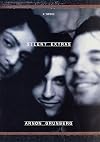
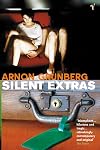
Silent Extras
by Arnon Grunberg
On This Page
Description
Ewald, Broccoli and the exotic Elvira are three young friends on the run - from the horrifying possibility of living mundane lives. They all want just one thing - to be magnificent, on screen or off it, but ideally in front of thousands of people. So Broccoli, self-styled svengali and 'President of the Society of Geniuses', begins Operation Brando, an insanely ambitious plan to make them the biggest stars Hollywood has ever known.Sadly, things don't quite follow this plan and their path to show more global obscurity is by turns hilarious, absurd and tragic. Operation Brando begins badly and gets rapidly worse- Broccoli is only able to secure auditions for his disciples as extras in risible youth theatre productions and lousy commercials. He thinks Ewald would be perfect for the non-speaking role of a spotty kid, for instance, who has only to fall down stairs to get the part, but even this stretches Ewald's talents a little too far. All three suffer badly from the burning need to be somebody else, somebody none of them are quite able to be, and this focus on the abyss separating desire and reality makes for a richly comic and ultimately moving novel by one of Europe's most exciting young authors. show lessTags
Recommendations


Member Reviews
Beste RR. (Books-of-Grunberg adept)
You answered "Try 'Silent Extra's' ", on my question where to start reading Arno Grunberg. A good advice! I liked it.loved it by parts,. it's funny, it's Grunberg's skill to write boredom in a frolic way. (Well, i dont think the characters feel bored, all the way they are trying to aim their goal)
Smart Writing! It is one of the books about loosers, - I read someone said Tirza is a turning point: the book is some more serious and more quiet in writing style - So it's good at least I have read one of these earlier works before I will read Tirza.
It was very entertaining! That a book about youngsters hanging around, (They drink, spent money in restaurants, keep telling themselves they are gonna make it on show more stage, without having any talent of that sort), is capable to keep your attention.
I have read more on this subject, (can't remember a bad example this moment) but Arnon does this very good wayl. Again and again different situations with flat characters (except Ewald Stieg who has some development). Weird situations, with creative solutions, you have to giggle, while you know all they do has no purpose and is frequently dumb behavior.
To have something to compare to: [Titaantjes], The Goldfinch, Murikami (in the sense of I see the writer gets the writing idea day by day, . Making up how things should go on again, in what other way can I continue the idleness fascinatingly for the reader.) Slapstick too. That scene in the toilets with the drunken father ... and later on the hysterical mother who raves to pack suitcases with cutlery.
The story also feels like a roadmovie, but most of the time in one town, Amsterdam.
Of course there is also the life phase of Ewald, desire and friendship, having the mentality being dependent of others, attempts to approach a girl, woman.
The fourth part i liked the less, when Elivira tells about her life in Argentina (what is a bit of a style change) and where they visit their parent's housekeepers. Happily the last part is amusing again. In the end only Ewald has succeeded to get a happy life, gaining his own money, the others have disappearaed, dead or are dearly unhappy losers.
The way the scenes are described is varied: A large part of the book consists of pieces of lively dialogues, interrupted by short reflections by The narrator Ewald. Often a scene is described meticulously and sometimes a whole story has been summarized in one sentence. Such as: (paraphrase) "The sex with Elvira would be one-off."
Here and there some philosophy:
Quote, p143: 'There is nothing that can be ruined as well and thoroughly as desire. Not that it disappears. It becomes even more important, but what you long for becomes increasingly unimportant.'
- I can hardly believe I am the first one who writes a review among 300 members who listed this book -
- remarkable rating, watch: all scores are almost equally represented -
citaat p143 op keuzes:
Broccoli reed zwijgend en veel te hard. Ik durfde niets tegen hem te zeggen en het leek me beter om ook niet tegen Eckstein (B's vader) te praten. De kraag van zijn witte boord was grijs geworden en hij had zijn stropdas niet meer om. Vlak voor Amsterdam richtte hij zich op met een kracht die ik niet meer van hem verwachtte. 'We gaan toch niet naar huis?!" riep hij. "Nee", zei Broccoli, "we gaan nog niet naar huis." _ Ik had natuurlijk moeten zeggen:"Laat mij er maar ergens uit, ik neem wel een bus naar huis." ik wist dat mijn ouders zaten te wachten. maar ik bleef zitten, waarschijnlijk omdat dat het makkelijkste was. Op de vraag waarom mensen bepaalde dingen in hun leven hebben gedaan is vaak maar één antwoord mogelijk: 'Omdat het op dat moment het makkelijkst was.' show less
You answered "Try 'Silent Extra's' ", on my question where to start reading Arno Grunberg. A good advice! I liked it.loved it by parts,. it's funny, it's Grunberg's skill to write boredom in a frolic way. (Well, i dont think the characters feel bored, all the way they are trying to aim their goal)
Smart Writing! It is one of the books about loosers, - I read someone said Tirza is a turning point: the book is some more serious and more quiet in writing style - So it's good at least I have read one of these earlier works before I will read Tirza.
It was very entertaining! That a book about youngsters hanging around, (They drink, spent money in restaurants, keep telling themselves they are gonna make it on show more stage, without having any talent of that sort), is capable to keep your attention.
I have read more on this subject, (can't remember a bad example this moment) but Arnon does this very good wayl. Again and again different situations with flat characters (except Ewald Stieg who has some development). Weird situations, with creative solutions, you have to giggle, while you know all they do has no purpose and is frequently dumb behavior.
To have something to compare to: [Titaantjes], The Goldfinch, Murikami (in the sense of I see the writer gets the writing idea day by day, . Making up how things should go on again, in what other way can I continue the idleness fascinatingly for the reader.) Slapstick too. That scene in the toilets with the drunken father ... and later on the hysterical mother who raves to pack suitcases with cutlery.
The story also feels like a roadmovie, but most of the time in one town, Amsterdam.
Of course there is also the life phase of Ewald, desire and friendship, having the mentality being dependent of others, attempts to approach a girl, woman.
The fourth part i liked the less, when Elivira tells about her life in Argentina (what is a bit of a style change) and where they visit their parent's housekeepers. Happily the last part is amusing again. In the end only Ewald has succeeded to get a happy life, gaining his own money, the others have disappearaed, dead or are dearly unhappy losers.
The way the scenes are described is varied: A large part of the book consists of pieces of lively dialogues, interrupted by short reflections by The narrator Ewald. Often a scene is described meticulously and sometimes a whole story has been summarized in one sentence. Such as: (paraphrase) "The sex with Elvira would be one-off."
Here and there some philosophy:
Quote, p143: 'There is nothing that can be ruined as well and thoroughly as desire. Not that it disappears. It becomes even more important, but what you long for becomes increasingly unimportant.'
- I can hardly believe I am the first one who writes a review among 300 members who listed this book -
- remarkable rating, watch: all scores are almost equally represented -
citaat p143 op keuzes:
Broccoli reed zwijgend en veel te hard. Ik durfde niets tegen hem te zeggen en het leek me beter om ook niet tegen Eckstein (B's vader) te praten. De kraag van zijn witte boord was grijs geworden en hij had zijn stropdas niet meer om. Vlak voor Amsterdam richtte hij zich op met een kracht die ik niet meer van hem verwachtte. 'We gaan toch niet naar huis?!" riep hij. "Nee", zei Broccoli, "we gaan nog niet naar huis." _ Ik had natuurlijk moeten zeggen:"Laat mij er maar ergens uit, ik neem wel een bus naar huis." ik wist dat mijn ouders zaten te wachten. maar ik bleef zitten, waarschijnlijk omdat dat het makkelijkste was. Op de vraag waarom mensen bepaalde dingen in hun leven hebben gedaan is vaak maar één antwoord mogelijk: 'Omdat het op dat moment het makkelijkst was.' show less
Grunberg is one of the young authors who have risen fast during the second half of the nineties. He actually lives in NY, his books are popular amongst school kids, who were bored with artsy fartsy literature and enjoy his straight forward writing, that has much more in it than several of them realise. His debut novel 'Blue Mondays' was translated into at least a dozen languages and praised loud by well-known critics. It's the only book by him I haven't read yet, so I can't judge myself. He was compared with Salinger and Kerouac. One could choose worse comparisons.
Figuranten is a story about three friends. The main character Ewald Krieg, his friend Broccoli and a girl from Argentina, Elvira. The three of them decide to become stars. show more They invent several ways of doing so, but apart from the occasional sidekick role in small plays or promotional films, they can't find a real way to become famous. They live on the money Broccoli's dad has. In the meantime they hang around the in places, walk the streets, buy Italian papers, not to read them, but because it is good for their image and invent more incredible projects. They practise their 'De Niro'-looks, the world always needs De Niro's, so they will be the next ones.
Obviously nothing really happens, hence the Salinger comparison I guess, but it is still good as I am eager to find out what won't happen next. I enjoyed reading it, don't know if it has been translated yet. I am still not convinced though that Grunberg is the best the Dutch have to offer. I can come up with a few other names, who haven't been translated yet that, in my humble opinion, deserve that praise more than he does. But I am looking forward to his next book anyway. show less
Figuranten is a story about three friends. The main character Ewald Krieg, his friend Broccoli and a girl from Argentina, Elvira. The three of them decide to become stars. show more They invent several ways of doing so, but apart from the occasional sidekick role in small plays or promotional films, they can't find a real way to become famous. They live on the money Broccoli's dad has. In the meantime they hang around the in places, walk the streets, buy Italian papers, not to read them, but because it is good for their image and invent more incredible projects. They practise their 'De Niro'-looks, the world always needs De Niro's, so they will be the next ones.
Obviously nothing really happens, hence the Salinger comparison I guess, but it is still good as I am eager to find out what won't happen next. I enjoyed reading it, don't know if it has been translated yet. I am still not convinced though that Grunberg is the best the Dutch have to offer. I can come up with a few other names, who haven't been translated yet that, in my humble opinion, deserve that praise more than he does. But I am looking forward to his next book anyway. show less
Ratings
Members
- Recently Added By
Author Information

Some Editions
Awards and Honors
Awards
Work Relationships
Has as a student's study guide
Common Knowledge
- Canonical title
- Silent Extras
- Original title
- Figuranten
- Original publication date
- 1997
- People/Characters*
- Ewald Stanislas Krieg; Broccoli Eckman; Elvira Lopez
- Important places
- Amsterdam
- Epigraph*
- Jammer dat je met een lijkwagen naar het paradijs moet.
Stanislaw Jerzy Lec - Dedication*
- Voor Ewa
die geprobeerd heeft een man van me te maken
die geprobeerd heeft een schrijver van me te maken
de geprobeerd heeft een beter mens van me te maken
en met warme herinneringen aan haar bietensoep - First words*
- Ik ben de geldwolf, makelaar in krotten.
- Quotations
- Er is niets dat zo goed en grondig verpest kan worden als verlangen. Niet dat het verdwijnt. Het wordt zelfs steeds belangrijker, maar datgene waarnaar je verlangt wordt steeds onbelangrijker. '
Broccoli reed zwijgend en veel te hard. Ik durfde niets tegen hem te zeggen en het leek me beter om ook niet tegen Eckstein (B's vader) te praten. De kraag van zijn witte boord was grijs geworden en hij had zijn stropdas niet... (show all) meer om. Vlak voor Amsterdam richtte hij zich op met een kracht die ik niet meer van hem verwachtte. 'We gaan toch niet naar huis?!" riep hij. "Nee", zei Broccoli, "we gaan nog niet naar huis." _ Ik had natuurlijk moeten zeggen:"Laat mij er maar ergens uit, ik neem wel een bus naar huis." ik wist dat mijn ouders zaten te wachten. Maar ik bleef zitten, waarschijnlijk omdat dat het makkelijkste was. Op de vraag waarom mensen bepaalde dingen in hun leven hebben gedaan is vaak maar één antwoord mogelijk: 'Omdat het op dat moment het makkelijkst was.' - Last words*
- (Click to show. Warning: May contain spoilers.)Soms zie ik op straat iemand aan zijn schoen prutsen en dan denk ik: Dat is er een.
- Original language
- Dutch
*Some information comes from Common Knowledge in other languages. Click "Edit" for more information.
Classifications
- Genres
- General Fiction, Fiction and Literature
- DDC/MDS
- 839.31364 — Literature & rhetoric German & related literatures Other Germanic literatures Netherlandish literatures Dutch Dutch fiction 20th Century 1945-1999
- LCC
- PT5881.17 .R96 .F54 — Language and Literature German, Dutch and Scandinavian literatures Dutch literature Individual authors or works 1961-2000
- BISAC
Statistics
- Members
- 374
- Popularity
- 83,776
- Reviews
- 2
- Rating
- (3.13)
- Languages
- 5 — Czech, Dutch, English, German, Italian
- Media
- Paper
- ISBNs
- 17