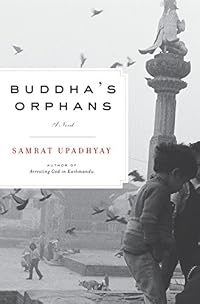
Buddha's Orphans
by Samrat Upadhyay
On This Page
Description
Raja and Nilu are fated to fall in love. Follow their story across the globe and through generations to see if, perhaps, old bends in a family tree may be righted in future branches.Tags
Recommendations















Member Reviews
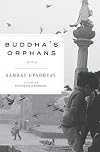
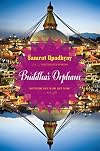
I enjoyed this book quite a bit. I am, however, surprised by some of the blurbs found on the cover:
I didn't have any sense whatsoever of Checkhov's modernist style in this nor would the word grandeur have come to mind. I'm not sure why there is this urge to make this into a Russian novel when it works perfectly well as a Nepalese one.
At its heart this is a love story between Nilu and Raja — a life-long but perfectly ordinary one insofar as such can occur across class/economic boundaries (I would disregard the "epic love" hyperbole on the cover as well) — but it also reaches both backwards a generation and show more forwards a generation to show strong parallels in the lives of their parents and children. However, the love story is just the vehicle for several ideas that seemed woven through the story.
I know very little about Buddhist philosophy but the consciously cyclical nature of this story seems very apropos for a tale that never steps very far from the culture of the Indian subcontinent. I took away the message that, however much the specifics of misfortune or adversity may seem unique to those encountering them, the fundamental experience has been repeated many times and how you meet the trial is part of what shapes the ultimate outcome. Further, those actions we take cause ripples out through the lives of others across time and geography in a general connectedness that we may not always perceive.
I found the women, by far, the most interesting characters. The arc from Mohini to Nilu to Ranjana to Kali, although not told chronologically, was the most powerful, both in terms of characterization and the underlying ideas. The men in the story, while as colorful and alive, are weaker people and their presence doesn't loom as large. Part of this is that cultural misogyny plays such an important role and the women's reactions — be it acceptance or struggle — form so much of the fabric of the story that it's hard not to see their roles as the backbone.
For me, Upadhyay is a quiet writer. By that I mean that I wasn't conscious of his presence all the time. His characters were living and breathing and, generally, all I could hear was their story. They are, by turns, humorous, sad, encouraging and heartbreaking but they are always engaging. Where this fell short occasionally was in the backdrop. It takes place from the 1960s to the present, a very tumultuous time politically in Nepal, and Upadhyay seems determined to insert a note of each political shift...even when it didn't seem to have that much relevance to his foreground story and felt somewhat bolted on.
I really enjoyed this book, especially the second half, becoming more engrossed as it went along. I can see why Upadhyay's other works have won awards and look forward to trying them someday.
Recommended. show less
...deserving of his acclaim as a Buddhist Chekhov...
...the sweep and romantic grandeur of a great old-fashioned Russian novel...
I didn't have any sense whatsoever of Checkhov's modernist style in this nor would the word grandeur have come to mind. I'm not sure why there is this urge to make this into a Russian novel when it works perfectly well as a Nepalese one.
At its heart this is a love story between Nilu and Raja — a life-long but perfectly ordinary one insofar as such can occur across class/economic boundaries (I would disregard the "epic love" hyperbole on the cover as well) — but it also reaches both backwards a generation and show more forwards a generation to show strong parallels in the lives of their parents and children. However, the love story is just the vehicle for several ideas that seemed woven through the story.
I know very little about Buddhist philosophy but the consciously cyclical nature of this story seems very apropos for a tale that never steps very far from the culture of the Indian subcontinent. I took away the message that, however much the specifics of misfortune or adversity may seem unique to those encountering them, the fundamental experience has been repeated many times and how you meet the trial is part of what shapes the ultimate outcome. Further, those actions we take cause ripples out through the lives of others across time and geography in a general connectedness that we may not always perceive.
I found the women, by far, the most interesting characters. The arc from Mohini to Nilu to Ranjana to Kali, although not told chronologically, was the most powerful, both in terms of characterization and the underlying ideas. The men in the story, while as colorful and alive, are weaker people and their presence doesn't loom as large. Part of this is that cultural misogyny plays such an important role and the women's reactions — be it acceptance or struggle — form so much of the fabric of the story that it's hard not to see their roles as the backbone.
For me, Upadhyay is a quiet writer. By that I mean that I wasn't conscious of his presence all the time. His characters were living and breathing and, generally, all I could hear was their story. They are, by turns, humorous, sad, encouraging and heartbreaking but they are always engaging. Where this fell short occasionally was in the backdrop. It takes place from the 1960s to the present, a very tumultuous time politically in Nepal, and Upadhyay seems determined to insert a note of each political shift...even when it didn't seem to have that much relevance to his foreground story and felt somewhat bolted on.
I really enjoyed this book, especially the second half, becoming more engrossed as it went along. I can see why Upadhyay's other works have won awards and look forward to trying them someday.
Recommended. show less
In his new novel, Buddha's Orphans, Samrat Upadhyay attempts a very ambitious literary canvas. He sets out to portray nothing less than the full social and emotional history of modern urban Nepal through the lives of two residents of Katmandu. The novel revolves around the story of Raja and Nilu, two orphans who become friends as children and later fall in love and marry. Raja is a boy abandoned as an infant and raised by an odd succession of surrogate mothers. Nilu is technically an orphan: she loses her father at a young age and must parent herself as a result of her mother's chronic alcoholism. The book covers the period from 1962 to the present day—the last half century of Nepalese history. Through the lives of these two main show more characters, the author gives his readers the opportunity to experience the social, political, and emotional history of Nepal during an unprecedented period of social upheaval. The changes that take place in the lives of these characters mirror the upheavals that Nepal experiences adapting to the modern world.
Nepal is therefore another character in this novel—an orphan on the world's stage. Raja, Nilu and Nepal, these are the three orphans under the umbrella of the novel's exotic title. "Buddha's Orphans" is a realistic and understated love story, but much more, it is a determined thematic and historical tour de force that succeeds admirably.
The novel has a classic structure. There are two books, each with three parts. They develop like interconnected three-act plays. The first book takes up more than three quarters of the text and covers Raja from his infancy through his young adulthood. During this first book, we observe Raja as he careens through life—from a physically deprived and needy infant, on to a psychologically damaged and detached child, then on to a seething rebellious adolescence, and finally into a muddled young adulthood. In this first book, Raja is portrayed as a disagreeable and unlikable main character. On the other hand, Nilu quickly earns the reader's care and devotion. It is her story that compels the reader to finish the first part of the book. The first book is also enhanced by a wide cast of fascinating secondary characters.
The second book covers Raja and Nilu during their mature years. We learn that Raja has changed. He has come to terms with the demons that haunted his earlier life. He has developed into an admirable, successful, modern, and psychologically intact man. Finally, there is balance and stability in Raja and Nilu's lives.
The book is a very realistic slice of Nepalese life. The writing is outstanding. The emphasis is on storytelling and character development. There is nothing particularly outlandish or thrilling about the plot. These are everyday Nepalese people trying to adapt to a chaotic period of change.
This book is probably too subtle and literary to have wide popular appeal, but I recommend it highly to all readers who are interested in contemporary world literature. I look forward to more books by this talented author. show less
Nepal is therefore another character in this novel—an orphan on the world's stage. Raja, Nilu and Nepal, these are the three orphans under the umbrella of the novel's exotic title. "Buddha's Orphans" is a realistic and understated love story, but much more, it is a determined thematic and historical tour de force that succeeds admirably.
The novel has a classic structure. There are two books, each with three parts. They develop like interconnected three-act plays. The first book takes up more than three quarters of the text and covers Raja from his infancy through his young adulthood. During this first book, we observe Raja as he careens through life—from a physically deprived and needy infant, on to a psychologically damaged and detached child, then on to a seething rebellious adolescence, and finally into a muddled young adulthood. In this first book, Raja is portrayed as a disagreeable and unlikable main character. On the other hand, Nilu quickly earns the reader's care and devotion. It is her story that compels the reader to finish the first part of the book. The first book is also enhanced by a wide cast of fascinating secondary characters.
The second book covers Raja and Nilu during their mature years. We learn that Raja has changed. He has come to terms with the demons that haunted his earlier life. He has developed into an admirable, successful, modern, and psychologically intact man. Finally, there is balance and stability in Raja and Nilu's lives.
The book is a very realistic slice of Nepalese life. The writing is outstanding. The emphasis is on storytelling and character development. There is nothing particularly outlandish or thrilling about the plot. These are everyday Nepalese people trying to adapt to a chaotic period of change.
This book is probably too subtle and literary to have wide popular appeal, but I recommend it highly to all readers who are interested in contemporary world literature. I look forward to more books by this talented author. show less
Topping 400 pages, this novel is the saga of a family created from the forbidden love between Nilu, who is fairly wealthy, and the orphaned Raja who was raised by a servant and then by a rich man and his unstable wife. The novel addresses themes of the echoing impact of the caste system, repetition of patterns through generations, and the survival of connections after death. There were times when I had mixed feelings about the novel and wasn't quite sure whether to rate it three or four stars. Ultimately the quality of the writing and the fact that it kept me riveted, even when I found myself annoyed with it, rated four stars.
The writing is spectacular. It vividly brings to life Nepalese culture. The love story between Raja and Nilu is show more engaging. At several points during the novel the behavior of some of the characters becomes very, well, uncharacteristic. This happens, for the most part, around tragedy that occurs, but I found the reactions strange at times. There is then a fairly large jump in time which results in the feeling that part of the story has been untold. Salient points of Nepalese history are visited throughout the novel; however, they are inserted in a somewhat awkward way and with a couple of exceptions, we never really see how these events impact the characters we've come to care about.
Past generations become connected to present in a way that is very spiritual, almost supernatural. This may put off some readers who appreciate a more logical, linear storyline, but I felt the author pulled it off well and it lent an element of an almost magical feeling to the story, tying everything together. The final segment of the novel has an urgently suspenseful feeling to it, drawing it to a satisfying conclusion. In summary, there are some bumps in the road here, but the love story, gorgeous writing, and fascinating glimpses into Nepalese culture make this a very worthwhile read. show less
The writing is spectacular. It vividly brings to life Nepalese culture. The love story between Raja and Nilu is show more engaging. At several points during the novel the behavior of some of the characters becomes very, well, uncharacteristic. This happens, for the most part, around tragedy that occurs, but I found the reactions strange at times. There is then a fairly large jump in time which results in the feeling that part of the story has been untold. Salient points of Nepalese history are visited throughout the novel; however, they are inserted in a somewhat awkward way and with a couple of exceptions, we never really see how these events impact the characters we've come to care about.
Past generations become connected to present in a way that is very spiritual, almost supernatural. This may put off some readers who appreciate a more logical, linear storyline, but I felt the author pulled it off well and it lent an element of an almost magical feeling to the story, tying everything together. The final segment of the novel has an urgently suspenseful feeling to it, drawing it to a satisfying conclusion. In summary, there are some bumps in the road here, but the love story, gorgeous writing, and fascinating glimpses into Nepalese culture make this a very worthwhile read. show less
There’s a bracing quality to how unceremoniously Buddha’s Orphans dumps you right into the action of Kathmandu: “Raja’s mother had abandoned him on the parade ground of Tundikhel on a misty morning before the Kathmandu had awakened, then drowned herself in Rani Pokhari, half a kilometer north… ”
Told mainly through the women who come to love Raja, most notably Kaki, the fierce street corn seller who surprises even herself with how quickly she takes on the orphan as her own, and later Nilu, the idealistic young woman who harbors a lingering fascination with the servant boy she once taught to read, the story sweeps through several decades of human drama- Life, Death, Revolution, and all that familiar ilk.
It’s a classic show more setup. Upadhayay’s got a deft hand with matter-of-fact humor and character, and in the best passages, there’s a great observational specificity of the little everyday beats that keeps it all fresh.
What he has harder problem with is maintaining a sense of momentum with which to make his point. The central character of Raja remains quite a cipher and never particularly compelling, and his weakness at the thematic crux results in lots of meandering story replete with awkward time jumps and point-of-view changes.
In fact, I find it a missed opportunity to not focus the novel solely on Nilu, whose empathy and strength and (perhaps most importantly) ambition could’ve leant a much greater incisiveness and statement to the proceedings. She’s a singular creation and the drop off in the latter third of the novel feels antithetical to her can-do, or rather, must-do nature. At its heart, this is a tale about the inevitable repetition of human history and the bonds of love that tie us to this fate. In such an idea, there’s a fine tonal balance between subtle acknowledgment and the flippant replaceability, and once or twice too often there’s a stagnancy that tips it all towards the later.
But still I applaud the attempt at such universality. The characters of Buddha’s Orphan’s often wander its streets in labyrinthine fashion, almost subconsciously aware of the tapestry they’re weaving and being woven into at a single intersection. I won’t soon forget that alive feeling.
**I received Buddha’s Orphans from the Goodreads’s First Reads. show less
Told mainly through the women who come to love Raja, most notably Kaki, the fierce street corn seller who surprises even herself with how quickly she takes on the orphan as her own, and later Nilu, the idealistic young woman who harbors a lingering fascination with the servant boy she once taught to read, the story sweeps through several decades of human drama- Life, Death, Revolution, and all that familiar ilk.
It’s a classic show more setup. Upadhayay’s got a deft hand with matter-of-fact humor and character, and in the best passages, there’s a great observational specificity of the little everyday beats that keeps it all fresh.
What he has harder problem with is maintaining a sense of momentum with which to make his point. The central character of Raja remains quite a cipher and never particularly compelling, and his weakness at the thematic crux results in lots of meandering story replete with awkward time jumps and point-of-view changes.
In fact, I find it a missed opportunity to not focus the novel solely on Nilu, whose empathy and strength and (perhaps most importantly) ambition could’ve leant a much greater incisiveness and statement to the proceedings. She’s a singular creation and the drop off in the latter third of the novel feels antithetical to her can-do, or rather, must-do nature. At its heart, this is a tale about the inevitable repetition of human history and the bonds of love that tie us to this fate. In such an idea, there’s a fine tonal balance between subtle acknowledgment and the flippant replaceability, and once or twice too often there’s a stagnancy that tips it all towards the later.
But still I applaud the attempt at such universality. The characters of Buddha’s Orphan’s often wander its streets in labyrinthine fashion, almost subconsciously aware of the tapestry they’re weaving and being woven into at a single intersection. I won’t soon forget that alive feeling.
**I received Buddha’s Orphans from the Goodreads’s First Reads. show less
Raja and Nilu are both orphans. Raja was abandoned as an infant just before his mother drowned herself, and Nilu was being brought up by a single mother who was often lost in the haze of alcohol and drugs. As children the two meet, he as the adopted son of a servant, and she as the daughter of the mistress of the house. It's an odd little relationship for the playmates at first, and Nilu begins to teach her little friend how to read. Theirs will be an epic love.
Set in Nepal during the later half of the 20th century, [Buddha's Orphans] is a tale of epic love—or perhaps an epic tale of a love that reaches across decades, caste, and anything else which might stand in its way. While reading it, Pasternak's [Doctor Zhivago] came to mind show more more than a few times, and while this novel doesn't reach the intensity of the classic, it certainly makes a brave attempt. His characters are superb, his stories—their stories—are set against the upheavals of Kathmandu as Nepal transforms itself from Monarchy to Democracy. The background-foreground connection doesn't work quite as well as it was probably intended, but I would not call it a failure as one is certainly transported to Nepal (and what do most of us know of Nepal?)
We've all read epic stories of love, set against war or other turmoil, but the most unusual thing about this epic love story is the very distinctive cyclical sense of it. Upadhyay has woven multiple stories in a way that suggests underpinnings of Hindu philosophy - that time is eternal and cyclical, a neverending cycle of birth, death, rebirth. This cyclical sense to the story was what really stayed with me after I had finished reading the book and perhaps it is this that gives the love story it's monumental feel.
*I also loved the author's previous novel, The Guru of Love. show less
Set in Nepal during the later half of the 20th century, [Buddha's Orphans] is a tale of epic love—or perhaps an epic tale of a love that reaches across decades, caste, and anything else which might stand in its way. While reading it, Pasternak's [Doctor Zhivago] came to mind show more more than a few times, and while this novel doesn't reach the intensity of the classic, it certainly makes a brave attempt. His characters are superb, his stories—their stories—are set against the upheavals of Kathmandu as Nepal transforms itself from Monarchy to Democracy. The background-foreground connection doesn't work quite as well as it was probably intended, but I would not call it a failure as one is certainly transported to Nepal (and what do most of us know of Nepal?)
We've all read epic stories of love, set against war or other turmoil, but the most unusual thing about this epic love story is the very distinctive cyclical sense of it. Upadhyay has woven multiple stories in a way that suggests underpinnings of Hindu philosophy - that time is eternal and cyclical, a neverending cycle of birth, death, rebirth. This cyclical sense to the story was what really stayed with me after I had finished reading the book and perhaps it is this that gives the love story it's monumental feel.
*I also loved the author's previous novel, The Guru of Love. show less
I wasn't sure whether I would like "Buddha's Orphans" or not. The thing that most appealed about the book was the setting in Nepal. It turns out that I love the book and that it has been hard to put down.
The story begins with Raja, an infant discovered by Bokey Ba on the streets. He is soon taken in by Kaki, and then stolen from her. As you begin reading the story, you imgine that it will continue through Raja's life and that the story will continue to center around him, but this is not the case. The story actually centers around Nilu, who enters the story about page 47 in an unusual way. I congratulate Samrat Upadhyay for bringing Nilu into the story in the way that he did - you have no idea that she is to become the main character in show more this story.
I love "Buddha's Orphans" and highly recommend it! show less
The story begins with Raja, an infant discovered by Bokey Ba on the streets. He is soon taken in by Kaki, and then stolen from her. As you begin reading the story, you imgine that it will continue through Raja's life and that the story will continue to center around him, but this is not the case. The story actually centers around Nilu, who enters the story about page 47 in an unusual way. I congratulate Samrat Upadhyay for bringing Nilu into the story in the way that he did - you have no idea that she is to become the main character in show more this story.
I love "Buddha's Orphans" and highly recommend it! show less
Buddha's Orphans is a circuitous story that takes the reader through the end of one generation to four generations later of a Nepali family. Focusing most strongly on the cultural expectations imposed by Nepali famlies on their children (i.e. arranged marriages), you can feel the world changing through each generation. The second theme of the book focuses on the strong (and not so strong) bonds of family. A sprinkling of politics is thrown in as well.
Most of the book focuses on Raja and Nilu. Raja is abandoned by his mother in a city park while she goes on to drown herself. Raja, an orphaned infant is turned away at the local orphanage. The poor street vendor, Kaki, rejected by her own son, sees raising Raja as a way to correct any show more mistakes she's made in the past with her grown son, and struggles to raise him despite her very precarious economic situation.
From this point, Rajas life takes twists and turns through life, but by his side from childhood is his friend and true love Nilu. Their story together takes center stage throughout most of the book. The youthful love bonds that these two created were believable and I found myself reflecting on the crushes/close friendships I had with boys when I was a child.
Ultimately, can Raja's birth mother's mistake ever be rectified through future generations? That is the question the author works towards up until the final chapter.
The book does have some awkward sexual situations. Nothing really gets steamy or sensual. The author glosses over most sexual situations with simple to the point language.
Overall, I enjoyed the book but would liked more focus on Kaki and her first six years raising Raja. She is quite a character, my favorite of the book. show less
Most of the book focuses on Raja and Nilu. Raja is abandoned by his mother in a city park while she goes on to drown herself. Raja, an orphaned infant is turned away at the local orphanage. The poor street vendor, Kaki, rejected by her own son, sees raising Raja as a way to correct any show more mistakes she's made in the past with her grown son, and struggles to raise him despite her very precarious economic situation.
From this point, Rajas life takes twists and turns through life, but by his side from childhood is his friend and true love Nilu. Their story together takes center stage throughout most of the book. The youthful love bonds that these two created were believable and I found myself reflecting on the crushes/close friendships I had with boys when I was a child.
Ultimately, can Raja's birth mother's mistake ever be rectified through future generations? That is the question the author works towards up until the final chapter.
The book does have some awkward sexual situations. Nothing really gets steamy or sensual. The author glosses over most sexual situations with simple to the point language.
Overall, I enjoyed the book but would liked more focus on Kaki and her first six years raising Raja. She is quite a character, my favorite of the book. show less
Members
- Recently Added By
Author Information

8+ Works 610 Members
Samrat Upadhyay was born and raised in Kathmandu and came to the United States at age twenty-one. His work has appeared in The Best American Short Stories and The Best of the Fiction Workshops. He lives with his wife and daughter near Cleveland, where he teaches at Baldwin-Wallace College
Awards and Honors
Awards
Notable Lists
Common Knowledge
- Canonical title
- Buddha's Orphans
- Original publication date
- 2010
- People/Characters
- Raja; Nilu; Kaki
- Important places
- Nepal; Kathmandu, Nepal
- First words
- Raja’s mother had abandoned him on the parade ground of Tundikhel on a misty morning before the Kathmandu had awakened, then drowned herself in Rani Pokhari, half a kilometer north…
Classifications
Statistics
- Members
- 76
- Popularity
- 414,480
- Reviews
- 9
- Rating
- (3.93)
- Languages
- English
- Media
- Paper, Ebook
- ISBNs
- 3
- UPCs
- 1
- ASINs
- 4