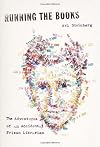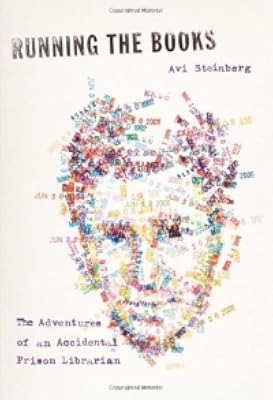
Running the Books: The Adventures of an Accidental Prison Librarian
by Avi Steinberg
On This Page
Description
In this captivating memoir, Steinberg, a Harvard grad and struggling obituary writer, spends two years as a librarian and writing instructor at a Boston prison, attracting con men, minor prophets, ghosts, and an assortment of quirky regulars searching for the perfect book and a connection to the outside world.Tags
Recommendations




Member Recommendations
Member Reviews
Completely trumps the last librarian-memoir I read, which relied on ridiculing and complaining about library clients and co-workers. Running the Books is well written and compelling. Not just about working in a library, but complexity of serving prison inmates.
Running through this memoir by a greenhorn librarian/creative-writing teacher in a Boston prison is a subliminal meditation on the power of words to liberate, isolate, connive, cajole, and dispute.
‘During a debate with a fellow hustler, C.C. Too Sweet scored major points when he said, “With all due, and undue, respect, the difference between me and you is the following: You are nonsensical while I, my brother, am ineffable. In case you ain’t mastered your diction, I’ll break that down for you—ineffable, meaning: I can not, and will not, be effed with.”’
‘During a debate with a fellow hustler, C.C. Too Sweet scored major points when he said, “With all due, and undue, respect, the difference between me and you is the following: You are nonsensical while I, my brother, am ineffable. In case you ain’t mastered your diction, I’ll break that down for you—ineffable, meaning: I can not, and will not, be effed with.”’
I find it hard to describe this book. When I had finished it, I knew I had been allowed a glimpse of something profound. But when I started it, I spent the first 100 or so pages wandering through the peripatetic mind of the author as he lets us into his rather jumbled mind and wondering if he was EVER going to get to the point. A self-described refugee from Yeshiva and then Harvard- where he wrote a dissertation on something to do with the symbolism of carrots in Bugs Bunny stories, he finds himself in his early 20's barely eeking out a living writing obituaries for the Boston Globe. When he sees an advertisement for a prison librarian job offering full-time employment AND BENEFITS, he applies.
The book is full of wonders. The first show more wonder is that he is makes it through the drug screening and the interview process. The second wonder is that he is hired. The third is that he is not killed by any of the inmates. And the fourth is that he not only figures out what the job is, he also figures out who he is and what he is capable of accomplishing in the job.
The final wonder is that I finished the book and loved it. I realize now that the book mirrors the author's life...disorganized and wandering at the beginning, questioning and tentative as he begins the job, and finally poignant, moving and inspirational at the end, as he finds ways to bring something positive into the lives of many of his 'patrons.'
There are extraordinarily touching stories in here. For those of us who are librarians, who subscribe to an ethic of providing service and not passing judgments, this is a frustrating book. Steinberg never went to library school, he never worked in a library--although as a Harvard grad he certainly was familiar with the library's resources. In the prison setting, he finds himself faced with rules and regulations that severely impact his ability to provide traditional library service; he is required to distrust, to question, to doubt, and to view each patron as a potential problem. Somehow, he manages to maintain his humanity while bringing some humaneness to the job and to his patrons.
While the library part of the story is interesting, and gives us a glimpse of the inner workings of a system most of us hope never to encounter, it is in the role of Creative Writing teacher that Steinberg shines. The prison library is part of the Education Department mandated for prisons. So Steinberg's job description included teaching this class to inmates. His Harvard education stands him well here, because he has inmates reading Proust, Plata, Plath and writing, and writing, and writing. One inmate is writing his memoirs, another writes poetry, another a letter to her son. The ability to express themselves in these classes is often the only way many of them have to communicate what has been bottled up for a lifetime. His mentoring helps them unlace their tightly held emotions.
As I said, when I closed the book, I had to stop and take a deep breath. It was a powerful, deeply moving story- a view of librarianship that most of us will never experience. It is a VERY GOOD book. It is encouraging to know that such talented and feeling young people are coming into the work force. It helps those of us in our 'golden years' sleep more soundly. show less
The book is full of wonders. The first show more wonder is that he is makes it through the drug screening and the interview process. The second wonder is that he is hired. The third is that he is not killed by any of the inmates. And the fourth is that he not only figures out what the job is, he also figures out who he is and what he is capable of accomplishing in the job.
The final wonder is that I finished the book and loved it. I realize now that the book mirrors the author's life...disorganized and wandering at the beginning, questioning and tentative as he begins the job, and finally poignant, moving and inspirational at the end, as he finds ways to bring something positive into the lives of many of his 'patrons.'
There are extraordinarily touching stories in here. For those of us who are librarians, who subscribe to an ethic of providing service and not passing judgments, this is a frustrating book. Steinberg never went to library school, he never worked in a library--although as a Harvard grad he certainly was familiar with the library's resources. In the prison setting, he finds himself faced with rules and regulations that severely impact his ability to provide traditional library service; he is required to distrust, to question, to doubt, and to view each patron as a potential problem. Somehow, he manages to maintain his humanity while bringing some humaneness to the job and to his patrons.
While the library part of the story is interesting, and gives us a glimpse of the inner workings of a system most of us hope never to encounter, it is in the role of Creative Writing teacher that Steinberg shines. The prison library is part of the Education Department mandated for prisons. So Steinberg's job description included teaching this class to inmates. His Harvard education stands him well here, because he has inmates reading Proust, Plata, Plath and writing, and writing, and writing. One inmate is writing his memoirs, another writes poetry, another a letter to her son. The ability to express themselves in these classes is often the only way many of them have to communicate what has been bottled up for a lifetime. His mentoring helps them unlace their tightly held emotions.
As I said, when I closed the book, I had to stop and take a deep breath. It was a powerful, deeply moving story- a view of librarianship that most of us will never experience. It is a VERY GOOD book. It is encouraging to know that such talented and feeling young people are coming into the work force. It helps those of us in our 'golden years' sleep more soundly. show less
Running the Books offers uneven writing and poor editing. I was surprised to see the publisher is a Doubleday imprint. Countless times as I was reading it, my roommate interrupted me to ask what I was laughing at. A few examples follow.
In reference to an inmate employee partaking in a vicious assault: "How, I wondered, was a person so concerned about hurting paperback books able to commit such violence to another human being? I personally didn't know too many vegetarians who were capable of that." hE OBVIOUSLY MY CAT TURNED ON THE CAPS LOCK, SORRY He obviously hasn't met me, or looked me up on any pertinent Clerk of Court websites. I can answer his question, though: because we don't attack books or eat people.
Regarding an inmate who wants to become a master chef when he gets out: "I considered bringing in some basic herbs and spices for Chudney. Kick things off with some fresh basil, rosemary, thyme. But I quickly nixed the idea. I could already see Officer Chuzzlewit's report: Sir, today at 1450, I did see the facility's librarian hand inmate Franklin 0506891 an unmarked plastic baggie full of a green, leafy substance. They did proceed to exchange a handshake usually used by gangs. He'd buy off three inmates to testify that I'd sold them Oxycontin in the library, that I'd delivered it in a hollowed-out James Patterson novel. I'd be in handcuffs before supper." Because Oxy, in its street form, is a leafy green substance. (This idea of "three inmates" backing up an accusation of him selling, specifically, Oxycontin, is part of a particular paranoia Steinberg has, and surfaces multiple times in the book as part of his fears involving a feud with a CO.)
Describing the day he "cracks": "Because of my bad back, I hadn't slept the night before and was already in a state. It was 7:40 a.m. Twenty minutes until the day's first inmates were due in the library. Not enough time to get my cereal: looked like I'd be having revenge for breakfast." This last sentence seems to have been written without irony.
Steinberg isn't a bad writer, he's not a bad prison librarian, and he's definitely not a bad guy. There are some nice passages in the book (apparently I didn't bother to mark any of those with a shredded Winnie-the-Pooh sticky note -- only shit that made me laugh out loud), and he definitely conveys his inner conflicts and his true character, which can be difficult to do. The book was just wildly uneven, the editing so bad the reader has to edit in her head as she goes along in order to make sense of the pages, and all this makes it an unpleasant experience for the consumer. show less
In reference to an inmate employee partaking in a vicious assault: "How, I wondered, was a person so concerned about hurting paperback books able to commit such violence to another human being? I personally didn't know too many vegetarians who were capable of that." hE OBVIOUSLY MY CAT TURNED ON THE CAPS LOCK, SORRY He obviously hasn't met me, or looked me up on any pertinent Clerk of Court websites. I can answer his question, though: because we don't attack books or eat people.
Regarding an inmate who
Describing the day he "cracks": "Because of my bad back, I hadn't slept the night before and was already in a state. It was 7:40 a.m. Twenty minutes until the day's first inmates were due in the library. Not enough time to get my cereal: looked like I'd be having revenge for breakfast." This last sentence seems to have been written without irony.
Steinberg isn't a bad writer, he's not a bad prison librarian, and he's definitely not a bad guy. There are some nice passages in the book (apparently I didn't bother to mark any of those with a shredded Winnie-the-Pooh sticky note -- only shit that made me laugh out loud), and he definitely conveys his inner conflicts and his true character, which can be difficult to do. The book was just wildly uneven, the editing so bad the reader has to edit in her head as she goes along in order to make sense of the pages, and all this makes it an unpleasant experience for the consumer. show less
I remember years ago seeing two photos side by side in the New York Times Magazine. One was of a dilapidated school library in a Boston Public school with peeling paint, worn carpet and mismatched furniture. The other was the library in the newly built Boston jail with matching furniture, more space and brighter. This book resonates with me. The inmates he writes about illustrates what happens to the children we throw away, who don't achieve for no fault of their own. But because of poverty, failing schools, and parents who do not or cannot care for them, they end up in prisons. Avi Steinberg points out: "All across America public libraries were, and are, being shut down, while prisons-with libraries- were and are, being built." show more Steinberg shares his experiences and his own background with the reader in a compassionate manner. He tells his story with such grace and kindness for the people he worked with, who are not always the most sympathetic. I look forward to reading his next book. show less
Well, I thought this would be better. The author lost major points by 1) calling Cleveland a 'wasteland,' and 2) referring to a library science degree with what could be contempt, but is probably just ignorance. An English major does not a Librarian make.
Even though I disliked the author's premise and assumptions (and at times tone), I did really like the characters in the book and how he describes their effect on him. The shining moment was the realization that he (and many others) had been glamorizing the pimp/ho dynamic when in reality it is an ugly, ugly thing.
Even though I disliked the author's premise and assumptions (and at times tone), I did really like the characters in the book and how he describes their effect on him. The shining moment was the realization that he (and many others) had been glamorizing the pimp/ho dynamic when in reality it is an ugly, ugly thing.
As an unemployed Harvard graduate, Steinberg found himself taking a job as a librarian in a maximum-security prison. His memoir details his adjustment to prison life and the relationships he forms with the inmates. Steinberg quickly discovers that the library is a lifeline for inmates, and that intricate hierarchies dominate prison life. He finds himself involved in elaborate turn wars with some of the guards, and emotionally invested with the inmates.
Steinberg's tale is certainly humorous; that was clear from the opening line: "Pimps make the best librarians." The absurdities of Steinberg's clientele are on full display, but Steinberg is certainly sympathetic to his patrons. He goes to bat for the inmates on more than one occasion. show more Steinberg attempts to reunite a mother with her long-lost son, and helps another inmate plan for a future career as a chef.
For all the humor and humanity, this book does not shy away from the violent and dehumanizing elements of prison. Aside from the miseries and loneliness of prison, Steinberg discovers that the outside world has its own problems, as he reads about the deaths of released inmates in the newspaper. He is particularly saddened by the deaths of two inmates to whom he developed connections in the library and his writing classes. Ultimately the humor and the sadness are wrapped together; they are inseparable.
This is a well-done memoir written by an observant and sensitive man. I highly recommend it. show less
Steinberg's tale is certainly humorous; that was clear from the opening line: "Pimps make the best librarians." The absurdities of Steinberg's clientele are on full display, but Steinberg is certainly sympathetic to his patrons. He goes to bat for the inmates on more than one occasion. show more Steinberg attempts to reunite a mother with her long-lost son, and helps another inmate plan for a future career as a chef.
For all the humor and humanity, this book does not shy away from the violent and dehumanizing elements of prison. Aside from the miseries and loneliness of prison, Steinberg discovers that the outside world has its own problems, as he reads about the deaths of released inmates in the newspaper. He is particularly saddened by the deaths of two inmates to whom he developed connections in the library and his writing classes. Ultimately the humor and the sadness are wrapped together; they are inseparable.
This is a well-done memoir written by an observant and sensitive man. I highly recommend it. show less
Members
- Recently Added By
Published Reviews
ThingScore 100
Avi Steinberg’s memoir, “Running the Books,” about his job as a prison librarian at “the Bay” — the Suffolk County House of Correction in South Bay near Boston — gets off to an obnoxious start.
Mr. Steinberg is a self-described “asthmatic Jewish kid,” a young Harvard graduate and a stalled novelist. He applied for the prison library job when he saw it posted on Craigslist. He show more needed the health insurance. Probably he needed a book idea too.
The early bits of “Running the Books” are as hopped-up as a spaniel with a new rubber ball. The tone is, more or less, “Augusten Burroughs Goes to the Clink.” Here’s a not atypical passage: “It was official. I was now on the side of angels. The Po-Po. The Fuzz. The Heat. The Big Blue Machine.”
But a funny thing happens to “Running the Books” as it inches forward. Mr. Steinberg’s sentences start to pop out at you, at first because they’re funny and then because they’re acidly funny. The book slows down. It blossoms. Mr. Steinberg proves to be a keen observer, and a morally serious one. His memoir is wriggling and alive — as involving, and as layered, as a good coming-of-age novel.
The humor bubbles up organically. When a homophobic prisoner learns about a book called “Queer Theory: An Introduction,” he bellows in agony: “They got theories now?” Mr. Steinberg gets this advice from a prison staff member on how to comport himself: “Don’t smile. This isn’t the Gap.” He listens bemusedly to one inmate’s intricate disquisition on why pimping, he relates, is “the great male art form, the art form to which all others aspired.”
Explaining his relatively pampered Orthodox Jewish background, Mr. Steinberg reports: “My yeshiva high school’s basketball team was named not the Tigers or the Hawks, but the MCATS. As in, the Medical College Admission Test.” . . . show less
Mr. Steinberg is a self-described “asthmatic Jewish kid,” a young Harvard graduate and a stalled novelist. He applied for the prison library job when he saw it posted on Craigslist. He show more needed the health insurance. Probably he needed a book idea too.
The early bits of “Running the Books” are as hopped-up as a spaniel with a new rubber ball. The tone is, more or less, “Augusten Burroughs Goes to the Clink.” Here’s a not atypical passage: “It was official. I was now on the side of angels. The Po-Po. The Fuzz. The Heat. The Big Blue Machine.”
But a funny thing happens to “Running the Books” as it inches forward. Mr. Steinberg’s sentences start to pop out at you, at first because they’re funny and then because they’re acidly funny. The book slows down. It blossoms. Mr. Steinberg proves to be a keen observer, and a morally serious one. His memoir is wriggling and alive — as involving, and as layered, as a good coming-of-age novel.
The humor bubbles up organically. When a homophobic prisoner learns about a book called “Queer Theory: An Introduction,” he bellows in agony: “They got theories now?” Mr. Steinberg gets this advice from a prison staff member on how to comport himself: “Don’t smile. This isn’t the Gap.” He listens bemusedly to one inmate’s intricate disquisition on why pimping, he relates, is “the great male art form, the art form to which all others aspired.”
Explaining his relatively pampered Orthodox Jewish background, Mr. Steinberg reports: “My yeshiva high school’s basketball team was named not the Tigers or the Hawks, but the MCATS. As in, the Medical College Admission Test.” . . . show less
added by PLReader
Lists

Best Autobiographies and Memoirs
370 works; 67 members

Books about Books
149 works; 24 members

Best books about books
209 works; 106 members

Favorite Memoirs
64 works; 13 members

Top Five Books of 2013
1,562 works; 721 members

Recommend the 20 best books you've read in the last five years
2,168 works; 607 members

Non-Fiction Worth Reading
1,016 works; 256 members

Best books read in 2011
200 works; 51 members

Five star books
1,767 works; 110 members
Author Information

4+ Works 1,044 Members
Some Editions
Awards and Honors
Awards
Distinctions
Common Knowledge
- Original title
- Running the books : the adventures of an accidental prison librarian
- Original publication date
- 2010
- People/Characters
- Avi Steinberg; Robert Coolidge; Jamar "Fat Kat" Richmond; Yoni
- Epigraph
- February 19. Hopes?February 20. Unnoticeable life. Noticeable failure.February 25. A letter.-FROM KAFKA'S DIARY, 1922
- Dedication
- To my family
- First words
- Pimps make the best librarians. Psycho killers, the worst.
- Quotations
- What in Flannery O'Connor's countenance met with Solitary's approval?
"I dunno," she said. "She looks kind of busted up, y'know? She ain't too pretty. I trust her."
She also informed me, in praise of her friend, that "hoes make the best librarians." Why? "Because they know how to be sweet but they will bust yo' ass if you get out of line."
Classifications
- Genres
- Biography & Memoir, Nonfiction, General Nonfiction
- DDC/MDS
- 027.665092 — Computer science, information & general works Library & information sciences General libraries and archives Libraries for special groups and organizations Welfare institution libraries
- LCC
- Z720 .S827 .A3 — Bibliography, Library Science and Information Resources Libraries Libraries (General)
- BISAC
Statistics
- Members
- 922
- Popularity
- 29,089
- Reviews
- 54
- Rating
- (3.60)
- Languages
- English
- Media
- Paper, Audiobook, Ebook
- ISBNs
- 5
- ASINs
- 5