On This Page
Description
Amateur detectives in Georgian England, Harriet Westerman and Gabriel Crowther investigate the drowning of a man in the Thames and discover that he may have been part of a plot to betray England's secrets to France.Tags
Recommendations












Member Reviews
First Line: Captain Westerman was in his cabin reading the letter from his wife for the fourth time when he heard the officer of the morning watch ring Six Bells.
It's 1781, and Harriet Westerman finds herself in London. Her husband, a ship's captain, has been very seriously injured while capturing a French vessel, and Harriet needs to be near him during his recuperation.
She and the reclusive anatomist Gabriel Crowther have become famous (or infamous) as amateur detectives for solving the mysteries of Thornleigh Hall, which occurred in the first book of the series, Instruments of Darkness. The British government requests their skills as detectives in investigating the death of a man whose body was pulled from the Thames. Harriet's show more presence at her husband's bedside is doing him no good. Since the doctor tells her to occupy her time in some other fashion-- and because "requests" from the government can seldom be ignored-- the team of Crowther and Westerman find themselves unraveling a plot filled with spies and betrayal.
Once again author Imogen Robertson immerses the reader in the England of the late eighteenth century. The setting, the time period, and the plot are all engrossing, but as with any high calibre mystery, the characters are what lift everything to a more lofty, enjoyable plane. We meet Harriet's husband, Harriet can now be seen as an anxious wife, and the hermit-like Gabriel Crowther is slowly becoming used to Harriet, her family, and just dealing with the general populace. (When you've avoided the public for years, it can take a while to get reacquainted.) Robertson's characters are anything but static and one-dimensional; things happen to them, they grow, and they change. Put this interesting cast in the middle of a genuinely puzzling investigation, and you experience a little bit of mystery reading nirvana.
If you're a fan of historical mysteries, strong characters, intriguing plots, and a rich, almost Dickensian setting, I'd advise you to read Imogen Robertson's Crowther and Westerman series. show less
It's 1781, and Harriet Westerman finds herself in London. Her husband, a ship's captain, has been very seriously injured while capturing a French vessel, and Harriet needs to be near him during his recuperation.
She and the reclusive anatomist Gabriel Crowther have become famous (or infamous) as amateur detectives for solving the mysteries of Thornleigh Hall, which occurred in the first book of the series, Instruments of Darkness. The British government requests their skills as detectives in investigating the death of a man whose body was pulled from the Thames. Harriet's show more presence at her husband's bedside is doing him no good. Since the doctor tells her to occupy her time in some other fashion-- and because "requests" from the government can seldom be ignored-- the team of Crowther and Westerman find themselves unraveling a plot filled with spies and betrayal.
Once again author Imogen Robertson immerses the reader in the England of the late eighteenth century. The setting, the time period, and the plot are all engrossing, but as with any high calibre mystery, the characters are what lift everything to a more lofty, enjoyable plane. We meet Harriet's husband, Harriet can now be seen as an anxious wife, and the hermit-like Gabriel Crowther is slowly becoming used to Harriet, her family, and just dealing with the general populace. (When you've avoided the public for years, it can take a while to get reacquainted.) Robertson's characters are anything but static and one-dimensional; things happen to them, they grow, and they change. Put this interesting cast in the middle of a genuinely puzzling investigation, and you experience a little bit of mystery reading nirvana.
If you're a fan of historical mysteries, strong characters, intriguing plots, and a rich, almost Dickensian setting, I'd advise you to read Imogen Robertson's Crowther and Westerman series. show less
London, 1781, Harriet Westerman waits to see if her husband will recover from serious injuries incurred during a naval battle off the coast of England. During this time she is asked if she and anatomist Gabriel Crowther will investigate a case of a dead man whose body was pulled out of the Thames.
Westerman and Crowther had investigated another crime earlier, and achieved recognition for solving the difficult case.
The body has ties to an opera house and has a reputation for spying and blackmail. The death of a soprano, who is performing at the same opera house, adds another thread to the web of intrigue.
There is also a second murder plot being investigated by a woman known for Tarot card reading. Was the dead lady a victim of an show more accidental fall or was she pushed? Is it relative to Westerman and Crowther’s case?
Each case has its draw and kept me reading till the end. show less
Westerman and Crowther had investigated another crime earlier, and achieved recognition for solving the difficult case.
The body has ties to an opera house and has a reputation for spying and blackmail. The death of a soprano, who is performing at the same opera house, adds another thread to the web of intrigue.
There is also a second murder plot being investigated by a woman known for Tarot card reading. Was the dead lady a victim of an show more accidental fall or was she pushed? Is it relative to Westerman and Crowther’s case?
Each case has its draw and kept me reading till the end. show less
Reading Anatomy of Murder has been a chore. There are some good qualities to the book. The main characters are not uninteresting. The story line had the makings of a gripping tale, but the pacing and author's shenanigans were deadly.The near constant weaving from the investigations of Harriet Westerman and Crowther with those of the tarot-reading Jocasta who is full of hocus pocus wisdom was fatiguing. And, why in the name of Tiresias would any author choose the name of Jocasta for a soothsayer. Jocasta, who unwittingly married her son thus bringing doom on Thebes? Geez, she couldn't even figure out the "Riddle of the Sphinx." Is Robertson trying to be funny? Another tiresome feature of the book is the persistent references to the show more previous novel. At times I was utterly clueless as to who was who as well as who they once were. I still haven't figured out who Uncle Eustache is or why he is learning his ABC's. I think I would have better luck sorting out the varied relationships of the Addam's Family than this crew's. Sometimes a tendency to heighten imagery led the author into singularly cringe-worthy writing - an apron is described as being "held together by grease and bad memories." At least that is evocative, if overreaching, but what am I to do with this as far as imagery goes, "he had a face that reminded her of a self-satisfied raisin pudding." Seems Harriet is familiar with this type. Since the fellow's face reminds her of said smug dessert she must have made the acquaintance of the likes at least once before. Me, I got nothin'. I would not know a self-satisfied raisin pudding from a lugubrious raisin pudding. I admit to having once looked upon the face of a churlish beignet. But then, who hasn't?
The basic plot runs along these lines : a not much liked fellow, one Fitzraven, is found afloat in the Thames. Soon there are questions abounding. At the crux there seems to be a whisper of treason and spying. The English are faring poorly against the colonies (truth be told they have already lost on land) and espionage seems to be in evidence. Meanwhile there is questionable goings on at the opera house which may be a sideline or... Meanwhile there are family tensions about Mrs. Westerman's detective tendencies (never avoid a cliche if you can work one in. If you were to go by the output of current novels, prior to 1930 a good 1/4 of English gentlewomen were scurrying about solving mysteries much to their families' chagrin) Meanwhile there is some romantic tension involving Graves, the guardian of the little Lord Sussex (shades of Little Lord F. ?) and a girl named Verity who has popped in for a brief visit from the previous book....Meanwhile... Capt. Westerman is in a madhouse after an accident at sea. Pity this accident came shortly after a conversation he had with a mysterious passenger from the French ship Westerman had besieged. All wish him a swift return to his former bonhomie and of his memory of the conversation with the odd prisoner. As everyone knows, the why and wherefore of a chap bobbing about in the Thames can most often be cleared up by knowing what was said months before off the coast of Newfoundland.
This is a ridiculously tiresome book. Perhaps one of the most vexing mysteries is why at the front of the book there is a map of London, 1871. show less
The basic plot runs along these lines : a not much liked fellow, one Fitzraven, is found afloat in the Thames. Soon there are questions abounding. At the crux there seems to be a whisper of treason and spying. The English are faring poorly against the colonies (truth be told they have already lost on land) and espionage seems to be in evidence. Meanwhile there is questionable goings on at the opera house which may be a sideline or... Meanwhile there are family tensions about Mrs. Westerman's detective tendencies (never avoid a cliche if you can work one in. If you were to go by the output of current novels, prior to 1930 a good 1/4 of English gentlewomen were scurrying about solving mysteries much to their families' chagrin) Meanwhile there is some romantic tension involving Graves, the guardian of the little Lord Sussex (shades of Little Lord F. ?) and a girl named Verity who has popped in for a brief visit from the previous book....Meanwhile... Capt. Westerman is in a madhouse after an accident at sea. Pity this accident came shortly after a conversation he had with a mysterious passenger from the French ship Westerman had besieged. All wish him a swift return to his former bonhomie and of his memory of the conversation with the odd prisoner. As everyone knows, the why and wherefore of a chap bobbing about in the Thames can most often be cleared up by knowing what was said months before off the coast of Newfoundland.
This is a ridiculously tiresome book. Perhaps one of the most vexing mysteries is why at the front of the book there is a map of London, 1871. show less
The Book Report: Mrs. Harriet Westerman, Royal Navy wife, and Mr. Gabriel Crowther, anatomist and aristocrat manqué (albeit with a very good reason to have missed the mark), are back in these two volumes, succeeding "INSTRUMENTS OF DARKNESS". Mrs. Westerman is, in "Anatomy," in London because her husband has suffered a grievous injury in the process of taking a very rich prize ship (an eighteenth-century Royal Navy captain made his own and his crew's fortune by capturing enemy ships, not sinking them). Mrs. Westerman has confined him to a hospital to recover, but her friend and neighbor Crowther has followed her to Town, ensuring she will not be bored. In fact, Crowther and Westerman find themselves looking into a series of show more ever-more-suspicious deaths, embroiling themselves and the families of Westerman and Thornleigh (County neighbors also in London while Thornleigh Hall is restored to its former magnificence after being burned down in the fist book) in the terrifying toils of a spy conspiracy taking place during the closing days of America's war for independence.
While there can never be a doubt that Crowther and Westerman will prevail, the cost to them both is always a source of suspense. Mrs. Westerman, a respectable Captain's wife, yet again charges around acting MOST unfeminine and brash, asking questions that powerful people do not want answered and demanding that everyone around her allow her to be herself (horrors!) and follow her own path (gadzooks!). Her proper, missish younger sister informs Mrs. Westerman in no uncertain terms of her behavior's cost to all her family. Crowther is drawn back into the world of aristos and wastrels he left behind without a shred of regret many years before. And, to make matters worse, while he is working out the solution to the dangerous puzzle at hand, he is required to dig up the ghosts of his murdered father and executed brother. All is resolved in the end, of course, but the personal lives of the sleuths are altered in some very significant ways. The stakes rise....
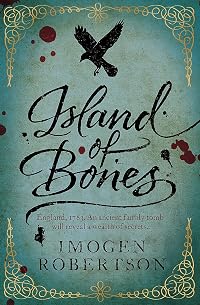
And in "Island," the newly upped ante is raised still further! Now Crowther and Westerman are summoned to Crowther's childhood home in the Lake District by none other than Crowther's unpleasant, spoiled, snobbish sister, unseen by the man for more than thirty years. (Thank GOODNESS, one can hear Crowther--and the author--thinking.) Her brat son is involved in some sort of scrape; bones are discovered in the family's old home that should most definitely not be there; and here Mrs. Westerman is, assisting with the anatomization of several of the corpses that pile up wherever the pair appear. Crowther has reason to suspect his nephew of murder, not a great stretch as the said nephew reminds him of his executed murderer brother; Mrs. Westerman's son Stephen, brought to the Lake District for enlightenment and education, is embroiled in the dangerous business of ferreting out truths that the great and the good do not wish to see out; and all concerned are, of course, inalterably changed by their researches and investigations.
At the end of this book, the entire series dramatis personae are assembled...it is a very moving finale. What Robertson plans for the enxt installment in the series, I cannot imagine. It will need to be a doozy to top this one.
My Review: I don't have a lot to say about the books, except I think any mystery lover who is also a history buff will enjoy the series. I very much enjoy the books myownself. I suspect that the author's somewhat stately choice of style, no contractions, no anachronisms, could pall on some readers. For me, it was a genuine pleasure. I like these books, and find them quite involving and well-made in novel terms. As mysteries, they are quite good enough...but not first-rank puzzlers. It's not why I am reading them, so I'm not disappointed. More of the Christie style, where the journey is the point, than the Sayers tradition, where the puzzle is very tightly crafted. Go in with your expectations properly calibrated, and these are delightful entertainments. show less
While there can never be a doubt that Crowther and Westerman will prevail, the cost to them both is always a source of suspense. Mrs. Westerman, a respectable Captain's wife, yet again charges around acting MOST unfeminine and brash, asking questions that powerful people do not want answered and demanding that everyone around her allow her to be herself (horrors!) and follow her own path (gadzooks!). Her proper, missish younger sister informs Mrs. Westerman in no uncertain terms of her behavior's cost to all her family. Crowther is drawn back into the world of aristos and wastrels he left behind without a shred of regret many years before. And, to make matters worse, while he is working out the solution to the dangerous puzzle at hand, he is required to dig up the ghosts of his murdered father and executed brother. All is resolved in the end, of course, but the personal lives of the sleuths are altered in some very significant ways. The stakes rise....
And in "Island," the newly upped ante is raised still further! Now Crowther and Westerman are summoned to Crowther's childhood home in the Lake District by none other than Crowther's unpleasant, spoiled, snobbish sister, unseen by the man for more than thirty years. (Thank GOODNESS, one can hear Crowther--and the author--thinking.) Her brat son is involved in some sort of scrape; bones are discovered in the family's old home that should most definitely not be there; and here Mrs. Westerman is, assisting with the anatomization of several of the corpses that pile up wherever the pair appear. Crowther has reason to suspect his nephew of murder, not a great stretch as the said nephew reminds him of his executed murderer brother; Mrs. Westerman's son Stephen, brought to the Lake District for enlightenment and education, is embroiled in the dangerous business of ferreting out truths that the great and the good do not wish to see out; and all concerned are, of course, inalterably changed by their researches and investigations.
At the end of this book, the entire series dramatis personae are assembled...it is a very moving finale. What Robertson plans for the enxt installment in the series, I cannot imagine. It will need to be a doozy to top this one.
My Review: I don't have a lot to say about the books, except I think any mystery lover who is also a history buff will enjoy the series. I very much enjoy the books myownself. I suspect that the author's somewhat stately choice of style, no contractions, no anachronisms, could pall on some readers. For me, it was a genuine pleasure. I like these books, and find them quite involving and well-made in novel terms. As mysteries, they are quite good enough...but not first-rank puzzlers. It's not why I am reading them, so I'm not disappointed. More of the Christie style, where the journey is the point, than the Sayers tradition, where the puzzle is very tightly crafted. Go in with your expectations properly calibrated, and these are delightful entertainments. show less
Anatomy of Murder is an overall fun read, with lots of action, good characterization, and a fine sense of place and time. Picking up a few months after Robertson's previous novel, Instruments of Darkness, leaves off, Anatomy of Murder takes place in London in 1781, as the American Revolution is winding down. Captain Westerman, disabled by a blow to the head, is being cared for in a private asylum in London; consequently, Mrs. Westerman and her family have taken up residence in Town with the Thornleigh household. With her is Mr. Crowther, the reclusive, unsociable anatomist with whom Mrs. Westerman had solved a crime that threatened the Thornleigh children.
A dead man is pulled from the Thames. Fearing that he had been spying for the show more French, the Admiralty steps in, discreetly requesting Westerman and Crowther to step in and investigate the murder. Fitzraven, the dead man, had been employed at an opera house; the plot moves from the royal box to the stews of the city, pulling in a beautiful soprano, an Italian castrato, a tarot reader, orphans, and peers in a Dickensian sweep. show less
A dead man is pulled from the Thames. Fearing that he had been spying for the show more French, the Admiralty steps in, discreetly requesting Westerman and Crowther to step in and investigate the murder. Fitzraven, the dead man, had been employed at an opera house; the plot moves from the royal box to the stews of the city, pulling in a beautiful soprano, an Italian castrato, a tarot reader, orphans, and peers in a Dickensian sweep. show less
A well plotted mystery that encompasses the Opera and the Navy. Once again Crowther and Westerman are obliged to investigate a murder- this time in 18th century London. Robertson's depictions of the metropolis- its sights, its smells, its sounds and most importantly its people immerse one firmly in 1781. The complex relationship between Crowther and Westerman, and their individual characters and conflicts, deepen in this novel and leave one hankering to know more about them. I am looking forward to the next in this series.
Robertson seems to have experienced a little bit of a sophomore slump. This story is very complex and hard to follow at times. My interest in the characters kept me going but it needed some editing.
Members
- Recently Added By
Lists

Best Historical Crime
44 works; 17 members
Author Information

9+ Works 1,773 Members
Series

Work Relationships
Common Knowledge
- Original publication date
- 2010
- People/Characters
- Harriet Westerman; Gabriel Crowther; James Westerman; Rachel Trench; Owen Graves; Jocasta Bligh (show all 7); Verity Chase
- Important places
- London, England, UK
Classifications
Statistics
- Members
- 284
- Popularity
- 113,390
- Reviews
- 19
- Rating
- (3.76)
- Languages
- English
- Media
- Paper, Audiobook, Ebook
- ISBNs
- 15
- ASINs
- 5