

On This Page
Description
At first glance, wheat farming may not appear to be a scintillating topic for a novel, but in the hands of renowned social realist Frank Norris, this seemingly quotidian activity is transformed into a fascinating analysis of the economic factors that spurred the expansion into the western United States. The first novel in a planned trilogy that Norris never completed, The Octopus: A Story of California is an enlightening and gratifying read..
Tags
Recommendations















Member Reviews
Oh, this is a filthy book. For the first three quarters or so I thought I was going to write a short review that praised Norris's occasional happy confluence of lyrical description and Zolaesque social realism while looking at the rhetorical reasons his attempt to evoke a sort of oceanic time and teleology underpinning human and inhuman affairs is incoherent and his characters come off kind of like cod-sitcom neghbours at moments (in brief, because you can reach for the epic by describing the wheat or the way a character's hair curls in front of his ears with the same formula again and again and reach after Homeric, "wine-dark sea" ground, but you can't do it with character catchphrases, or maybe you could in 1901 but not in 2009, show more because TV ruined catchphrases, sorry). And then give it, like, a 3.
But as best-laid plans unravel for the league of ranchers in their struggle against the railroad's transport monopoly and ownership of their land, Norris's story unravels too, with shocking speed. For moments earlier in the book he even seemed like a socialist, but as soon as the railroad (SPOILERZ) wins unequivocally, the narrative starts licking their boots as a matter of course. Annixter, Osterman, Broderson and the rest aren't even cold in their graves before we get all this about how the men who make the decisions for the railroad and crush the small homesteaders aren't responsible, and it's pointless to blame them because the railroad/octopus is part of a FORCE, a FORCE, a fucking ill-defined late-19th century positivist-mystical FORCE that delivers wheat to starving millions in India and is in a spurious and ill-defined way part of a cycle of life that makes the slaugher of the ranchers and appropriation of their land okay, a kind of figurative mulch.
But maybe that shouldn't surprise, because Norris seems to hold human life cheap in that late-19th-century way that led to the Somme and always makes you wish you could go back and assemble the mighty of the nations, maybe on the deck of the Graf Zeppelin, just to give them a reeeallly sarcastic thumbs up. Harran Derrick dies in a shootout with the Old West version of jackbooted thugs and still gets no narrative arc of his own; his whole role here is as motive factor for his father's final breakdown--you know, the real tragedy here. I don't know WHAT the fascination is among a certain strain of American writer with fucking straight-backed patriarchs and their fucking hawklike noses and fucking moral authority and fucking RECTITUDE (John Steinbeck is another prime offender), but I can only assume it stems from a deepseated psychological need to be punished by an Old Testament father and love him for it. And I was hopeful when Norris started to talk about Magnus Derrick in terms of a thwarted will to power and a need to dominate that he would have a more probing touch, but no--it's the pile of death that's the appetizer in this tragedy and the humiliation of one pointless old fascist that's the main course.
But Magnus's fall isn't the only thing that's considered more tragic than the massacre in the wheat fields. For most of the book, I thought Hooven was just a tired German stereotype with an execrably rendered accent. But no, it turns out when he dies that we're to be treated to a little morality play where his daughter, whom we've already been served warning is a little bit rotten inside because she likes the boys or whatever, gets separated from her mother and sister and in a mere day or two turns to prostitution, which you may think is a little fast, but she just isn't able to come up with any other course of action except wandering from place to place pathetically and starving. And it's a family trait--her mother literally wanders around San Francisco like nothing so much as a kid from the suburbs who doesn't want to call her parents for a ride and has to start panhandling for bus change. Only Mrs. Hooven has no parents and is not very good at begging, so she literally dies in the street after all of three days or something without food, without ever trying to steal a loaf or throw herself on the mercy of the Church or knock on every door in the rich district and look pathetic with her baby and all. This is not realism, Frank Norris; if human beings had no more resourcefulness and survival instinct than that, we wouldn't have survived long enough to settle California in the fucking first place.
But the final straw is that when Mrs. Hooven expires with a rattle and the younger daughter Hilda is conveniently adopted by a rich family (bad timing, that--oh well, call the meatwagon to pick up the old broad), our narrator editorializes, not about how hard her life will be because she's an orphan, not even about the burden (if we MUST talk in these terms) of having a father who was a "terrorist"--no, Hilda's life is going to be ruined because her sister is a "_____". And you know what "_____" means. MINNA HOOVEN, WHORE, TOO BAD U GOT HUNGRY AND SOLD YOUR ASS, WHORE. LADIES, STAY PURE OR PLEASE GO DIE.
And it just goes on like this. After Presley's big encounter with Shelgrim, the railroad CEO (which only serves to establish that in Norris's world the monopolists are all JEWS and we all know that Jews are SNAKES--this in contrast to the real world, where it was exactly the bunch of East Coast Protestant financiers you'd expect) and Norris's exculpation of the railmen (because a SNAKE JEW can't help but be a JEW SNAKE), we get a totally unnecessary sycophantic little passage where Presley rejects the anarchism of the barkeep Caraher because it's anti-life and whatnot. Better anything than red--wasn't quite fair play on the part of the railroad, but no need to get radical, right? (I understand from the afterword that Norris may have put this in so as to not get in trouble with his publisher and the real P&SW Railway, which means he gets a sarcastic thumbs up all to himself).
And for those of us who still nurse a grudge against the capitalists, we get the ludicrous, grotesque interlude of S. Behrman's death--patronizing pandering in its Gothic ghost-story punishment-lust. Just to remind us that there's something wrong with US for hatin', not him. NOT S. BEHRMAN! (Although now that I think of it doesn't that name seem kind of Jewish too?) It's a similar thing to Mrs. Hooven above--the over-the-topness of the depiction makes it a mockery.
And when finally we've seen how leftists are traitors and women who have sex out of wedlock are bitch whores and the capitalists are a bit sneaky and Jewish but ultimately not to be blamed because exploitation is an important and awesome part of natural processes beyond human ken and all the blood and death in this book is small beans beside the gravy stain it leaves on the fucking moral ascot of the Lion in Winter--THEN Vanamee, the Jesus figure, has the gall to show up and tell us it's all totally cool because he's not sad any more that his ol' lady got all raped and dead, because it turns out she has a daughter who looks just like her and JUST GOT NUBILE and DEFINITELY WANTS TO BANG THIS SMELLY ITINERANT IN HER MOM'S PLACE and THE CIRCLE OF LIFE CONTINUES.
And I have obviously engaged in hyperbole here, and I'd like to give this an extra half star because ultimately, to be frank, I agree with Norris on that score--the circle of life does continue, and that's the most beautiful thing there is. But I just can't, because I feel suckered. The first three quarters of this book Norris pretends like he's on the side of our little band of heroes, and sketches their struggles compellingly. And then suddenly it's fuck 'em all as he tries to huckster us with a banal version of the interconnectedness of all things predicated on the idea that sleeping with a hot thirteen-year-old is just like sleeping with her hot dead mother only better. Fuck off, Frank Norris. You and your evil book. show less
But as best-laid plans unravel for the league of ranchers in their struggle against the railroad's transport monopoly and ownership of their land, Norris's story unravels too, with shocking speed. For moments earlier in the book he even seemed like a socialist, but as soon as the railroad (SPOILERZ) wins unequivocally, the narrative starts licking their boots as a matter of course. Annixter, Osterman, Broderson and the rest aren't even cold in their graves before we get all this about how the men who make the decisions for the railroad and crush the small homesteaders aren't responsible, and it's pointless to blame them because the railroad/octopus is part of a FORCE, a FORCE, a fucking ill-defined late-19th century positivist-mystical FORCE that delivers wheat to starving millions in India and is in a spurious and ill-defined way part of a cycle of life that makes the slaugher of the ranchers and appropriation of their land okay, a kind of figurative mulch.
But maybe that shouldn't surprise, because Norris seems to hold human life cheap in that late-19th-century way that led to the Somme and always makes you wish you could go back and assemble the mighty of the nations, maybe on the deck of the Graf Zeppelin, just to give them a reeeallly sarcastic thumbs up. Harran Derrick dies in a shootout with the Old West version of jackbooted thugs and still gets no narrative arc of his own; his whole role here is as motive factor for his father's final breakdown--you know, the real tragedy here. I don't know WHAT the fascination is among a certain strain of American writer with fucking straight-backed patriarchs and their fucking hawklike noses and fucking moral authority and fucking RECTITUDE (John Steinbeck is another prime offender), but I can only assume it stems from a deepseated psychological need to be punished by an Old Testament father and love him for it. And I was hopeful when Norris started to talk about Magnus Derrick in terms of a thwarted will to power and a need to dominate that he would have a more probing touch, but no--it's the pile of death that's the appetizer in this tragedy and the humiliation of one pointless old fascist that's the main course.
But Magnus's fall isn't the only thing that's considered more tragic than the massacre in the wheat fields. For most of the book, I thought Hooven was just a tired German stereotype with an execrably rendered accent. But no, it turns out when he dies that we're to be treated to a little morality play where his daughter, whom we've already been served warning is a little bit rotten inside because she likes the boys or whatever, gets separated from her mother and sister and in a mere day or two turns to prostitution, which you may think is a little fast, but she just isn't able to come up with any other course of action except wandering from place to place pathetically and starving. And it's a family trait--her mother literally wanders around San Francisco like nothing so much as a kid from the suburbs who doesn't want to call her parents for a ride and has to start panhandling for bus change. Only Mrs. Hooven has no parents and is not very good at begging, so she literally dies in the street after all of three days or something without food, without ever trying to steal a loaf or throw herself on the mercy of the Church or knock on every door in the rich district and look pathetic with her baby and all. This is not realism, Frank Norris; if human beings had no more resourcefulness and survival instinct than that, we wouldn't have survived long enough to settle California in the fucking first place.
But the final straw is that when Mrs. Hooven expires with a rattle and the younger daughter Hilda is conveniently adopted by a rich family (bad timing, that--oh well, call the meatwagon to pick up the old broad), our narrator editorializes, not about how hard her life will be because she's an orphan, not even about the burden (if we MUST talk in these terms) of having a father who was a "terrorist"--no, Hilda's life is going to be ruined because her sister is a "_____". And you know what "_____" means. MINNA HOOVEN, WHORE, TOO BAD U GOT HUNGRY AND SOLD YOUR ASS, WHORE. LADIES, STAY PURE OR PLEASE GO DIE.
And it just goes on like this. After Presley's big encounter with Shelgrim, the railroad CEO (which only serves to establish that in Norris's world the monopolists are all JEWS and we all know that Jews are SNAKES--this in contrast to the real world, where it was exactly the bunch of East Coast Protestant financiers you'd expect) and Norris's exculpation of the railmen (because a SNAKE JEW can't help but be a JEW SNAKE), we get a totally unnecessary sycophantic little passage where Presley rejects the anarchism of the barkeep Caraher because it's anti-life and whatnot. Better anything than red--wasn't quite fair play on the part of the railroad, but no need to get radical, right? (I understand from the afterword that Norris may have put this in so as to not get in trouble with his publisher and the real P&SW Railway, which means he gets a sarcastic thumbs up all to himself).
And for those of us who still nurse a grudge against the capitalists, we get the ludicrous, grotesque interlude of S. Behrman's death--patronizing pandering in its Gothic ghost-story punishment-lust. Just to remind us that there's something wrong with US for hatin', not him. NOT S. BEHRMAN! (Although now that I think of it doesn't that name seem kind of Jewish too?) It's a similar thing to Mrs. Hooven above--the over-the-topness of the depiction makes it a mockery.
And when finally we've seen how leftists are traitors and women who have sex out of wedlock are bitch whores and the capitalists are a bit sneaky and Jewish but ultimately not to be blamed because exploitation is an important and awesome part of natural processes beyond human ken and all the blood and death in this book is small beans beside the gravy stain it leaves on the fucking moral ascot of the Lion in Winter--THEN Vanamee, the Jesus figure, has the gall to show up and tell us it's all totally cool because he's not sad any more that his ol' lady got all raped and dead, because it turns out she has a daughter who looks just like her and JUST GOT NUBILE and DEFINITELY WANTS TO BANG THIS SMELLY ITINERANT IN HER MOM'S PLACE and THE CIRCLE OF LIFE CONTINUES.
And I have obviously engaged in hyperbole here, and I'd like to give this an extra half star because ultimately, to be frank, I agree with Norris on that score--the circle of life does continue, and that's the most beautiful thing there is. But I just can't, because I feel suckered. The first three quarters of this book Norris pretends like he's on the side of our little band of heroes, and sketches their struggles compellingly. And then suddenly it's fuck 'em all as he tries to huckster us with a banal version of the interconnectedness of all things predicated on the idea that sleeping with a hot thirteen-year-old is just like sleeping with her hot dead mother only better. Fuck off, Frank Norris. You and your evil book. show less
While more than a great read, I cannot pretend to agree with the dire determinism of the author, Frank Norris. This novel of California wheat farmers versus the Railroad (the 'Octopus' of the title) is in the naturalistic tradition of Zola. In fact I was reminded of my reading of Germinal at times while rereading this classic, yet flawed, novel. Norris tends toward hyperbole at times and the prose can be somewhat melodramatic, yet it is a lucidly written novel with fascinating characters. The poet, Presley, is one character who particularly fascinated me. Presumably a stand-in for Norris himself, Presley is able to comment on the action and almost persuade the people to rise up against the Railroad; however, he is ultimately show more unsuccessful in changing their fate determined by Nature. Norris planned a trilogy based on his story of 'Wheat' but only finished one more volume, The Pit, before his untimely death. show less
News stories about Occupy Wall Street and the 99% have dominated the headlines for the past year. These same themes also dominate this century-old book, which was a bestseller in 1901. Here, the Octopus is the Railroad, its tentacles suffocating and destroying the lives of hardworking ranchers and their families.
This book is also personal for me. It's based on real events that happened around 1880 in central California, only miles away from where I grew up a century later. The Southern Pacific leased land to ranchers, and then after the land was developed and the lease time was at end, the railroad increased the price tenfold and then acted to force the farmers off the land. The end result was the Mussel Slough Tragedy, a shoot-out that show more killed several men and made the surviving ranchers into local folk heroes.
Norris used those elements to create his drama of the West. He changed many of the facts; in his book, the incident takes place right before 1900, and the real places of Hanford and Grangeville have been altered to Bonneville and Guadalajara, respectively. The latter also has a mission in this telling. The geography is also strangely different with nearby hills and canyons that provide handy places for his characters to look down upon the valley of promise; in reality, the hills are some 40 miles away.
There are some classics that age better than others. The Octopus is very slow to get going. It has a wide cast of characters and changes points of view on a whim. The women are stock characters, either simpering or overly noble; the real protagonists are the men. In Victorian fashion, the descriptions wax eloquent and can go on for pages. Very little happens in the first 2/3 of this 650 page novel. Much of it is building up the tension, slowly, and has a great deal of angst. However, when the end comes it actually moves along at a steady clip. It's a tragedy in a Rocks Fall Everyone Dies sort of way. Most of the main cast is annihilated: the men dead, the women suffering through miscarriage or poverty or prostitution. All of this is the fault of the railroad or their own moral failings.
Those moral failings are heavy-handed in the style of the time, but also are not clear black and white. The most upstanding of the characters suffer because of their poor choices. A character I disliked immensely at the beginning was Annixter; he was creepy and anti-woman, with an angry fixation on his dairymaid. However, by the end of the book he had transformed and became a redemptive figure because of the love of that very dairymaid.
The book is also steeped in the biased attitudes of the time. The head of the railroad is Jewish. The cast of good guys is very Anglo-Saxon. The lesser farmhands, such as the Portuguese, are regarded with disdain (which is amazing to me since the valley's Portuguese population is now so large and integral). The most blatantly racist line of the book is near the end, after a jack rabbit round-up: "The Anglo-Saxon spectators round drew back in disgust, but the hot, degenerated blood of the Portuguese, Mexican, and mixed Spaniard boiled up in excitement at this wholesale slaughter." It makes me wince, but the statement is also a reflection of the time period and must be seen in that context. Also, most of those wincing Anglo-Saxons ended up dead, but the so-called degenerates lived on. Perhaps there's a sort of Darwinism in that.
It's not a fun read, but I found it fascinating to read a dramatization of events that happened a few miles away from my home, and I'm glad I finally trudged through the tome. Sometimes it's good to read a classic just to be able to say, "I read that." show less
This book is also personal for me. It's based on real events that happened around 1880 in central California, only miles away from where I grew up a century later. The Southern Pacific leased land to ranchers, and then after the land was developed and the lease time was at end, the railroad increased the price tenfold and then acted to force the farmers off the land. The end result was the Mussel Slough Tragedy, a shoot-out that show more killed several men and made the surviving ranchers into local folk heroes.
Norris used those elements to create his drama of the West. He changed many of the facts; in his book, the incident takes place right before 1900, and the real places of Hanford and Grangeville have been altered to Bonneville and Guadalajara, respectively. The latter also has a mission in this telling. The geography is also strangely different with nearby hills and canyons that provide handy places for his characters to look down upon the valley of promise; in reality, the hills are some 40 miles away.
There are some classics that age better than others. The Octopus is very slow to get going. It has a wide cast of characters and changes points of view on a whim. The women are stock characters, either simpering or overly noble; the real protagonists are the men. In Victorian fashion, the descriptions wax eloquent and can go on for pages. Very little happens in the first 2/3 of this 650 page novel. Much of it is building up the tension, slowly, and has a great deal of angst. However, when the end comes it actually moves along at a steady clip. It's a tragedy in a Rocks Fall Everyone Dies sort of way. Most of the main cast is annihilated: the men dead, the women suffering through miscarriage or poverty or prostitution. All of this is the fault of the railroad or their own moral failings.
Those moral failings are heavy-handed in the style of the time, but also are not clear black and white. The most upstanding of the characters suffer because of their poor choices. A character I disliked immensely at the beginning was Annixter; he was creepy and anti-woman, with an angry fixation on his dairymaid. However, by the end of the book he had transformed and became a redemptive figure because of the love of that very dairymaid.
The book is also steeped in the biased attitudes of the time. The head of the railroad is Jewish. The cast of good guys is very Anglo-Saxon. The lesser farmhands, such as the Portuguese, are regarded with disdain (which is amazing to me since the valley's Portuguese population is now so large and integral). The most blatantly racist line of the book is near the end, after a jack rabbit round-up: "The Anglo-Saxon spectators round drew back in disgust, but the hot, degenerated blood of the Portuguese, Mexican, and mixed Spaniard boiled up in excitement at this wholesale slaughter." It makes me wince, but the statement is also a reflection of the time period and must be seen in that context. Also, most of those wincing Anglo-Saxons ended up dead, but the so-called degenerates lived on. Perhaps there's a sort of Darwinism in that.
It's not a fun read, but I found it fascinating to read a dramatization of events that happened a few miles away from my home, and I'm glad I finally trudged through the tome. Sometimes it's good to read a classic just to be able to say, "I read that." show less
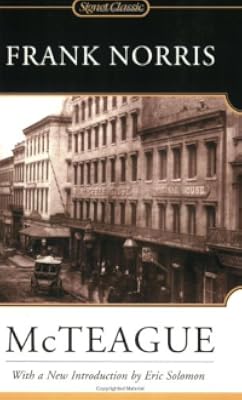
This book merits three stars based on historical interest alone. It's not Norris's best writing by a long shot, that honor belonging to "McTeague" (in this writer's never-humble opinion), and it's further evidence if any was needed that the loss to American letters that Norris's death at 32 was immense.
The imagination that Norris evidenced in his six-book career is sharp. He saw clearly the world around him, and wasn't about to let the Great Unwashed fail to see it with his clarity. His infelicities of style were those that a longer career could have, and probably would have, beaten out of him. Dreiser aside, the other American Realists improved their writing chops with time; I see no reason to suspect Norris of Dreiser-hood.
But no show more amount of writerly tyro-hood can take away the astonishing storytelling eye the man had. It's entirely possible that we'd have grown our own, more meellifluous, Conrad right here in Murrika had medical science been only a little more advanced in 1902. A major cultural "what might have been" moment....
I'd say this isn't a book to read and savored and committed to memory, but rather a cultural artifact to be appreciated by those interested in the culture in question. show less
The imagination that Norris evidenced in his six-book career is sharp. He saw clearly the world around him, and wasn't about to let the Great Unwashed fail to see it with his clarity. His infelicities of style were those that a longer career could have, and probably would have, beaten out of him. Dreiser aside, the other American Realists improved their writing chops with time; I see no reason to suspect Norris of Dreiser-hood.
But no show more amount of writerly tyro-hood can take away the astonishing storytelling eye the man had. It's entirely possible that we'd have grown our own, more meellifluous, Conrad right here in Murrika had medical science been only a little more advanced in 1902. A major cultural "what might have been" moment....
I'd say this isn't a book to read and savored and committed to memory, but rather a cultural artifact to be appreciated by those interested in the culture in question. show less
What a crock! The book ends with "...all things surely, inevitably, resistessly work together for good." How disappointing is the philosophy of the author to be so ignorant of life. The story starts out slow and has many characters. The conflict is interesting and the devastation of the ranchers is truly dismal. The latter half of the book was engaging and I enjoyed it, although some aspects were odd, like that of Vanamee. I sincerely disagree with the author. Conflict does not end and does not surely lead to good. Life, death, conflict, misery, and happiness are continuing series of events leading to no specific end.
When I finish reading a book and can't figure out if it was bad or good, I ask myself a simple question: Did I like reading it? In the case of The Octopus my answer is, "Not really."
I liked reading it -sometimes-. Norris has the sort of overly dramatic prose where even if you don't like where he's going, or don't really care about what's happening it's fun to watch him turn a meal, or plowing, or a trip, into an epic event. It's also amusing to listen to a voice that is clearly showing its age. There is off-hand racism in the mention of those with Hispanic blood reveling in the murder of a sea of rabbits where more civilized Angelos turn away (though in Norris' defense such silliness only happens once). Gender roles and ideals about show more them stand firmly in the early 1900s. Yes, there is really a part in the book where Norris can't gather the balls to use the word whore and substitutes ____. Oh how far we have come.
And that's where the real value of the book is. It's not horrible, just horribly outdated, and because it's so outdated it provides for the reader not just a window into the world that Norris was writing about, but also the perceptions and assumptions that helped people of the time define that world. show less
I liked reading it -sometimes-. Norris has the sort of overly dramatic prose where even if you don't like where he's going, or don't really care about what's happening it's fun to watch him turn a meal, or plowing, or a trip, into an epic event. It's also amusing to listen to a voice that is clearly showing its age. There is off-hand racism in the mention of those with Hispanic blood reveling in the murder of a sea of rabbits where more civilized Angelos turn away (though in Norris' defense such silliness only happens once). Gender roles and ideals about show more them stand firmly in the early 1900s. Yes, there is really a part in the book where Norris can't gather the balls to use the word whore and substitutes ____. Oh how far we have come.
And that's where the real value of the book is. It's not horrible, just horribly outdated, and because it's so outdated it provides for the reader not just a window into the world that Norris was writing about, but also the perceptions and assumptions that helped people of the time define that world. show less
Wheat famers. Bakersfield, CA. Railroad. These three factors made me think I was going to hate this book. I was wrong. I could not put this book (all 500 pages) down. My eyes literally turned red from reading. It's the classic railroad v. farmers story, but written in such a way that it's actually interesting. A lovely surprise.
Members
- Recently Added By
Lists

Harold Bloom - The Western Canon: C. The Democratic Age
336 works; 15 members

Trinity College Booklist (1951): Class Ten, English Literature
358 works; 5 members

Books about Octopuses
23 works; 1 member

AP Lit
363 works; 6 members

Recommended Reading : 600 Classics Reviewed, Editors of Salem Press, 2015
634 works; 6 members
Talk Discussions
Past Discussions
The Octopus Place in Le Salon Littéraire du Peuple pour le Peuple (October 2009)
Author Information

48+ Works 3,786 Members
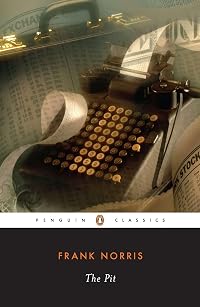
Considered one of the leading pioneers in American Naturalism, Frank Norris is read and studied for his vivid and honest depiction of life at the beginning of a lusty and developing new century. Born in Chicago, he moved to San Francisco with his well-to-do family when he was 14 and went on to attend the University of California and Harvard show more University before becoming a war correspondent in South Africa and Cuba. His early apprentice work consisted mostly of rather unremarkable adventure stories, but with the long-gestating McTeague: A Story of San Francisco (1899), he struck a new note. That powerful study of avarice in a seedy section of the Bay Area may well be Norris's masterpiece. The Octopus (1901), the first of Norris's projected Epic of the Wheat series, deals with the raising of wheat in California and the struggle of ranchers against the railroads, while The Pit (1903) is a novel about speculation on the Chicago wheat exchange. Unfortunately, Norris died suddenly after an operation for appendicitis. Like Stephen Crane, a writer with whom Norris is frequently compared, Norris died too young to fulfill his considerable promise, but he has more than held his own ground among turn-of-the-century writers whose works have lived. One reason may be that he took his craft as a writer seriously, as is shown by his posthumously published Responsibilities of the Novelist and Other Literary Essays (1903) and The Literary Criticism of Frank Norris, edited by Donald Pizer. (Bowker Author Biography) show less
Some Editions
Awards and Honors
Series

Belongs to Publisher Series
Work Relationships
Is contained in
Contains
Has the adaptation
Has as a study
Has as a student's study guide
Common Knowledge
- Canonical title
- The Octopus: A Story of California
- Original publication date
- 1901
- Important places
- California, USA
- Related movies
- The Octopus (1915 | IMDb)
- Dedication
- Dedicated to my wife
- First words
- Around five in the morning sometime in March 1899, Bruce Porter, formerly of San Francisco, awoke in his apartment in The Benedict on Washington Square, New York City, to a pounding on his door. -Introduction, Kevin Starr
Just after passing Caraher's saloon, on the County Road that ran south from Bonneville, and that divided the Broderson ranch from that of Los Muertos, Presley was suddenly aware of the faint and prolonged blowing of a steam w... (show all)histle that he knew must come from the railroad shops near the depot at Bonneville. -Chapter 1 - Original language
- English
- Canonical DDC/MDS
- 813.4
- Canonical LCC
- PS2472
Classifications
- Genres
- General Fiction, Fiction and Literature, Historical Fiction
- DDC/MDS
- 813.4 — Literature & rhetoric American literature in English American fiction in English Later 19th Century 1861-1900
- LCC
- PS2472 — Language and Literature American literature American literature Individual authors 19th century
- BISAC
Statistics
- Members
- 1,043
- Popularity
- 24,706
- Reviews
- 16
- Rating
- (3.39)
- Languages
- 5 — Czech, English, French, German, Russian
- Media
- Paper, Audiobook, Ebook
- ISBNs
- 80
- UPCs
- 1
- ASINs
- 47