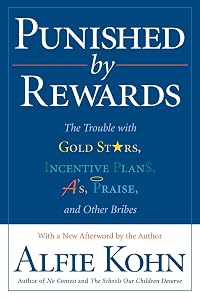
Punished by Rewards: The Trouble with Gold Stars, Incentive Plans, A's, Praise, and Other Bribes
by Alfie Kohn
On This Page
Description
The basic strategy we use for raising children, teaching students, and managing workers can be summarized in six words: Do this and you'll get that. We dangle goodies (from candy bars to sales commissions) in front of people in much the same way we train the family pet. Drawing on a wealth of psychological research, Alfie Kohn points the way to a more successful strategy based on working with people instead of doing things to them. "Do rewards motivate people?" asks Kohn. "Yes. They motivate show more people to get rewards." Seasoned with humor and familiar examples, Punished by Rewards presents an argument unsettling to hear but impossible to dismiss. show lessTags
Recommendations
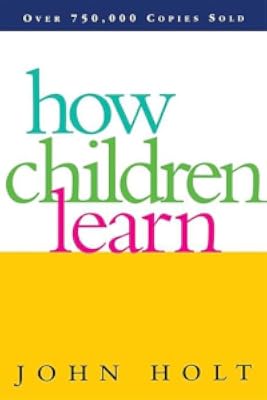
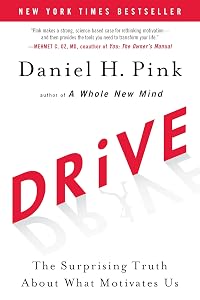
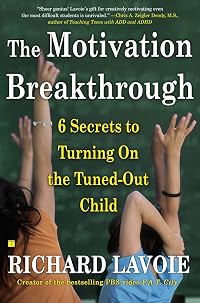
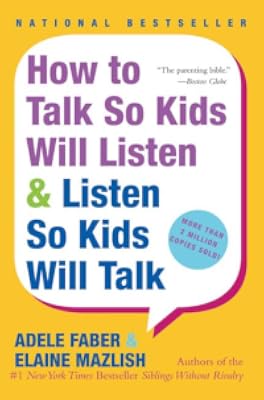





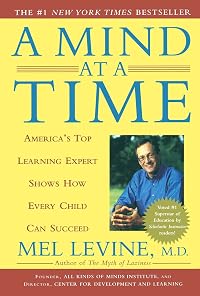
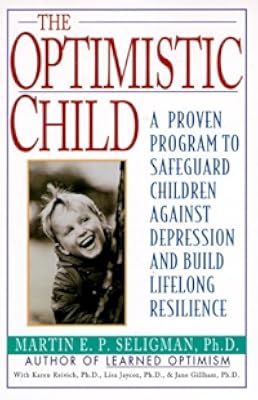
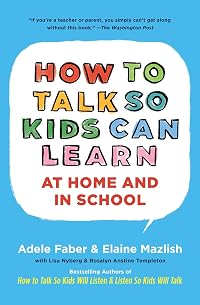

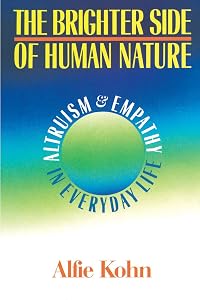

















Member Recommendations
Member Reviews
By Alfie Kohn
Alas the book challenges so many of our cherished beliefs that I am beginning to see the the loss of motivation in a new light. It is disconcerting to see how widely his critique applies.
"Skinner spent his life denying the idea of choice and urging us to control reinforcers in the environment since they, in turn, control us." (p. 30)
The most notable aspect of a positive judgment is not that it is positive but that it is a judgment. (Page 102)
The legendary statistical consultant W. Edwards Deming, with his characteristic gift for understatement, has called the system by which Americans are praised and rewarded "the most power to inhibitor to quality and productivity in the Western world." He adds that it "nourishes show more short-term performance, annihilates long-term planning, builds fear, demolishes teamwork, nourishes rivalry and ... leaves people bitter." To this we can add that it is simply unfair to the extent that employees are held responsible for what are, in reality, systemic factors that are beyond their control. (Page 129)
Part 3 isn't as depressing as Part 1 was. There are no quick fixes; in fact, that is what makes behaviorism (rewards) so attractive. Rewards can be given to get the desired behavior without understanding the problem. In part 3 we are treated to recommendations not a few. Kohn recommends that really understanding why there is a problem is necessary to come up with an appropriate approach. I am now thinking about how I will "behave" differently because of reading this book. show less
Alas the book challenges so many of our cherished beliefs that I am beginning to see the the loss of motivation in a new light. It is disconcerting to see how widely his critique applies.
"Skinner spent his life denying the idea of choice and urging us to control reinforcers in the environment since they, in turn, control us." (p. 30)
The most notable aspect of a positive judgment is not that it is positive but that it is a judgment. (Page 102)
The legendary statistical consultant W. Edwards Deming, with his characteristic gift for understatement, has called the system by which Americans are praised and rewarded "the most power to inhibitor to quality and productivity in the Western world." He adds that it "nourishes show more short-term performance, annihilates long-term planning, builds fear, demolishes teamwork, nourishes rivalry and ... leaves people bitter." To this we can add that it is simply unfair to the extent that employees are held responsible for what are, in reality, systemic factors that are beyond their control. (Page 129)
Part 3 isn't as depressing as Part 1 was. There are no quick fixes; in fact, that is what makes behaviorism (rewards) so attractive. Rewards can be given to get the desired behavior without understanding the problem. In part 3 we are treated to recommendations not a few. Kohn recommends that really understanding why there is a problem is necessary to come up with an appropriate approach. I am now thinking about how I will "behave" differently because of reading this book. show less
You would have to be a dyed-in-the-wool behaviorist or at least some kind of sociological conservative not to be persuaded by Alfie Kohn's compelling, if unnecessarily overlong, case against using rewards of any kind as a motivator. What amazes me is how easy it is to fall into the reward trap when interacting with others. And the scenarios seem universal whether you're in a classroom, at home or at work. Rewards and punishments are like a jackhammer to a problem—it will probably get the job done quickly, but in the clumsiest, messiest way possible.
My recommendation for this book is to read the first 100 pages (all of Part 1, "The Case Against Rewards") and then skim the rest.
My recommendation for this book is to read the first 100 pages (all of Part 1, "The Case Against Rewards") and then skim the rest.
Dan Pink pointed me to Kohn's work for understanding the stranglehold extrinsic motivation has on our academic, family, and work thinking. For anyone who has ever wondered why pay for performance, annual reviews, and other incentive-obsessed models don't seem to work, here's why. What's depressing, of course, is how tenaciously we hold onto the if-you-do-this-you'll-get-a-cookie model of motivation in the face of overwhelming evidence that it's diminishing, not improving, performance.
Fascinating look at how "do this and you'll get that" doesn't really work to motivate (especially in the long term), and can actually DE-motivate. Definitely something I wish I could recommend to more people to read, but unfortunately was not written for mass consumption, but in a rigorous academic literature review style that took me almost 22 hours to get through (according to Libby). I appreciate the work and rigor involved, but can't say I would have taken it on if I'd seen a 1500 page physical copy instead of the ebook. Another wish I had was that in addition to talking through the studies and saying in general terms what we should or shouldn't do in order to preserve and promote intrinsic motivation, having examples and thought show more experiments of what that would look like in actual situations. Since our society is so extrinsic reward based, it's difficult to imagine other ways. show less
The major thesis, backed up by studies, is that rewards kill motivation and in the long term decrease performance, quality and creativity. He cites many examples from child behavior, school performance and job incentive plans. Generally, rewards create short term behavior changes, but once the rewards end, the desired behavior falls below it's initial level. What is surprising is that this was known via studies dating back into the 60s and yet management consultants and business schools assert reward programs are the way to go. As a side effect, many reward structures foster competition which is detrimental in most settings -- grades in school, bonus programs for workers, commissions for sales people, etc.
The content is invaluable despite the frustrating constant repetition of what problems there are with rewards and their side effects.
If you expect a simple counter solution to incentives and school grades the author explains there are none, because ultimately our idea of rewards is based on the fallacy that humans can be reduced to simple behaviours. Once we move beyond this things get complicated...
Its about intrinsic motivation and the mysteries of the dynamics of conscious thoight...
If you expect a simple counter solution to incentives and school grades the author explains there are none, because ultimately our idea of rewards is based on the fallacy that humans can be reduced to simple behaviours. Once we move beyond this things get complicated...
Its about intrinsic motivation and the mysteries of the dynamics of conscious thoight...
Needed some reminders about education and parenting via intrinsic motivation. And he always hits my sweet spot on the elusive balance between boundaries, respect, and self-determination for all.
Members
- Recently Added By
Author Information

32+ Works 3,701 Members
Alfie Kohn was described by "Time" as "the country's most outspoken critic of education's fixation on grades & test scores." The author of the influential "No Contest" & "Punished by Rewards," he writes & speaks widely about human behavior, education, & social theory. He lives in Belmont, Massachusetts. (Bowker Author Biography)
Classifications
Statistics
- Members
- 987
- Popularity
- 26,476
- Reviews
- 12
- Rating
- (4.03)
- Languages
- English, Portuguese
- Media
- Paper, Audiobook, Ebook
- ISBNs
- 13
- UPCs
- 2
- ASINs
- 6