On This Page
Description
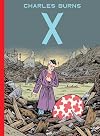
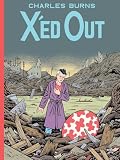
"Doug is in bad shape. All the drugs in the world won't shut out the images that haunt his fevered dreams-- fetal pigs, razor blades, black cats, open wounds-- and eggs. Let's not forget the eggs" -- p. [4] of cover.Tags
Recommendations











Member Reviews
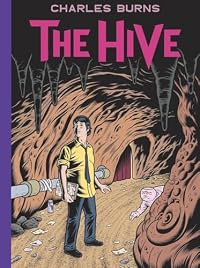
A cross between William S. Burroughs and TinTin. I think a lot of reviewers get this book all wrong. Has more to do with Expressionism and Surrealism than conventional story telling. There is a lot of criticism of "dream sequences and imagery." This gets it all wrong too. There is no way to separate dream from reality here. The protagonist keeps "waking up" (with more or less hair) to the next reality, not the next dream. This has more in common with P.K. Dick themes about the nature of reality than anything else. This is another graphic novel that is going to appeal to the snobs who never stoop to reading comics or GNs. I guess that's okay and a good thing for Charles Burns. It will still appeal to the geek comic book folks, which is a show more good thing too. Next up in October, part 2, The Hive. show less
POSSIBLE SPOILERS
It should be common knowledge by now that X’ed Out, the first volume of a new trilogy by Charles Burns, is chock full of weirdness, mystery, and beautiful artwork. The book is part revision of Hergé’s TinTin, part tribute to William Burroughs, part Alice in Wonderland, and something new yet to be revealed. Within all of that, there are some interesting themes that I’m sure Burns will expand on in the next two volumes.
Doug, the protagonist, has suffered some mystery trauma and spends most of his time in bed in the basement of his parents’ house looking at old Polaroids of his girlfriend. The narrative slips back and forth between this reality, a Burroughs inspired dream world induced by Doug’s painkillers, show more flashback sequences where Doug meets and falls in love with Sarah (the girl in the Polaroids), and past conversations with Doug’s father.
The idea of motherhood, or more specifically failed motherhood, runs throughout this first volume. Doug’s mother is mentioned, but never seen. Doug and his father both want to avoid her. In one flashback sequence Doug remembers his father saying, “Your Mom and I…We started out with such high hopes…But I guess things don’t always work out the way they’re supposed to.” Like Doug, his father retreats downstairs, which Burns has admitted is a symbol for the womb. Doug comes upstairs for Poptarts and reminds himself that his mom will not be home from work until 5:30 He says, “…at least I don’t have to deal with her.”
Sarah has a thing for fetal pigs in jars, one of which gets broken by her “psycho” ex-boyfriend at the party where Doug meets Sarah. She poses topless with one fetal pig as a Madonna and child (she poses topless a lot). There is a panel of an actual Madonna and child. Lizard-like fetuses and eggs are everywhere in Doug’s dream world. To top it off, a cartoonish version of Sarah appears in the dream world. Doug’s nameless, baby-like alien guide tells him she is the new Queen of the hive, a breeder.
Identity is another interesting issue in the book. Doug’s alter-ego is Nitnit. He puts on a mask that resembles TinTin when he reads his cut-up poetry in reality, perhaps subconsciously wanting to hide from his audience. In his dream world, Doug is Nitnit. Doug also identifies with his father. Like his father, Doug spends his time in the basement looking at photographs and dwelling on the past. Doug’s guide in the dream world smokes like his father and, I would argue, vaguely resembles his father. Adding to that, Nitnit has several visions of his father while he is with the guide.
What does this all mean? It’s too early to tell. The book is short and leaves more questions than answers, but it is only volume one of what should be a great trilogy. Burns has stated in interviews that all of these “threads” will come together in the next two volumes. And let’s not forget the beautiful artwork. I’ve compared Bill Sienkiewicz’s artwork to fever dreams before, but I have to say that Burns has really captured that particular strangeness in his vivid colors and style. The next volume, The Hive, is slated to come out sometime in 2011. show less
It should be common knowledge by now that X’ed Out, the first volume of a new trilogy by Charles Burns, is chock full of weirdness, mystery, and beautiful artwork. The book is part revision of Hergé’s TinTin, part tribute to William Burroughs, part Alice in Wonderland, and something new yet to be revealed. Within all of that, there are some interesting themes that I’m sure Burns will expand on in the next two volumes.
Doug, the protagonist, has suffered some mystery trauma and spends most of his time in bed in the basement of his parents’ house looking at old Polaroids of his girlfriend. The narrative slips back and forth between this reality, a Burroughs inspired dream world induced by Doug’s painkillers, show more flashback sequences where Doug meets and falls in love with Sarah (the girl in the Polaroids), and past conversations with Doug’s father.
The idea of motherhood, or more specifically failed motherhood, runs throughout this first volume. Doug’s mother is mentioned, but never seen. Doug and his father both want to avoid her. In one flashback sequence Doug remembers his father saying, “Your Mom and I…We started out with such high hopes…But I guess things don’t always work out the way they’re supposed to.” Like Doug, his father retreats downstairs, which Burns has admitted is a symbol for the womb. Doug comes upstairs for Poptarts and reminds himself that his mom will not be home from work until 5:30 He says, “…at least I don’t have to deal with her.”
Sarah has a thing for fetal pigs in jars, one of which gets broken by her “psycho” ex-boyfriend at the party where Doug meets Sarah. She poses topless with one fetal pig as a Madonna and child (she poses topless a lot). There is a panel of an actual Madonna and child. Lizard-like fetuses and eggs are everywhere in Doug’s dream world. To top it off, a cartoonish version of Sarah appears in the dream world. Doug’s nameless, baby-like alien guide tells him she is the new Queen of the hive, a breeder.
Identity is another interesting issue in the book. Doug’s alter-ego is Nitnit. He puts on a mask that resembles TinTin when he reads his cut-up poetry in reality, perhaps subconsciously wanting to hide from his audience. In his dream world, Doug is Nitnit. Doug also identifies with his father. Like his father, Doug spends his time in the basement looking at photographs and dwelling on the past. Doug’s guide in the dream world smokes like his father and, I would argue, vaguely resembles his father. Adding to that, Nitnit has several visions of his father while he is with the guide.
What does this all mean? It’s too early to tell. The book is short and leaves more questions than answers, but it is only volume one of what should be a great trilogy. Burns has stated in interviews that all of these “threads” will come together in the next two volumes. And let’s not forget the beautiful artwork. I’ve compared Bill Sienkiewicz’s artwork to fever dreams before, but I have to say that Burns has really captured that particular strangeness in his vivid colors and style. The next volume, The Hive, is slated to come out sometime in 2011. show less
This modest-length graphic novel is in the Belgian-French physical format for these things, and it visually cites TinTin. It recounts a portal fantasy and/or drug trip stitched together with quotidian flashbacks. It is introduced and internally linked with "the part where I wake up and I don't know where I am." The end points to more engagement with the fantasy world and resolves the volume as the opening chapter of a longer work.
I enjoy Burns' art, and a highlight of this book is the shifting self-image of the protagonist Doug. While visually consistent characters can be useful for illustrated narrative, the range of depictions here help to open a register of psychological reflection.
I enjoy Burns' art, and a highlight of this book is the shifting self-image of the protagonist Doug. While visually consistent characters can be useful for illustrated narrative, the range of depictions here help to open a register of psychological reflection.
I'm intrigued so far by Charles Burns' new serial outing, which like "Black Hole" promises to be an unsettling mix of realistic coming-of-age tale with the fantastically grotesque, in a visual style here perhaps best described as Tintin having a bad opium trip. I'll be waiting until all the volumes are out, though, before doing a substantial write-up of the entire thing.
http://nwhyte.livejournal.com/1929682.html
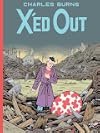
I picked this up when I went to a Charles Burns exhibition, struck by its front cover which is a direct homage to one of Hergé's Tintin albums, The Shooting Star. The story here is completely different, though, as young Doug wakes up in a nightmare world of strange and slightly horrible people; we get flashbacks to his "normal" life in our world which may or may not explain what has provoked his dreams, if they are dreams; and then a big reveal in the last frame shakes some sense into Doug's new world, and prepares the way for the next volume; which I will buy.
I picked this up when I went to a Charles Burns exhibition, struck by its front cover which is a direct homage to one of Hergé's Tintin albums, The Shooting Star. The story here is completely different, though, as young Doug wakes up in a nightmare world of strange and slightly horrible people; we get flashbacks to his "normal" life in our world which may or may not explain what has provoked his dreams, if they are dreams; and then a big reveal in the last frame shakes some sense into Doug's new world, and prepares the way for the next volume; which I will buy.
I picked this up on a whim from the library from the graphic novels display. I'd heard the name Charles Burns, but aside from perhaps a collection of authors, had not read any of his work.
His non-linear storytelling, graphics style, and typography are all appealing to me. What was not appealing was that this is not a stand-alone volume. In fact, after reading it, I knew very little of the storyline at all-- and not enough to ensure that I will pick up the next volume.
Bound in hardcover, I was expecting a standalone or at least a complete story in a collection of others. However, in fact, the scene shown on the cover of the book does not even happen in this volume.
Burns's style is much more intriguing in color than in black and white (I show more picked up a collection in which he appeared as a featured author, but in black and white, to compare) and I think he's heading somewhere interesting with _X'ed Out_: a story which plays with the malleability of memory, family patterns, memory loss, mental illness, identity...with a nice dose of a possible parallel universe thrown in. Maybe. show less
His non-linear storytelling, graphics style, and typography are all appealing to me. What was not appealing was that this is not a stand-alone volume. In fact, after reading it, I knew very little of the storyline at all-- and not enough to ensure that I will pick up the next volume.
Bound in hardcover, I was expecting a standalone or at least a complete story in a collection of others. However, in fact, the scene shown on the cover of the book does not even happen in this volume.
Burns's style is much more intriguing in color than in black and white (I show more picked up a collection in which he appeared as a featured author, but in black and white, to compare) and I think he's heading somewhere interesting with _X'ed Out_: a story which plays with the malleability of memory, family patterns, memory loss, mental illness, identity...with a nice dose of a possible parallel universe thrown in. Maybe. show less
At first I thought this was a stand-alone graphic novel, but it's only the first chapter of what promises to be a much longer work. I am intrigued, baffled and creeped out in the same manner that I was intrigued, baffled and creeped out by "Black Hole" when I first read the comic book installments. With "Black Hole", one of the problems of reading it in installment format was the length of time between issues, sometimes a year or more. I would tend to forget key images and plot points that hold the overall story together. But when I finally got hold of the hardcover of BH, it all made sense. As much sense as Burns' work makes, that is.
If you've read Burns' other work, you know what dark, nauseating worlds he creates, and "X'ed Out" is show more no exception. The narrative alternates between the real-world story of Doug, a young artist, and an alien and mysterious dream world he inhabits. In the dream world, he appears as a dazed, shell-shocked version of the Belgian comic character Tintin, and some of the landscapes in "X'ed Out" resemble the kind of thing you'd see in Tintin, except as seen through a dark lens. Tintin fans will also note that Doug has a black cat named Inky rather than a white dog named Snowy.
I look forward to the next installment. show less
If you've read Burns' other work, you know what dark, nauseating worlds he creates, and "X'ed Out" is show more no exception. The narrative alternates between the real-world story of Doug, a young artist, and an alien and mysterious dream world he inhabits. In the dream world, he appears as a dazed, shell-shocked version of the Belgian comic character Tintin, and some of the landscapes in "X'ed Out" resemble the kind of thing you'd see in Tintin, except as seen through a dark lens. Tintin fans will also note that Doug has a black cat named Inky rather than a white dog named Snowy.
I look forward to the next installment. show less
Members
- Recently Added By
Published Reviews
ThingScore 100
Wie ein Horror-Trip auf LSD - Charles Burns hat gegenwärtig den härtesten Strich aller amerikanischen Comic-Zeichnern, die stärksten Konturen, das tiefste Schwarz. Nach "Black Hole" ist "X" seine neue Chronik der amerikanischen Jugend der Siebziger - verstörend, deformiert, apokalyptisch. Ein Trip, wie man ihn sonst nur von William S. Burroughs oder David Lynch kennt.
added by private library
Lists

Titles beginning with X
72 works; 3 members
Author Information

78+ Works 5,603 Members
Series

Belongs to Publisher Series
Work Relationships
Is contained in
Common Knowledge
- Canonical title
- X'ed Out
- Original publication date
- 2010
- People/Characters
- Doug
- First words
- THIS IS THE ONLY PART I'LL REMEMBER.
- Last words
- (Click to show. Warning: May contain spoilers.)RIGHT THERE STRAIGHT IN FRONT OF YOU... THE HIVE.
Classifications
- Genre
- Graphic Novels & Comics
- DDC/MDS
- 741.5973 — Arts & recreation Drawing & decorative arts Drawing Comic books, graphic novels, fotonovelas, cartoons, caricatures, comic strips History, geographic treatment, biography North American United States (General)
- LCC
- PN6727 .B87 .X43 — Language and Literature Literature (General) Literature (General) Collections of general literature Comic books, strips, etc.
- BISAC
Statistics
- Members
- 547
- Popularity
- 53,833
- Reviews
- 27
- Rating
- (3.64)
- Languages
- 7 — Danish, Dutch, English, French, German, Italian, Spanish
- Media
- Paper
- ISBNs
- 8