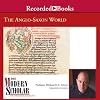
The Anglo-Saxon World (The Modern Scholar)
by Michael D. C. Drout
On This Page
Description
Had the Angles and Saxons not purposefully migrated to the isles of the Britons and brought with them their already-well-developed use of language, Angelina Jolie may never have appeared in the movie Beowulf. Professor Michael D.C. Drout is at his best when lecturing on the fascinating history, language, and societal adaptations of the Anglo-Saxons. He not only presents their storytelling abilities using their own words; he does so in their own voice-the incredibly melodious Old English. show more Drout's scholarship and recognized expertise on this subject is of the highest caliber. show lessTags
Recommendations















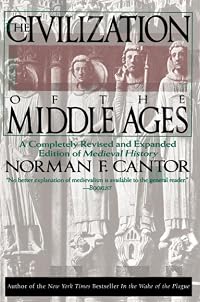
Member Recommendations

themulhern If you're interested in the subject, the lecture series is a great deal more friendly. But the book has its good points, also.
Member Reviews
What a pleasure to listen to this series of lectures! Drout covers the history of the Angles, Saxons, and Jutes, beginning with their migration into Britain. Drout’s love for this culture really shines through, and his excitement is both genuine and contagious. If his goal was to teach history, he succeeded; if his goal was to get people excited, well, he succeeded there, too. A few of the events he described were things I’d read about before, but he put a unique spin on them. For example, I had already read about the custom of passing a lyre around a hall so that people could take turns singing. But Drout made me laugh when he described this as “Medieval Karaoke Night” and then added the disclaimer, “I am not making this show more up.” What a fun way of looking at it! It’s so lovely when the author’s personality shines through.
He describes different facets of Anglo-Saxon life, from the extreme amount of labor that was involved in making a book, to the relatively poor living conditions of the masses, to the king who lamented that most of his people never bothered to learn a language other than English. Drout tells of the heroes and the idiots who shaped the course of British history, and he traces the development of certain ideas and practices across the centuries. He traces the fall of this culture, which was conquered and, in many respects, completely destroyed by William.
My two favorite elements of this lecture series are both literary. I enjoyed learning about King Alfred, who pushed for books in the vernacular, who fostered increased literacy among his subjects and his court, and who worked as both translator and author. And I absolutely adored Drout’s in-depth look at a variety of works of literature. Not just Beowulf—although that is, of course, the subject of one lecture—but also many of the great works of that period. “The Wanderer,” “The Seafarer,” “Judith” (he uses the phrase “Braveheart speech” to describe this warrior woman), religious poetry, wisdom poems, “The Dream of the Rood,” King Alfred’s writings, and more: Drout paints a vivid portrait of these and other writings, and he offers in-depth literary analysis. As if that weren’t enough, he also reads from these texts in the original Old English, which is such a beautiful and melodic language.
All in all, highly informative. A well-rounded picture of many different elements of this particular history and culture. show less
He describes different facets of Anglo-Saxon life, from the extreme amount of labor that was involved in making a book, to the relatively poor living conditions of the masses, to the king who lamented that most of his people never bothered to learn a language other than English. Drout tells of the heroes and the idiots who shaped the course of British history, and he traces the development of certain ideas and practices across the centuries. He traces the fall of this culture, which was conquered and, in many respects, completely destroyed by William.
My two favorite elements of this lecture series are both literary. I enjoyed learning about King Alfred, who pushed for books in the vernacular, who fostered increased literacy among his subjects and his court, and who worked as both translator and author. And I absolutely adored Drout’s in-depth look at a variety of works of literature. Not just Beowulf—although that is, of course, the subject of one lecture—but also many of the great works of that period. “The Wanderer,” “The Seafarer,” “Judith” (he uses the phrase “Braveheart speech” to describe this warrior woman), religious poetry, wisdom poems, “The Dream of the Rood,” King Alfred’s writings, and more: Drout paints a vivid portrait of these and other writings, and he offers in-depth literary analysis. As if that weren’t enough, he also reads from these texts in the original Old English, which is such a beautiful and melodic language.
All in all, highly informative. A well-rounded picture of many different elements of this particular history and culture. show less
Ratings
Members
- Recently Added By
Author Information

45+ Works 890 Members
Series
Belongs to Publisher Series
Modern Scholar (144)
Classifications
- Genres
- Nonfiction, History, General Nonfiction, Literature Studies and Criticism
- DDC/MDS
- 942.01 — History & geography History of Europe England and Wales England Anglo-Saxon B.C. 55 - A.D. 1066
- LCC
- DA152 .D76 — History of Europe, Asia, Africa and Oceania Great Britain History of Great Britain England History By period Early and medieval to 1485 Celts. Romans. Saxons. Danes. Normans
Statistics
- Members
- 35
- Popularity
- 819,646
- Reviews
- 1
- Rating
- (4.41)
- Languages
- English
- Media
- Paper, Audiobook
- ISBNs
- 4
- ASINs
- 1