
Theological-Political Treatise
by Baruch Spinoza
On This Page
Description
This new and complete translation of Spinoza's famous 17th-century work fills an important gap, not only for all scholars of Spinoza, but also for everyone interested in the relationship between Western philosophy and religion, and the history of biblical exegesis. The existing Elwes translation of 1883 has long been regarded as insufficient by Spinoza scholars for its misleading rendering of the Latin and its many omissions. Samuel Shirley, well-known for his excellent best-selling show more translation of Spinoza's "Ethics," now presents this new, complete translation of Spinoza's "Tractatus Theologico-Politicus" in lucid English, which meets the highest standards of modern critical scholarship. The book includes an Index of Subjects and a detailed Index of Biblical References as well as an Introduction by Brad Gregory, which sets Spinoza squarely in the context of his time and intellectual tradition. show lessTags
Recommendations

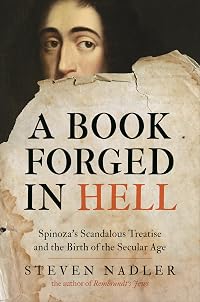




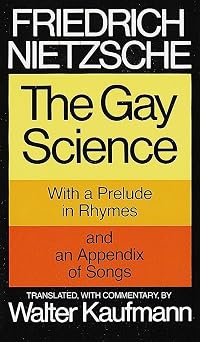
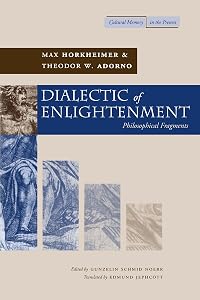
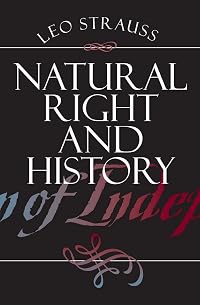
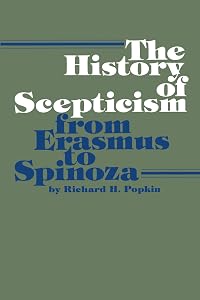

Member Reviews
When Spinoza’s Theological-Political Treatise was published in 1670, it was immediately attacked as a “godless”, “atheistic” book intended to attack all religions. Many considered it the most dangerous book ever written and one reviewer described it as a “book forged in Hell.”
The reason it upset so many people was it said so many shocking things including that the “Bible is not literally the word of God, and ‘true religion’ has nothing to do with theology or liturgical ceremonies” and that religion boils down to the simple rule to love your neighbor. He dismissed the existence of miracles, said that Moses did not write the first five books of the Bible, and pioneered the use of critical text analysis for the Bible show more saying that the Bible is just a work of human literature.
This is a remarkably readable book and, despite all of the negative things said about it, it is actually very devout. The reason to book is so powerful and persuasive is that Spinoza provides detailed reasoning for all of his conjectures and his reasoning always start with a very precise reading of scripture.
Particularly interesting were the many chapters where Spinoza illustrated his methodology for critical text analysis. Although very detailed, it is fascinating to watch unfold. When he begins with the text, he looks at the original Hebrew letters and surmises that some misreading of specific letters could have led to erroneous translations. He also goes into great detail illustrating where scripture contradicts itself. He then concludes which passages can and cannot be believed due to these likely distortions. Spinoza shows genuine contempt for theologians who provide twisted reasoning in an effort to explain away these contradictions in order to defend Biblical inerrancy.
After reading Steven Nadler’s A Book Forged in Hell about Spinoza’s book, I felt compelled to read the original from Spinoza. I am glad I did. I read a very inexpensive e-book published by Grapevine and found the edition of high quality. There are, however, no footnotes or introductory remarks for this edition. show less
The reason it upset so many people was it said so many shocking things including that the “Bible is not literally the word of God, and ‘true religion’ has nothing to do with theology or liturgical ceremonies” and that religion boils down to the simple rule to love your neighbor. He dismissed the existence of miracles, said that Moses did not write the first five books of the Bible, and pioneered the use of critical text analysis for the Bible show more saying that the Bible is just a work of human literature.
This is a remarkably readable book and, despite all of the negative things said about it, it is actually very devout. The reason to book is so powerful and persuasive is that Spinoza provides detailed reasoning for all of his conjectures and his reasoning always start with a very precise reading of scripture.
Particularly interesting were the many chapters where Spinoza illustrated his methodology for critical text analysis. Although very detailed, it is fascinating to watch unfold. When he begins with the text, he looks at the original Hebrew letters and surmises that some misreading of specific letters could have led to erroneous translations. He also goes into great detail illustrating where scripture contradicts itself. He then concludes which passages can and cannot be believed due to these likely distortions. Spinoza shows genuine contempt for theologians who provide twisted reasoning in an effort to explain away these contradictions in order to defend Biblical inerrancy.
After reading Steven Nadler’s A Book Forged in Hell about Spinoza’s book, I felt compelled to read the original from Spinoza. I am glad I did. I read a very inexpensive e-book published by Grapevine and found the edition of high quality. There are, however, no footnotes or introductory remarks for this edition. show less
Fascinating--I'm glad I finally read this. Being raised an Atheist and knowing little about religion, I found this book very challenging, but informative. Spinoza's ultimate message seems to be that God/Religion is in the world around us--i.e. nature is God and God is nature. I'm surprised that he was allowed to advance this philosopy at the time that he did. He also seemed to employ quite a bit of sarcasm, which also surprised me, but which enlivened the reading.
Not as dull as it sounds
One quote review.
An excerpt from the book:
"The affirmations and the negations of 'God' always involve necessity or truth; so that, for example, if God said to Adam that He did not wish him to eat of the tree of knowledge of good and evil, it would have involved a contradiction that Adam should have been able to eat of it, and would, therefore, have been impossible that he should have so eaten, for the Divine command would have involved an eternal necessity and truth. But since Scripture nevertheless narrates that God did give this command to Adam, and yet that none the less Adam ate of the tree, we must perforce say that God revealed to Adam the evil which would surely follow if he should eat of the tree, but did not disclose that such show more evil would of necessity come to pass. Thus it was that Adam took the revelation to be not an eternal and necessary truth, but a law - that is, an ordinance followed by gain or loss, not depending necessarily on the nature of the act performed, but solely on the will and absolute power of some potentate, so that the revelation in question was solely in relation to Adam, and solely through his lack of knowledge a law, and God was, as it were, a lawgiver and potentate. From the same cause, namely, from lack of knowledge, the Decalogue in relation to the Hebrews was a law. We conclude, therefore, that God is described as a lawgiver or prince, and styled just, merciful, etc., merely in concession to popular understanding, and the imperfection of popular knowledge; that in reality God acts and directs all things simply by the necessity of His nature and perfection, and that His decrees and volitions are eternal truths, and always involve necessity."
The key words in the excerpt are: "solely through the lack of knowledge" - the whole anthropomorphic domain of law, ínjunction, moral command, et cetera, is based on our ignorance; and the proposed ontological ethics are deprived of the deontological dimension.
_______________________________
Also, "Cigarette smoking may be hazardous to your health."
But that is not prohibited obviously — (Nothing is, nothing can be) — you're just informed of a cáusal link.
An excerpt from the book:
"The affirmations and the negations of 'God' always involve necessity or truth; so that, for example, if God said to Adam that He did not wish him to eat of the tree of knowledge of good and evil, it would have involved a contradiction that Adam should have been able to eat of it, and would, therefore, have been impossible that he should have so eaten, for the Divine command would have involved an eternal necessity and truth. But since Scripture nevertheless narrates that God did give this command to Adam, and yet that none the less Adam ate of the tree, we must perforce say that God revealed to Adam the evil which would surely follow if he should eat of the tree, but did not disclose that such show more evil would of necessity come to pass. Thus it was that Adam took the revelation to be not an eternal and necessary truth, but a law - that is, an ordinance followed by gain or loss, not depending necessarily on the nature of the act performed, but solely on the will and absolute power of some potentate, so that the revelation in question was solely in relation to Adam, and solely through his lack of knowledge a law, and God was, as it were, a lawgiver and potentate. From the same cause, namely, from lack of knowledge, the Decalogue in relation to the Hebrews was a law. We conclude, therefore, that God is described as a lawgiver or prince, and styled just, merciful, etc., merely in concession to popular understanding, and the imperfection of popular knowledge; that in reality God acts and directs all things simply by the necessity of His nature and perfection, and that His decrees and volitions are eternal truths, and always involve necessity."
The key words in the excerpt are: "solely through the lack of knowledge" - the whole anthropomorphic domain of law, ínjunction, moral command, et cetera, is based on our ignorance; and the proposed ontological ethics are deprived of the deontological dimension.
_______________________________
Also, "Cigarette smoking may be hazardous to your health."
But that is not prohibited obviously — (Nothing is, nothing can be) — you're just informed of a cáusal link.
show less
One quote review.
An excerpt from the book:
"The affirmations and the negations of 'God' always involve necessity or truth; so that, for example, if God said to Adam that He did not wish him to eat of the tree of knowledge of good and evil, it would have involved a contradiction that Adam should have been able to eat of it, and would, therefore, have been impossible that he should have so eaten, for the Divine command would have involved an eternal necessity and truth. But since Scripture nevertheless narrates that God did give this command to Adam, and yet that none the less Adam ate of the tree, we must perforce say that God revealed to Adam the evil which would surely follow if he should eat of the tree, but did not disclose that such show more evil would of necessity come to pass. Thus it was that Adam took the revelation to be not an eternal and necessary truth, but a law - that is, an ordinance followed by gain or loss, not depending necessarily on the nature of the act performed, but solely on the will and absolute power of some potentate, so that the revelation in question was solely in relation to Adam, and solely through his lack of knowledge a law, and God was, as it were, a lawgiver and potentate. From the same cause, namely, from lack of knowledge, the Decalogue in relation to the Hebrews was a law. We conclude, therefore, that God is described as a lawgiver or prince, and styled just, merciful, etc., merely in concession to popular understanding, and the imperfection of popular knowledge; that in reality God acts and directs all things simply by the necessity of His nature and perfection, and that His decrees and volitions are eternal truths, and always involve necessity."
The key words in the excerpt are: "solely through the lack of knowledge" - the whole anthropomorphic domain of law, ínjunction, moral command, et cetera, is based on our ignorance; and the proposed ontological ethics are deprived of the deontological dimension.
_______________________________
Also, "Cigarette smoking may be hazardous to your health."
But that is not prohibited obviously — (Nothing is, nothing can be) — you're just informed of a cáusal link.
An excerpt from the book:
"The affirmations and the negations of 'God' always involve necessity or truth; so that, for example, if God said to Adam that He did not wish him to eat of the tree of knowledge of good and evil, it would have involved a contradiction that Adam should have been able to eat of it, and would, therefore, have been impossible that he should have so eaten, for the Divine command would have involved an eternal necessity and truth. But since Scripture nevertheless narrates that God did give this command to Adam, and yet that none the less Adam ate of the tree, we must perforce say that God revealed to Adam the evil which would surely follow if he should eat of the tree, but did not disclose that such show more evil would of necessity come to pass. Thus it was that Adam took the revelation to be not an eternal and necessary truth, but a law - that is, an ordinance followed by gain or loss, not depending necessarily on the nature of the act performed, but solely on the will and absolute power of some potentate, so that the revelation in question was solely in relation to Adam, and solely through his lack of knowledge a law, and God was, as it were, a lawgiver and potentate. From the same cause, namely, from lack of knowledge, the Decalogue in relation to the Hebrews was a law. We conclude, therefore, that God is described as a lawgiver or prince, and styled just, merciful, etc., merely in concession to popular understanding, and the imperfection of popular knowledge; that in reality God acts and directs all things simply by the necessity of His nature and perfection, and that His decrees and volitions are eternal truths, and always involve necessity."
The key words in the excerpt are: "solely through the lack of knowledge" - the whole anthropomorphic domain of law, ínjunction, moral command, et cetera, is based on our ignorance; and the proposed ontological ethics are deprived of the deontological dimension.
_______________________________
Also, "Cigarette smoking may be hazardous to your health."
But that is not prohibited obviously — (Nothing is, nothing can be) — you're just informed of a cáusal link.
show less
I know, I know that I also have this in French and in Latin but I bought the intro by Jonathan Israel.
Qué escándalo que debió haber causado este libro en 1670, si incluso hoy muchas de sus ideas deben ser muy avanzadas para ciertas personas: la Biblia no es la palabra de Dios, ni el Pentateuco fue escrito por Moisés, la Biblia fue escrita por seres humanos, con el propósito básico de hacer que el pueblo judío obedeciera órdenes para garantizar la "cohesión social". Los milagros son básicamente supersticiones. Y finalmente, el Estado debe ponerse por encima de las distintas facciones religiosas para garantizar que ninguna de ellas pueda usurpar derechos básicos: de pensar lo que se quiera, de decir lo que se piensa, para garantizar finalmente la tolerancia religiosa. Este libro está en el origen de la concepción moderna del show more estado secular, liberal, tolerante y pluralista. Fue casi que universalmente condenado por sus contemporáneos cuando Spinoza lo publicó anónimamente (para protegerse de la intolerancia religiosa, precisamente). show less
Dec 16, 2014Spanish
Members
- Recently Added By
Lists

Books I Want to Read
36 works; 1 member

Política - Clásicos
164 works; 2 members

Atheism, humanism, freethought, &c. — Best nonfiction books in favour of
167 works; 14 members

Philosophy, Politics and Economics
61 works; 1 member
Author Information

336+ Works 10,134 Members
Baruch Spinoza was born in Amsterdam, the son of Portuguese Jewish refugees who had fled from the persecution of the Spanish Inquisition. Although reared in the Jewish community, he rebelled against its religious views and practices, and in 1656 was formally excommunicated from the Portuguese-Spanish Synagogue of Amsterdam and was thus effectively show more cast out of the Jewish world. He joined a group of nonconfessional Christians (although he never became a Christian), the Collegiants, who professed no creeds or practices but shared a spiritual brotherhood. He was also apparently involved with the Quaker mission in Amsterdam. Spinoza eventually settled in The Hague, where he lived quietly, studying philosophy, science, and theology, discussing his ideas with a small circle of independent thinkers, and earning his living as a lens grinder. He corresponded with some of the leading philosophers and scientists of his time and was visited by Leibniz and many others. He is said to have refused offers to teach at Heidelberg or to be court philosopher for the Prince of Conde. During his lifetime he published only two works, The Principles of Descartes' Philosophy (1666) and the Theological Political Tractatus (1670). In the first his own theory began to emerge as the consistent consequence of that of Descartes (see also Vol. 5). In the second, he gave his reasons for rejecting the claims of religious knowledge and elaborated his theory of the independence of the state from all religious factions. After his death (probably caused by consumption resulting from glass dust), his major work, the Ethics, appeared in his Opera Posthuma, and presented the full metaphysical basis of his pantheistic view. Spinoza's influence on the Enlightenment, on the Romantic Age, and on modern secularism has been tremendous. (Bowker Author Biography) show less

Baruch Spinoza has a Legacy Library. Legacy libraries are the personal libraries of famous readers, entered by LibraryThing members from the Legacy Libraries group.
Some Editions
Awards and Honors
Notable Lists
Series
Belongs to Publisher Series
Work Relationships
Is contained in
Has as a commentary on the text
Common Knowledge
- Canonical title
- Theological-Political Treatise
- Original title
- Tractatus theologico-politicus
- Original publication date
- 1670
- People/Characters
- Giordano Bruno; Baruch Spinoza
- First words*
- Tra i vari, possibili discorsi introduttivi alla lettura del Trattato teologico-politico - testo insieme di critica biblica, filosofia della religione e filosofia politica - quello tendente a mettere in luce il signifi... (show all)cato della filosofia politica spinoziana e il nesso esistente tra filosofia politica e metafisica spinoziana mi è parso offrire il tipo di approccio al testo oggi più pertinente.
PREFAZIONE di Emilia Gaincotti Boscherini
Se gli uomini potessero procedere a ragion veduta in tutte le loro cose o se la fortuna fosse loro sempre propizia, non andrebbero soggetti ad alcuna superstizione. Ma, poiché essi vengono spesso a trovarsi di fronte a tali ... (show all)difficoltà che non sanno prendere alcuna decisione e poiché il loro smisurato desiderio degli incerti beni della fortuna li fa penosamente ondeggiare tra la speranza e il timore, il loro animo è quanto mai incline a credere qualsiasi cosa; quando è preso dal dubbio, esso è facilmente sospinto or qua or là, e tanto più allorché esita in preda alla speranza o al timore, mentre nei momenti di fiducia è pieno di vanità e presunzione.
PREFAZIONE
Profezia o rivelazione è la conoscenza certa di una cosa rivelata da Dio agli uomini. - Last words*
- (Click to show. Warning: May contain spoilers.)In esso [nel Trattato] l'Autore, rivolgendosi per la prima volta in prima persona al pubblico filosofico (pur senza dichiarare il proprio nome), discute sui principî al fine di offrire i presupposti teorici per una soluzione pratica del problema del rapporto tra confessioni religiose da una parte e tra chiesa e stato dall'altra; e di avanzare una ipotesi di organizzazione della società civile nella quale il diritto naturale del singolo trovi la sua concreta, razionale esplicazione nel riconoscimento del diritto altrui, e l'interesse individuale si identifichi con l'interesse collettivo.
PREFAZIONE di Emilia Gaincotti Boscherini
(Click to show. Warning: May contain spoilers.)So di essere un uomo e di aver potuto sbagliare: ma ho fatto tutto il possibile per non cadere in errore e perché, soprattutto, quanto scrivevo fosse in tutto conforme alle leggi del mio paese, alla religione e alla morale. - Original language
- Latin
*Some information comes from Common Knowledge in other languages. Click "Edit" for more information.
Classifications
- Genres
- Philosophy, Nonfiction, Religion & Spirituality, General Nonfiction, Politics and Government
- DDC/MDS
- 199.492 — Philosophy & psychology Modern western philosophy Philosophy in other geographic areas Europe Other European Countries Netherlands
- LCC
- B3985 .E5 .S4513 — Philosophy, Psychology and Religion Philosophy (General) By period Modern By region or country
- BISAC
Statistics
- Members
- 1,183
- Popularity
- 21,241
- Reviews
- 12
- Rating
- (3.95)
- Languages
- 14 — Danish, Dutch, English, French, German, Hebrew, Hungarian, Italian, Latin, Portuguese, Serbian, Spanish, Swedish, Turkish
- Media
- Paper, Ebook
- ISBNs
- 95
- UPCs
- 1
- ASINs
- 18