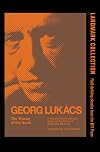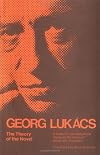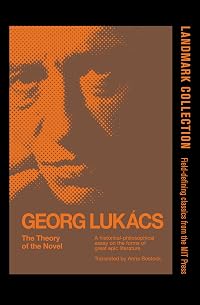
The Theory of the Novel
by Georg Lukacs
On This Page
Description
Georg Lukács wrote The Theory of the Novel in 1914-1915, a period that also saw the conception of Rosa Luxemburg's Spartacus Letters, Lenin's Imperialism: The Highest Stage of Capitalism, Spengler's Decline of the West, and Ernst Bloch's Spirit of Utopia. Like many of Lukács's early essays, it is a radical critique of bourgeois culture and stems from a specific Central European philosophy of life and tradition of dialectical idealism whose originators include Kant, Hegel, Novalis, Marx, show more Kierkegaard, Simmel, Weber, and Husserl. The Theory of the Novel marks the transition of the Hungarian philosopher from Kant to Hegel and was Lukács's last great work before he turned to Marxism-Leninism. show lessTags
Recommendations







Member Reviews
Lukács was Very Serious about the novel, and the many dangers of constructing it in certain ways. No frivolity here, people! Buckle down!
Ratings
Members
- Recently Added By
Lists

Literary Theory and Criticism: What Happens and Why
37 works; 5 members
Author Information

330+ Works 4,574 Members
George Steiner calls Lukacs "the one major critical talent to have emerged from the gray servitude of the Marxist world." This well-known writer on European literature combines a Marxist-Hegelian concern for the historical process with great artistic sensitivity. Lukacs joined the Hungarian Communist party in 1918, serving in its first government show more until the defeat of Bela Kun. He spent many years in exile, first in Berlin and then, from 1933 to 1945, in Moscow, writing and studying. He later became a professor of aesthetics in Budapest, but after the 1956 revolution he was stripped of influence because of his too-friendly attitude to non-Marxist literatures. Steiner has written: "A Communist by conviction, a dialectical materialist by virtue of his critical method, he has nevertheless kept his eyes resolutely on the past. Despite pressure from his Russian hosts, Lukacs gave only perfunctory notice to the much-heralded achievements of Soviet Realism. Instead, he dwelt on the great lineage of eighteenth and nineteenth century European poetry and fiction. The critical perspective is rigorously Marxist, but the choice of themes is central European and conservative." Lukacs has concentrated mainly on criticism of Russian, French, and German authors and often writes in German. Robert J. Clements has reported that Hungarian young people regard him as somewhat passe. (Bowker Author Biography) show less
Series
Belongs to Publisher Series
Work Relationships
Is contained in
Common Knowledge
- Canonical title*
- La teoria de la novel·la
- Original title
- Die Theorie des Romans
- Original publication date
- 1920
*Some information comes from Common Knowledge in other languages. Click "Edit" for more information.
Classifications
Statistics
- Members
- 703
- Popularity
- 40,486
- Reviews
- 1
- Rating
- (3.70)
- Languages
- 12 — Catalan, Dutch, English, French, German, Italian, Korean, Norwegian (Bokmål), Polish, Portuguese, Slovenian, Spanish
- Media
- Paper, Ebook
- ISBNs
- 28
- ASINs
- 10