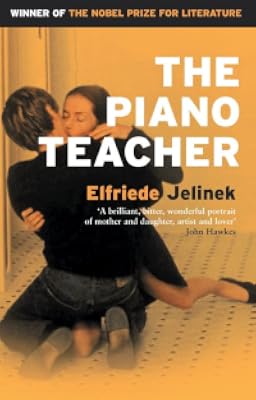
The Piano Teacher
by Elfriede Jelinek
On This Page
Description
In The Piano Teacher, Elfride Jelinek creates a shocking portrait of a talented, capable woman fashioned by society into a ticking bomb. Set in 1980s Vienna, it describes a culture rotting under the weight of its oppressive, outmoded ideals-a place mirrored by the heroine's own repressed dreams. Erika Kohut, piano teacher at the prestigious Vienna Conservatory, is a quiet woman devoted to Bach, Beethoven, and her domineering mother. Her life consists of desperate boredom, neurotic show more possessiveness, and hopeless dreams of a concert career whose hour has long passed. Enter Walter Klemmer-a handsome, arrogant man out to conquer Erika's affections. Suddenly the dangerous passions roiling under her subdued exterior explode in a release of sexual perversity and long-buried violence. Awarded the Nobel and the Heinrich Boll Prize for her outstanding contribution to German letters, Elfriede Jelinek is one of the most original and controversial writers in Austria today. The Piano Teacher was made into an acclaimed film by Michael Haneke in 2001. show lessTags
Recommendations

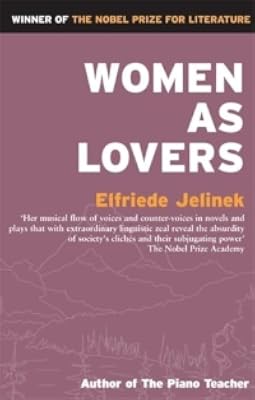









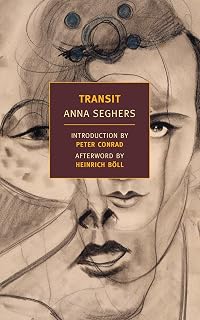


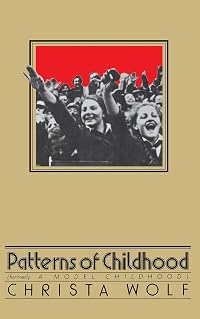
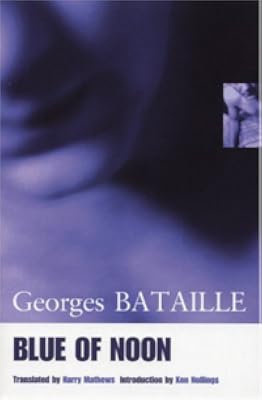
Member Recommendations

Dorn by Lilly Axster
by anonymous user

by anonymous user

Member Reviews
The Piano Teacher
by Elfriede Jelinek
Review by Karl Wolff
Personal History: Every once in a while, the Swedish Academy awards the Nobel Prize in Literature you've never heard of. In my case, it was Elfriede Jelinek. When she was awarded the Nobel Prize in 2004, a storm of controversy erupted. Knut Ahnlund resigned in protest, saying her work was "whining, unenjoyable public pornography" and "a mass of text shovelled together without artistic structure." A Nobel laureate's work likened to pornography? I became immediately interested in finding Jelinek's work. As with several other authors in this series, this is the first time I've read anything by Elfriede Jelinek and I read it "cold." (For those who haven't read The Piano Teacher and show more want to read it, stop reading this essay right now. Everything below will inevitably involve spoilers, historical and cultural context, and my opinion on the book. Reading those things would ruin your initial reading experience. Caveat lector.)
The History: Elfriede Jelinek is Austrian. This is an important distinction in German-language literature. While Germany and Austria share the same language, they are radically different cultures. Germany became unified in a series of nationalistic wars in the 1860s and reigned triumphant with their victory in the Franco-Prussian War of 1871. Then the World Wars happened, followed by the economic miracle, and eventual unification between East and West Germany. Following the First World War, Austria was lopped off from the Austro-Hungarian Empire, a multinational, multiethnic imperial entity that had been ruled by the Hapsburg dynasty for centuries. (The Austro-Hungarian Empire also included the nations that made up Yugoslavia, as well as Hungary, Czechoslovakia, and Romania.) A German-speaking aristocracy ran the government and supplied candidates to the officer corps. Non-German speakers were one rung lower on the social hierarchy.
Unlike Germany, with its mix of Lutherans and Catholics, Austria is almost entirely Catholic. For centuries, the Austrian monarchy provided Catholic brides to European kings. Marie Antoinette came from Austria. During the early modern period, Austria saw itself as the bulwark against the Muslim hordes of Asia and the Ottoman Empire. Hitler was also born in Austria.
In addition to this cultural background, Austria has a rich literary tradition. Writers, philosophers, and intellectuals include Leopold von Sacher-Masoch, Thomas Bernhard, Sigmund Freud, Karl Kraus, Arthur Schnitzler, Joseph Roth, and Robert Musil. There are many, many more. Elfriede Jelinek is part of this tradition. Her relentless, bleak, yet darkly comic style is reminiscent of Thomas Bernhard and her acidic bon mots burn like those from Karl Kraus. Kraus summed up the Austrian national character, saying, "Prussia: Freedom of movement, with a muzzle. Austria: Solitary confinement, with permission to scream." (This reads like a two-sentence summary of The Piano Teacher.) "In Berlin you walk on papier mache, in Vienna you bite granite."
Elfriede Jelinek distills the suffocating, bureaucratic, culture-soaked decadence, Catholic sexual repression, and her nation's culpability in Nazi criminality and turns it into a lacerating novel about love, sex, and desperation. Written in 1983, The Piano Teacher can be considered "contemporary fiction."
The Book: The Piano Teacher is a story about relationships. Erika Kohut teaches piano at the Vienna Conservatory and lives with her mother. After having failed a major recital, Erika's destiny to become a famous concert pianist is destroyed. Her mother, a monstrous showbiz mom right out of Toddlers & Tiaras, shepherds her daughter into becoming a piano teacher. When she can, Erika escapes the suffocating micromanagement of her mother to watch sex shows and visit porn stores in Vienna's darker corners.
Then she meets Walter Klemmer, an engineering student studying piano. He is a young student and Erika is approaching forty. Walter thinks he can get sexual experience from Erika. Erika desperately desires Walter to be her lover. Erika punishes herself for such naughty thoughts by cutting herself. Unlike other professionals, Erika shares an apartment with her mother, gives her mother her paychecks, and sleeps with mother in the same bed. (As far as well-adjusted parent-child relationships, Erika and her mother make Norman Bates and his mother seem normal.)
Erika is hen-pecked by her mother, reprimanded and guilt-tripped for buying a dress. She would nothing more than to escape the clutches of her mother, but she can't seem to muster the will power. Each are dangerously co-dependent on each other. The novel also tells us how her father was driven insane by her mother.
In order to jumpstart the affair, Erika flirts with Walter. They eventually kiss in the Conservatory's bathroom. Walter hopes he can get Erika to consummate the relationship. Unfortunately, Erika pleasures him, but refuses to bring the act to completion. The stillborn affair enters a black tailspin when she gives Walter a letter. The letter pleads with Walter. It says he can do whatever he wants with her, including tying her up and beating her. Walter is disgusted. The novel ends with Erika locking her mother in her bedroom and begging Walter to have sex with her. Walter ends up raping her and beating her. After her recovery, she gets a knife and prepares to find Walter to stab him. She chickens out, instead using the knife to cut herself and then walking back to the apartment and back to Mother.
The Verdict: This was one of the few books that effected me physically. The only other books that have done that have been those written by the Marquis de Sade. I had to put it down after reading one or two chapters. Jelinek's style alienates, intimidates, and mocks. The Swedish Academy said she has a "musical flow of voices and counter-voices in novels and plays that with extraordinary linguistic zeal reveal the absurdity of society's cliches and their subjugating power." These voices and counter-voices resound throughout the novel. Mother tells Erika she must teach in order to school people in the value of the arts. Then Mother tells Erika that the people coming to her recitals are nothing but philistine poseurs who know nothing about art. Walter, sexually immature, will stop at nothing to possess Erika. Yet he finds her desperation disgusting and he calls her ugly. Again and again, pretensions are raised high and then dashed against the rocks with merciless efficiency. It reminds me of Miss Lonelyhearts by Nathanael West.
While Jelinek has roots in Communist and feminist ideologies, The Piano Teacher transcends being mere agitprop for some specific agenda. The book's ferocity is relentless and omnicidal. It attacks everyone and everything. Jelinek is like an Austrian version of Kathy Acker. The book takes everyday cliches and spits them back at the reader's face.
Granted, this book isn't for everybody. It lacks a redemptive arc and every character is morally contemptible. Lacking conventional dialogue and filled with dream sequences and hallucinations, it is a challenge to read.
Is it erotica? Or pornography? Hardly. While the book pulsates with sexual derangement and obsession, it is the least erotic thing I've read. Sexuality is treated as yet another power game with Erika, Klemmer, and Mother as a trio of self-destructive con artists. While this is challenging literature written with savage beauty, the eroticism is curdled and rancid, since every relationship remains infused with a numbed toxic hatred.
http://www.cclapcenter.com/2013/12/the_nsfw_files_the_piano_teach.html
or
http://driftlessareareview.com/2013/12/06/the-nsfw-files-the-piano-teacher-by-el... show less
by Elfriede Jelinek
Review by Karl Wolff
Personal History: Every once in a while, the Swedish Academy awards the Nobel Prize in Literature you've never heard of. In my case, it was Elfriede Jelinek. When she was awarded the Nobel Prize in 2004, a storm of controversy erupted. Knut Ahnlund resigned in protest, saying her work was "whining, unenjoyable public pornography" and "a mass of text shovelled together without artistic structure." A Nobel laureate's work likened to pornography? I became immediately interested in finding Jelinek's work. As with several other authors in this series, this is the first time I've read anything by Elfriede Jelinek and I read it "cold." (For those who haven't read The Piano Teacher and show more want to read it, stop reading this essay right now. Everything below will inevitably involve spoilers, historical and cultural context, and my opinion on the book. Reading those things would ruin your initial reading experience. Caveat lector.)
The History: Elfriede Jelinek is Austrian. This is an important distinction in German-language literature. While Germany and Austria share the same language, they are radically different cultures. Germany became unified in a series of nationalistic wars in the 1860s and reigned triumphant with their victory in the Franco-Prussian War of 1871. Then the World Wars happened, followed by the economic miracle, and eventual unification between East and West Germany. Following the First World War, Austria was lopped off from the Austro-Hungarian Empire, a multinational, multiethnic imperial entity that had been ruled by the Hapsburg dynasty for centuries. (The Austro-Hungarian Empire also included the nations that made up Yugoslavia, as well as Hungary, Czechoslovakia, and Romania.) A German-speaking aristocracy ran the government and supplied candidates to the officer corps. Non-German speakers were one rung lower on the social hierarchy.
Unlike Germany, with its mix of Lutherans and Catholics, Austria is almost entirely Catholic. For centuries, the Austrian monarchy provided Catholic brides to European kings. Marie Antoinette came from Austria. During the early modern period, Austria saw itself as the bulwark against the Muslim hordes of Asia and the Ottoman Empire. Hitler was also born in Austria.
In addition to this cultural background, Austria has a rich literary tradition. Writers, philosophers, and intellectuals include Leopold von Sacher-Masoch, Thomas Bernhard, Sigmund Freud, Karl Kraus, Arthur Schnitzler, Joseph Roth, and Robert Musil. There are many, many more. Elfriede Jelinek is part of this tradition. Her relentless, bleak, yet darkly comic style is reminiscent of Thomas Bernhard and her acidic bon mots burn like those from Karl Kraus. Kraus summed up the Austrian national character, saying, "Prussia: Freedom of movement, with a muzzle. Austria: Solitary confinement, with permission to scream." (This reads like a two-sentence summary of The Piano Teacher.) "In Berlin you walk on papier mache, in Vienna you bite granite."
Elfriede Jelinek distills the suffocating, bureaucratic, culture-soaked decadence, Catholic sexual repression, and her nation's culpability in Nazi criminality and turns it into a lacerating novel about love, sex, and desperation. Written in 1983, The Piano Teacher can be considered "contemporary fiction."
The Book: The Piano Teacher is a story about relationships. Erika Kohut teaches piano at the Vienna Conservatory and lives with her mother. After having failed a major recital, Erika's destiny to become a famous concert pianist is destroyed. Her mother, a monstrous showbiz mom right out of Toddlers & Tiaras, shepherds her daughter into becoming a piano teacher. When she can, Erika escapes the suffocating micromanagement of her mother to watch sex shows and visit porn stores in Vienna's darker corners.
Then she meets Walter Klemmer, an engineering student studying piano. He is a young student and Erika is approaching forty. Walter thinks he can get sexual experience from Erika. Erika desperately desires Walter to be her lover. Erika punishes herself for such naughty thoughts by cutting herself. Unlike other professionals, Erika shares an apartment with her mother, gives her mother her paychecks, and sleeps with mother in the same bed. (As far as well-adjusted parent-child relationships, Erika and her mother make Norman Bates and his mother seem normal.)
Erika is hen-pecked by her mother, reprimanded and guilt-tripped for buying a dress. She would nothing more than to escape the clutches of her mother, but she can't seem to muster the will power. Each are dangerously co-dependent on each other. The novel also tells us how her father was driven insane by her mother.
In order to jumpstart the affair, Erika flirts with Walter. They eventually kiss in the Conservatory's bathroom. Walter hopes he can get Erika to consummate the relationship. Unfortunately, Erika pleasures him, but refuses to bring the act to completion. The stillborn affair enters a black tailspin when she gives Walter a letter. The letter pleads with Walter. It says he can do whatever he wants with her, including tying her up and beating her. Walter is disgusted. The novel ends with Erika locking her mother in her bedroom and begging Walter to have sex with her. Walter ends up raping her and beating her. After her recovery, she gets a knife and prepares to find Walter to stab him. She chickens out, instead using the knife to cut herself and then walking back to the apartment and back to Mother.
The Verdict: This was one of the few books that effected me physically. The only other books that have done that have been those written by the Marquis de Sade. I had to put it down after reading one or two chapters. Jelinek's style alienates, intimidates, and mocks. The Swedish Academy said she has a "musical flow of voices and counter-voices in novels and plays that with extraordinary linguistic zeal reveal the absurdity of society's cliches and their subjugating power." These voices and counter-voices resound throughout the novel. Mother tells Erika she must teach in order to school people in the value of the arts. Then Mother tells Erika that the people coming to her recitals are nothing but philistine poseurs who know nothing about art. Walter, sexually immature, will stop at nothing to possess Erika. Yet he finds her desperation disgusting and he calls her ugly. Again and again, pretensions are raised high and then dashed against the rocks with merciless efficiency. It reminds me of Miss Lonelyhearts by Nathanael West.
While Jelinek has roots in Communist and feminist ideologies, The Piano Teacher transcends being mere agitprop for some specific agenda. The book's ferocity is relentless and omnicidal. It attacks everyone and everything. Jelinek is like an Austrian version of Kathy Acker. The book takes everyday cliches and spits them back at the reader's face.
Granted, this book isn't for everybody. It lacks a redemptive arc and every character is morally contemptible. Lacking conventional dialogue and filled with dream sequences and hallucinations, it is a challenge to read.
Is it erotica? Or pornography? Hardly. While the book pulsates with sexual derangement and obsession, it is the least erotic thing I've read. Sexuality is treated as yet another power game with Erika, Klemmer, and Mother as a trio of self-destructive con artists. While this is challenging literature written with savage beauty, the eroticism is curdled and rancid, since every relationship remains infused with a numbed toxic hatred.
http://www.cclapcenter.com/2013/12/the_nsfw_files_the_piano_teach.html
or
http://driftlessareareview.com/2013/12/06/the-nsfw-files-the-piano-teacher-by-el... show less
Erika Kohut is a woman in her mid-thirties who teaches piano at the prestigious Vienna Conservatory. She lives with her controlling mother in a very taught and unhealthy relationship. Erika rebels in various including buying clothing she never wears, self-harm, and deliberately injuring strangers. Over the course of the novel she also explores her repressed sexuality by going to pornographic movies, peep shows, and practicing voyeurism.
Walter Klemmer, a student over a decade younger than Erika, begins to show her attention. Their desire grows and when they finally acknowledge it, Erika requests a sadomasochistic relationship. Walter, who is an arrogant prick, really justs wants to have sex with an older woman and move on. Things go show more horribly, horribly wrong.
I saw this book described as "erotic" but there's absolutely nothing sexy about it. In fact, it is quite repulsive. Jelinek seems to revel in using the most unpleasant description possible for the human condition and the human body. It just gets worse and worse and I really struggled to finish this book. I've also seen the book described as "satire," but it reads to me as nothing more than caustic misanthropy. show less
Walter Klemmer, a student over a decade younger than Erika, begins to show her attention. Their desire grows and when they finally acknowledge it, Erika requests a sadomasochistic relationship. Walter, who is an arrogant prick, really justs wants to have sex with an older woman and move on. Things go show more horribly, horribly wrong.
I saw this book described as "erotic" but there's absolutely nothing sexy about it. In fact, it is quite repulsive. Jelinek seems to revel in using the most unpleasant description possible for the human condition and the human body. It just gets worse and worse and I really struggled to finish this book. I've also seen the book described as "satire," but it reads to me as nothing more than caustic misanthropy. show less
A uniquely structured but uneven novel that largely deals with control, The Piano Teacher operates through childhood trauma and sexual repression underneath its series of masochistic degradation and violation. In this mother-daughter relationship moulded from unhealthy dependencies, a seemingly omniproof protection asphyxiates the prey: the middle-aged daughter Erika Kohut who does not have a life of her own outside her piano lessons. What seems to be a maternal preservation of innocence becomes a descent to self-destruction; and what seems to be the appealing notion of parental trust becomes a game of manipulation. Whilst this habitual power trip also tips the already off-balanced relationship it further plunges down with the arrival show more of a student who becomes infatuated with Erika. A cat-and-mouse chase ensues until it reveals itself to be another, but much perverse, game of manipulation. "Love" has a deformed face. Who shall be in control this time?
Behind the voyeuristic nature of the narrative which at times is horrific, even revolting, a gamut of loneliness runs its course amidst Erika’s filthy actions. There is a painful attempt at trying to take back any kind of control for one’s own sanity, however drastic, in any way possible. And it may be that even sanity loses itself in the process. The result is a dismal self-infliction. Adulthood is only a childhood warped in its worsened state with a worse outcome ("I have no feelings. Get that into your head. If I ever do, they won't defeat my intelligence"). It suggests a cycle without an end so long as loneliness is (un)successfully alleviated by dangerously pleasure-seeking comforts and consumingly fatal / foetal type of reliance. The possession of self-identity is lost or rather nonexistent in the first place. Art becomes a malady instead of a therapy; classical music will definitely never be the same.
(This is certainly one of the few instances where I prefer the film from the book. The outstanding Isabelle Huppert under Michael Haneke’s direction has made an easily detestable character into a much conflicted and complex woman.) show less
Behind the voyeuristic nature of the narrative which at times is horrific, even revolting, a gamut of loneliness runs its course amidst Erika’s filthy actions. There is a painful attempt at trying to take back any kind of control for one’s own sanity, however drastic, in any way possible. And it may be that even sanity loses itself in the process. The result is a dismal self-infliction. Adulthood is only a childhood warped in its worsened state with a worse outcome ("I have no feelings. Get that into your head. If I ever do, they won't defeat my intelligence"). It suggests a cycle without an end so long as loneliness is (un)successfully alleviated by dangerously pleasure-seeking comforts and consumingly fatal / foetal type of reliance. The possession of self-identity is lost or rather nonexistent in the first place. Art becomes a malady instead of a therapy; classical music will definitely never be the same.
(This is certainly one of the few instances where I prefer the film from the book. The outstanding Isabelle Huppert under Michael Haneke’s direction has made an easily detestable character into a much conflicted and complex woman.) show less
This novel appeared in 1983 and was made into a film wih Isabelle Huppert in the title role in 2001. Possibly because of the success of the film, it seems to be Jelinek's best-known work among English-speaking readers. The central character is a woman in her mid-thirties trapped in a closed, possessive relationship with her elderly mother and a sterile career teaching students the mechanical process of interpreting music according to a set of predefined rules. If she were English, she would be a character in a wistfully ironic novel by Barbara Pym or Elizabeth Taylor. However, she doesn't have that luxury, but instead tries to break out by realising her violent and transgressive sexual fantasies, with disastrous results.
The novel is a show more savage, disturbing, but often also very funny satire that tries to dismantle our ideological assumptions about family relationships, love, sex, high culture and outdoor sport. Jelinek writes from a decidedly Marxist-feminist point of view, in which everything turns out to be ultimately about money, power and violence. But this isn't a dour political tract. Jelinek keeps us on our toes by constantly shifting the narrator's tone and style around, until we have no idea from where we are looking at Erika. Sometimes the language is mildly ironic, sometimes it's lyrical, sometimes analytically bureaucratic. But whenever you think you know where you are, that's when the narrator will swing round and hit you with something that looks unbelievably crude, shocking, and out-of-context, but is also undeniably completely true. She pulls the rug out from under us by telling us about things that we know (but don't want to acknowledge) would happen in that situation in real life, but which seem completely out of place in a novel. Definitely not an easy or a comfortable read, but a very rewarding one. show less
The novel is a show more savage, disturbing, but often also very funny satire that tries to dismantle our ideological assumptions about family relationships, love, sex, high culture and outdoor sport. Jelinek writes from a decidedly Marxist-feminist point of view, in which everything turns out to be ultimately about money, power and violence. But this isn't a dour political tract. Jelinek keeps us on our toes by constantly shifting the narrator's tone and style around, until we have no idea from where we are looking at Erika. Sometimes the language is mildly ironic, sometimes it's lyrical, sometimes analytically bureaucratic. But whenever you think you know where you are, that's when the narrator will swing round and hit you with something that looks unbelievably crude, shocking, and out-of-context, but is also undeniably completely true. She pulls the rug out from under us by telling us about things that we know (but don't want to acknowledge) would happen in that situation in real life, but which seem completely out of place in a novel. Definitely not an easy or a comfortable read, but a very rewarding one. show less
'a harsh expressionistic picture of sexuality'
By sally tarbox on 17 Feb. 2013
Format: Kindle Edition
Brilliantly written yet rather horrible story; I almost gave up on it in the earlier part but later on got quite hooked into the narrative.
Erika Kohut, a middle aged Austrian piano teacher, lives in a weird relationship with her overbearing mother, even sharing her bed and forced to bow to Mother's decisions about where she may go and what she may wear. Yet despite furious fights at times and her tendency to self-harm, Erika seems to enjoy the cosy world they share. And she works out her physical needs through visits to sex shows in the red light district.
Meanwhile handsome student Walter Klemmer has set himself the challenge of seducing show more his teacher before moving on to something better.
'Her two chosen mates will encompass her like crab claws: Mother and Klemmer. Erika can't have both, and she can't have just one, because then she would miss the other dreadfully.'
The strange and grotesque working out of this storyline was compulsive reading. Not for the easily shocked. show less
By sally tarbox on 17 Feb. 2013
Format: Kindle Edition
Brilliantly written yet rather horrible story; I almost gave up on it in the earlier part but later on got quite hooked into the narrative.
Erika Kohut, a middle aged Austrian piano teacher, lives in a weird relationship with her overbearing mother, even sharing her bed and forced to bow to Mother's decisions about where she may go and what she may wear. Yet despite furious fights at times and her tendency to self-harm, Erika seems to enjoy the cosy world they share. And she works out her physical needs through visits to sex shows in the red light district.
Meanwhile handsome student Walter Klemmer has set himself the challenge of seducing show more his teacher before moving on to something better.
'Her two chosen mates will encompass her like crab claws: Mother and Klemmer. Erika can't have both, and she can't have just one, because then she would miss the other dreadfully.'
The strange and grotesque working out of this storyline was compulsive reading. Not for the easily shocked. show less
This book is definitely not for the faint of heart nor the judgmental. Jelinek tackles a difficult subject: when does hate become love or love become hate? Do we even know what those jumbles of emotion mean? Fetishism pulls on the hard line that some pain is an expression of love, but when does it become an expression of hate and disdain? Erika is the troubled outsider who seeks the explore that fine demarcation, one that Walter does not understand: he is too much in the world, or perhaps just too young, to explore the depth of the human psyche the way Erika wishes him to.
Jelinek has a powerful writing style which brings pure poetry to such a dark and sticky topic. It is not an easy read but a fascinating one.
Jelinek has a powerful writing style which brings pure poetry to such a dark and sticky topic. It is not an easy read but a fascinating one.
The piano teacher is Erika. She lives with her cold and controlling mother. Their relationship is dysfunctional, physically abusive and emotionally manipulative. It is also a co-dependent relationship and like nothing I have ever read or witnessed. But it does go a long way in explaining how there are some very messed up people out there.
Erika is and has been under her mothers control since childhood. Although she is now an adult and her mother elderly, Erika must be home on time and if out, will be phoned many times. Partly her mother does this to be sure of Erika's safety but mostly to assert her control over her daughter and to maintain ownership of her life. Erika's strict upbringing within a training regime to become a concert show more pianist is the guise under which this level of control has been allowed to escalate.
When Erika finds a student has an interest in her, she sees an opportunity to explore the self-loathing (see quote) part of herself even more, and to see if her admirer will partake.
"Rot between her legs, an unfeeling soft mass. Decay, putrescent lumps of organic material. No spring breezes awaken anything. It is a dull pile of petty wishes and mediocre desires, afraid of coming true." (p 197)
Unable to express herself other than through anger or pain, she makes this request by a lengthy and disturbingly specific letter. Klemmer, her much younger suitor, is thrilled by the chase, but has neither the emotional maturity to respond to her requests appropriately, nor the restraint to hold back his anger.
"Klemmer feels superior to other night people, who are wandering along, holding some lady's hands. He feels superior to them because his anger is a lot hotter than the fire of love." (p 252)
The resulting fiasco is possibly the most intense and disturbing piece of writing I have read. The kinds of pain Erika wishes on herself is fairly revolting and I cant help but fear that some type of person reading it would use it as justification for physical attacks. Nevertheless, people use all sorts of ways to achieve sexual gratification in a consensual manner, and this part of the story was interesting for that aspect.
The narrative was so distinctive with every comment adding more and more to flesh out the character until you feel that you are bizarrely in the know with regards to their intentions and actions. show less
Erika is and has been under her mothers control since childhood. Although she is now an adult and her mother elderly, Erika must be home on time and if out, will be phoned many times. Partly her mother does this to be sure of Erika's safety but mostly to assert her control over her daughter and to maintain ownership of her life. Erika's strict upbringing within a training regime to become a concert show more pianist is the guise under which this level of control has been allowed to escalate.
When Erika finds a student has an interest in her, she sees an opportunity to explore the self-loathing (see quote) part of herself even more, and to see if her admirer will partake.
"Rot between her legs, an unfeeling soft mass. Decay, putrescent lumps of organic material. No spring breezes awaken anything. It is a dull pile of petty wishes and mediocre desires, afraid of coming true." (p 197)
Unable to express herself other than through anger or pain, she makes this request by a lengthy and disturbingly specific letter. Klemmer, her much younger suitor, is thrilled by the chase, but has neither the emotional maturity to respond to her requests appropriately, nor the restraint to hold back his anger.
"Klemmer feels superior to other night people, who are wandering along, holding some lady's hands. He feels superior to them because his anger is a lot hotter than the fire of love." (p 252)
The resulting fiasco is possibly the most intense and disturbing piece of writing I have read. The kinds of pain Erika wishes on herself is fairly revolting and I cant help but fear that some type of person reading it would use it as justification for physical attacks. Nevertheless, people use all sorts of ways to achieve sexual gratification in a consensual manner, and this part of the story was interesting for that aspect.
The narrative was so distinctive with every comment adding more and more to flesh out the character until you feel that you are bizarrely in the know with regards to their intentions and actions. show less
Members
- Recently Added By
Lists

The Guardian's 1000 Novels Everyone Must Read
1,005 works; 547 members

1001 Books You Must Read Before You Die
1,448 works; 1,134 members

German Literature
518 works; 55 members

Female Author
1,234 works; 67 members

Best Feminist Literature
188 works; 26 members

Nobel Price Winners
222 works; 20 members
Female Protagonist
1,056 works; 57 members

Favorite Literary Love Stories
182 works; 101 members

1980s
356 works; 23 members

Top Five Books of 2014
1,064 works; 398 members

music to my eyes
86 works; 12 members

1,001 BYMRBYD Concensus
723 works; 27 members

My E-Book Collection - Opinions Welcome
92 works; 10 members

Elena Ferrante's 40 favourite books by female authors
40 works; 10 members

Books Read in 2023
5,547 works; 145 members

Books Read in 2017
4,249 works; 130 members

Must read
10 works; 1 member

Same Title
115 works; 3 members

Allie's Wishlist
217 works; 2 members

Biggest Disappointments
606 works; 163 members

Mitski!
25 works; 1 member

Books Read in 2013
1,630 works; 51 members

Die besten Werke der deutschsprachigen Erzählliteratur von 1924 bis 2024
100 works; 2 members

100 knjiga
100 works; 1 member
Talk Discussions
Past Discussions
Lit Snobs Group Read: The Piano Teacher in Literary Snobs (January 2014)
Author Information

103+ Works 5,193 Members
Elfriede Jelinek was born on October 20, 1946 in Mürzzuschlag, Styria, Austria. She is an Austrian playwright and novelist. Jelinek was awarded the Nobel Prize in Literature in 2004. Jelinek started writing poetry at a young age. She made her literary debut with the collection Lisas Schatten (Lisa's Shadow) in 1967 and received her first literary show more prize in 1969. Female sexuality, its abuse, and the battle of the sexes in general are prominent topics in her work. Her works include: Wir sind Lockvögel, Baby! (We are Decoys, Baby!), Die Liebhaberinnen (Women as Lovers) and Die Klavierspielerin (The Piano Teacher). That last novel was the basis for the 2001 Austrian film of the same name, The Piano Teacher, directed by Michael Haneke and starring French actress Isabelle Huppert. When awarded the Nobel prize in 2004, Jelinek was criticized for not accepting the prize in person; instead, a video message was presented at the ceremony. Jelinek revealed that she suffers from agoraphobia and social phobia, so she was more comfortable accepting via video. Jelinek was also awarded many other prizes for her literature. These include: Georg Büchner Prize, 1998; Franz Kafka Prize, 2004; and the German Mülheimer Dramatikerpreis award three times, 2004, 2009 and 2011. (Bowker Author Biography) show less
Some Editions
Awards and Honors
Awards
Notable Lists
Series
Belongs to Publisher Series
Work Relationships
Has the adaptation
Common Knowledge
- Canonical title
- The Piano Teacher
- Original title
- Die Klavierspielerin
- Original publication date
- 1983 (original German) (original German); 1988 (English: Neugroschel) (English: Neugroschel)
- People/Characters
- Erika Kohut; Walter Klemmer; Mother
- Important places
- Vienna, Austria
- Related movies
- La pianiste (2001 | IMDb)
- First words
- Učiteljica glasovira Erika Kohut banula je poput vihora u stan u kojem živi s majkom.
The piano teacher, Erika Kohut, bursts like a whirlwind into the apartment she shares with her mother. - Last words
- (Click to show. Warning: May contain spoilers.)Hoda polagano ubrzavajući korak.
(Click to show. Warning: May contain spoilers.)She heads home, gradually quickening her step. - Original language
- German
Classifications
- Genres
- Fiction and Literature, General Fiction
- DDC/MDS
- 833.914 — Literature & rhetoric German & related literatures German fiction 1900- 1900-1990 1945-1990
- LCC
- PT2670 .E46 .K513 — Language and Literature German, Dutch and Scandinavian literatures German literature Individual authors or works 1961-2000
- BISAC
Statistics
- Members
- 2,250
- Popularity
- 8,931
- Reviews
- 39
- Rating
- (3.47)
- Languages
- 24 — Armenian, Catalan, Chinese, Czech, Danish, Dutch, English, Estonian, Finnish, French, German, Greek, Hindi, Hungarian, Italian, Norwegian (Bokmål), Polish, Portuguese, Romanian, Russian, Croatian, Spanish, Swedish, Turkish
- Media
- Paper, Audiobook, Ebook
- ISBNs
- 85
- ASINs
- 20