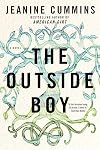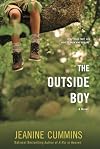
The Outside Boy
by Jeanine Cummins
On This Page
Description
A poignant, coming of age novel about an Irish gypsy boy’s childhood in the 1950’s from the national bestselling author of A Rip in Heaven and American Dirt.Ireland, 1959: Young Christopher Hurley is a tinker, a Pavee gypsy, who roams with his father and extended family from town to town, carrying all their worldly possessions in their wagons. Christy carries with him a burden of guilt as well, haunted by the story of his mother’s death in childbirth.
The wandering life is the only one show more Christy has ever known, but when his grandfather dies, everything changes. His father decides to settle briefly, in a town, where Christy and his cousin can receive proper schooling and prepare for their first communions. But still, always, they are treated as outsiders.
As Christy struggles to find his way amid the more conventional lives of his new classmates, he starts to question who he is and where he belongs. But then the discovery of an old newspaper photograph, and a long-buried secret from his mother’s mysterious past, changes his life forever.... show less
Tags
Recommendations





Member Reviews
Christy is a young Pavee gypsy boy traveling with his family in Ireland when his grandfather dies. As a traveler who feels claustrophobic when he is indoors for any length of time, he is horrified to find out that his grandfather's body is going to be buried and his wagon and all his belongings lit on fire. And so Christy and his cousin concoct a plan to burn their grandfather's body in the wagon instead of consigning him to the tiny underground space of a coffin. The intended conflagration doesn't quite have the intended effect, both depriving his grandmother of the comfort of long-standing tradition and making the adults angry. And because they are angry, Christy decides that he will not show anyone the newspaper clipping that show more fluttered, still intact, out of the fire. The clipping shows his mother, an unknown man, and a baby. Meanwhile, Christy's father and aunt have determined that it is time for Christy and his cousin Martin to make their first communion and so they stay in one place far longer than they ever have before, giving Christy time to unravel the mystery of the mother who died in giving him birth.
Cummins has drawn a beautiful and eloquent picture of gyspy life in Ireland and created a charming and insightful character in young Christy. Christy tells his own story in the vernacular but it is fairly easy to adapt to this non-traditional narrative voice. In searching for his mother, Christy is, in many ways, searching for himself and his place in the world. He both envies a settled life and he scorns it as unthinkable. He faces prejudice from the local townspeople, causing him to carefully evaluate the lifestyle in which he has been raised. He knows his father is a good man but what of the loose interpretation of morality as compared to the town folk? He finds good and caring people who value and accept him despite his gypsy heritage. And he finds the help he needs to unravel the threads of his personal history.
Christy is on a quest and what he finds will shake many of his assumptions, shaping who he will become as he goes forward in life. This novel of exploration, mysteries long-buried and unacknowledged, and a way of life slowly dying out is an unexpected delight to read. Cummins has written an engaging and evocative coming of age novel about an unusual boy. Thoughtful and respectful, loaded full of gyspy tradition and reasoning, this story happily satisfies. show less
Cummins has drawn a beautiful and eloquent picture of gyspy life in Ireland and created a charming and insightful character in young Christy. Christy tells his own story in the vernacular but it is fairly easy to adapt to this non-traditional narrative voice. In searching for his mother, Christy is, in many ways, searching for himself and his place in the world. He both envies a settled life and he scorns it as unthinkable. He faces prejudice from the local townspeople, causing him to carefully evaluate the lifestyle in which he has been raised. He knows his father is a good man but what of the loose interpretation of morality as compared to the town folk? He finds good and caring people who value and accept him despite his gypsy heritage. And he finds the help he needs to unravel the threads of his personal history.
Christy is on a quest and what he finds will shake many of his assumptions, shaping who he will become as he goes forward in life. This novel of exploration, mysteries long-buried and unacknowledged, and a way of life slowly dying out is an unexpected delight to read. Cummins has written an engaging and evocative coming of age novel about an unusual boy. Thoughtful and respectful, loaded full of gyspy tradition and reasoning, this story happily satisfies. show less
Young Christy, a Pavee Gypsy wandering the byways of 1959 Ireland in the company of his immediate family, has always believed his mam died in childbirth … but did she? A clipped picture from a newspaper sends him on a journey that causes him to question who he is and where he belongs.
The answers eventually come, but in keeping with a story about a family of travelers (aka tinkers), Cummins’s narrative focuses on the journey rather than the destination. Scenes unfold at a pace that allows them spread out, with attention paid to everything from the intimate interdependence of Christy’s family (paternal grandparents, father, uncle, aunt, cousins) to the sights and smells of countryside camps where they pause their caravans along the show more way, from the mistrust and prejudice of the townspeople they interact with to Christy’s awkward adolescent introduction to first love. There’s also quite a lot about tinker culture – their lifestyle and traditions, their negotiated detente with Catholicism (Baptism and Communion are sacrosanct, but their relationship with “though shalt not steal,” a bit more flexible) and, perhaps most affecting, the creeping uncertainty triggered by the impact of modern innovations (cars, plastics) on their traditional way of life.
The story is told in first person by Christy, an engaging lad of 10 or so. Cleverly, Cummins incorporates elements of tinker dialect and grammar to evoke Christy’s differentness while simultaneously infusing him with all the familiar, universal curiosities, enthusiasms, loyalties and insecurities of adolescence. Does Cummins spend more time than strictly necessary inside Christy’s head? Perhaps yes, but I’m willing to forego such petty critiques out of respect for Cummins’s beautifully lyric and evocative prose. (Christy, of his granddad: “I could see the wrinkles shooting out from the corners of his eyes, like rays coming out of the sun.” Such a lovely, powerful simile.)
I don’t know if Cummins is herself Irish, but she certainly seems to have mastered the uniquely Irish art of weaving stories that balance joy, tragedy, hope, love and heartbreak with a deep reverence for humanity. Call it a little story with a big heart. show less
The answers eventually come, but in keeping with a story about a family of travelers (aka tinkers), Cummins’s narrative focuses on the journey rather than the destination. Scenes unfold at a pace that allows them spread out, with attention paid to everything from the intimate interdependence of Christy’s family (paternal grandparents, father, uncle, aunt, cousins) to the sights and smells of countryside camps where they pause their caravans along the show more way, from the mistrust and prejudice of the townspeople they interact with to Christy’s awkward adolescent introduction to first love. There’s also quite a lot about tinker culture – their lifestyle and traditions, their negotiated detente with Catholicism (Baptism and Communion are sacrosanct, but their relationship with “though shalt not steal,” a bit more flexible) and, perhaps most affecting, the creeping uncertainty triggered by the impact of modern innovations (cars, plastics) on their traditional way of life.
The story is told in first person by Christy, an engaging lad of 10 or so. Cleverly, Cummins incorporates elements of tinker dialect and grammar to evoke Christy’s differentness while simultaneously infusing him with all the familiar, universal curiosities, enthusiasms, loyalties and insecurities of adolescence. Does Cummins spend more time than strictly necessary inside Christy’s head? Perhaps yes, but I’m willing to forego such petty critiques out of respect for Cummins’s beautifully lyric and evocative prose. (Christy, of his granddad: “I could see the wrinkles shooting out from the corners of his eyes, like rays coming out of the sun.” Such a lovely, powerful simile.)
I don’t know if Cummins is herself Irish, but she certainly seems to have mastered the uniquely Irish art of weaving stories that balance joy, tragedy, hope, love and heartbreak with a deep reverence for humanity. Call it a little story with a big heart. show less
My first exposure to Cummins' work was A Rip in Heaven, which was so compelling that I managed to finish in a day. At the time, I characterized the memoir to my friends as something that would re-sensitize you to the impact of crime. Cummins wrote with a kind of quiet ferocity that lended itself well to the account. We always hear about families' lives getting uprooted and destroyed in the crossfire of others' evil acts, but rarely do we get to read the victim's account of events in such a thorough way. A certain level of desensitization is almost necessary in order to cope with all of the suffering that you see people go through, but at the same time, it's not good to completely "numb out" and lose that essential empathy for others. show more Reading Cummins' memoir helped me to start rebuilding my deteriorating empathy at the time.
While The Outside Boy is not nearly as hard a read, Cummins portrays the grief that her characters go through in a way that's organic to their culture, their psychology, and their meager living conditions. I'll admit, I don't know much about 1950s Ireland, let alone the nomads that were discriminated there. But from my previous experience with Cummins, she's thorough when researching her subject matter. The fabric of story-reality never breaks apart with some hapless insertion of modern culture, whether it be with the peoples' ideologies or the introduction of certain cultural phenomena. The main characters are not simply paper cut-outs, or mere archetypes, but act in ways that are well-rounded, often delighting you by acting in ways that adhere to their character, but also breaking those molds in appropriate ways.
That being said, a lot of the other characters suffer in this regard because they're not developed to the same degree that the main family is. It's tough to make everyone interesting and varied, but it can be done. Naoki Urasawa, who is one of my favorite mangakas, manages to do this in all of his stories by taking characters whose roles are small and giving you the impression that they, too, could become main characters if given the chance. Not every side character has to shine or be given 100 pages of development, but they shouldn't just be tools that are only meant to push the main characters along.
As for the first-person perspective in the story, it can take some getting used to. Cummins uses a mix of old slang and proper English to create a more layered tone for the story, although the general lack of prosody tends to make for jarring phrases that prevent a smoother narrative style from happening. The narrator's sense of humor makes up for this in part, but I could never really shake the thought that Cummins' writing could've gone to new heights if she'd been willing to hone the main character's writing style some more.
There are also a lot of story threads that never see any resolution. The end of the book is more akin to the climax, where things are getting really good―and then it just ends. I like books where it leaves you satisfied yet speculative, but it appears that Cummins left a lot of story ideas unfinished because she didn't know where to take them (or simply ran out of space). She had all of the proper setup, all of the motives laid bare, and then she kind of just lets characters lose their presence over time. I suppose this is because she's writing what is essentially a pseudo-memoir here. In memoirs, not having people reappear in your story is quite normal, but in fiction it's a different ballgame. Even though this is a nomadic story wherein the theme is adhered to, failing to complete essential story threads is the sign of a tyro fiction writer. Where's book 2?, I thought to myself.
In terms of historical fiction, coming-of-age, and family drama, this book has a lot to offer. Its failures come from the inexperience of its author, whose strong suit is memoir. If the book had been lengthened to accommodate meaningful content, then this would have been a powerful entry, indeed. While there are powerful moments to be read within, there are only the rumblings of power in the distance, echoing back to tease you with what could have been, but never was. show less
While The Outside Boy is not nearly as hard a read, Cummins portrays the grief that her characters go through in a way that's organic to their culture, their psychology, and their meager living conditions. I'll admit, I don't know much about 1950s Ireland, let alone the nomads that were discriminated there. But from my previous experience with Cummins, she's thorough when researching her subject matter. The fabric of story-reality never breaks apart with some hapless insertion of modern culture, whether it be with the peoples' ideologies or the introduction of certain cultural phenomena. The main characters are not simply paper cut-outs, or mere archetypes, but act in ways that are well-rounded, often delighting you by acting in ways that adhere to their character, but also breaking those molds in appropriate ways.
That being said, a lot of the other characters suffer in this regard because they're not developed to the same degree that the main family is. It's tough to make everyone interesting and varied, but it can be done. Naoki Urasawa, who is one of my favorite mangakas, manages to do this in all of his stories by taking characters whose roles are small and giving you the impression that they, too, could become main characters if given the chance. Not every side character has to shine or be given 100 pages of development, but they shouldn't just be tools that are only meant to push the main characters along.
As for the first-person perspective in the story, it can take some getting used to. Cummins uses a mix of old slang and proper English to create a more layered tone for the story, although the general lack of prosody tends to make for jarring phrases that prevent a smoother narrative style from happening. The narrator's sense of humor makes up for this in part, but I could never really shake the thought that Cummins' writing could've gone to new heights if she'd been willing to hone the main character's writing style some more.
There are also a lot of story threads that never see any resolution. The end of the book is more akin to the climax, where things are getting really good―and then it just ends. I like books where it leaves you satisfied yet speculative, but it appears that Cummins left a lot of story ideas unfinished because she didn't know where to take them (or simply ran out of space). She had all of the proper setup, all of the motives laid bare, and then she kind of just lets characters lose their presence over time. I suppose this is because she's writing what is essentially a pseudo-memoir here. In memoirs, not having people reappear in your story is quite normal, but in fiction it's a different ballgame. Even though this is a nomadic story wherein the theme is adhered to, failing to complete essential story threads is the sign of a tyro fiction writer. Where's book 2?, I thought to myself.
In terms of historical fiction, coming-of-age, and family drama, this book has a lot to offer. Its failures come from the inexperience of its author, whose strong suit is memoir. If the book had been lengthened to accommodate meaningful content, then this would have been a powerful entry, indeed. While there are powerful moments to be read within, there are only the rumblings of power in the distance, echoing back to tease you with what could have been, but never was. show less
Eleven year old Christy has lived his whole life on the road – a “traveler” in Ireland – along with his grandparents, father, aunt, uncle and cousins. Martin, the cousin closest to Christy in age, is his constant companion and friend. When Christy’s grandda dies unexpectedly, the family decides to stop traveling for a time in order to facilitate getting Christy and Martin’s Communion.
Christy soon discovers that enrolling in school doesn’t make him any more acceptable to the townspeople. In fact, living among them, he soon begins to question the flexible morality with which he has been brought up. For example, is stealing to fill an empty belly the same as stealing something one covets?
When Christy discovers a worn out show more newspaper clipping of his mother (who he believes has died giving birth to him), the mystery of his past surfaces…and Christy goes on a search to not only discover his true identity, but to determine whether or not his past will impact his future.
The Outside Boy is a coming of age story dropped into the rich history of Ireland’s gypsies during the mid-twentieth century. Christy is a typical boy in many ways, but his alienation and isolation from the larger world have worked together to make him question the life his family has led. Despite the love of his family, he carries with him the guilt of his mother’s death and wonders if he has missed something essential in not having a stable home. Christy’s search for his identity is the central theme in the book.
Jeanine Cummins captures the life of a nomadic family perfectly, revealing not only their challenges but also their joys. Cummins seems to understand that financial well being does not always equate to happiness, and that love is deeper than material comfort. Christy’s struggle to understand himself, his eagerness for acceptance among his peers, his encounter with first love – all ring true.
There is one part of the book which I did not like – and I will admit it is my own subjective emotion. In the novel an animal dies – actually an animal is killed – and it upset me. I don’t like when animals die in books. Although I will say that this scene was not gratuitous and it actually fit within the context of the story and supported one of the major themes (which is loss and recovery). Even still, if you are like me, you might want to have this warning up front.
Despite this one complaint, I enjoyed my journey with Christy and his family. I think The Outside Boy is a bit of a crossover YA/Adult book. Teens will identify with Christy’s search for himself and struggles with his peers; and adults will enjoy the history of Ireland’s traveling people and the themes of love, loss and moving forward after tragedy. The novel also opens up questions regarding morality – a wonderful jumping off point for discussions with teens about right and wrong, and religion.
Cummins writes with authority and sensitivity – she understands her characters emotions and flaws, and it shows in the writing. Christy is a character walking the fine line between wanting to be an adult, and longing to remain a child – and Cummin’s captures this beautifully, bringing to life a young boy who at times only wishes to be held in the arms of a mother he has never met. Poignant and heartfelt, this is a novel I can recommend. show less
Christy soon discovers that enrolling in school doesn’t make him any more acceptable to the townspeople. In fact, living among them, he soon begins to question the flexible morality with which he has been brought up. For example, is stealing to fill an empty belly the same as stealing something one covets?
When Christy discovers a worn out show more newspaper clipping of his mother (who he believes has died giving birth to him), the mystery of his past surfaces…and Christy goes on a search to not only discover his true identity, but to determine whether or not his past will impact his future.
The Outside Boy is a coming of age story dropped into the rich history of Ireland’s gypsies during the mid-twentieth century. Christy is a typical boy in many ways, but his alienation and isolation from the larger world have worked together to make him question the life his family has led. Despite the love of his family, he carries with him the guilt of his mother’s death and wonders if he has missed something essential in not having a stable home. Christy’s search for his identity is the central theme in the book.
Jeanine Cummins captures the life of a nomadic family perfectly, revealing not only their challenges but also their joys. Cummins seems to understand that financial well being does not always equate to happiness, and that love is deeper than material comfort. Christy’s struggle to understand himself, his eagerness for acceptance among his peers, his encounter with first love – all ring true.
There is one part of the book which I did not like – and I will admit it is my own subjective emotion. In the novel an animal dies – actually an animal is killed – and it upset me. I don’t like when animals die in books. Although I will say that this scene was not gratuitous and it actually fit within the context of the story and supported one of the major themes (which is loss and recovery). Even still, if you are like me, you might want to have this warning up front.
Despite this one complaint, I enjoyed my journey with Christy and his family. I think The Outside Boy is a bit of a crossover YA/Adult book. Teens will identify with Christy’s search for himself and struggles with his peers; and adults will enjoy the history of Ireland’s traveling people and the themes of love, loss and moving forward after tragedy. The novel also opens up questions regarding morality – a wonderful jumping off point for discussions with teens about right and wrong, and religion.
Cummins writes with authority and sensitivity – she understands her characters emotions and flaws, and it shows in the writing. Christy is a character walking the fine line between wanting to be an adult, and longing to remain a child – and Cummin’s captures this beautifully, bringing to life a young boy who at times only wishes to be held in the arms of a mother he has never met. Poignant and heartfelt, this is a novel I can recommend. show less
Nice story for a young audience. A little light-weight for an adult. I almost gave up on it because it was slow to get going but ended up being a well-rounded story. I would have liked more historical info on how things changed for the itinerants in Ireland in the late 1950s and today, even if just in an afterward. Told from an 11 year old's first person viewpoint.
Jeanine Cummins' most famous and amazing book, American Dirt, inspired me to look up her other books. Set in Ireland, it has a strong Catholic theme, which, as an ex-Catholic, turned me off. The writing and story line kept me connected to the characters and made me keep reading to find out what happened.
I thought this was a good story and kinda played out like a TV show. I liked how it talked about cross cultural """"love""""" and also what the Pavee culture is from Ireland. I really liked it but it wasn't anything special. 2/14/26
Members
- Recently Added By
Lists

Adult Books for YA Readers
194 works; 6 members
Author Information

11+ Works 6,110 Members
Awards and Honors
Notable Lists
Common Knowledge
- Canonical title
- The Outside Boy
- Original title
- The Outside Boy
- Original publication date
- 2010
- People/Characters
- Christy Hurley
- Important places
- Ireland
- Dedication
- For Grandma Polly and Grandpa Art, who came from different wolrds.
- First words
- Ireland, 1959 _____ I was dreaming of purple horses.
- Last words
- (Click to show. Warning: May contain spoilers.)My father sat waiting for me.
Classifications
Statistics
- Members
- 275
- Popularity
- 117,881
- Reviews
- 8
- Rating
- (3.76)
- Languages
- English, French, Korean
- Media
- Paper, Audiobook, Ebook
- ISBNs
- 8
- ASINs
- 4