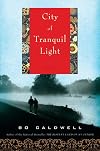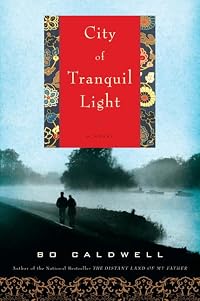
City of Tranquil Light: A Novel
by Bo Caldwell
On This Page
Description
"A beautifully written, often riveting, heartbreaking, heart-healing, wise and sweet-tempered novel." - America Magazine"What ardent, dazzling souls emerge from these American missionaries in China . . . A beautiful, searing book that leaves an indelible presence in the mind." -Patricia Hampl, author of The Florist's Daughter Will Kiehn is seemingly destined for life as a humble farmer in the Midwest when, having felt a call from God, he travels to the vast North China Plain in the early show more twentieth-century. There he is surprised by love and weds a strong and determined fellow missionary, Katherine. They soon find themselves witnesses to the crumbling of a more than two-thousand-year-old dynasty that plunges the country into decades of civil war. As the couple works to improve the lives of the people of Kuang P'ingCh'eng- City of Tranquil Light, a place they come to love-and face incredible hardship, will their faith and relationship be enough to sustain them?Told through Will and Katherine's alternating viewpoints-and inspired by the lives of the author's maternal grandparents- City of Tranquil Light is a tender and elegiac portrait of a young marriage set against the backdrop of the shifting face of a beautiful but torn nation. A deeply spiritual book, it shows how those who work to teach others often have the most to learn, and is further evidence that Bo Caldwell writes "vividly and with great historical perspective" ( San Jose Mercury News ). show lessTags
Recommendations
































Member Reviews
As the grandchild & nephew of Mennonite missionaries to India I am drawn to this genre. I found this exploration of the missionary life sorely lacking. As opposed to offering a postmodern reflection on cultural relativism and colonialism, it is a 1950’s recruiting manual for one particular strand of Christianity.
For the most part God gets a pass, evil and loss are mysterious whereas fortunate turn of events are divine grace. At least part of the fortuitous events are due to a benevolent bandit, although the characters do not reflect on the source of those particular acts of grace.
If you are looking for a deeper exploration of the missionary movement I recommend “The Poisonwood Bible,” “At Play in the Fields of the Lord,” or show more “Dancing at Lughnasa.” show less
For the most part God gets a pass, evil and loss are mysterious whereas fortunate turn of events are divine grace. At least part of the fortuitous events are due to a benevolent bandit, although the characters do not reflect on the source of those particular acts of grace.
If you are looking for a deeper exploration of the missionary movement I recommend “The Poisonwood Bible,” “At Play in the Fields of the Lord,” or show more “Dancing at Lughnasa.” show less
City of Tranquil Light is the story of young Will Kiehn, who, growing up as a Mennonite and a farmer in Oklahoma, hears the unmistakable call of God to serve as a missionary in, of all places, China. It's not something he wants to do or something he's even qualified for, but he can't shake that feeling that the God he loves and knows loves him wants him to go to China. Dreamy, clumsy, and homesick, 21-year-old Will is, at first, terribly ill-suited to his calling, but his mentor, Edward, and Edward's young sister-in-law Katherine, who travels to China for the first time at the same time that Will does, soon see a change being worked in him. Katherine, a nurse, has almost happily abandoned life in the U.S. to serve the Chinese who suffer show more from many ailments and also suffer from the traditional cures for those ailments. As she and Will work together under Edward and his wife Naomi's tutelage, to help and to share the Gospel with the local Chinese, Will and Katherine find that they are falling in love.
Before long, Katherine and Will are married and embarking on their own journey of mission work together. When they arrive in Kuang P'ing Ch'eng, the City of Tranquil Light, Katherine and Will don't know a soul and only have tenuous grasp on the local culture. Soon, Will is nervously preaching his first sermon to a crowd of Chinese, and Katherine is opening a makeshift clinic to help the sick. Little do they realize that the people with whom they are sharing their faith, will bless them richly as well. City of Tranquil Light is the story of how Will and Katherine become a part of Kuang P'ing Ch'eng's community told in both point of views, with Will's narration coming from his last years as he reflects upon his life and Katherine's view from journal entries written throughout their life in China. Theirs is a story rife with the heartbreaks of living in an inhospitable environment constantly troubled by famine, bandits, and war. It's also a story filled with the joy of seeing God's promises kept to a couple who often has only their faith to sustain them. It's a bittersweet story of missionaries who come to learn that even while they seek to serve their Chinese neighbors, their neighbors have much to offer them as well.
City of Tranquil Light is fiction's answer to all those kooky, ultimately harmful Christians/Christian missionaries found in life and in books who judge, exploit, and damage the people they should be helping, who force their beliefs down the throats of all without regard to their cultures or their everyday circumstances. The Christian faith displayed in Katherine and Will is real, and it's beautiful. It's marked by love and self-sacrifice and forgiveness. Instead of trying to force those around them to change, they focus on helping them, building lasting relationships with them, and freely sharing the faith and the God that sustains them. Katherine and Will's is a relationship that deepens and blossoms as they face the trials of life in China together, and their love story is heartrending. They love each other, they love their God, and the lives they lead speak of God even louder than the words that Will gladly preaches. Of course, their life isn't all sunshine and rainbows, and Katherine and Will and their growing congregation face often unbearable suffering, and crises of faith soon follow, but ultimately their passion for God, His promises and His faithfulness, never allow them to fall.
Bo Caldwell writes in the introduction (in the ARC, at least) that City of Tranquil Light is a novel based on the lives of her own grandparents who served as missionaries in China and Taiwan for many years, a story she always thought would be too dull to be worth telling. Thankfully, she changed her mind, and what results is an honest, genuine but never preachy, cheesy or overblown story of people who gave their lives to the work of spreading the Gospel in the vast mission field of China. It is anything but dull. It is a profoundly moving love letter of faith about a God who is always at work even if it is behind the scenes.
This book has plenty of merit for the Christian and the non-Christian. It's full of memorable characters that you can easily come to care about. It's a detailed rendering of historical China complete with well-researched cultural details. It's a realistic love story and even has elements of suspense as dangerous situations crop up. That said, for a Christian, this book is that much more powerful. I wept more than once at God's grace to these characters and displayed by these characters as well as the love they received in return - grace that I have seen in my own life and in the lives of my friends in one way or another. It accurately and heartbreakingly portrays struggles with faith and unbelief that plague even the most devout, well-meaning believer. It's a beautiful story of God and His faithfulness to His people who He loves beyond reason and sent His Son to save, and by the end I felt blessed for having read it. show less
Before long, Katherine and Will are married and embarking on their own journey of mission work together. When they arrive in Kuang P'ing Ch'eng, the City of Tranquil Light, Katherine and Will don't know a soul and only have tenuous grasp on the local culture. Soon, Will is nervously preaching his first sermon to a crowd of Chinese, and Katherine is opening a makeshift clinic to help the sick. Little do they realize that the people with whom they are sharing their faith, will bless them richly as well. City of Tranquil Light is the story of how Will and Katherine become a part of Kuang P'ing Ch'eng's community told in both point of views, with Will's narration coming from his last years as he reflects upon his life and Katherine's view from journal entries written throughout their life in China. Theirs is a story rife with the heartbreaks of living in an inhospitable environment constantly troubled by famine, bandits, and war. It's also a story filled with the joy of seeing God's promises kept to a couple who often has only their faith to sustain them. It's a bittersweet story of missionaries who come to learn that even while they seek to serve their Chinese neighbors, their neighbors have much to offer them as well.
City of Tranquil Light is fiction's answer to all those kooky, ultimately harmful Christians/Christian missionaries found in life and in books who judge, exploit, and damage the people they should be helping, who force their beliefs down the throats of all without regard to their cultures or their everyday circumstances. The Christian faith displayed in Katherine and Will is real, and it's beautiful. It's marked by love and self-sacrifice and forgiveness. Instead of trying to force those around them to change, they focus on helping them, building lasting relationships with them, and freely sharing the faith and the God that sustains them. Katherine and Will's is a relationship that deepens and blossoms as they face the trials of life in China together, and their love story is heartrending. They love each other, they love their God, and the lives they lead speak of God even louder than the words that Will gladly preaches. Of course, their life isn't all sunshine and rainbows, and Katherine and Will and their growing congregation face often unbearable suffering, and crises of faith soon follow, but ultimately their passion for God, His promises and His faithfulness, never allow them to fall.
Bo Caldwell writes in the introduction (in the ARC, at least) that City of Tranquil Light is a novel based on the lives of her own grandparents who served as missionaries in China and Taiwan for many years, a story she always thought would be too dull to be worth telling. Thankfully, she changed her mind, and what results is an honest, genuine but never preachy, cheesy or overblown story of people who gave their lives to the work of spreading the Gospel in the vast mission field of China. It is anything but dull. It is a profoundly moving love letter of faith about a God who is always at work even if it is behind the scenes.
This book has plenty of merit for the Christian and the non-Christian. It's full of memorable characters that you can easily come to care about. It's a detailed rendering of historical China complete with well-researched cultural details. It's a realistic love story and even has elements of suspense as dangerous situations crop up. That said, for a Christian, this book is that much more powerful. I wept more than once at God's grace to these characters and displayed by these characters as well as the love they received in return - grace that I have seen in my own life and in the lives of my friends in one way or another. It accurately and heartbreakingly portrays struggles with faith and unbelief that plague even the most devout, well-meaning believer. It's a beautiful story of God and His faithfulness to His people who He loves beyond reason and sent His Son to save, and by the end I felt blessed for having read it. show less
Though I’m not a very religious person I don’t shy away from books that have a religious theme as long as the author discloses it openly from the start. What I don’t like is when the topic broadsides you; the author slipping in the religion like one of those proselytizers that catch you unawares by starting a conversation and you slowly realize that they’re making more and more references to a higher being. Ah, I think, I’m being witnessed to and I just thought I was having a pleasant chat with someone. I end up feeling duped. The City of Tranquil Light by Bo Caldwell is a book with religion as a central theme but the reader knows it right away. And it in no way takes anything away from a very beautiful story.
Elderly Will show more Kiehn looks back on his life and recounts his time as a missionary in China along with his wife, Katherine. As missionaries, preaching is not the only work they do; practicing medicine, feeding, housing and teaching are all tasks that they set for themselves. They share much joy, but also anguish and sometimes great fear. Based on the lives of the author’s grandparents, this book is a wonderful tribute to an otherwise forgotten group. We don’t have missionaries like these anymore: with little funding or support from home they managed to thrive.
This was the right time for me to read this book. I’ve been reading some YA fiction, science fiction and other general ‘light’ fiction since those genres were what I’ve been in the mood for lately. Only when I started reading The City of Tranquil Light did I realize how much I’ve missed more serious fiction. The story, alternating between Will’s narrative and Katherine’s journals, is smoothly written. The characters leap off the pages and I was so swept up in the action I found it hard to put down. There were a number of times I found myself relating to Katherine as in this passage from page 146:
At times my fear overwhelms me. Last night I woke in the dark and the panic seemed unbearable. All sorts of horrible possibilities presented themselves in my mind, fantasies that I would not entertain in the daytime but that took hold of me in the dark of our bedroom and seemed completely real.
The author treats the Chinese culture with honesty and respect and I could easily picture the images that were conveyed. The only issue I had with this book was that there were no maps. I think it may have been helpful had there been two, one showing the travel route that took them from America to China and perhaps an inset of the regions in China that the characters traveled, and a second map of the city, (Kuang P’ing Ch’eng) they lived in for so many years. I highly recommend this book, especially if you enjoyed Balzac and the Little Chinese Seamstress by Dai Sijie or The Blue Notebook by James A. Levine. show less
Elderly Will show more Kiehn looks back on his life and recounts his time as a missionary in China along with his wife, Katherine. As missionaries, preaching is not the only work they do; practicing medicine, feeding, housing and teaching are all tasks that they set for themselves. They share much joy, but also anguish and sometimes great fear. Based on the lives of the author’s grandparents, this book is a wonderful tribute to an otherwise forgotten group. We don’t have missionaries like these anymore: with little funding or support from home they managed to thrive.
This was the right time for me to read this book. I’ve been reading some YA fiction, science fiction and other general ‘light’ fiction since those genres were what I’ve been in the mood for lately. Only when I started reading The City of Tranquil Light did I realize how much I’ve missed more serious fiction. The story, alternating between Will’s narrative and Katherine’s journals, is smoothly written. The characters leap off the pages and I was so swept up in the action I found it hard to put down. There were a number of times I found myself relating to Katherine as in this passage from page 146:
At times my fear overwhelms me. Last night I woke in the dark and the panic seemed unbearable. All sorts of horrible possibilities presented themselves in my mind, fantasies that I would not entertain in the daytime but that took hold of me in the dark of our bedroom and seemed completely real.
The author treats the Chinese culture with honesty and respect and I could easily picture the images that were conveyed. The only issue I had with this book was that there were no maps. I think it may have been helpful had there been two, one showing the travel route that took them from America to China and perhaps an inset of the regions in China that the characters traveled, and a second map of the city, (Kuang P’ing Ch’eng) they lived in for so many years. I highly recommend this book, especially if you enjoyed Balzac and the Little Chinese Seamstress by Dai Sijie or The Blue Notebook by James A. Levine. show less
Very behind on my book reviews and I wish I hadn‘t waited so long to review this one. I‘ve lost the mysterious haze this book left on me, which will be hard for me to describe now.
A young man discovers deep faith, the love of his life, and his true self moving to China in 1906. He and his wife retell their story, after they‘ve been forced to move back to America in 1933. China is in great upheaval; its huge population lacks basic healthcare.
While seeking to bring Christianity to these people, Will and Katherine find themselves becoming healers as well. Both goals work well together, and they and the people in the City of Tranquil Light become entwined. But violent gangs, the Japanese occupiers, and even China‘s own government show more bring frightening brutality to parts of the country, which they sometimes have to navigate. When the Maoists finally prevail, and the Chinese must disavow Christianity, the life of Will‘s family is at stake and they must flee. This is a very quiet thoughtful novel, but there are periods of serious stress, for example, when Will is kidnapped by a violent gang and forced to provide medical care to the gang members. That frightening interlude comes back to haunt him and miraculously, to save his life. A well-told story based on the author‘s grandparents. Very pleased it was recommended. show less
A young man discovers deep faith, the love of his life, and his true self moving to China in 1906. He and his wife retell their story, after they‘ve been forced to move back to America in 1933. China is in great upheaval; its huge population lacks basic healthcare.
While seeking to bring Christianity to these people, Will and Katherine find themselves becoming healers as well. Both goals work well together, and they and the people in the City of Tranquil Light become entwined. But violent gangs, the Japanese occupiers, and even China‘s own government show more bring frightening brutality to parts of the country, which they sometimes have to navigate. When the Maoists finally prevail, and the Chinese must disavow Christianity, the life of Will‘s family is at stake and they must flee. This is a very quiet thoughtful novel, but there are periods of serious stress, for example, when Will is kidnapped by a violent gang and forced to provide medical care to the gang members. That frightening interlude comes back to haunt him and miraculously, to save his life. A well-told story based on the author‘s grandparents. Very pleased it was recommended. show less
A quiet book that follows a married couple that are mennonite missionaries living in China. It is an account of their deep love for each other and the Chinese people. It also chronicles their spiritual journeys and somehow avoids being preachy. I am told Caldwell's first book is excellent and I'm interested in reading that as well.
City of Tranquil Light, reads smoothly and consistently as it tells of the story of an American missionary couple's work for the Mennonite church. Caldwell focuses on their love and kindness as they face difficulties like famine, illness, and bandits. The book is nicely written but I have a preference for books with more inner conflict in their main characters -- Will and Katherine were believable but sometimes a little too tranquil.
There's more on my blog, here.
There's more on my blog, here.
"City of Tranquil Light," Bo Caldwell's second novel, is a beautiful story set in China just when that country was on the cusp of all the cultural shocks the rest of the 20th century would bring it. It is the story of two young Mennonites who were inspired to return to rural China with the charismatic minister who came to their communities seeking the funds and volunteers he needed to keep his mission there alive.
The saga begins in 1906 when a 21-year-old farmer from Oklahoma and a 22-year-old nurse from Cleveland decide to become foreign missionaries. For Katherine Friesen, the decision is a little easier than it is for Will Kiehn - Katherine's sister is married to the charismatic young minister with whom she will be traveling to show more China. Will, on the other hand, has never known a life other than farming and he fears that he is unprepared for what is ahead. He is right about that. But no one could have been prepared for the lives he and Katherine will lead in a remote Chinese village for the better part of the next twenty-five years.
A few short years after their arrival, Katherine and Will have married and have started a mission of their own in the even more remote village of Kuang P'ing Ch'eng (the "City of Tranquil Light"). There, as their mission steadily grows, the couple overcome the initial distrust of the villagers and learn to deal with threats from bandits, invading armies, drought, and their own religious doubts. Katherine and Will Kiehn grow to love China and its people so deeply that, when forced to return to the United States for their own safety, they find the transition to life in California to be an unsettling one. Thankfully, they also find that their mission is not yet complete.
Some will say that "City of Tranquil Light" is at times over-sentimental, and perhaps it is, but it all works beautifully because of the remarkable characters involved. Caldwell based the book's two main characters on her own grandparents (using their real surname) and, by alternating Will's first person narrative with excerpts from Katherine's diary, she uses both voices to tell their story. Surrounding the couple are memorable Chinese characters that, over time, come to consider the missionary couple as members of their own families. This fierce, two-way loyalty will allow Katherine and Will Kiehn to change countless lives even in a country as turbulent the China of the first half of the 20th century.
"City of Tranquil Light" is an inspiring story about a simpler time during which, despite the great logistical challenges involved, one or two people could make a huge difference in the world. If only it were so simple today.
Rated at: 5.0 show less
The saga begins in 1906 when a 21-year-old farmer from Oklahoma and a 22-year-old nurse from Cleveland decide to become foreign missionaries. For Katherine Friesen, the decision is a little easier than it is for Will Kiehn - Katherine's sister is married to the charismatic young minister with whom she will be traveling to show more China. Will, on the other hand, has never known a life other than farming and he fears that he is unprepared for what is ahead. He is right about that. But no one could have been prepared for the lives he and Katherine will lead in a remote Chinese village for the better part of the next twenty-five years.
A few short years after their arrival, Katherine and Will have married and have started a mission of their own in the even more remote village of Kuang P'ing Ch'eng (the "City of Tranquil Light"). There, as their mission steadily grows, the couple overcome the initial distrust of the villagers and learn to deal with threats from bandits, invading armies, drought, and their own religious doubts. Katherine and Will Kiehn grow to love China and its people so deeply that, when forced to return to the United States for their own safety, they find the transition to life in California to be an unsettling one. Thankfully, they also find that their mission is not yet complete.
Some will say that "City of Tranquil Light" is at times over-sentimental, and perhaps it is, but it all works beautifully because of the remarkable characters involved. Caldwell based the book's two main characters on her own grandparents (using their real surname) and, by alternating Will's first person narrative with excerpts from Katherine's diary, she uses both voices to tell their story. Surrounding the couple are memorable Chinese characters that, over time, come to consider the missionary couple as members of their own families. This fierce, two-way loyalty will allow Katherine and Will Kiehn to change countless lives even in a country as turbulent the China of the first half of the 20th century.
"City of Tranquil Light" is an inspiring story about a simpler time during which, despite the great logistical challenges involved, one or two people could make a huge difference in the world. If only it were so simple today.
Rated at: 5.0 show less
Members
- Recently Added By
Lists

Fiction about missionaries
34 works; 5 members
Author Information

4 Works 799 Members
Bo Caldwell has published short stories in numerous literary magazines. Her nonfiction writing includes a long-running series of personal essays in the "Washington Post Magazine". A former Stegner Fellow in creative writing at Stanford University, she lives in Northern California. "The Distant Land of My Father" is her first novel. (Bowker Author show more Biography) show less
Awards and Honors
Awards
Common Knowledge
- Original title
- City of Tranquil Light
- Original publication date
- 2010-09
- People/Characters
- Will Kiehn; Katherine Kiehn; Chung Hao; Mo Yun
- Important places
- China
- Important events
- Chinese Revolution of 1949
- Dedication
- For Kate and Scotty and Ron, real and constant blessings in my life -- with love
- First words
- Suppose it is an autumn day, fine and clear and cool.
- Quotations
- … my wife’s diary, a thin volume I never read while she was alive but whose pages I now know by heart. Reading her sporadic entries is bittersweet, for while they bring our years together to life, they also show me my fl... (show all)aws and the ways in which I hurt her, unintentional though they war. But her pages make it seem that she is near, and if the price I pay for that closeness is regret it is a bargain still, albeit a painful one.
Katherine, there are practices in this country that you will dislike, I assure you. But some of these we must accept as they are. We are here to offer the people the gift of faith, not remake their way of life, even when th... (show all)e change seems necessary and right. It’s a question of choosing your battles. Remember that we’re guests, and uninvited ones at that.
… Chung Chiu Chieh, the Moon Festival, which is a celebration of the autumn harvest and the end of summer… The people see the moon’s round shape as representing the family circle, and they gather with their relations t... (show all)o stare up at the full moon together. This perhaps sounds silly, but it isn’t; it’s beautiful, and it is my favorite night of the year.
Many people have left the city. … Many others have come to us; each day at our gate we find a dozen or more refugees … Perhaps half of our refugees are infants and children, their ribs showing through their ragged tunic... (show all)s, their eyes sunken and hollow. Some are orphans whose parents have starved to death; others have been abandoned by parents who can’t feed them and decide it’s better to leave them here than take them along, only to bury them down the road. The parents bring their children to the compound gates then just disappear, or they plead with us first then tell their children goodbye and turn and walk away as the children cry and try to run after them while we hold them back. It is horrible, and I wake each morning with dread.
Not all of these desperate parents bring their daughters and sons to us; some send them to live with relatives, others tie them to trees and leave them there. Still others sell their offspring, either because they want the money or as a way to keep the children alive. At first this was a clandestine affair, but now the selling of children, especially young girls, is a brisk business with its own stand at the market, where anyone can buy a girl for three dollars.
Tonight before I came upstairs I stood in the doorway, looking at the dozens of cots and baskets and the sleeping children and babies that they held. The room smelled of them, a dusky, heavy scent, and the sound of their bre... (show all)athing was like a distant ocean. After seeing so much hardship and death in the last six months, I have found the nearness of the children to be a salve. … Since returning from furlough, the word “childless” has taken up residence in my mind. It sits in the room of my thoughts like an unwelcome guest. But tonight I found a different word lingering my mind: “childfull”. I’m no longer childless; I’m childfull, for although I have not one child of my own, I have the unexpected gift of a hundred who are like my own, a fact that fills my cracked heart with purpose.
We are at war; we hear gunfire and cannon, we taste gunpowder, and Kuang P’ing Ch’eng has become a city of the wounded. … We are short of medical supplies – bandages, dressings, sutures, medications – partly becau... (show all)se of the great need but also because the war has so disrupted transportation that we receive only a few of our orders. When we began caring for the wounded, I tore strips of white cloth into bandages, but we used those up in two days. I have found horrifying ways to economize; we salvage the used bandages from the living and the dead, wash them in great tubs of water that becomes instantly red, then use the bandages again. We are short of anesthetics, and I must reserve our limited supply for those who will live, no matter how intense the pain of the dying. It is as simple and harsh an equation as that, and although it nearly makes me ill, there is nothing to be done.
Almost nothing. In times such as these one must be flexible and for those who are too injured or ill to recover I have looked no further than our own backyard for something to relieve the pain of passing from this life to th... (show all)e next. I give them opium. … These I dole out carefully to our dying, not to hasten death but to lessen the pain that accompanies it. I have read of the liberal use of opium pills as an anesthetic for pain during the American Civil War, and I see no reason why the soldiers in China’s Civil War should not be afforded the same relief sixty years later. If I had syringes of morphine or unlimited chloroform or ether, I would gladly use any or all of them, but whatever I have must go to those who might live. What I have for our dying is small black opium pills, and giving them to these brutalized men so their deaths become less agonizing is the kindest and holiest act I can perform, and one that I cannot imagine God disapproving of. … And so I move quietly from one man to the next, offering the blessings of opium and faith and thanking God for both.
“In the past, you have been a refuge for those who came to your compound in times of danger or want. We have been grateful for your protection, but that, too, is changing. I fear that in the future the reverse will be tru... (show all)e: your presence will put those near you in peril.” He paused for a moment; then, his voice low, he said, “My friend, if the Communists gain power, they will try to kill every missionary in the country; they have said as much. Mission stations will become the most dangerous places to be, rather than the safest.” Finally he met my eyes. “I believe the time is coming when you will need to leave us to protect us.”
People often spoke of the sacrifice Katherine and I had made in going to China. This had always sounded odd to me, for I had never thought of it as sacrifice; I had only been following the desire of my heart. But on that coo... (show all)l November afternoon I understood that there had been a sacrifice nonetheless, a surrendering of one thing of value for the sake of something more valuable. The sacrifice wasn’t in going to China; the sacrifice was in leaving. - Last words
- (Click to show. Warning: May contain spoilers.)With the gift of that renewed certainty when I awake each morning, I rise to meet the day and to praise my dear Lord, and to finish my course with joy.
- Blurbers
- Barrett, Andrea; Hampl, Patricia
Classifications
Statistics
- Members
- 237
- Popularity
- 136,791
- Reviews
- 33
- Rating
- (4.23)
- Languages
- English
- Media
- Paper, Audiobook, Ebook
- ISBNs
- 12
- ASINs
- 5