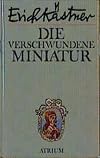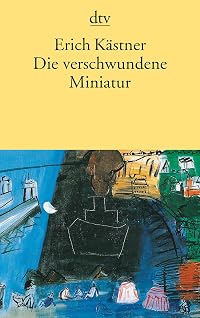
The Missing Miniature
by Erich Kästner
On This Page
Description
Ein urwüchsiger Berliner Fleischermeister wird in Kopenhagen in eine amüsant erzählte turbulente Kriminalaffäre verwickelt. Gro druck..Tags
Recommendations























Member Reviews
review of
Erich Kästner's The Missing Miniature
or The Adventures of A Sensitive Butcher
by tENTATIVELY, a cONVENIENCE - January 4, 2012
I came to the writings of Kästner b/c I'm researching material to use for a sampling movie I'm working on called Robopaths about the relationship between conformity & scapegoating, megalomainiacs & genocide, etc.. It was probably while witnessing the excellent The Wonderful, Horrible Life of Leni Riefenstahl" movie by Ray Müller (1993) that I saw footage of the notorious nazi bk burnings about wch Wikipedia has this to say:
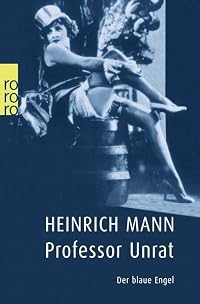
""In a symbolic act of ominous significance, on 10 May 1933, the students burned upwards of 25,000 volumes of "un-German" books, presaging an era of state censorship and control show more of culture. On the night of 10 May, in most university towns, nationalist students marched in torchlight parades "against the un-German spirit." The scripted rituals called for high Nazi officials, professors, rectors, and student leaders to address the participants and spectators. At the meeting places, students threw the pillaged and unwanted books into the bonfires with great joyous ceremony, band-playing, songs, "fire oaths," and incantations. In Berlin, some 40,000 people gathered in the Opernplatz to hear Joseph Goebbels deliver a fiery address: "No to decadence and moral corruption!" Goebbels enjoined the crowd. “Yes to decency and morality in family and state! I consign to the flames the writings of Heinrich Mann, Ernst Gläser, Erich Kästner.”"
- http://en.wikipedia.org/wiki/Nazi_book_burnings
In the footage I saw there was something similar to the last Goebbels English-translated quote in the subtitles & I realized that I'd never read anything by the 3 authors so highlighted. I immediately set about to correcting that. I started reading Kästner's poetry 1st in search of something quotable for my movie. After reading a bit of that, I switched to this novel. As my friend Lizard says: "What can I say?".
This was one of the most entertaining easy reading things I've read for quite a long time. I assume it's targeted at young adults since the writing style is fairly easy & since Kastner's mainly known as a children's writer.
Whatever the case, I thoroughly enjoyed it. It was written in 1935 & published in German (in Switzerland) & in English in 1936 at a time when Kästner wd've been well aware of the rise of Nazism:
"The Gestapo interrogated Kästner several times, and the writers' guild excluded him. The Nazis burnt Kästner's books as "contrary to the German spirit" during the infamous book burnings of May 10th 1933, which was instigated by the then Nazi propaganda minister Joseph Goebbels. Kästner witnessed the event in person. Kästner was denied entry into the new Nazi-controlled national writers' guild, the Reichsschrifttumskammer, because of what officials called the "culturally Bolshevist attitude in his writings predating 1933." This amounted to a gag order for Kästner throughout the Third Reich."
- http://en.wikipedia.org/wiki/Erich_Kästner#Berlin_1927.E2.80.931933
The humor is gentle & neither the police nor the criminals (it's a mystery of sorts) are brutal. Wishful thinking & perhaps more than a little role-model setting on Kastner's part. In retrospect I'm most reminded of the novels of Raymond Queneau: the characters are well-described in a way that borders on caricature w/o being particularly demeaning to any of them. The title's character, the butcher Herr Külz, is presented as being somewhat hopelessly naive but endearingly well-intentioned.
I wonder: is Kästner a largely forgotten writer? 2 of his bks were made into Disney movies, a Bulgarian expatriate friend of mine wrote me that "I read all of his books which were voraciously published in Socialist Bulgaria (everything persecuted by the Nazis was given extra distribution/attention)", & Wikipedia's entry on him states that "Hebrew is among the many languages to which Kästner's works were translated, and they enjoyed enormous popularity in Israel during the 1950s and 1960s – a very exceptional phenomenon at the time, when there was among Israelis a very strong aversion to, and widespread boycotting of, all things German in the aftermath of the Holocaust." &, yet, I doubt that many people I know have ever heard of him. show less
Erich Kästner's The Missing Miniature
or The Adventures of A Sensitive Butcher
by tENTATIVELY, a cONVENIENCE - January 4, 2012
I came to the writings of Kästner b/c I'm researching material to use for a sampling movie I'm working on called Robopaths about the relationship between conformity & scapegoating, megalomainiacs & genocide, etc.. It was probably while witnessing the excellent The Wonderful, Horrible Life of Leni Riefenstahl" movie by Ray Müller (1993) that I saw footage of the notorious nazi bk burnings about wch Wikipedia has this to say:
""In a symbolic act of ominous significance, on 10 May 1933, the students burned upwards of 25,000 volumes of "un-German" books, presaging an era of state censorship and control show more of culture. On the night of 10 May, in most university towns, nationalist students marched in torchlight parades "against the un-German spirit." The scripted rituals called for high Nazi officials, professors, rectors, and student leaders to address the participants and spectators. At the meeting places, students threw the pillaged and unwanted books into the bonfires with great joyous ceremony, band-playing, songs, "fire oaths," and incantations. In Berlin, some 40,000 people gathered in the Opernplatz to hear Joseph Goebbels deliver a fiery address: "No to decadence and moral corruption!" Goebbels enjoined the crowd. “Yes to decency and morality in family and state! I consign to the flames the writings of Heinrich Mann, Ernst Gläser, Erich Kästner.”"
- http://en.wikipedia.org/wiki/Nazi_book_burnings
In the footage I saw there was something similar to the last Goebbels English-translated quote in the subtitles & I realized that I'd never read anything by the 3 authors so highlighted. I immediately set about to correcting that. I started reading Kästner's poetry 1st in search of something quotable for my movie. After reading a bit of that, I switched to this novel. As my friend Lizard says: "What can I say?".
This was one of the most entertaining easy reading things I've read for quite a long time. I assume it's targeted at young adults since the writing style is fairly easy & since Kastner's mainly known as a children's writer.
Whatever the case, I thoroughly enjoyed it. It was written in 1935 & published in German (in Switzerland) & in English in 1936 at a time when Kästner wd've been well aware of the rise of Nazism:
"The Gestapo interrogated Kästner several times, and the writers' guild excluded him. The Nazis burnt Kästner's books as "contrary to the German spirit" during the infamous book burnings of May 10th 1933, which was instigated by the then Nazi propaganda minister Joseph Goebbels. Kästner witnessed the event in person. Kästner was denied entry into the new Nazi-controlled national writers' guild, the Reichsschrifttumskammer, because of what officials called the "culturally Bolshevist attitude in his writings predating 1933." This amounted to a gag order for Kästner throughout the Third Reich."
- http://en.wikipedia.org/wiki/Erich_Kästner#Berlin_1927.E2.80.931933
The humor is gentle & neither the police nor the criminals (it's a mystery of sorts) are brutal. Wishful thinking & perhaps more than a little role-model setting on Kastner's part. In retrospect I'm most reminded of the novels of Raymond Queneau: the characters are well-described in a way that borders on caricature w/o being particularly demeaning to any of them. The title's character, the butcher Herr Külz, is presented as being somewhat hopelessly naive but endearingly well-intentioned.
I wonder: is Kästner a largely forgotten writer? 2 of his bks were made into Disney movies, a Bulgarian expatriate friend of mine wrote me that "I read all of his books which were voraciously published in Socialist Bulgaria (everything persecuted by the Nazis was given extra distribution/attention)", & Wikipedia's entry on him states that "Hebrew is among the many languages to which Kästner's works were translated, and they enjoyed enormous popularity in Israel during the 1950s and 1960s – a very exceptional phenomenon at the time, when there was among Israelis a very strong aversion to, and widespread boycotting of, all things German in the aftermath of the Holocaust." &, yet, I doubt that many people I know have ever heard of him. show less
Danmark, København, ca 1932
Indeholder "1. Papa Külz spiser et stykke smørrebrød", "2. Irene Trübner er bange", "3. Der tales om kunst", "4. Symposiet i 'Lykkens Kælder'", "5. Afsked med København", "6. Oh, disse toldere!", "7. Kufferten og cigarerne", "8. Eventyret om den brave mand", "9. Külz lærer endelig sin kone at kende", "10. Brevudbæring i danserestauranten", "11. Kostumeballet hører op", "12. Fader Lieblichs toddykælder", "13. En politiinspektør har en teori", "14. Hr. Struves sælsomme afhøring", "15. En kegleklub har bekymringer", "16. Ankomsten til Berlin", "17. Det går ikke altid, som man tænker ...", "18. Motorjagt med sedler gennem Berlin", "19. Hr. Kühlewein lærer angsten at kende", "20. Men nu er alt i show more vinkel".
En tysk slagtermester Oskar Külz er taget til København uden at fortælle det til nogen. Hele hans slægt i flere generationer er slagtere og han smager gerne de danske pølser for at se om de måtte være bedre end hans egne. Men egentlig trænger han bare til en pause fra at være slagtemester. Han bliver iagttaget af et par mænd, der kalder sig Storm og Philipp Achtel.
??? show less
Indeholder "1. Papa Külz spiser et stykke smørrebrød", "2. Irene Trübner er bange", "3. Der tales om kunst", "4. Symposiet i 'Lykkens Kælder'", "5. Afsked med København", "6. Oh, disse toldere!", "7. Kufferten og cigarerne", "8. Eventyret om den brave mand", "9. Külz lærer endelig sin kone at kende", "10. Brevudbæring i danserestauranten", "11. Kostumeballet hører op", "12. Fader Lieblichs toddykælder", "13. En politiinspektør har en teori", "14. Hr. Struves sælsomme afhøring", "15. En kegleklub har bekymringer", "16. Ankomsten til Berlin", "17. Det går ikke altid, som man tænker ...", "18. Motorjagt med sedler gennem Berlin", "19. Hr. Kühlewein lærer angsten at kende", "20. Men nu er alt i show more vinkel".
En tysk slagtermester Oskar Külz er taget til København uden at fortælle det til nogen. Hele hans slægt i flere generationer er slagtere og han smager gerne de danske pølser for at se om de måtte være bedre end hans egne. Men egentlig trænger han bare til en pause fra at være slagtemester. Han bliver iagttaget af et par mænd, der kalder sig Storm og Philipp Achtel.
??? show less
Ratings
Members
- Recently Added By
Author Information

Some Editions
Series
Belongs to Publisher Series
Amstelboeken (20)
dtv (11009)
Work Relationships
Common Knowledge
- Canonical title
- The Missing Miniature
- Original title
- Die verschwundene Miniatur oder auch Die Abenteuer eines empfindsamen Fleischermeisters
- Original publication date
- 1935
- People/Characters*
- Oskar Külz; Irene Trübner
- Important places*
- Hotel d'Angleterre (Kopenhagen, Dänemark); Kopenhagen, Dänemark; Warnemünde, Mecklenburg-Vorpommern, Deutschland; Rostock, Mecklenburg-Vorpommern, Deutschland; Berlin, Deutschland
- First words*
- Jener Platz in Kopenhagen, an dem die Königliche Oper steht, heisst der Kongens Nytorv.
- Last words*
- (Click to show. Warning: May contain spoilers.)In diesem Augenblick trat Irene Trübner aus dem Gebäude und nichte den drei Herren glücklich zu.
- Original language*
- Deutsch
*Some information comes from Common Knowledge in other languages. Click "Edit" for more information.
Classifications
Statistics
- Members
- 192
- Popularity
- 170,942
- Reviews
- 2
- Rating
- (3.35)
- Languages
- 8 — Danish, Dutch, English, Finnish, French, German, Hebrew, Hungarian
- Media
- Paper, Audiobook, Ebook
- ISBNs
- 17
- ASINs
- 22