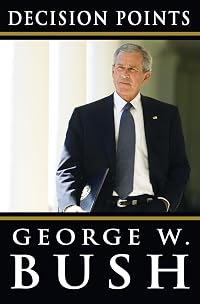
Decision Points
by George W. Bush
On This Page
Description
Decision points is the memoir of America's 43rd president. George W. Bush offers a candid journey through the defining decisions of his life while writing about his flaws and mistakes, as well as his accomplishments.Tags
Recommendations
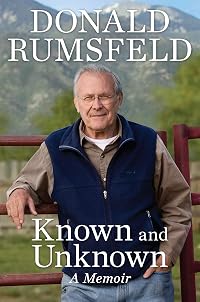
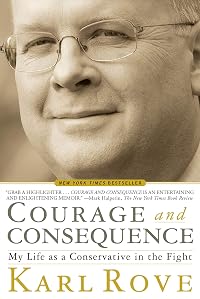
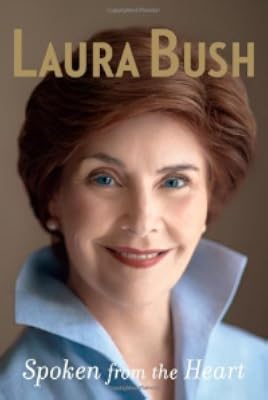
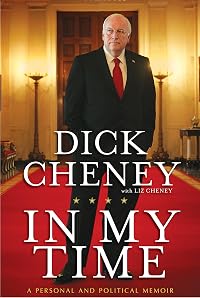
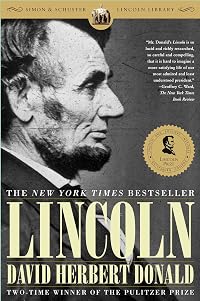
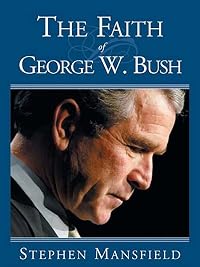
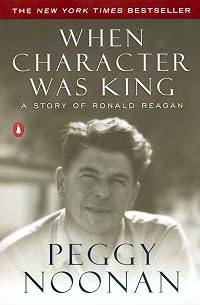
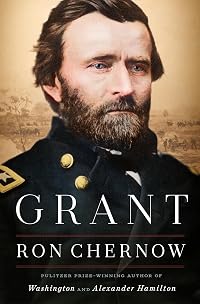
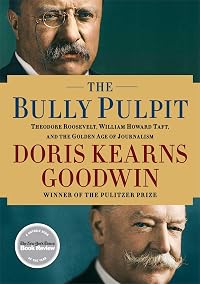
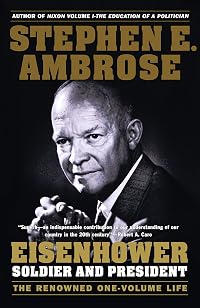
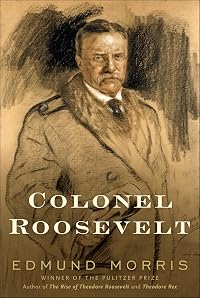
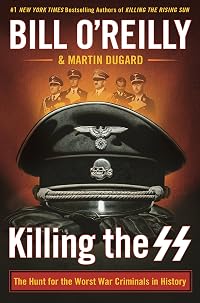
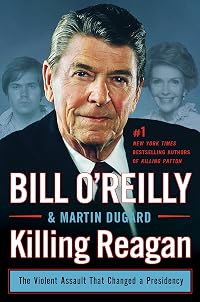
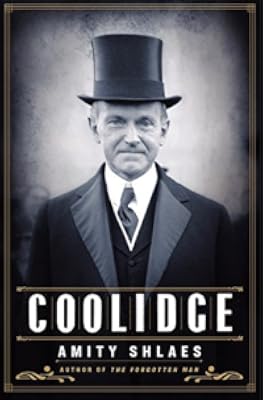
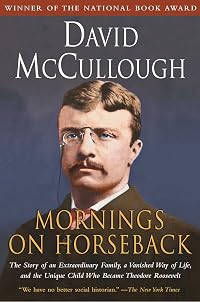
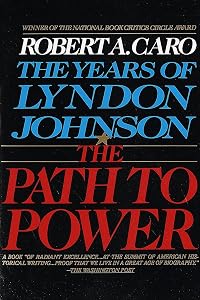

Member Recommendations
Member Reviews
"Whatever the verdict on my presidency, I’m comfortable with the fact that I won’t be around to hear it." This book's penultimate sentence exemplifies three points of George W. Bush: His unwillingness to face criticism, his inability to learn and his egocentricity. Sheltered and pampered, nobody will shatter his delusions of being a modern Abraham Lincoln (about whom he says to have read fourteen biographies during his presidency). I have read about Abraham Lincoln too and Shrub is no Lincoln. He isn't even a Nixon. His place among the worst US presidents is guaranteed. This book will soon end up in the remaindered books section and join Milosevic's and Saddam Hussein's oeuvres in the libraries.
One interesting aspect is that George show more W. Bush now fully embraces and is fully embraced by the Bush clan. In order to revive the tarnished family name, all internal dissent is airbrushed out of existence. The whitewash and start of project "lost cause" has started with a vengeance.
Even Jon Stewart considers it impolite to call Bush a war criminal. You see, the US doesn't torture. George W. Bush said "damn right" to enhanced interrogation to break people, whereas the actual breaking was preferentially outsourced. Many of Bush's victims were innocent, kidnapped far from any war zone (El-Masri in Macedonia, Maher Arar in NYC, ...). In relation to FRAGO 242, the Guardian wrote that "US soldiers, US advisers, were standing aside and doing nothing, while members of the Wolf Brigade beat and tortured prisoners." Nixon at least acknowledged that his actions were evil. Bush fails to show any contrition, any remorse, to feel any guilt. Only he himself feels wronged from Kanye to Putin. This makes reading this book so painful. In order to keep up his cocksure facade, Bush has to airbrush out major elements of all the stories he tells. The model for this book is less the classic presidential memoir but a dictator's vanity project. Bush ridicules Kim Jong-Il's and Saddam's pomposity he is equally guilty of. This book is similar to the Lenin and Marx memorabilia one could buy after the collapse of communism in Eastern Europe.
Apart from his two commendable personal but (inter)nationally disastrous decisions to quit drinking and running for office, Bush selected, out of the over 300 scandals and the rather limited successes of the Bush administration, the following topics as chapters for his book: VP Dick Cheney, stem cells, 9/11, Afghanistan, Iraq, No child left behind, Katrina, AIDS, Iraq II: the surge, Israel-Palestine-Lebanon, financial collapse. Unfortunately, his account of these issues is not complete, fair nor balanced. Any element which might reflect badly on Dear Leader is cut out of the picture. This might be sufficient for his authoritarian fans and talk show hosts. All others should wait for an annotated edition.
For those that have already forgotten the Bush years and need a refresher about some of the events not found in this book: Bush sat around on 9/11, played air guitar and shared a cake with John McCain while Katrina loomed, he joked about searching for WMD in his office and about the execution of Saddam Hussein, he started two wars, torpedoed Global Warming initiatives, he corrupted, stuffed and disabled governmental agencies, curbed civil liberties, enabled torture, and he repeatedly lied to his citizens and to the world. And he failed to capture or kill Osama bin Laden. A miserable failure indeed. show less
One interesting aspect is that George show more W. Bush now fully embraces and is fully embraced by the Bush clan. In order to revive the tarnished family name, all internal dissent is airbrushed out of existence. The whitewash and start of project "lost cause" has started with a vengeance.
Even Jon Stewart considers it impolite to call Bush a war criminal. You see, the US doesn't torture. George W. Bush said "damn right" to enhanced interrogation to break people, whereas the actual breaking was preferentially outsourced. Many of Bush's victims were innocent, kidnapped far from any war zone (El-Masri in Macedonia, Maher Arar in NYC, ...). In relation to FRAGO 242, the Guardian wrote that "US soldiers, US advisers, were standing aside and doing nothing, while members of the Wolf Brigade beat and tortured prisoners." Nixon at least acknowledged that his actions were evil. Bush fails to show any contrition, any remorse, to feel any guilt. Only he himself feels wronged from Kanye to Putin. This makes reading this book so painful. In order to keep up his cocksure facade, Bush has to airbrush out major elements of all the stories he tells. The model for this book is less the classic presidential memoir but a dictator's vanity project. Bush ridicules Kim Jong-Il's and Saddam's pomposity he is equally guilty of. This book is similar to the Lenin and Marx memorabilia one could buy after the collapse of communism in Eastern Europe.
Apart from his two commendable personal but (inter)nationally disastrous decisions to quit drinking and running for office, Bush selected, out of the over 300 scandals and the rather limited successes of the Bush administration, the following topics as chapters for his book: VP Dick Cheney, stem cells, 9/11, Afghanistan, Iraq, No child left behind, Katrina, AIDS, Iraq II: the surge, Israel-Palestine-Lebanon, financial collapse. Unfortunately, his account of these issues is not complete, fair nor balanced. Any element which might reflect badly on Dear Leader is cut out of the picture. This might be sufficient for his authoritarian fans and talk show hosts. All others should wait for an annotated edition.
For those that have already forgotten the Bush years and need a refresher about some of the events not found in this book: Bush sat around on 9/11, played air guitar and shared a cake with John McCain while Katrina loomed, he joked about searching for WMD in his office and about the execution of Saddam Hussein, he started two wars, torpedoed Global Warming initiatives, he corrupted, stuffed and disabled governmental agencies, curbed civil liberties, enabled torture, and he repeatedly lied to his citizens and to the world. And he failed to capture or kill Osama bin Laden. A miserable failure indeed. show less
This is a very easy read and concentrates on Bush's decision making process rather than on a self-servicing defense of his reign or a comprehensive, chronological account of his two terms. For all the many criticisms of George W. this memoir is rather surprising. He does not pontificate, rationalize, or excuse his decisions. What he does instead is to demonstrate how he came to make the important decisions, right or regretable, that he made while president.
The most embarrassing and worst section is his account of the government-induced financial crisis. Bush states: "I decided that the only way to preserve the free market in the long run was to intervene in the short run" (p. 59) which is sort of like saying I am going to save myself by show more shooting my foot. show less
The most embarrassing and worst section is his account of the government-induced financial crisis. Bush states: "I decided that the only way to preserve the free market in the long run was to intervene in the short run" (p. 59) which is sort of like saying I am going to save myself by show more shooting my foot. show less
One of W's predecessors had this to say about the marvelous wonder of writing (and reading): "Writing - the art of communicating thoughts to the mind, through the eye - is the great invention of the world ... great, very great in enabling us to converse with the dead, the absent, and the unborn, at all distances of time and space." That was the voice of Abraham Lincoln, and W has taken those words literally; since he seems to be writing exclusively for "the dead, the absent and the unborn." Certainly anyone who happened to have been alive and present during W's tenure could not possibly be expected to take seriously what W has to say in this memoir. Saddam was actively seeking nuclear weapons? This isn't re-writing history, it's show more de-writing history. I am not a book burner. But if ever my house is on fire, I would not hesitate to try to put out the flames by beating them with this book. show less
It's not that I didn't vote for Dubya the second time he ran, I actively voted against him. Still, when I heard of him saying things like "‘Anglo-Saxon’ ideals show pro-Trump Republicans ‘want to be extinct’", I felt I would like to revisit and consider his reflections on his two terms.
I give him four stars for an engaging political memoir and acknowledging many missteps. He hasn't converted me to being a supported as I feel he falls short of (1) seeing hypocrisy in his own core beliefs and (2) finding sufficient responsibility for an apparently poorly managed administration.
For (1) he details a lot of respectable soul-searching and consultation leading restricting Federal funding of stem cell research based on the idea that show more "destroying an embryo for the vague and indirect purpose of scientific research" is immoral. Ok. I can respect that and his compromise where he "authorized federal funding for embryonic stem cell research—but solely for existing stem cell lines". But then, just after, came a decision Bush had never imagined he would have to make. A hijacked plane was headed toward Washington. The president ordered that it be shot down by American fighter aircraft. "Hijacked planes were weapons of war. Despite the agonizing costs, taking one out could save countless lives on the ground. I had just made my first decision as a wartime commander in chief," Bush writes and misses an opportunity for rigorous self-analysis of what, surely, are difficult decisions. Well, he seems to be unable to get out of the box he put himself in as The Decider-In-Chief. ("I'm the decider, and I decide what's best.")
Handling TARP and contravening his own free market principles feels also like it is truly absent close examination for how that reality challenges his prior assumptions and, to some extent, either negates them or was an error in need of explanation.
As for (2), from the "Mission Accomplished" banner to Comey to the Patriot Act it feels like Bush stumbled through a a lot of "didn't know" and should have known situations that points to poor leadership and ineffectual administration.
Reading this is a good reminder of his accomplishments and impact on making the U.S. lead the effort to combat AIDS in Africa.
While it is never stated, it feels to me like this enshrining of two terms of Texas Republican style over substance nudged the GOP on the Trump trajectory. show less
I give him four stars for an engaging political memoir and acknowledging many missteps. He hasn't converted me to being a supported as I feel he falls short of (1) seeing hypocrisy in his own core beliefs and (2) finding sufficient responsibility for an apparently poorly managed administration.
For (1) he details a lot of respectable soul-searching and consultation leading restricting Federal funding of stem cell research based on the idea that show more "destroying an embryo for the vague and indirect purpose of scientific research" is immoral. Ok. I can respect that and his compromise where he "authorized federal funding for embryonic stem cell research—but solely for existing stem cell lines". But then, just after, came a decision Bush had never imagined he would have to make. A hijacked plane was headed toward Washington. The president ordered that it be shot down by American fighter aircraft. "Hijacked planes were weapons of war. Despite the agonizing costs, taking one out could save countless lives on the ground. I had just made my first decision as a wartime commander in chief," Bush writes and misses an opportunity for rigorous self-analysis of what, surely, are difficult decisions. Well, he seems to be unable to get out of the box he put himself in as The Decider-In-Chief. ("I'm the decider, and I decide what's best.")
Handling TARP and contravening his own free market principles feels also like it is truly absent close examination for how that reality challenges his prior assumptions and, to some extent, either negates them or was an error in need of explanation.
As for (2), from the "Mission Accomplished" banner to Comey to the Patriot Act it feels like Bush stumbled through a a lot of "didn't know" and should have known situations that points to poor leadership and ineffectual administration.
Reading this is a good reminder of his accomplishments and impact on making the U.S. lead the effort to combat AIDS in Africa.
While it is never stated, it feels to me like this enshrining of two terms of Texas Republican style over substance nudged the GOP on the Trump trajectory. show less
It doesn’t matter whether you are Republican or Democrat; you should read this book. Here are some of the reasons why: we all have tendencies to forget history, or edit it the way we remember; and we want to believe everything we see on the news. Trust me, as someone who just had a half hour interview edited down to nothing more than a sound bite you can’t believe what you hear and see—everyone has their slant. Another reason is that until we walk in someone’s shoes we can never fully understand the decisions they make. In Decision Point, former President Bush takes you back to the beginning and lets you see it through his eyes. You may not have your opinion of him change, but some aspects of his presidency are revealed in a show more different light. I liked his down to earth sometimes embarrassing honesty and I came away with a better understanding of him and the Presidential office. I highly recommend reading this book. show less
"Great events and personalities are all made small when passed through the medium of this small mind." - Winston Churchill
While Churchill, when writing to Eisenhower, could not have known about Bush the President, let alone the writer or Decider, I can find no better way of describing this book.
There is a terrible problem in life; we are all so damned self-forgiving. We all find ways of abridging our faults and accentuating our successes. Fortunately for us all, most of us learn this and mitigate it; George Bush wrote almost an entire book embracing it. The book is full of gosh-darnit-if-I-didn't-do-my-best moments that make you feel like you are watching a small child give it their best shot. Occasionally, when he stumbles on show more something and does assign some self-blame the moment is so rare and fleeting that you hardly notice it (ex. his looking into the soul of Vladimir Putin, later realizing he wasn't a great guy).
The New Yorker review also pegged the exact nature of the "Decision Points," namely that they aren't really decisions, so much as conclusions. For instance, the Chapter on Stem Cells includes the fairest, most intellectual debate of the book doesn't even have significant quotation (more than 4 lines) from either side. You are left wondering if he just opened his mouth and he said what came to the top of his brain.
The lasting opinion, the feeling that stuck with me the most, is just an overwhelming feeling that I'm looking at some piece of genius here. That, like the City of the Ladies, you need to dig deeper and you will see an achievement of true ingenuity. But then I re-read a chapter and think, "Nah." show less
While Churchill, when writing to Eisenhower, could not have known about Bush the President, let alone the writer or Decider, I can find no better way of describing this book.
There is a terrible problem in life; we are all so damned self-forgiving. We all find ways of abridging our faults and accentuating our successes. Fortunately for us all, most of us learn this and mitigate it; George Bush wrote almost an entire book embracing it. The book is full of gosh-darnit-if-I-didn't-do-my-best moments that make you feel like you are watching a small child give it their best shot. Occasionally, when he stumbles on show more something and does assign some self-blame the moment is so rare and fleeting that you hardly notice it (ex. his looking into the soul of Vladimir Putin, later realizing he wasn't a great guy).
The New Yorker review also pegged the exact nature of the "Decision Points," namely that they aren't really decisions, so much as conclusions. For instance, the Chapter on Stem Cells includes the fairest, most intellectual debate of the book doesn't even have significant quotation (more than 4 lines) from either side. You are left wondering if he just opened his mouth and he said what came to the top of his brain.
The lasting opinion, the feeling that stuck with me the most, is just an overwhelming feeling that I'm looking at some piece of genius here. That, like the City of the Ladies, you need to dig deeper and you will see an achievement of true ingenuity. But then I re-read a chapter and think, "Nah." show less
This took me almost a week to read. Way longer than it normally takes me to read a book. I was surprised by how much I liked it. His personality really came through and it was formatted in a way that you went from one important point in his presidency to the next. Pages weren't filled with names or particulars that weren't relevant. His deep faith and his humor both came through in perfect balance. Also his mother's humor peppered the book and she cracked me up. I think Ill add her book to my tbr list as a result.
Members
- Recently Added By
Lists

Best Autobiographies and Memoirs
370 works; 67 members

You Couldn't Pay Me to Read That
25 works; 8 members

Presidential Autobiographies
37 works; 3 members
Memoirs and Autobiographies by US National Government Officials
15 works; 2 members

Books Read in 2013
1,630 works; 51 members

United States Foreign Policy & Foreign Relations
25 works; 2 members
Author Information

46+ Works 5,340 Members
George Walker Bush was born on July 6, 1946 in New Haven, Connecticut to George Herbert Walker Bush, the 41st President of the United States and Barbara Pierce Bush. He received a bachelor's degree in history from Yale University in 1968. After college, he enlisted in the Texas Air National Guard, attaining the rank of Second Lieutenant, and show more gaining certification to fly the F-102 jet fighter. He remained in the Air National Guard until 1973. In the early 70's, he worked on various United States Senate campaigns for Republican candidates in Florida and Alabama. He also worked for a firm that specialized in large scale agricultural operations and as part of a student mentor program for children in inner city Houston. He received a M. B. A. from Harvard Business School in 1975. He started an independent oil-exploration company called Arbusto Energy Incorporated, which eventually joined Spectrum 7, where Bush became Chairman. In 1986, Spectrum 7 was folded into Harken Energy Corp., and Bush served as a consultant and a member of the Board of Directors. In 1987, Bush served as the campaign advisor for his father's run at the presidency. He also held the position of liaison to the media, as well as conservative and Christian leaders. In 1989, he purchased a small interest in the Texas Rangers baseball team, eventually becoming a managing general partner and serving as the public spokesperson for the ownership group. He became the Governor of Texas in 1994. He became the 43rd President of the United States and served from 2001 to 2009. Since leaving the White House, he has written several books including Decision Points and 41: A Portrait of My Father. (Bowker Author Biography) show less
Awards and Honors
Distinctions
Common Knowledge
- Original publication date
- 2010-11-09
- People/Characters
- George W. Bush; Laura Bush; Dick Cheney; Condoleezza Rice; George H. W. Bush; Barbara Bush (show all 7); Donald Rumsfeld
- Important places
- Washington, D.C., USA; New York, New York, USA; Texas, USA
- Dedication
- Signé
- First words
- It was a simple question.
- Last words
- (Click to show. Warning: May contain spoilers.)Whatever the verdict in my presidency, I'm comfortable with the fact that I won't be around to hear it. That's a decision point only history will reach.
Classifications
- Genres
- Biography & Memoir, General Nonfiction, History, Nonfiction
- DDC/MDS
- 973.931092 — History & geography History of North America United States 1901- New Millennium, Post 9/11 (2001-Present) George W. Bush (2001-2009) Sept 11 Attacks, Iraq War, Patriot Act
- LCC
- E903 .A3 — History of the United States George W. Bush's administrations, 2001-2009
- BISAC
Statistics
- Members
- 3,567
- Popularity
- 4,605
- Reviews
- 73
- Rating
- (3.68)
- Languages
- 9 — Chinese, Danish, Dutch, English, Finnish, French, Hungarian, Portuguese, Romanian
- Media
- Paper, Audiobook, Ebook
- ISBNs
- 28
- ASINs
- 20