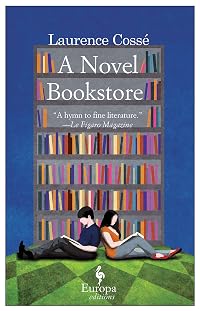
A Novel Bookstore
by Laurence Cossé
On This Page
Description
A mysterious death, unusual car accident, and anonymous threats have one thing in common-- the victims are all members of the Good Novel bookstore's secret selection committee. Set in Paris, this tale combines mystery, romance, and French theology and literature.Tags
Recommendations


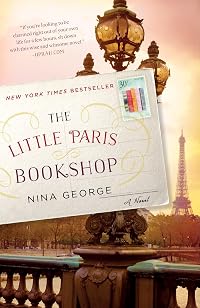
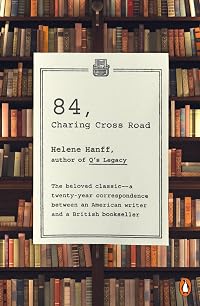
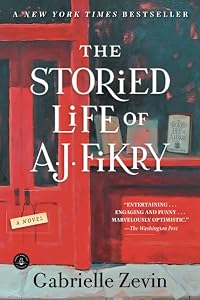
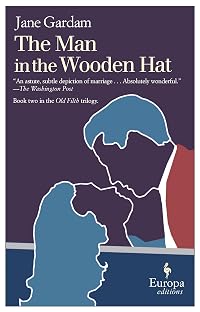


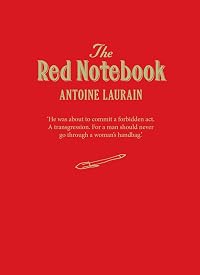

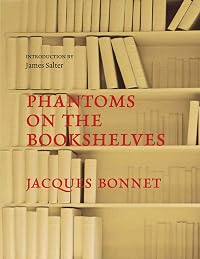
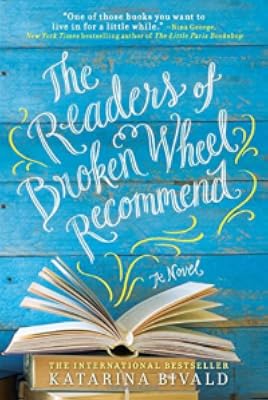
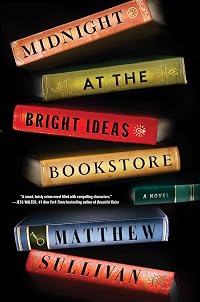


Member Recommendations
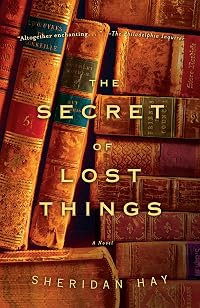
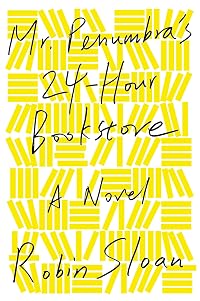
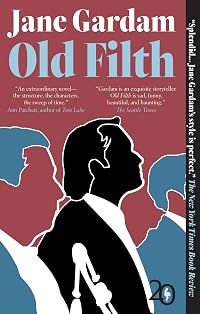
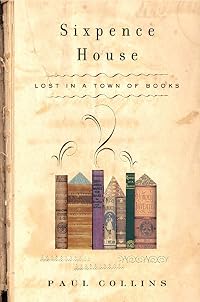
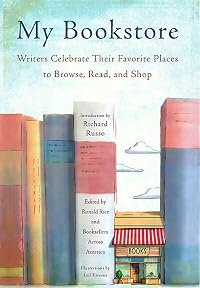
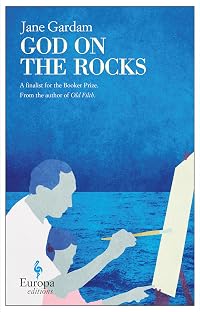
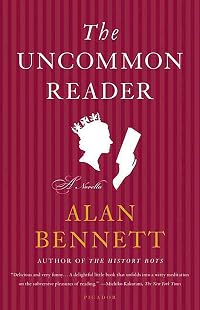
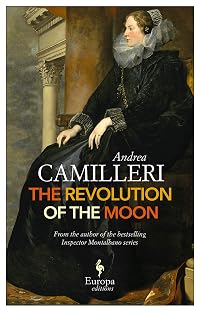
morsecode The English-language editions (published by Europa Editions) of both novels are translated by Alison Andersen. There isn't a lot of similarity between the two novels (beyond the fact that both are quite literary), but I do think that someone who enjoys one will enjoy the other.
20
Member Reviews
The publicity quotes on the back of this thoroughly enjoyable novel will so mislead.
"a thriller, a romance, and a fairytale," says Le Figaro. "commentary on the world of contemporary publishing," cries La Croix. "An Agatha Christie-style mystery bolstered by a love story," chimes in Madame Figaro.
With the possible exception of "fairytale," all these miss the point. Is there a mystery? Well, yes, but it's a plot vehicle rather than the plot and (quite frankly) never does get resolved all that satisfactorily...certainly not to the standards of M. Poirot or Miss Marple. Is there a romance? Yes, more than one, in fact, and quite well done...but these are really minor threads rounding out the characters rather than defining them. show more Commentary?...hmm, that's a bit like saying Goodbye, Mr. Chips is a commentary on British public boarding schools—it's there, you can form opinions, but it's not the point.
The essence of this story is a paean to the love of reading good books. Ivan and Francesca decide to open a book store, The Good Novel, where you won't find Twilight, anything by Tom Clancy, nor the latest million-selling chick lit. Instead you'll find only great novels, chosen for them by an anonymous panel of some of the best living authors, without regard to publication dates, best seller lists, literary prizes or any criterion beyond the opinion that it is great literature.
And therein hangs the tale. The publishers who see 99% of their books rejected and the authors who realize none of their books are represented on the shelves are not happy and a campaign against the store is begun. There is something almost Ayn Rand-ish (without the strong sense of elitism!) about the whole thing except that the reader can discern that it is bruised egos and wallets firing the opposition, not mediocrity.
At the beginning, I said that "fairytale" might not quite miss the mark. When I think about the amazing success of the store or about the severity of the reaction, there is more than a bit unreal about it all. However, I don't think it detracts unless you go in looking for a mystery or a commentary. Instead, look for colorful and lovable characters, the author's deep and obvious love for reading, and opportunities to think about a "literary heritage, which is being threatened by forgetfulness and indifference."
I'm not sure if A Novel Bookstore would actually make it onto The Good Novel's shelves but I think it would be hard to read this book and not walk away a bit excited and eager for your next good novel. show less
"a thriller, a romance, and a fairytale," says Le Figaro. "commentary on the world of contemporary publishing," cries La Croix. "An Agatha Christie-style mystery bolstered by a love story," chimes in Madame Figaro.
With the possible exception of "fairytale," all these miss the point. Is there a mystery? Well, yes, but it's a plot vehicle rather than the plot and (quite frankly) never does get resolved all that satisfactorily...certainly not to the standards of M. Poirot or Miss Marple. Is there a romance? Yes, more than one, in fact, and quite well done...but these are really minor threads rounding out the characters rather than defining them. show more Commentary?...hmm, that's a bit like saying Goodbye, Mr. Chips is a commentary on British public boarding schools—it's there, you can form opinions, but it's not the point.
The essence of this story is a paean to the love of reading good books. Ivan and Francesca decide to open a book store, The Good Novel, where you won't find Twilight, anything by Tom Clancy, nor the latest million-selling chick lit. Instead you'll find only great novels, chosen for them by an anonymous panel of some of the best living authors, without regard to publication dates, best seller lists, literary prizes or any criterion beyond the opinion that it is great literature.
And therein hangs the tale. The publishers who see 99% of their books rejected and the authors who realize none of their books are represented on the shelves are not happy and a campaign against the store is begun. There is something almost Ayn Rand-ish (without the strong sense of elitism!) about the whole thing except that the reader can discern that it is bruised egos and wallets firing the opposition, not mediocrity.
At the beginning, I said that "fairytale" might not quite miss the mark. When I think about the amazing success of the store or about the severity of the reaction, there is more than a bit unreal about it all. However, I don't think it detracts unless you go in looking for a mystery or a commentary. Instead, look for colorful and lovable characters, the author's deep and obvious love for reading, and opportunities to think about a "literary heritage, which is being threatened by forgetfulness and indifference."
I'm not sure if A Novel Bookstore would actually make it onto The Good Novel's shelves but I think it would be hard to read this book and not walk away a bit excited and eager for your next good novel. show less
I especially enjoyed the details -- which other reviewers found distracting -- about the management of the bookstore. In such minutia one discovers the choices that must be made to create such an outlet, and thus the opportunities that arise for a bookstore to be as expressive of one's inner life as writing a book can be for an author. In this sense the bookstore is not too different from one's library. Choices must be made, and through those decisions we reveal what we judge to be important. I do wish Cosse had done a better job resolving some of the narrative loose ends.
Do you stand reading in bookstores until you realize you are now late, and the book is half done? Do you find yourself scanning friends' bookshelves surreptitiously, while nodding at small talk? Do you think some books are better than others? If so, you will probably enjoy this book as much as I did. However, if you think there is no such thing as a "great book" or are a publisher or mega-chain bookstore owner, you probably won't.
Although this book contains within it a mystery, a couple of love stories, and a bit of otherworldly Chagallishness, mostly it is about people who love books. The catch is that these people don't love just any books, they love good books. Often today's culture celebrates diversity by saying everything is show more equally good. The consumer should decide for his or her self. Differences in quality or ability are minimized, hidden, or ignored for fear of the e-word: elitism.
A Novel Bookstore explores this concept in the world of book publishing, selling, and reviewing. Fed up with the mediocrity and sameness of the mega-bookstores, and even many smaller ones, Ivan and Francesca decide to open the ideal bookstore: one which carries only “good” novels. We are led through their entire planning process. Novels or all fiction? Just classics or also newly released? Only new copies or also used? And above all, who will decide? The bookstore opens with a flourish and attracts both serious readers and the attention of those who stand to lose if some books are deemed better than others.
I found the beginning of the book delightful: a celebration of literature wrapped in a fun mystery-love story. But somewhere in the last third, I began to feel as though the author had lost her way. A narrative voice appears from nowhere and is a distraction, the mystery comes bogged down and is never resolved, and the theme of discernment in literature turns to an inditement of large publishers, booksellers, critics, and book prize judges in general. But despite a less than optimal ending, I found the book fun to read and a reminder that it is okay to say, “This is a good book, and this one is not.” show less
Although this book contains within it a mystery, a couple of love stories, and a bit of otherworldly Chagallishness, mostly it is about people who love books. The catch is that these people don't love just any books, they love good books. Often today's culture celebrates diversity by saying everything is show more equally good. The consumer should decide for his or her self. Differences in quality or ability are minimized, hidden, or ignored for fear of the e-word: elitism.
A Novel Bookstore explores this concept in the world of book publishing, selling, and reviewing. Fed up with the mediocrity and sameness of the mega-bookstores, and even many smaller ones, Ivan and Francesca decide to open the ideal bookstore: one which carries only “good” novels. We are led through their entire planning process. Novels or all fiction? Just classics or also newly released? Only new copies or also used? And above all, who will decide? The bookstore opens with a flourish and attracts both serious readers and the attention of those who stand to lose if some books are deemed better than others.
I found the beginning of the book delightful: a celebration of literature wrapped in a fun mystery-love story. But somewhere in the last third, I began to feel as though the author had lost her way. A narrative voice appears from nowhere and is a distraction, the mystery comes bogged down and is never resolved, and the theme of discernment in literature turns to an inditement of large publishers, booksellers, critics, and book prize judges in general. But despite a less than optimal ending, I found the book fun to read and a reminder that it is okay to say, “This is a good book, and this one is not.” show less
A beautifully written book by an author who clearly loves words, literature and bookstores. One of those books that I wanted to quote incessantly at people. One of those books that made me want to read every book mentioned within it.
Why not five stars?
Well, that's all tied up with the ending. So, spoilers ahead.
I feel as though I ought to be bothered that the mystery hook which lured me into the novel is solved but unresolved, or perhaps resolved but unsolved. Though to tell the truth, by the time I reached the resolution of the mystery portion of the plot, I was much more concerned with the survival of the bookstore than with the identity of the attackers from the initial chapters.
No, the aspects that left me unsatisfied werethe show more increasing centrality of Ivan's love story -- I could not understand his fascination with Anis especially in the face of her seeming indifference -- and the final revelation of the narrator. Most of the book seems to be in third person, but there are tantalizing glimpses of a first-person narrator running throughout. Given who "I" was when the narrator's identity was finally revealed, I would have liked to have closed the book with some understanding of the narrator and the narrator's motives throughout the novel.
Still, I very much enjoyed the journey. show less
Why not five stars?
Well, that's all tied up with the ending. So, spoilers ahead.
I feel as though I ought to be bothered that the mystery hook which lured me into the novel is solved but unresolved, or perhaps resolved but unsolved. Though to tell the truth, by the time I reached the resolution of the mystery portion of the plot, I was much more concerned with the survival of the bookstore than with the identity of the attackers from the initial chapters.
No, the aspects that left me unsatisfied were
Still, I very much enjoyed the journey. show less
The Book Report: Well, okay, see, this is a French novel, and it's really, really hard for a Murrikin like me to disentangle what French novels are about, like what the author set out to do, because the French don't really have the same rules we Murrikins do for novel-writing. It seems to be about two people, a rich, smart woman and a poor, smart man, who sorta kinda fall in love in a way and yet they don't because she's married to a major Philistine a-hole and he's in love, for some unfathomable reason, with this dreary little chickie half his age who seems drippy, useless, and uninteresting to *me* and, I suspect, to the rich lady too. So the rich lady does what rich people do best and unbelts with a big pile of gelt for the show more poor-but-smart dude to start this bookstore that will sell only novels, and only the best, the finest, the most ut of the lit'ry output of the planet, chosen by eight of the best (French) writers now writing. Hijinks ensue, which are frankly completely incredible (in its literal sense), but are lots of fun. What this book is *not* is any species of thriller or mystery; it's a French novel. That's what it is. No more, no less, no different. So, in the end, the Philistine husband and the poor-but-smart dude part ways but the store must go on, and the book's narrator is revealed, though I have to say it's not a huge surprise, though I think it's intended that way. The end, happily ever after but sadder and wiser.
My Review: I gave the book a generous 4.1 stars because it's one of those books that, while reading, goes wildly up and down the star scale; but in the end, cover closed, glasses chewed upon, assumes a different shape than the one that the reading process creates.
I'd recommend this book to all and sundry if only because of this passage, beautifully translated by the very talented Alison Anderson, on page 150 of the Europa edition:
"Literature is a source of pleasure...it is one of the rare inexhaustible joys in life, but it's not only that. It must not be dissociated from reality. Everything is there. That is why I never use the word fiction. Every subtlety in life is material for a book....Have you noticed...that I'm talking about novels? Novels don't contain only exceptional situations, life or death choices, or major ordeals; there are also everyday difficulties, temptations, ordinary disappointments; and, in response, every human attitude, every type of behavior, from the finest to the most wretched. There are books where, as you read, you wonder: What would I have done? It's a question you have to ask yourself. Listen carefully: it is a way to learn to live. There are grown-ups who will say no, literature is not life, that novels teach you nothing. They are wrong. Literature informs, instructs, it prepares you for life."
If that passage rings you like the bell you wondered if you might be, then this book will speak to you and shape you a bit differently than you were before; if it seems tediously long, avoid this book like it's got herpes, because you'll hate it.
*gooonnnggg* goes my spirit. show less
My Review: I gave the book a generous 4.1 stars because it's one of those books that, while reading, goes wildly up and down the star scale; but in the end, cover closed, glasses chewed upon, assumes a different shape than the one that the reading process creates.
I'd recommend this book to all and sundry if only because of this passage, beautifully translated by the very talented Alison Anderson, on page 150 of the Europa edition:
"Literature is a source of pleasure...it is one of the rare inexhaustible joys in life, but it's not only that. It must not be dissociated from reality. Everything is there. That is why I never use the word fiction. Every subtlety in life is material for a book....Have you noticed...that I'm talking about novels? Novels don't contain only exceptional situations, life or death choices, or major ordeals; there are also everyday difficulties, temptations, ordinary disappointments; and, in response, every human attitude, every type of behavior, from the finest to the most wretched. There are books where, as you read, you wonder: What would I have done? It's a question you have to ask yourself. Listen carefully: it is a way to learn to live. There are grown-ups who will say no, literature is not life, that novels teach you nothing. They are wrong. Literature informs, instructs, it prepares you for life."
If that passage rings you like the bell you wondered if you might be, then this book will speak to you and shape you a bit differently than you were before; if it seems tediously long, avoid this book like it's got herpes, because you'll hate it.
*gooonnnggg* goes my spirit. show less
Picked up on a whim in a brick and mortar bookstore, based solely on the title and the cover artwork, I was thoroughly charmed by A Novel Bookstore. It’s found a permanent place on my “favorites” booklist.
While a love story about fine literature and books, it’s also a mystery and, in its own understated way, a love story. The Great Novel bookstore is conceived by two literature (and book) lovers. Francesca has the wealth to launch such an enterprise, Van has the knowledge to buy and sell the books. Their concept is simple; establish an anonymous committee of eight great authors who select the stock to be sold at The Great Novel.
But intolerance, and ignorance, raise their ugly heads. Attempts are made on several of the committee show more members’ lives, the internet buzzes with irrational critiques and commentary, the French media gets involved. It gets messy, and a bit complicated, as all good plots do. Tragedy occurs and The Great Novel is left to shake itself off and reinvent itself. The overriding question here is, “Who cares what you read and where you buy it?” If you can’t find your favorite mainstream novel in one store, go down the road (or onto the internet) and find it there.
This bookstore is a place I wish really existed. At the end of the book, I wanted to put my things in storage, and go to Paris to find the store, befriend the owners and make The Great Novel my hangout. Rarely do books have that kind of emotional impact on me. A Novel Bookstore is thoroughly engaging, charming and entrancing. show less
While a love story about fine literature and books, it’s also a mystery and, in its own understated way, a love story. The Great Novel bookstore is conceived by two literature (and book) lovers. Francesca has the wealth to launch such an enterprise, Van has the knowledge to buy and sell the books. Their concept is simple; establish an anonymous committee of eight great authors who select the stock to be sold at The Great Novel.
But intolerance, and ignorance, raise their ugly heads. Attempts are made on several of the committee show more members’ lives, the internet buzzes with irrational critiques and commentary, the French media gets involved. It gets messy, and a bit complicated, as all good plots do. Tragedy occurs and The Great Novel is left to shake itself off and reinvent itself. The overriding question here is, “Who cares what you read and where you buy it?” If you can’t find your favorite mainstream novel in one store, go down the road (or onto the internet) and find it there.
This bookstore is a place I wish really existed. At the end of the book, I wanted to put my things in storage, and go to Paris to find the store, befriend the owners and make The Great Novel my hangout. Rarely do books have that kind of emotional impact on me. A Novel Bookstore is thoroughly engaging, charming and entrancing. show less
"For as long as literature has existed, suffering, joy, horror, grace, and everything that is great in humankind has produced great novels. These exceptional books are often not very well-known, and are in constant danger of being forgotten, and in today’s world, where the number of books being published is considerable, the power of marketing and the cynicism of business have joined forces to keep those extraordinary books indistinguishable from millions of insignificant, not to say pointless books.
"But those masterful novels are life-giving. They enchant us. They help us to live. They teach us. It has become necessary to come to their defense and promote them relentlessly, because it is an illusion to think that they have the power show more to radiate all by themselves. …
"We want necessary books, books we can read the day after a funeral, when we have no tears left from all our crying, when we can hardly stand for the pain; books that will be there like loved ones when we have tidied a dead child’s room and copied out her secret notes to have them with us, always, and breathed in her clothes hanging in the wardrobe a thousand times, and there is nothing left to do; books for those nights when no matter how exhausted we are we cannot sleep, and all we want is to tear ourselves away from obsessive visions; books that have heft and do not let us down …
"We have no time to waste on insignificant books, hollow books, books that are here to please.
We want books that are written for those of us who doubt everything, who cry over the least little thing, who are startled by the slightest noise.
"We want books that cost their authors a great deal, books where you can feel the years of work, the backache, the writer’s block, the author’s panic at the thought that he might be lost; his discouragement, his courage, his anguish, his stubbornness, the risk of failure that he has taken.
"We want splendid books, books that immerse us in the splendor of reality and keep us there; books that prove to us that love is at work in the world next to evil, right up against it, at times indistinctly, and that it always will be, just the way that suffering will always ravage hearts. We want good novels.
"We want books that leave nothing out; neither human tragedy nor everyday wonders, books that bring fresh air to our lungs
"And even if there is only one such book per decade, even if there is only one … every ten years, that would be enough. We want nothing else."
This is the message, the moral and the mantra of Laurence Cossé's ninth missive, A Novel Bookstore, published as an English translation by Alison Anderson in 2010 by Europa Editions (originally in France by Èditions Gallimard, Paris as Au bon roman in 2009). The message is true - we crave good books, good literature. On occasion a book with a decorative cover might catch our eye, but it's not the covers we read, or read for: it, as with most things, is what's inside that really counts - not to discount beautifully
crafted editions of good books - they're most welcome.
Like most good books, this one has a little bit of everything - romance, heartache (those two, however, are not always mutually inclusive), mystery, drama... But not in an austere fashion. The premise has an ounce of literary swagger, but it is also humble. Its narrative style is splendid but simple, its prose is satisfying, even in its somewhat clumsy English (I wish I knew French... I'm sure it's divine in French.)
And it aspires to be only what it is - un bon roman, rich in character and poise.
It's the story of some idyllic owners of an idyllic bookstore - one that aspires to only sell good books. The selection is made by a committee of anonymous (though not to the reader, nor to the bookstore owners) authors who are each asked to make a list of 600 good novels. Their lists are integrated to make one master list, the contents of which are then stocked and shelved. This isn't Borders or Barnes and Noble or Gibert Joseph. This is not lollipops and digital art. This is honey, soft snowy peaks and green moss - as close to perfection as you can get. And, like honey will, it attracts the flies - novelists, journalists, bibliophiles. Hell, I would shop there. But it also attracts a lot of negative energy.
Like Jane Eyre or Harry Potter, the book store is the titular hero of its story - it embodies goodness. In labeling itself as "The Good Novel" bookstore, one assumes that it sells what it presumes to be good novels, and everything else must be... well... not good. And like those other heroes and heroines, the store (its owners, employees and committee) come under the attack of an unseen antagonist - a villain
with an endless supply of vitriol and ill-humor, driven by jealousy, pride and conceit.
There is a thriller at the core, but it's so much more than that. To borrow a bias from the novel, this is not a Dan Brown blockbuster thriller mega fun time extravaganza. Le Figaro Magazine called it "A hymn to fine literature"; I call it a veritable love song to the written word in 3-part harmony with 3-dimensional
lyrics, the kind of fairytale that can only exist in reality.
It is purely, simply, without inhibition, without being violent or explicit, a good novel... a pleasurable novel, an excellent novel. The kind of book that, when one gets to the end, it feels heavier, thicker, as if you've left part of yourself behind, between the leaves, among the darkly printed words, curled up beneath the narrow sweep of an italicized comma.
Lauren Cartelli
www.theliterarygothamite.com show less
"But those masterful novels are life-giving. They enchant us. They help us to live. They teach us. It has become necessary to come to their defense and promote them relentlessly, because it is an illusion to think that they have the power show more to radiate all by themselves. …
"We want necessary books, books we can read the day after a funeral, when we have no tears left from all our crying, when we can hardly stand for the pain; books that will be there like loved ones when we have tidied a dead child’s room and copied out her secret notes to have them with us, always, and breathed in her clothes hanging in the wardrobe a thousand times, and there is nothing left to do; books for those nights when no matter how exhausted we are we cannot sleep, and all we want is to tear ourselves away from obsessive visions; books that have heft and do not let us down …
"We have no time to waste on insignificant books, hollow books, books that are here to please.
We want books that are written for those of us who doubt everything, who cry over the least little thing, who are startled by the slightest noise.
"We want books that cost their authors a great deal, books where you can feel the years of work, the backache, the writer’s block, the author’s panic at the thought that he might be lost; his discouragement, his courage, his anguish, his stubbornness, the risk of failure that he has taken.
"We want splendid books, books that immerse us in the splendor of reality and keep us there; books that prove to us that love is at work in the world next to evil, right up against it, at times indistinctly, and that it always will be, just the way that suffering will always ravage hearts. We want good novels.
"We want books that leave nothing out; neither human tragedy nor everyday wonders, books that bring fresh air to our lungs
"And even if there is only one such book per decade, even if there is only one … every ten years, that would be enough. We want nothing else."
This is the message, the moral and the mantra of Laurence Cossé's ninth missive, A Novel Bookstore, published as an English translation by Alison Anderson in 2010 by Europa Editions (originally in France by Èditions Gallimard, Paris as Au bon roman in 2009). The message is true - we crave good books, good literature. On occasion a book with a decorative cover might catch our eye, but it's not the covers we read, or read for: it, as with most things, is what's inside that really counts - not to discount beautifully
crafted editions of good books - they're most welcome.
Like most good books, this one has a little bit of everything - romance, heartache (those two, however, are not always mutually inclusive), mystery, drama... But not in an austere fashion. The premise has an ounce of literary swagger, but it is also humble. Its narrative style is splendid but simple, its prose is satisfying, even in its somewhat clumsy English (I wish I knew French... I'm sure it's divine in French.)
And it aspires to be only what it is - un bon roman, rich in character and poise.
It's the story of some idyllic owners of an idyllic bookstore - one that aspires to only sell good books. The selection is made by a committee of anonymous (though not to the reader, nor to the bookstore owners) authors who are each asked to make a list of 600 good novels. Their lists are integrated to make one master list, the contents of which are then stocked and shelved. This isn't Borders or Barnes and Noble or Gibert Joseph. This is not lollipops and digital art. This is honey, soft snowy peaks and green moss - as close to perfection as you can get. And, like honey will, it attracts the flies - novelists, journalists, bibliophiles. Hell, I would shop there. But it also attracts a lot of negative energy.
Like Jane Eyre or Harry Potter, the book store is the titular hero of its story - it embodies goodness. In labeling itself as "The Good Novel" bookstore, one assumes that it sells what it presumes to be good novels, and everything else must be... well... not good. And like those other heroes and heroines, the store (its owners, employees and committee) come under the attack of an unseen antagonist - a villain
with an endless supply of vitriol and ill-humor, driven by jealousy, pride and conceit.
There is a thriller at the core, but it's so much more than that. To borrow a bias from the novel, this is not a Dan Brown blockbuster thriller mega fun time extravaganza. Le Figaro Magazine called it "A hymn to fine literature"; I call it a veritable love song to the written word in 3-part harmony with 3-dimensional
lyrics, the kind of fairytale that can only exist in reality.
It is purely, simply, without inhibition, without being violent or explicit, a good novel... a pleasurable novel, an excellent novel. The kind of book that, when one gets to the end, it feels heavier, thicker, as if you've left part of yourself behind, between the leaves, among the darkly printed words, curled up beneath the narrow sweep of an italicized comma.
Lauren Cartelli
www.theliterarygothamite.com show less
Members
- Recently Added By
Published Reviews
ThingScore 67
...Laurence Cossés underhållande men ofta röriga och upprepningsfyllda roman ”Drömbokhandeln” ...
added by Jannes
Cossé, a noted journalist as well as a successful novelist in her native France, has a gift for clever if sometimes heavy-handed satire of the Paris literary scene, even if her characters behave like stock figures. Hélas, the novel's ending falls flat, and the mystery's resolution evokes a resounding "Huh?"
Still, many readers will find a reason to linger in "A Novel Bookstore," which makes a show more good argument for literature as a sensual pleasure surpassing even sex and fine wine. show less
Still, many readers will find a reason to linger in "A Novel Bookstore," which makes a show more good argument for literature as a sensual pleasure surpassing even sex and fine wine. show less
added by ScattershotSteph
Cossé cleverly constructs the mystery with even a dash of romance, but that's not the best part of the book. "A Novel Bookstore" succeeds by conveying true book lust: It's packed with sublime, enthusiastic descriptions of reading and literature.
added by ScattershotSteph
Lists

To Read - Literature / Fiction
26 works; 1 member
Author Information

16 Works 1,608 Members
Some Editions
Awards and Honors
Distinctions
Notable Lists
Series
Belongs to Publisher Series
Common Knowledge
- Canonical title*
- Au bon roman
- Original title
- Au bon roman
- Original publication date
- 2009
- People/Characters
- Ivan Georg; Francesca Aldo-Valbelli; Oscar; Anis; Gonzague Heffner
- Important places
- Paris, Île-de-France, France
- First words
- One could hardly say that Paul Néon's disappearance caused a stir in the canton of Biot, where he had apparently settled for good, nor in Les Crêts, the scrawny village where he inhabited the very last house.
- Quotations
- You have just confirmed to me that one of the most fortunate purposes of literature is to bring like-minded people together and get them talking.
My grandfather left me a great deal more—a passion for literature, and something additional, fundamental: the conviction that literature is important. He talked about it often. Literature is a source of pleasure, he said, i... (show all)t is one of the rare inexhaustible joys in life, but it's not only that. It must not be dissociated from reality. Everything is there. That is why I never use the word fiction. Every subtlety in life is material for a book. - Last words
- (Click to show. Warning: May contain spoilers.)Francesca and Van wanted to do something good. And they did, that's the least you can say.
- Original language
- French
*Some information comes from Common Knowledge in other languages. Click "Edit" for more information.
Classifications
- Genres
- Fiction and Literature, General Fiction, Mystery
- DDC/MDS
- 843.914 — Literature & rhetoric French Literature French fiction 1900- 20th Century 1945-1999
- LCC
- PQ2663 .O7248 .A9313 — Language and Literature French, Italian, Spanish and Portuguese literatures French literature Modern literature 1961-2000
- BISAC
Statistics
- Members
- 1,256
- Popularity
- 19,652
- Reviews
- 58
- Rating
- (3.42)
- Languages
- 8 — Catalan, English, French, German, Greek, Italian, Spanish, Swedish
- Media
- Paper, Ebook
- ISBNs
- 18
- ASINs
- 11