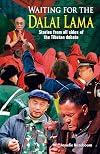
Waiting for the Dalai Lama: Stories from all Sides of the Tibetan Debate
by Annelie Rozeboom 
On This Page
Description
Why does the issue of Tibet rouse such passions on both sides? And is there any way to find common ground? Chinese-speaking journalist Annelie Rozeboom worked as a foreign correspondent in China for ten years. During that time she was able to interview numerous Tibetan people inside and outside Tibet, as well as Chinese residents, Western observers and the Dalai Lama himself. As these people explain their life stories, it becomes clear to the reader why they think the way they do. The book show more also shows how history washed over this remote kingdom and how the Tibetans and the Chinese came to take such opposing positions. This is a uniquely valuable book which approaches the emotive issue of Tibet from all angles. show lessTags
Recommendations
















Member Recommendations
Member Reviews
To Tibetans, the Dalai Lama is something much more than a religious leader, or a leader in exile. The Dalai Lama is part of their identity as Tibetans, a distinct people in the new China, however unwillingly. Tibet, and the Dalai Lama have also somehow established themselves in western consciousness in a way that few other struggles for cultural and political identity in the third world have accomplished.
Dutch journalist Annelie Rozeboom captures the importance of the Dalai Lama in contemporary Tibet, through a series of vignettes of Tibetans, in Tibet, in China and in exile. The value in this book lies in the range of vignettes, foreigners involved with Tibet, Chinese migrants in Tibet, Tibetans in exile and in China, people who have show more done well out of the coming of the Chinese to Tibet and those who haven’t. Through these little pen portraits Rozeboom manages to build a picture of the range of attitudes within the Tibetan community, both within and without Tibet.
This is not a didactic posturing book, it is a genuine attempt to show that the Chinese presence in Tibet is not a black and white issue, nor is the Dalai Lama automatically a figure of adoration within the greater Tibetan community. The truth as always, is rather more murky and ambiguous than some would have us believe.
As such Rozeboom’s book is a valuable contribution to understanding and describing contemporary Tibet, for all its contradictions and inconsistencies. Despite the undoubted repression of the Tibetan people, Rozeboom shows that some Tibetans have been able to take advantage of the Chinese presence, and rather neatly, that being able to improve their lot does not automatically translate to undying love for the Chinese presence.
Likewise her portraits of Chinese residents in Tibet help show that a range of attitudes exist among the Chinese.
As such this book forms a valuable source book for anyone interested in contemporary Tibetan politics and society. show less
Dutch journalist Annelie Rozeboom captures the importance of the Dalai Lama in contemporary Tibet, through a series of vignettes of Tibetans, in Tibet, in China and in exile. The value in this book lies in the range of vignettes, foreigners involved with Tibet, Chinese migrants in Tibet, Tibetans in exile and in China, people who have show more done well out of the coming of the Chinese to Tibet and those who haven’t. Through these little pen portraits Rozeboom manages to build a picture of the range of attitudes within the Tibetan community, both within and without Tibet.
This is not a didactic posturing book, it is a genuine attempt to show that the Chinese presence in Tibet is not a black and white issue, nor is the Dalai Lama automatically a figure of adoration within the greater Tibetan community. The truth as always, is rather more murky and ambiguous than some would have us believe.
As such Rozeboom’s book is a valuable contribution to understanding and describing contemporary Tibet, for all its contradictions and inconsistencies. Despite the undoubted repression of the Tibetan people, Rozeboom shows that some Tibetans have been able to take advantage of the Chinese presence, and rather neatly, that being able to improve their lot does not automatically translate to undying love for the Chinese presence.
Likewise her portraits of Chinese residents in Tibet help show that a range of attitudes exist among the Chinese.
As such this book forms a valuable source book for anyone interested in contemporary Tibetan politics and society. show less
 This review was written for LibraryThing Early Reviewers.
"Waiting for the Dalai Lama - Stories from all sides of the Tibetan debate" was written by Annelie Rozeboom and published in 2011.
I was a little apprehensive about the title of this book. There may be innocent beneficiaries from a crime but do we want to hear them praise the crime? The stories told by Annelie Rozeboom are apparently verbatim accounts of Tibetans in Beijing, Lhasa and refugees in Dharamsala in India. They are an interesting variety of people and their accounts are interesting and enlightening. There are also official views by Chinese Communists contrasted with the accounts from the 1926 book “We Tibetans” by Rinchen Lhamo for an accurate historical view of Tibetan culture prior to the Chinese invasion as well as the show more official views of the Tibetan Government in Exile. Accounts range from an authorised Mao Zedong impersonator in Beijing, a Tibetan pro-Chinese Cadre and the Dalai Lama himself. By the juxtaposition of these accounts, the book shows the Chinese accounts to be incredible but leaves this conclusion largely up to the reader.
Although the title of the book is “Stories from all Sides of the Tibetan Debate” there are two groups significantly missing. Several times we are told that Tibetans are pinning there hopes on the young educated Chinese and Chinese dissidents that are starting to "ask questions" about Tibet but we do not hear their voices in this book. I fear that is because they don't actually exist. In 2008 Chinese youth and Chinese foreign students studying in Australia organised a several thousand people strong counter protest to disrupt the protest of pro-Tibetan groups against the Beijing Olympics. In my experience, most young Chinese (including ex-patriot) support and justify the Chinese occupation of Tibet including its consequences for Tibetans. A letter circulated in Chinese communities in Australia said ‘"the China forces" in Canberra are weak and need reinforcement because the city is a "separatist base" for Falun Gong, pro-Tibet, pro-Uighur (in Xinjiang province) and other "splittists"’. This is a tragedy that this book ignores.
"China is a sleeping giant. But when she awakes the world will tremble." A familar quotation attributed to Napoleon, but despite the remarkable economic development of China in recent years, in reality, China is still deeply asleep, indeed in a kind of cultural paralysis. I think Rozeboom’s book aims to let the accounts of "official" China contrasted with the accounts of actual Tibetans speak for themselves but it may leave the reader confused and incredulous. You almost have to conclude that the Chinese officials are thoughtless lying automotons. It would have been better had it attempted to analyse this problem by asking young intellectual Chinese what they thought about Tibet and why they think in this way. I believe the answers would have been disappointing and frightening.
The ancient neo-Confucian "Rectification of Names" is still very influential in Chinese culture so that we see a strange kind of rigidity of thought and objectification of language that is often bewildering to people in the West. (Kevin Burns “Eastern Philosophy” has some interesting perspectives on this.) Unfortunately for China, this means an obsession with the past, a culture that is a gaudy and tastless imitation of ancient China or otherwise shallow imitations of Japanese or Western popular culture. It also means a chronic lack of inovation, creativity and imagination that does not bode well for the sustainability of China's economic future. It makes many Chinese even in the West insular, elitest, rascist and downright bad mannered. There are some Chinese that have realised and commented on this (famously Bo Yang in “The Ugly Chinaman and the Crisis of Chinese Culture”) but they are a rarity. We see this also in young Chinese devotion to fashion. It would be funny when it seems like 50% of young Chinese women in Sydney have suddenly dyed their hair brown and cut it in the same way (apparently in imitation of Christina Aguilera) were it not that this cult-like aspect of Chinese culture is what made and continues to make nightmares like the Cultural Revolution possible in China.
So the only real sign of China waking up from this cultural paralysis would be something like real freedom for Tibetans. The book interviews no young Chinese or even Chinese dissidents. These are the people that it seems Tibetans are hoping to bring about a change in the situation in Tibet and so the people I would have thought a book like this would have needed to include. Personally, I see little hope. Things can change rapidly but Chinese youth were crushed after the Tiananmen Massacre and there successors have apparently been put in their place and placated with nationalism. Although China clamped down recently on social media to prevent any chance that the "Arab Spring" should spread to China, there is little evidence that they needed to. Although a quarter of the people using the internet world wide are now in China, it seems that the "Great Firewall of China" is largely unnecessary as most Chinese users don't even want to access web sites outside China.
What needs to happen is grass roots actions by individuals as our governments are too scared of China to do anything but formally mention human rights in Tibet before getting down to the real discussions on trade. One action would be to do exactly what this books fails to do. Simply ask young educated Chinese what they think about Tibet. You may be shocked and appalled by what they say. If so, you should show it, for Chinese are also obsessed with appearance and "face". I have often thought that one sign of hope for Tibet it that Chinese are ashamed enough about what they have done so that they have to lie about it. show less
I was a little apprehensive about the title of this book. There may be innocent beneficiaries from a crime but do we want to hear them praise the crime? The stories told by Annelie Rozeboom are apparently verbatim accounts of Tibetans in Beijing, Lhasa and refugees in Dharamsala in India. They are an interesting variety of people and their accounts are interesting and enlightening. There are also official views by Chinese Communists contrasted with the accounts from the 1926 book “We Tibetans” by Rinchen Lhamo for an accurate historical view of Tibetan culture prior to the Chinese invasion as well as the show more official views of the Tibetan Government in Exile. Accounts range from an authorised Mao Zedong impersonator in Beijing, a Tibetan pro-Chinese Cadre and the Dalai Lama himself. By the juxtaposition of these accounts, the book shows the Chinese accounts to be incredible but leaves this conclusion largely up to the reader.
Although the title of the book is “Stories from all Sides of the Tibetan Debate” there are two groups significantly missing. Several times we are told that Tibetans are pinning there hopes on the young educated Chinese and Chinese dissidents that are starting to "ask questions" about Tibet but we do not hear their voices in this book. I fear that is because they don't actually exist. In 2008 Chinese youth and Chinese foreign students studying in Australia organised a several thousand people strong counter protest to disrupt the protest of pro-Tibetan groups against the Beijing Olympics. In my experience, most young Chinese (including ex-patriot) support and justify the Chinese occupation of Tibet including its consequences for Tibetans. A letter circulated in Chinese communities in Australia said ‘"the China forces" in Canberra are weak and need reinforcement because the city is a "separatist base" for Falun Gong, pro-Tibet, pro-Uighur (in Xinjiang province) and other "splittists"’. This is a tragedy that this book ignores.
"China is a sleeping giant. But when she awakes the world will tremble." A familar quotation attributed to Napoleon, but despite the remarkable economic development of China in recent years, in reality, China is still deeply asleep, indeed in a kind of cultural paralysis. I think Rozeboom’s book aims to let the accounts of "official" China contrasted with the accounts of actual Tibetans speak for themselves but it may leave the reader confused and incredulous. You almost have to conclude that the Chinese officials are thoughtless lying automotons. It would have been better had it attempted to analyse this problem by asking young intellectual Chinese what they thought about Tibet and why they think in this way. I believe the answers would have been disappointing and frightening.
The ancient neo-Confucian "Rectification of Names" is still very influential in Chinese culture so that we see a strange kind of rigidity of thought and objectification of language that is often bewildering to people in the West. (Kevin Burns “Eastern Philosophy” has some interesting perspectives on this.) Unfortunately for China, this means an obsession with the past, a culture that is a gaudy and tastless imitation of ancient China or otherwise shallow imitations of Japanese or Western popular culture. It also means a chronic lack of inovation, creativity and imagination that does not bode well for the sustainability of China's economic future. It makes many Chinese even in the West insular, elitest, rascist and downright bad mannered. There are some Chinese that have realised and commented on this (famously Bo Yang in “The Ugly Chinaman and the Crisis of Chinese Culture”) but they are a rarity. We see this also in young Chinese devotion to fashion. It would be funny when it seems like 50% of young Chinese women in Sydney have suddenly dyed their hair brown and cut it in the same way (apparently in imitation of Christina Aguilera) were it not that this cult-like aspect of Chinese culture is what made and continues to make nightmares like the Cultural Revolution possible in China.
So the only real sign of China waking up from this cultural paralysis would be something like real freedom for Tibetans. The book interviews no young Chinese or even Chinese dissidents. These are the people that it seems Tibetans are hoping to bring about a change in the situation in Tibet and so the people I would have thought a book like this would have needed to include. Personally, I see little hope. Things can change rapidly but Chinese youth were crushed after the Tiananmen Massacre and there successors have apparently been put in their place and placated with nationalism. Although China clamped down recently on social media to prevent any chance that the "Arab Spring" should spread to China, there is little evidence that they needed to. Although a quarter of the people using the internet world wide are now in China, it seems that the "Great Firewall of China" is largely unnecessary as most Chinese users don't even want to access web sites outside China.
What needs to happen is grass roots actions by individuals as our governments are too scared of China to do anything but formally mention human rights in Tibet before getting down to the real discussions on trade. One action would be to do exactly what this books fails to do. Simply ask young educated Chinese what they think about Tibet. You may be shocked and appalled by what they say. If so, you should show it, for Chinese are also obsessed with appearance and "face". I have often thought that one sign of hope for Tibet it that Chinese are ashamed enough about what they have done so that they have to lie about it. show less
This review was written for LibraryThing Early Reviewers.I was promised and given stories from all sides of the Tibetan debate in this book. I do try to keep an open mind and examine all sides and perspectives.
I don't know - is it because I'm getting old? Everything I read seems to be something I've already read - nothing new - for example:
Chinese torturing Tibetan priests, nuns and "civilians" - I'm hearing Cheney in the background talking about how torture is ok and necessary and helpful.
Chinese saying they educated Tibetans who had previously been 98% illiterate? I'm hearing European Americans talk about the schools they built for Native Americans. You know - the ones they forced the children to attend after taking them from their parents? Where they were punished for speaking their own show more language and given new names?
Hearing Chinese talk about the barren mountaintops they gave to Tibetans? Have you BEEN on an American Indian Reservation that isn't barren land?
The Chinese are cutting down whole forests and leaving deserts in their wake in Tibet so that the people can no longer plant? Hmmm. You mean like taking oil or other natural resources from other countries? Like destroying rain forests for Burger King and leaving natives to starve?
There are too many parallels between the way the U.S. treats and has treated other cultures to make this a very comfortable read for an American. Not comfortable, but highly recommended for those interested in other cultures and especially Tibet. This author spent ten years in China and knows what she is talking about - she has seen it all.
You very well may learn something new from reading this VERY informative and well documented book. Additionally, the personal stories, placed in context very well, make for interesting reading. show less
I don't know - is it because I'm getting old? Everything I read seems to be something I've already read - nothing new - for example:
Chinese torturing Tibetan priests, nuns and "civilians" - I'm hearing Cheney in the background talking about how torture is ok and necessary and helpful.
Chinese saying they educated Tibetans who had previously been 98% illiterate? I'm hearing European Americans talk about the schools they built for Native Americans. You know - the ones they forced the children to attend after taking them from their parents? Where they were punished for speaking their own show more language and given new names?
Hearing Chinese talk about the barren mountaintops they gave to Tibetans? Have you BEEN on an American Indian Reservation that isn't barren land?
The Chinese are cutting down whole forests and leaving deserts in their wake in Tibet so that the people can no longer plant? Hmmm. You mean like taking oil or other natural resources from other countries? Like destroying rain forests for Burger King and leaving natives to starve?
There are too many parallels between the way the U.S. treats and has treated other cultures to make this a very comfortable read for an American. Not comfortable, but highly recommended for those interested in other cultures and especially Tibet. This author spent ten years in China and knows what she is talking about - she has seen it all.
You very well may learn something new from reading this VERY informative and well documented book. Additionally, the personal stories, placed in context very well, make for interesting reading. show less
This review was written for LibraryThing Early Reviewers.During her 10 years in China, as a foreign correspondant for a Dutch paper, Annelie Rozeboom had a chance to meet and interview Tibetans (some living in Tibet, some living out), Chinese and Westerners about Tibet. In this book she has collected their views and experiences of the Chinese invasion of Tibet, and of the 60 or so years following. Along with the interviews that Rozeboom relates to us, she tells us a little of the history, beliefs, and traditions of the Tibetans before the invasion, and how the Tibetan way of life has changed since.
Rozeboom subtitles this book 'Stories from all sides of the Tibetan debate', as if to give all stories equal consideration, but Rozeboom shows bias for Tibetans-in-exile and an independant Tibet. show more Most of the interviews are with Tibetans and while some of them have prospered in Tibet since the Chinese took over, she is quick to point out that Tibetans still living in Tibet are afraid of reprisals for speaking out against China and for an independant Tibet. She warns that it is better to speak to Tibetans-in-exile who are not being censored. There are also several articles quoted in the book, but all the Chinese sources show China as Tibet's benefactress and Rozeboom seems to be countering these using articles from Tibetan sources with opposing views. And while there is mention of Chinese supporters of Tibet independance, there are no interviews with these Chinese.
Another difficulty I found was with the vague dating of various events, interviews and articles referred to. It became hard to decipher when events occurred in relation to each other, or what period of time an interviewee was referring to.
Still, the stories passed on to us are intriguing. Often, what I hear about Tibet is only about how China has oppressed the Tibetans. This is the first I've read about Tibetans prospering in Tibet, and about their successes in helping other Tibetans and in trying to keep their culture from disappearing completely. Rozeboom's book shows us how complex the problems are between China and Tibet, complicated by very different, though not necessarily opposing, world views. The interviews, and the book itself, are brief and tantalizing, and left me with a wish to find out more about Tibet and its people. show less
Rozeboom subtitles this book 'Stories from all sides of the Tibetan debate', as if to give all stories equal consideration, but Rozeboom shows bias for Tibetans-in-exile and an independant Tibet. show more Most of the interviews are with Tibetans and while some of them have prospered in Tibet since the Chinese took over, she is quick to point out that Tibetans still living in Tibet are afraid of reprisals for speaking out against China and for an independant Tibet. She warns that it is better to speak to Tibetans-in-exile who are not being censored. There are also several articles quoted in the book, but all the Chinese sources show China as Tibet's benefactress and Rozeboom seems to be countering these using articles from Tibetan sources with opposing views. And while there is mention of Chinese supporters of Tibet independance, there are no interviews with these Chinese.
Another difficulty I found was with the vague dating of various events, interviews and articles referred to. It became hard to decipher when events occurred in relation to each other, or what period of time an interviewee was referring to.
Still, the stories passed on to us are intriguing. Often, what I hear about Tibet is only about how China has oppressed the Tibetans. This is the first I've read about Tibetans prospering in Tibet, and about their successes in helping other Tibetans and in trying to keep their culture from disappearing completely. Rozeboom's book shows us how complex the problems are between China and Tibet, complicated by very different, though not necessarily opposing, world views. The interviews, and the book itself, are brief and tantalizing, and left me with a wish to find out more about Tibet and its people. show less
This review was written for LibraryThing Early Reviewers.I received this book from Library Thing Early Reviewers in return for a review.
I’ve always been interested in Tibet but knew very little about the country. I knew of course who the Dalai Lama was and that he was in exile, but that was mostly it.
I’m now much more knowledgeable about Tibet. The book is written in a fresh, journalistic style, as befitting the author’s profession. She lived in China for ten years. For the book she interviewed various Tibetans/Chinese and got their viewpoints and stories, which are written down in their own words. Thus, some of the information given is slightly conflicting, since everyone had their own angles.
Perhaps I should first make it clear, in case there’s anyone out there that doesn’t know, show more that Tibet is now a part of China and strictly controlled by the Chinese, while Tibetans and the Dalai Lama want independence.
The book is well-written, easy to read and extremely informative.
We learn about the poverty of the Tibetans, Tibet being described as “a country of beggars”. The children receive little or poor education, and even if there is a school in a village, “you might have to learn Chinese first” in order to understand the teaching. Many parents send their children “on a two-week walk through snow and ice” to get an education in India (as far as I understand).
We’re told about the Panchen Lama, Choekyi Gyaltsen, who apparently was the Tibetan leader after the Dalai Lama’s exit. (I’d never previously heard of him.) He is now deceased but spent his life criticizing China’s policies in Tibet and trying to modernize his country. “He asked for more environmental protection, more freedom, and more money. He denounced the harsh punishments after the revolts, and described how the communes during the Great Leap Forward led to famine”.
But the Tibetans disagree about the merits and achievements of the Panchen Lama.
Buddhism is tolerated in Tibet, and the Tibetans are allowed to worship. But in the new Tibet “there is no more deep religious study”. The Chinese effect impressive restorations of monasteries and the palace of the Dalai Lama but the monks feel oppressed since they live under strict restrictions. If a monastery or a Buddhist teacher becomes too powerful, the Chinese authorities start a campaign.
The Tibetans have a great belief in spirits and demons. Even the Dalai Lama consults the state oracle, the Nechung, before deciding any major issue.
There is a chapter about the exile government in Dharamsala in India. A large community of Tibetans lives here together with the Dalai Lama. Tibetan children are sent here to receive an education in the Tibetans schools that have been set up. Nowadays, the Dalai Lama does not insist on independence for Tibet but has put forward a peace plan called the Middle Path, whose main suggestion is that while waiting for complete independence , Tibet could be an autonomous region for a while. “China would take care of Tibet’s foreign affairs and military defence and the Dalai Lama would go back as a religious leader.” He has also several other stipulations, of course.
The book concludes with the writer’s audience with the Dalai Lama, a fitting close to her account.
It contains much more than I have indicated, also about the condition of Tibetan women and their democratic association to improve their circumstances.
If there is a negative feature of the book, it might be that with all the various persons expressing their viewpoints, one can get a bit confused about who is talking. And unless you’re extremely knowledgeable about the area, you might be unclear about where the various places are, in China, Tibet or India, for instance. Perhaps the author should have included a few maps showing the areas she’s discussing.
I absolutely recommend that you read this book if you have any interest in Tibet – it was an enjoyable read for me. show less
I’ve always been interested in Tibet but knew very little about the country. I knew of course who the Dalai Lama was and that he was in exile, but that was mostly it.
I’m now much more knowledgeable about Tibet. The book is written in a fresh, journalistic style, as befitting the author’s profession. She lived in China for ten years. For the book she interviewed various Tibetans/Chinese and got their viewpoints and stories, which are written down in their own words. Thus, some of the information given is slightly conflicting, since everyone had their own angles.
Perhaps I should first make it clear, in case there’s anyone out there that doesn’t know, show more that Tibet is now a part of China and strictly controlled by the Chinese, while Tibetans and the Dalai Lama want independence.
The book is well-written, easy to read and extremely informative.
We learn about the poverty of the Tibetans, Tibet being described as “a country of beggars”. The children receive little or poor education, and even if there is a school in a village, “you might have to learn Chinese first” in order to understand the teaching. Many parents send their children “on a two-week walk through snow and ice” to get an education in India (as far as I understand).
We’re told about the Panchen Lama, Choekyi Gyaltsen, who apparently was the Tibetan leader after the Dalai Lama’s exit. (I’d never previously heard of him.) He is now deceased but spent his life criticizing China’s policies in Tibet and trying to modernize his country. “He asked for more environmental protection, more freedom, and more money. He denounced the harsh punishments after the revolts, and described how the communes during the Great Leap Forward led to famine”.
But the Tibetans disagree about the merits and achievements of the Panchen Lama.
Buddhism is tolerated in Tibet, and the Tibetans are allowed to worship. But in the new Tibet “there is no more deep religious study”. The Chinese effect impressive restorations of monasteries and the palace of the Dalai Lama but the monks feel oppressed since they live under strict restrictions. If a monastery or a Buddhist teacher becomes too powerful, the Chinese authorities start a campaign.
The Tibetans have a great belief in spirits and demons. Even the Dalai Lama consults the state oracle, the Nechung, before deciding any major issue.
There is a chapter about the exile government in Dharamsala in India. A large community of Tibetans lives here together with the Dalai Lama. Tibetan children are sent here to receive an education in the Tibetans schools that have been set up. Nowadays, the Dalai Lama does not insist on independence for Tibet but has put forward a peace plan called the Middle Path, whose main suggestion is that while waiting for complete independence , Tibet could be an autonomous region for a while. “China would take care of Tibet’s foreign affairs and military defence and the Dalai Lama would go back as a religious leader.” He has also several other stipulations, of course.
The book concludes with the writer’s audience with the Dalai Lama, a fitting close to her account.
It contains much more than I have indicated, also about the condition of Tibetan women and their democratic association to improve their circumstances.
If there is a negative feature of the book, it might be that with all the various persons expressing their viewpoints, one can get a bit confused about who is talking. And unless you’re extremely knowledgeable about the area, you might be unclear about where the various places are, in China, Tibet or India, for instance. Perhaps the author should have included a few maps showing the areas she’s discussing.
I absolutely recommend that you read this book if you have any interest in Tibet – it was an enjoyable read for me. show less
This review was written for LibraryThing Early Reviewers.This book does tell a lot of personal stories, from both Tibetans and Chinese.
But whenever the Chinese side of the story is told, this is done either to contrast it with the Tibetan side, or to show it is plain wrong. For a book that claims to tell "stories from all sides", it is much too clear the writer is only on the Tibetan side. Sure, the Chinese people suffer as well, but all the same this book makes it all the fault of the Chinese.
Disappointing.
But whenever the Chinese side of the story is told, this is done either to contrast it with the Tibetan side, or to show it is plain wrong. For a book that claims to tell "stories from all sides", it is much too clear the writer is only on the Tibetan side. Sure, the Chinese people suffer as well, but all the same this book makes it all the fault of the Chinese.
Disappointing.
This review was written for LibraryThing Early Reviewers.I was rather looking forward to this book as I have been interested in Tibet and Buddhism since my student days and I even managed to visit Tibet on my travels around Asia in 2005. My visit to Tibet was interesting but I was on an official group tour which flew me in from China rather than taking the long way around by hitching or going by bus, and although I did get to do some wandering around Lhasa on my own the majority of the “tour” only really showed me the sanitised touristy bits. Also, any attempts at conversations with the people I met throughout my four months in China pretty much followed the same pattern as the conversations with the Chinese in this book with me being told a bunch of “facts” that bore no resemblance show more to any of the “facts” that I was aware of as a westerner. I thought that they had been fed ridiculous propaganda and they thought that I had been fed ridiculous propaganda. As a result I came back from my travels rather confused and not really feeling like I had a full handle on the situation or how, apart from a total withdrawal from the Tibetan Autonomous Region by China, the situation was to be resolved. It was much the same with “Waiting for the Dalai Lama”.
Having said that though the subtitle is “stories from all sides of the Tibetan debate” and not “answers about the Tibetan debate” and so in terms of doing exactly what it says on the tin, I can’t fault it. In these pages, there are indeed stories from both sides of the debate and for people who know little or nothing about the current situation this may well go someway towards a deeper understanding and getting peoples stories, thoughts and viewpoints out into the public domain can only be a good thing.
It is also quite nice to see the Chinese view on the subject even though it brought out feelings of deep frustration in me. It was just so weird for me to be reading the views and stories of the Tibetans and thinking “Yes that’s the way it is and its awful” and then reading the views and stories of the Chinese and pro-Chinese Tibetans and thinking “well, that’s what you would think, you’ve been brainwashed”! Because of this, the book never quite felt like an unbiased look at the issues but then that’s probably down to my preconceptions.
Style wise the way the book was set up seemed a bit random despite the efforts to make each chapter a different subject and it probably would have been nice to have a map or two and a basic historical timeline somewhere in the book. show less
Having said that though the subtitle is “stories from all sides of the Tibetan debate” and not “answers about the Tibetan debate” and so in terms of doing exactly what it says on the tin, I can’t fault it. In these pages, there are indeed stories from both sides of the debate and for people who know little or nothing about the current situation this may well go someway towards a deeper understanding and getting peoples stories, thoughts and viewpoints out into the public domain can only be a good thing.
It is also quite nice to see the Chinese view on the subject even though it brought out feelings of deep frustration in me. It was just so weird for me to be reading the views and stories of the Tibetans and thinking “Yes that’s the way it is and its awful” and then reading the views and stories of the Chinese and pro-Chinese Tibetans and thinking “well, that’s what you would think, you’ve been brainwashed”! Because of this, the book never quite felt like an unbiased look at the issues but then that’s probably down to my preconceptions.
Style wise the way the book was set up seemed a bit random despite the efforts to make each chapter a different subject and it probably would have been nice to have a map or two and a basic historical timeline somewhere in the book. show less
This review was written for LibraryThing Early Reviewers.Members
- Recently Added By
Published Reviews
ThingScore 100
If you are interested in the situation in Tibet, the book serves as a great compendium of opinions and references.
added by annelierozeboom
Will anyone else in Asia publish a more forthright and revealing book this year? Unlike most questions about Tibet, this one has an obvious answer – almost certainly not.
added by annelierozeboom
Author Information
2+ Works 45 Members
Annelie Rozeboom is a LibraryThing Author, an author who lists their personal library on LibraryThing.
Common Knowledge
- Canonical title
- Waiting for the Dalai Lama: Stories from all Sides of the Tibetan Debate
- Original publication date
- 2011
- People/Characters
- Dalai Lama
- Important places
- Tibet
Classifications
- Genres
- Nonfiction, General Nonfiction, Travel, History, Religion & Spirituality, Politics and Government
- DDC/MDS
- 305 — Society, government, & culture Social sciences, sociology & anthropology Social group - Age, Gender, Ethnicity
- LCC
- BQ7935 .B777 — Philosophy, Psychology and Religion Buddhism Buddhism Modifications, schools, etc. Tibetan Buddhism (Lamaism)
- BISAC
Statistics
- Members
- 40
- Popularity
- 729,051
- Reviews
- 14
- Rating
- (3.08)
- Languages
- Dutch, English
- Media
- Paper, Ebook
- ISBNs
- 5