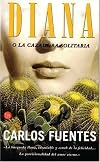
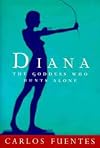
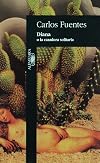
Diana, The Goddess who Hunts Alone
by Carlos Fuentes
On This Page
Description
On New Year's Eve in 1969, a novelist in his forties meets the beautiful movie actress Diana Soren at a party and is fascinated by her oddly elusive charm. But in this novel from Carlos Fuentes, his infatuation turns into doomed pursuit as the fleeting object of his desire spurns him, and he is forced to reconsider the foundations of his life as a writer.Tags
Recommendations



















Member Reviews
Writing about this book had been presenting me with a number of problems, so I kept putting it off. Then it occurred to me; this was the great Carlos Fuentes writing, so I had been searching for something that wasn't there. After all, even great writers produce lesser books once in a while. Having accepted that this was a slight novel for Fuentes, in both tone and length, I felt much better. I was now more prepared to look at it on its own.
Part of the problem was that this is an autobiographical novel narrated by the author himself. I imagine it is difficult to write such a thing, no matter how much pleasure is derived from having the starring role. Looking back to 1970, the time of the novel, the narrator tells us at the beginning,
He viewed himself as a Don Juan, giving himself to the dual roles of lover and writer. Loving or writing, nothing is more exciting or more beautiful than recognizing the struggle between the power we exercise over another person and the power the other -- man or woman -- exercises over us. However, as an attempt at a "total victory over transitory loves", he sought a reconciliation with his wife, from whom he had been separated for over a year. At a party to celebrate this reconciliation, he met Diana Soren. He did not go home.
Diana was an American actress, married to a left leaning French intellectual. They lived in Paris. She was in Mexico to make a film, a western. Diana is based on Jean Seberg, the real life American actress with whom Fuentes had an affair. Like Seberg, she was under FBI surveillance, forced to leave the US for a Europe more understanding and tolerant of her political views. Like Seberg, she died in miserable circumstances.
Diana was a needy creature on many levels, and Fuentes never quite succeeds in conveying her appeal. He is far better at describing the world of film making itself. Here was a group of actors and crew basically banished to the edge of the desert for the making of a second rate film. Each goes through the routine of establishing a partner and a territory for the duration, a choice which may or may not work out. As Diana's hairdresser later said to the narrator, "How good it is you came. You saved Diana from the stuntman."
Narrator/Fuentes moved in with Soren. He wrote in the morning while she worked. He visited in the afternoon.They drank in the evenings. Each night he was confronted with the photograph of her last lover, a man who could only have been Clint Eastwood, watching over them from the bedside table. Naturally the affair didn't last.
The narrator tells his tale from the vantage point of 1993. This allows him to reflect not only on the US of the 1960s, but on later US debacles like Iran Contra and Nicaragua. Fuentes seemed much happier in this role of social critic. Government and Hollywood each have their own thoughts on history, Fuentes has his. It is in the distinctions between myth and reality, and the overlapping of the two, that he excels. show less
Part of the problem was that this is an autobiographical novel narrated by the author himself. I imagine it is difficult to write such a thing, no matter how much pleasure is derived from having the starring role. Looking back to 1970, the time of the novel, the narrator tells us at the beginning,
Atshow more
the time I believed, despite everything, that literature, my gospel, excused everything. Others surrendered in the name of literature to drugs, alcohol, politics, even to polemics as a literary sport. I -- and I wasn't alone -- succumbed to love, but I retained my right to keep my distance, to manipulate, to be cruel.
He viewed himself as a Don Juan, giving himself to the dual roles of lover and writer. Loving or writing, nothing is more exciting or more beautiful than recognizing the struggle between the power we exercise over another person and the power the other -- man or woman -- exercises over us. However, as an attempt at a "total victory over transitory loves", he sought a reconciliation with his wife, from whom he had been separated for over a year. At a party to celebrate this reconciliation, he met Diana Soren. He did not go home.
Diana was an American actress, married to a left leaning French intellectual. They lived in Paris. She was in Mexico to make a film, a western. Diana is based on Jean Seberg, the real life American actress with whom Fuentes had an affair. Like Seberg, she was under FBI surveillance, forced to leave the US for a Europe more understanding and tolerant of her political views. Like Seberg, she died in miserable circumstances.
Diana was a needy creature on many levels, and Fuentes never quite succeeds in conveying her appeal. He is far better at describing the world of film making itself. Here was a group of actors and crew basically banished to the edge of the desert for the making of a second rate film. Each goes through the routine of establishing a partner and a territory for the duration, a choice which may or may not work out. As Diana's hairdresser later said to the narrator, "How good it is you came. You saved Diana from the stuntman."
Narrator/Fuentes moved in with Soren. He wrote in the morning while she worked. He visited in the afternoon.They drank in the evenings. Each night he was confronted with the photograph of her last lover, a man who could only have been Clint Eastwood, watching over them from the bedside table. Naturally the affair didn't last.
The narrator tells his tale from the vantage point of 1993. This allows him to reflect not only on the US of the 1960s, but on later US debacles like Iran Contra and Nicaragua. Fuentes seemed much happier in this role of social critic. Government and Hollywood each have their own thoughts on history, Fuentes has his. It is in the distinctions between myth and reality, and the overlapping of the two, that he excels. show less
Inspired to read Carlos Fuentes upon the unfortunate event of his death, I picked up this one, which intrigued me because I hadn't heard of it before; it was based on Fuentes' real-life affair with actress, Jean Seberg; and it clocks in at a manageable couple hundred pages.
It's an uneven read, but I liked it, especially Fuentes' asides on politics, religion, history, ethnicity, etc. (The novel begins with this sentence: "No bondage is worse than the hope of happiness.") It is a raggedy, rough, sometimes embarrassing read, but it is also reflective, sometimes beautifully so.
It's an uneven read, but I liked it, especially Fuentes' asides on politics, religion, history, ethnicity, etc. (The novel begins with this sentence: "No bondage is worse than the hope of happiness.") It is a raggedy, rough, sometimes embarrassing read, but it is also reflective, sometimes beautifully so.
The story is insinuated to be autobiographical account of a 2 month romance between the author and an actress. The object of his affections has the fictitious name Diana Soren but the plot makes no effort to hide that the real life actress is Jean Seberg. The identity is so thinly veiled that one wonders why Fuentes chose to even change her name. I was left wondering if this a true account or a fantasy of an affair that Fuentes always wished for but never experienced. Definitely not one of Fuentes' best but its a short read.
¿Qué pasiones o ideales mueven al ser humano y lo arrastran hasta su propia muerte? Ésta parece ser la pregunta que se hace Carlos Fuentes al reflexionar acerca de la vida y la muerte de la actriz Diana Soren: tan solitaria como bella, tan fuerte como destruible, de ojos profundos, que encierra en su persona, y en el apasionado episodio erótico que vive con un escritor mexicano, los ideales de toda una generación, la de los años sesenta, cuando las ilusiones de la década se resistían a morir. En Diana o la cazadora solitaria encontramos el retrato de un ser humano que vivió en carne propia la ambigüedad de la era de la cual finalmente fue víctima, al tiempo que un reflejo del mundo intelectual de un México que despertaba show more tras el genocidio de Vietnam y los homicidios masivos del sesenta y ocho. show less
Dec 22, 2022Spanish
Long et trop poétique à mon goût
May 20, 2006 (Edited)French
Ratings
Members
- Recently Added By
Author Information

198+ Works 15,009 Members
Carlos Fuentes was born in Panama on November 11, 1928. He studied law at the National University of Mexico and did graduate work at the Institute des Hautes Etudes in Switzerland. He entered Mexico's diplomatic service and wrote in his spare time. His first novel, Where the Air Is Clear, was published in 1958. His other works include The Death of show more Artemio Cruz, Destiny and Desire, and Vlad. The Old Gringo was later adapted as a film starring Gregory Peck and Jane Fonda in 1989. He won numerous awards including the Fuentes the Romulo Gallegos Prize in Venezuela for Terra Nostra, the National Order of Merit in France, the Cervantes Prize in 1987, and Spain's Prince of Asturias Award for literature in 1994. He also wrote essays, short stories, screenplays, and political nonfiction. In addition to writing, he taught at numerous universities, including Columbia, Harvard, Princeton, and Brown. He served as the ambassador of Mexico to France. He died on May 15, 2012 at the age of 83. (Bowker Author Biography) show less
Some Editions
Awards and Honors
Awards
Series
Belongs to Publisher Series
Gallimard, Folio (3185)
Common Knowledge
- Canonical title
- Diana, The Goddess who Hunts Alone
- Original title
- Diana, o, La cazadora solitaria
- Original publication date
- 1994 (original Spanish) (original Spanish); 1995 (English translation) (English translation)
- First words
- Geen ergere slavernij dan de hoop op geluk.
No bondage is worse than the hope of happiness. - Original language
- Spanish
Classifications
Statistics
- Members
- 253
- Popularity
- 128,077
- Reviews
- 5
- Rating
- (3.38)
- Languages
- 8 — Dutch, English, French, German, Portuguese, Spanish, Swedish, Turkish
- Media
- Paper, Ebook
- ISBNs
- 29
- ASINs
- 5