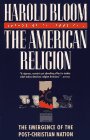
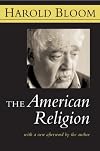
The American Religion: The Emergence of the Post-Christian Nation
by Harold Bloom
On This Page
Description
Examination of America's national soul identifying the American religion as a variation of Gnosticism, believers in a pre-Christian tradition of individual divinity.Tags
Recommendations





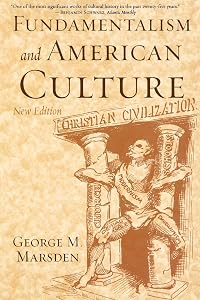

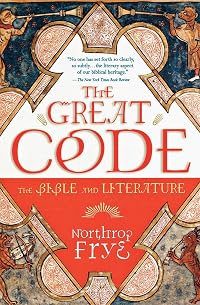

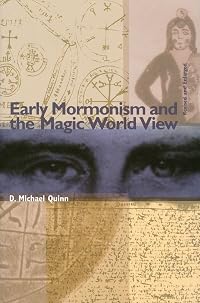
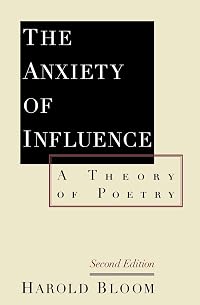








Member Recommendations

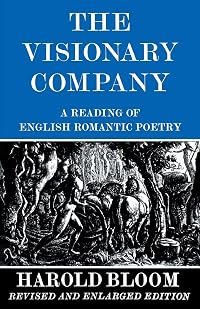
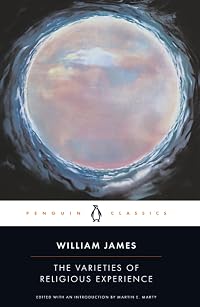
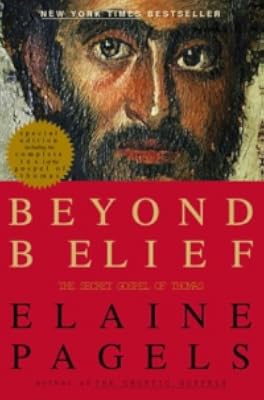
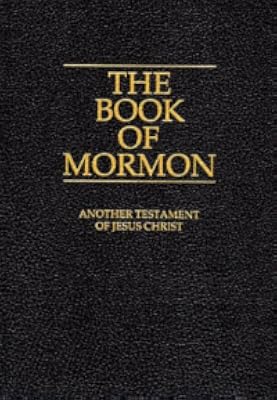
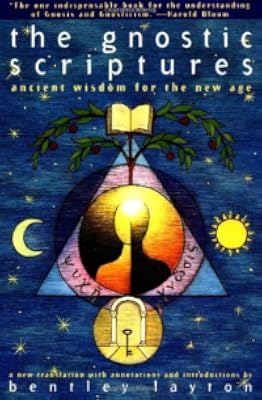
x_hoxha Lee's work is a major influence on Bloom's treatment of American religion. Bloom admires this "Gnostic" strain in American spiritual life; Lee does not.
Member Reviews
Pretentious, dated gobbledygook. There may be a good idea in here somewhere but damned if I could find it - made it through a hundred pages before brain spasms caused me a quit. One star for getting most of the historical dates right, for the sheer audacity of comparing Woodstock to Cane Ridge (the first religious camp meeting in 1801) and for hooking up Goldwater's running mate in 1964 with the apocalypse in 1843. Read it, or try to, if you dare, but don't expect much sense.
I personally loved Harold Bloom's take on American Christianity (although he studies more than American Christian sects, his main look is at Southern Baptists, Mormons, etc.) and their gnostic characteristics and optimistic outlook.
Although Bloom is an outsider to all the faiths he looks at, and most orthodox readers would disagree with his overall thesis, he does engage the subject well and brings his famous criticism skills to the religion game very well.
Although Bloom is an outsider to all the faiths he looks at, and most orthodox readers would disagree with his overall thesis, he does engage the subject well and brings his famous criticism skills to the religion game very well.
The American religion is not the original Christianity. The multitude of denominations and sects together share a common basis in gnosticism, with strong origins in the personal freedom so important in American culture. The Mormon and Southern Baptist organizations are forecast for future dominance. Bloom provides a concise history of religion in America and a thoughtful commentary on its meaning.
In this fascinating work of religious criticism, Harold Bloom examines a number of American-born faiths: Pentecostalism, Mormonism, Seventh-day Adventism, Christian Science, Jehovah's Witnesses, Southern Baptism and Fundamentalism, and African American spirituality. He traces the distinctive features of American religion while asking provocative questions about the role religion plays in American culture and in each American's concept of his or her relationship to God. Bloom finds that our spiritual beliefs provide an exact portrait of our national character.
Aug 18, 2018Dutch
Ratings
Members
- Recently Added By
Author Information

1,222+ Works 38,089 Members
Harold Bloom was born on July 11, 1930 in New York City. He earned his Bachelor of Arts from Cornell in 1951 and his Doctorate from Yale in 1955. After graduating from Yale, Bloom remained there as a teacher, and was made Sterling Professor of Humanities in 1983. Bloom's theories have changed the way that critics think of literary tradition and show more has also focused his attentions on history and the Bible. He has written over twenty books and edited countless others. He is one of the most famous critics in the world and considered an expert in many fields. In 2010 he became a founding patron of Ralston College, a new institution in Savannah, Georgia, that focuses on primary texts. His works include Fallen Angels, Till I End My Song: A Gathering of Last Poems, Anatomy of Influence: Literature as a Way of Life and The Shadow of a Great Rock: A Literary Appreciation of The King James Bible. Harold Bloom passed away on October 14, 2019 in New Haven, at the age of 89. (Bowker Author Biography) show less
Common Knowledge
- Original publication date
- 1992
- Canonical DDC/MDS
- 200.973
Classifications
- Genres
- Religion & Spirituality, Nonfiction, History, General Nonfiction
- DDC/MDS
- 200.973 — Religion The Bible & Christianity Religion History, geographic treatment, biography North America United States
- LCC
- BR515 .B58 — Philosophy, Psychology and Religion Christianity Christianity History By region or country
- BISAC
Statistics
- Members
- 582
- Popularity
- 50,567
- Reviews
- 5
- Rating
- (3.74)
- Languages
- English, Italian, Spanish
- Media
- Paper, Ebook
- ISBNs
- 9
- ASINs
- 3