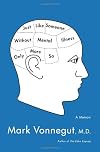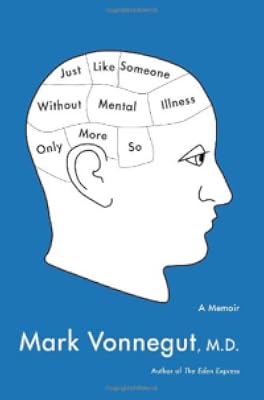
Just Like Someone Without Mental Illness Only More So: A Memoir
by Mark Vonnegut M.D.
On This Page
Description
Biography & Autobiography. Psychology. Self-Improvement. Nonfiction. HTML:More than thirty years after the publication of his acclaimed memoir The Eden Express, Mark Vonnegut continues his story in this searingly funny, iconoclastic account of coping with mental illness, finding his calling, and learning that willpower isn’t nearly enough.Here is Mark’s life childhood as the son of a struggling writer, as well as the world after Mark was released from a mental hospital. At the late show more age of twenty-eight and after nineteen rejections, he is finally accepted to Harvard Medical School, where he gains purpose, a life, and some control over his condition. There are the manic episodes, during which he felt burdened with saving the world, juxtaposed against the real-world responsibilities of running a pediatric practice.
Ultimately a tribute to the small, daily, and positive parts of a life interrupted by bipolar disorder, Just Like Someone Without Mental Illness Only More So is a wise, unsentimental, and inspiring book that will resonate with generations of readers. show less
Tags
Recommendations










































Member Reviews
There are certain books you read during your life that stick with you. For me, one of those is one I first read while still in college, Mark Vonnegut's The Eden Express: A Memoir of Insanity. First published in 1975 (and reissued in 2002), the book is a frank and compelling story of a young man's descent into schizophrenia and his recovery from it.
In the introduction to that book, Vonnegut, the son of author Kurt Vonnegut, described himself as "a hippie, a son of a counterculture hero, a B.A. in religion [with a] a genetic biochemical predisposition to schizophrenia." He and friends established a commune in a remote area of British Columbia but the mysticism he sensed he was experiencing led in 1971 to his hospitalization in a show more psychiatric hospital in Vancouver for what was diagnosed as paranoid schizophrenia. Eden Express details that journey, two subsequent hospitalizations and his efforts toward recovery.
Although Vonnegut has since come to believe what he really suffered from was a combination of what is now know as bipolar disorder and schizophrenia, his recovery has been equally remarkable. Not only did he return to "normal" life, he attended Harvard Medical School and has been a practicing pediatrician in the Boston area sine the early 1980s. With his follow-up memoir, Just Like Someone Without Mental Illness Only More So, he takes takes readers on that journey -- and his fourth psychiatric breakdown "when the voices came back" more than 14 years after his last breakdown.
As a fan of Eden Express, I must admit I approached Just Like Someone Without Mental Illness Only More So with a bit of trepidation. I didn't want anything to take away my favorable impression of the first book (although rereading it before the new book arguably have increased that risk). Yet the new book drew me in as much as the first and I found it just as compelling. Not only does Vonnegut he again provide insight into the lives of those who confront mental illnesses, the book gives us a real glimpse of the type of person and doctor he is, his bout with alcoholism, and a look at how the practice of medicine has changed in the last 25 years. ("Every bright idea that was supposed to improve medical care has made care worse, usually by increasing costs and restricting access.")
Eden Express was marked by its frank yet conversational tone. A similar approach helps make Just Like Someone Without Mental Illness Only More So as good as the predecessor. The two books, though, are different. The new one break the story into smaller segments as opposed to lengthier chapters. It also has more echoes of his father's style and wit. For example, if he's been doing so well, why does he continue to see a psychiatrist? His response is a simple, Vonnegutesque one: "Over the years I've come to care about Ned and, and I think I go mostly to make sure he's okay." Or, he notes at one point, "I have so many original thoughts I have to take medication for it."
This approach enhances the readability of a story that gives an idea of the life of a "regular" person dealing with existing or quiescent mental illness and how easy it can be to slip into a manic-depressive or schizophrenic state.
Still, Vonnegut never suggests he possesses some unique quality or strength that gave him advantages in recovering.
Yet even that doesn't ensure there will never be recurrences. In fact, Vonnegut's fourth breakdown found him taken by police from his home in a straitjacket when he tried, unsuccessfully, to run through a third-floor window to prove to God that he was worthy of saving and "not just a selfish little shit." Vonnegut says that when the voices he heard in the early 1970s came back, "it was like we picked up in the middle of a conversation that had been interrupted just a few minutes earlier." The manic part of his bipolar disorder manic depression makes it that much more difficult. Vonnegut describes the slide into mental illness as a "grammatical shift. Thoughts come into the mind as firmly established truth. ... The fantastic presents itself as fact."
Once again, though, the hospitalization, together with medication and support, allowed Vonnegut to return to a normal life, including the practice of medicine. He forthrightly examines not only the role of medication but the treatment he underwent in the 1970s and explores the extent to which family heredity can play a role in a person's psychiatric state.
Fortunately, Vonnegut did not just return to the practice of medicine but also to memoir. Taken together, Eden Express and Just Like Someone Without Mental Illness Only More So are an excellent survey of a life affected by mental illness. Yet with its style, tone and frank manner of addressing serious issues and events, Just Like Someone Without Mental Illness Only More So earns a place on anyone's bookshelf on its own merits. It is the most insightful and enjoyable memoir I've read in a long time.
(Originally posted at A Progressive on the Prairie.) show less
In the introduction to that book, Vonnegut, the son of author Kurt Vonnegut, described himself as "a hippie, a son of a counterculture hero, a B.A. in religion [with a] a genetic biochemical predisposition to schizophrenia." He and friends established a commune in a remote area of British Columbia but the mysticism he sensed he was experiencing led in 1971 to his hospitalization in a show more psychiatric hospital in Vancouver for what was diagnosed as paranoid schizophrenia. Eden Express details that journey, two subsequent hospitalizations and his efforts toward recovery.
Although Vonnegut has since come to believe what he really suffered from was a combination of what is now know as bipolar disorder and schizophrenia, his recovery has been equally remarkable. Not only did he return to "normal" life, he attended Harvard Medical School and has been a practicing pediatrician in the Boston area sine the early 1980s. With his follow-up memoir, Just Like Someone Without Mental Illness Only More So, he takes takes readers on that journey -- and his fourth psychiatric breakdown "when the voices came back" more than 14 years after his last breakdown.
As a fan of Eden Express, I must admit I approached Just Like Someone Without Mental Illness Only More So with a bit of trepidation. I didn't want anything to take away my favorable impression of the first book (although rereading it before the new book arguably have increased that risk). Yet the new book drew me in as much as the first and I found it just as compelling. Not only does Vonnegut he again provide insight into the lives of those who confront mental illnesses, the book gives us a real glimpse of the type of person and doctor he is, his bout with alcoholism, and a look at how the practice of medicine has changed in the last 25 years. ("Every bright idea that was supposed to improve medical care has made care worse, usually by increasing costs and restricting access.")
Eden Express was marked by its frank yet conversational tone. A similar approach helps make Just Like Someone Without Mental Illness Only More So as good as the predecessor. The two books, though, are different. The new one break the story into smaller segments as opposed to lengthier chapters. It also has more echoes of his father's style and wit. For example, if he's been doing so well, why does he continue to see a psychiatrist? His response is a simple, Vonnegutesque one: "Over the years I've come to care about Ned and, and I think I go mostly to make sure he's okay." Or, he notes at one point, "I have so many original thoughts I have to take medication for it."
This approach enhances the readability of a story that gives an idea of the life of a "regular" person dealing with existing or quiescent mental illness and how easy it can be to slip into a manic-depressive or schizophrenic state.
Still, Vonnegut never suggests he possesses some unique quality or strength that gave him advantages in recovering.
None of us are entirely well, and none of us are irrevocably sick. At my best I have islands of being sick entirely. At my worst I had islands of being well. Except for a reluctance to give up on myself there isn't anything I can claim credit for that helped me recover from my breaks. Even that doesn't count. You either have or don't have a reluctance to give up on yourself. It helps a lot if others don't give up on you.
Yet even that doesn't ensure there will never be recurrences. In fact, Vonnegut's fourth breakdown found him taken by police from his home in a straitjacket when he tried, unsuccessfully, to run through a third-floor window to prove to God that he was worthy of saving and "not just a selfish little shit." Vonnegut says that when the voices he heard in the early 1970s came back, "it was like we picked up in the middle of a conversation that had been interrupted just a few minutes earlier." The manic part of his bipolar disorder manic depression makes it that much more difficult. Vonnegut describes the slide into mental illness as a "grammatical shift. Thoughts come into the mind as firmly established truth. ... The fantastic presents itself as fact."
Once again, though, the hospitalization, together with medication and support, allowed Vonnegut to return to a normal life, including the practice of medicine. He forthrightly examines not only the role of medication but the treatment he underwent in the 1970s and explores the extent to which family heredity can play a role in a person's psychiatric state.
Fortunately, Vonnegut did not just return to the practice of medicine but also to memoir. Taken together, Eden Express and Just Like Someone Without Mental Illness Only More So are an excellent survey of a life affected by mental illness. Yet with its style, tone and frank manner of addressing serious issues and events, Just Like Someone Without Mental Illness Only More So earns a place on anyone's bookshelf on its own merits. It is the most insightful and enjoyable memoir I've read in a long time.
(Originally posted at A Progressive on the Prairie.) show less
 This review was written for LibraryThing Early Reviewers.
Just Like Someone Without Mental Illness Only More So is Mark Vonnegut’s follow-up to The Eden Express, his 1975 memoir of a series of psychotic breakdowns in his early 20s.
This is memoir also, of perseverance, told through a collection of thoughts, vignettes, and longer pieces. Vonnegut writes about attending Harvard Medical School (of twenty programs he applied to, his only acceptance); a passage describing his first patient death, alongside a staff nurse, reminded me how often nurses guide doctors-to-be through that experience. He writes about his career as a pediatrician, including criticism of contemporary health care and the health-insurance industry. He includes passages about his own childhood -- his weirdly prescient (and show more mentally ill) mother; his plainly weird (and genius) father (before he was successful and famous); his orphaned cousins his parents took in and raised as his siblings. He describes a medical mission to Honduras. He examines marriage, fatherhood, being alcoholic … and a fourth psychotic episode, wherein he takes us inside his mind as it breaks down.
Each chapter opens with a personal photo or sample of his own artwork, and he includes bits of advice about sanity and sobriety throughout, for example: “It’s possible within any given moment of any given day to choose between self and sickness. Rarely are there big heroic choices that will settle matters once and for all. The smallest positive step is probably the right one.”
Vonnegut is curious, optimistic, fun, philosophical ... and this gentle memoir is highly recommended. show less
This is memoir also, of perseverance, told through a collection of thoughts, vignettes, and longer pieces. Vonnegut writes about attending Harvard Medical School (of twenty programs he applied to, his only acceptance); a passage describing his first patient death, alongside a staff nurse, reminded me how often nurses guide doctors-to-be through that experience. He writes about his career as a pediatrician, including criticism of contemporary health care and the health-insurance industry. He includes passages about his own childhood -- his weirdly prescient (and show more mentally ill) mother; his plainly weird (and genius) father (before he was successful and famous); his orphaned cousins his parents took in and raised as his siblings. He describes a medical mission to Honduras. He examines marriage, fatherhood, being alcoholic … and a fourth psychotic episode, wherein he takes us inside his mind as it breaks down.
Each chapter opens with a personal photo or sample of his own artwork, and he includes bits of advice about sanity and sobriety throughout, for example: “It’s possible within any given moment of any given day to choose between self and sickness. Rarely are there big heroic choices that will settle matters once and for all. The smallest positive step is probably the right one.”
Vonnegut is curious, optimistic, fun, philosophical ... and this gentle memoir is highly recommended. show less
This review was written for LibraryThing Early Reviewers.This book will make you smile, smirk, chuckle and laugh out loud. It will also make you wince, perhaps in recognition, but certainly in sympathy. Because Mark Vonnegut's road to finding some measure of peace in his sixty-three years of life has been filled with bumps, collisions and countless stretches of "under construction." One would think that being the son of a famous author like Kurt Vonnegut would have made for an easy and charmed life. Nope. As it turns out mental illness ran in Vonnegut's family on both sides probably back three or four generations. With a family history like that, it's not surprising that Mark Vonnegut cracked up in his early twenties, the first of at least four major episodes in his life which each time left show more him hospitalized and scrambling to find purchase on a sudden downward slide. The last time it happened, Vonnegut had reconstructed his life well enough to have gotten into Harvard Med School and had successfully completed an internship and residency and was already well established as one of the top pediatricians in the Boston area. Alcohol and prescription drugs (Xanax) played a part, and denial played perhaps an even bigger role.
Mark Vonnegut has written only one other book, a memoir 35 years ago. The Eden Express, an insider's tale of mental illness, was a smashing success, enough to finance the author's med school and buy him a house. I must have read the book, probably soon after it came out, because my brother said I lent it to him years ago. But I can't remember it at all, so I'll have to find a copy and read it again. Since I'm a few years older than Mark Vonnegut, I guess I'll just chalk my forgetfulness up to age. Because I love this new book. While mental illness is not exactly a happy subject, Vonnegut's wit, wisdom and wry and dry slightly off-center sense of humor make the journey an extremely entertaining one. I found myself nodding in agreement to many of the things he had to say, smiling and chuckling at much of it. A confirmed introvert myself, I had to laugh at what he had to say about people like me and also about extroverts -
"Introverts almost never cause me trouble and are usually much better at what they do than extroverts. Extroverts are too busy slapping one another on the back, team building, and making fun of introverts to get much done ... I can pass for normal most of the time, but I understand perfectly why some of my autistic patients scream and flap their arms - it's to frighten off extroverts."
There's more, but you get the idea. This perhaps gene-propagated Vonnegut sense of humor is very much in evidence throughout the book. Here's another sample from pediatrician/would-be handyman Vonnegut - "Since I took up carpentry I measure children much more carefully, sometimes to 1/32 of an inch." Hmm ... I wonder if, like most good carpenters, he measures twice, so he'll only have to cut once.
Vonnegut has many points he wants to make and is pretty successful in making all of them I think. He is quite disenchanted, for example, with insurance and pharmaceutical companies and the general state of the health care business today, and pretty much everything he has to say on these things rings true and makes sense. He has numerous comments to make about his famous father, usually making allowances for his crankiness and ungraciousness, calling him "more like an unpredictable younger brother than a father ... [who] fiercely defended and exercised his right to be a pain in the ass on a regular basis." But he obviously loved Kurt, as evidenced in the chapter entitled, "There Is Nothing Quite as Final as a Dead Father," when he comments sadly, "I was no longer on deck."
The final chapter in this slim volume is called "Mushrooms," and is quite hilarious as he describes his late-in-life discovery and fascination with finding various fungi and cooking and eating them, which leads to what he calls the UNFORTUNATE INCIDENT. In a book describing a life filled with UNFORTUNATE INCIDENTs, Vonnegut somehow manages to end his story on a upbeat note, with "a wish to move forward. I love finding out what happens next."
I sincerely hope this guy is not finished telling his story, because he is an extremely talented and engaging writer. This apple didn't fall far. I want to know what happens next too. Take notes, Dr. Vonnegut, and please write it all down. Your daddy would be proud, but then again ... Well, he SHOULD be proud.
- Tim Bazzett, author of the memoir, BOOKLOVER show less
Mark Vonnegut has written only one other book, a memoir 35 years ago. The Eden Express, an insider's tale of mental illness, was a smashing success, enough to finance the author's med school and buy him a house. I must have read the book, probably soon after it came out, because my brother said I lent it to him years ago. But I can't remember it at all, so I'll have to find a copy and read it again. Since I'm a few years older than Mark Vonnegut, I guess I'll just chalk my forgetfulness up to age. Because I love this new book. While mental illness is not exactly a happy subject, Vonnegut's wit, wisdom and wry and dry slightly off-center sense of humor make the journey an extremely entertaining one. I found myself nodding in agreement to many of the things he had to say, smiling and chuckling at much of it. A confirmed introvert myself, I had to laugh at what he had to say about people like me and also about extroverts -
"Introverts almost never cause me trouble and are usually much better at what they do than extroverts. Extroverts are too busy slapping one another on the back, team building, and making fun of introverts to get much done ... I can pass for normal most of the time, but I understand perfectly why some of my autistic patients scream and flap their arms - it's to frighten off extroverts."
There's more, but you get the idea. This perhaps gene-propagated Vonnegut sense of humor is very much in evidence throughout the book. Here's another sample from pediatrician/would-be handyman Vonnegut - "Since I took up carpentry I measure children much more carefully, sometimes to 1/32 of an inch." Hmm ... I wonder if, like most good carpenters, he measures twice, so he'll only have to cut once.
Vonnegut has many points he wants to make and is pretty successful in making all of them I think. He is quite disenchanted, for example, with insurance and pharmaceutical companies and the general state of the health care business today, and pretty much everything he has to say on these things rings true and makes sense. He has numerous comments to make about his famous father, usually making allowances for his crankiness and ungraciousness, calling him "more like an unpredictable younger brother than a father ... [who] fiercely defended and exercised his right to be a pain in the ass on a regular basis." But he obviously loved Kurt, as evidenced in the chapter entitled, "There Is Nothing Quite as Final as a Dead Father," when he comments sadly, "I was no longer on deck."
The final chapter in this slim volume is called "Mushrooms," and is quite hilarious as he describes his late-in-life discovery and fascination with finding various fungi and cooking and eating them, which leads to what he calls the UNFORTUNATE INCIDENT. In a book describing a life filled with UNFORTUNATE INCIDENTs, Vonnegut somehow manages to end his story on a upbeat note, with "a wish to move forward. I love finding out what happens next."
I sincerely hope this guy is not finished telling his story, because he is an extremely talented and engaging writer. This apple didn't fall far. I want to know what happens next too. Take notes, Dr. Vonnegut, and please write it all down. Your daddy would be proud, but then again ... Well, he SHOULD be proud.
- Tim Bazzett, author of the memoir, BOOKLOVER show less
This review was written for LibraryThing Early Reviewers.Part memoir of growing up with an unconventional family, part criticism of the modern healthcare industry, part insight into living with mental illness, Mark Vonnegut's Just Like Someone Without Mental Illness Only More So is a fascinating read. The narrative reads like a bipolar brain might think - disjointed, non-linear, without transitions. The result is a quick, bumpy, jaunt through Dr. Vonnegut's life. What's most striking is that other than his polymathic tendencies, his famous family, and his psychotic breaks, Mark is pretty much a regular guy with the problems and issues many of us face. And, really, I think that's the take home message.
It was with a trace of fear that I began reading ‘Just Like Someone Without Mental Illness Only More So’ by Mark Vonnegut. I was afraid of what I would uncover or the author would reveal.
Besides outright dysfunction, mental illness lies in my family’s background...and not too deeply back. Even with more public acknowledgement and open discussion of mental illness, I found I still fear the stigma of mental illness claiming a place in my family history.
Vonnegut speaks core truths on the topic of medical care - cost, application, doctor/patient/vendor/insurance relationships; with tacit deals between drug companies, sales reps, and doctors sometimes more a prescription determinant than the illness itself. I related to perhaps more show more of his observations than I felt healthy - among them, of trying not to take up to much air or leaving as few footprints as possible in life. This deeply moving, insightful book is written with wry humor, sadness, and a desire to do no harm in its revelations. The author writes frankly about his birth family (son of Kurt and Jane Vonnegut) and his relationships with his wives and son. I appreciate the trust he offers the reader.
Invisible people and hidden compartments of life - Vonnegut’s writing comes across as bull’s-eye direct. He peels away layer after layer of truth and insight for the mentally healthy as well as the mentally ill, and those who teeter in between. Each time I returned to the book, it was with some trepidation; each time I closed its covers, it was with some new insight and strength.
sage holben 12/27/2010 show less
Besides outright dysfunction, mental illness lies in my family’s background...and not too deeply back. Even with more public acknowledgement and open discussion of mental illness, I found I still fear the stigma of mental illness claiming a place in my family history.
Vonnegut speaks core truths on the topic of medical care - cost, application, doctor/patient/vendor/insurance relationships; with tacit deals between drug companies, sales reps, and doctors sometimes more a prescription determinant than the illness itself. I related to perhaps more show more of his observations than I felt healthy - among them, of trying not to take up to much air or leaving as few footprints as possible in life. This deeply moving, insightful book is written with wry humor, sadness, and a desire to do no harm in its revelations. The author writes frankly about his birth family (son of Kurt and Jane Vonnegut) and his relationships with his wives and son. I appreciate the trust he offers the reader.
Invisible people and hidden compartments of life - Vonnegut’s writing comes across as bull’s-eye direct. He peels away layer after layer of truth and insight for the mentally healthy as well as the mentally ill, and those who teeter in between. Each time I returned to the book, it was with some trepidation; each time I closed its covers, it was with some new insight and strength.
sage holben 12/27/2010 show less
This review was written for LibraryThing Early Reviewers.In the interval between The Eden Express and the present memoir, Vonnegut's diagnosis has shifted from schizophrenia to bipolar disorder. This isn't surprising for two reasons: 1) He responded well to lithium, which today we generally understand as tipping the scales toward a bipolar diagnosis; and 2) schizophrenia is a garbage category for a lot of disorders that include psychosis (and in my opinion, may not be etiologically related). These days, there's a lot less hebephrenic schizophrenia and a lot more bipolar II.
The Eden Express makes more sense as a narrative of manic and depressive episodes (leavened with a plethora of recreational substances). It's wild, fast, roller coaster-like. The author is not in consensual reality for much show more of the story. By contrast, Just like Someone Without Mental Illness Only Moreso is a normalized book, slower and perhaps less interesting, although the contrast over time is fascinating. Read the two together as a really good look at how disruptive unchecked bipolar disorder can be. show less
The Eden Express makes more sense as a narrative of manic and depressive episodes (leavened with a plethora of recreational substances). It's wild, fast, roller coaster-like. The author is not in consensual reality for much show more of the story. By contrast, Just like Someone Without Mental Illness Only Moreso is a normalized book, slower and perhaps less interesting, although the contrast over time is fascinating. Read the two together as a really good look at how disruptive unchecked bipolar disorder can be. show less
I requested this book from the Early Reviewers because I know someone with severe mental illness, and he has never been able and/or willing to explain to me what it's like to experience delusions, rages, hallucinations, intrusive thoughts, uncontrollable impulses and manias. It's critically important that I understand those things better - there's nothing in the DSM-IV that tells you how to communicate with someone in the grip of a mania.
Mark Vonnegut does people like me a service by writing this memoir. Though this wasn't as helpful as I wished, it may be that the answers I'm seeking - the magic words that will quiet the monster - just don't exist. He does include numerous passages about his illness, like this from Chapter 9: "Part of show more what happens when one goes crazy is that there's a grammatical shift. Thoughts come in the mind as firmly established truth. There is no simile or metaphor. There's no tense but the present. The fantastic presents itself as fact. It would possibly be tolerable to feel like or as if one was on fire or like the CIA might be after you or you had to hold your breath so that you could be compacted and smuggled into a neutral site in Mongolia to wrestle India's craziest crazy. But there's no like or as if. It's all really happening, and there's no time to argue or have second thoughts."
An observation in Chapter 7 that perfectly illustrates the rational swan dive patients can take even in the midst of a sentence that started normally: "The doctor in charge of the whole place wore baby-blue alligator shoes, drove a light blue '59 Cadillac convertible, and wore what I was sure was the button to end the world as a tie clip."
Vonnegut suffers another trait that I recognize in the person I know as well: extreme narcissism. It must go with the disease - the brain is constantly in self-protect mode, and those with bipolar disease and schizophrenia seem to lose their ability to view themselves in context - to recognize how small and unimportant they really are in the scheme of things. Watching the person I know and reading Vonnegut has taught me that Humility is the truest mark of sanity.
In Vonnegut's case, he only ever cites the negative impact he's had on loved ones as a way to quantify for the reader what a great big deal his psychotic episodes were. He is not fantastic at describing things, so this is what he offers the reader in place of narrative. He is neither empathetic nor apologetic to anyone he may have hurt, shocked, horrified, abused or exploited on the way to his four hospitalizations. When he himself is in a position to care for a sister who also has a psychotic break, what he describes is pride, and the arrogant sense that only he can properly care for her. He proudly recounts telling his father to stay home and write checks for her while he arranges for her medical care.
Note to Kurt Vonnegut biographers: His father really only gets a mention when Mark wants to tell a story about besting him at things: chess, caring for his sister, participating in family life at home, etc. Also, he mentions his father by first name throughout the first half of the book, to make sure you know who he's the Son Of. His other favorite proper noun is Harvard.
For family and friends of the mentally ill, this book is fairly helpful, if only by confirming that all mentally ill are extremely cadgey about sharing their delusions and hallucinations with anyone else. For people looking for good accounts of medical school or good examples of autobiography in general, I can't recommend it. show less
Mark Vonnegut does people like me a service by writing this memoir. Though this wasn't as helpful as I wished, it may be that the answers I'm seeking - the magic words that will quiet the monster - just don't exist. He does include numerous passages about his illness, like this from Chapter 9: "Part of show more what happens when one goes crazy is that there's a grammatical shift. Thoughts come in the mind as firmly established truth. There is no simile or metaphor. There's no tense but the present. The fantastic presents itself as fact. It would possibly be tolerable to feel like or as if one was on fire or like the CIA might be after you or you had to hold your breath so that you could be compacted and smuggled into a neutral site in Mongolia to wrestle India's craziest crazy. But there's no like or as if. It's all really happening, and there's no time to argue or have second thoughts."
An observation in Chapter 7 that perfectly illustrates the rational swan dive patients can take even in the midst of a sentence that started normally: "The doctor in charge of the whole place wore baby-blue alligator shoes, drove a light blue '59 Cadillac convertible, and wore what I was sure was the button to end the world as a tie clip."
Vonnegut suffers another trait that I recognize in the person I know as well: extreme narcissism. It must go with the disease - the brain is constantly in self-protect mode, and those with bipolar disease and schizophrenia seem to lose their ability to view themselves in context - to recognize how small and unimportant they really are in the scheme of things. Watching the person I know and reading Vonnegut has taught me that Humility is the truest mark of sanity.
In Vonnegut's case, he only ever cites the negative impact he's had on loved ones as a way to quantify for the reader what a great big deal his psychotic episodes were. He is not fantastic at describing things, so this is what he offers the reader in place of narrative. He is neither empathetic nor apologetic to anyone he may have hurt, shocked, horrified, abused or exploited on the way to his four hospitalizations. When he himself is in a position to care for a sister who also has a psychotic break, what he describes is pride, and the arrogant sense that only he can properly care for her. He proudly recounts telling his father to stay home and write checks for her while he arranges for her medical care.
Note to Kurt Vonnegut biographers: His father really only gets a mention when Mark wants to tell a story about besting him at things: chess, caring for his sister, participating in family life at home, etc. Also, he mentions his father by first name throughout the first half of the book, to make sure you know who he's the Son Of. His other favorite proper noun is Harvard.
For family and friends of the mentally ill, this book is fairly helpful, if only by confirming that all mentally ill are extremely cadgey about sharing their delusions and hallucinations with anyone else. For people looking for good accounts of medical school or good examples of autobiography in general, I can't recommend it. show less
This review was written for LibraryThing Early Reviewers.Members
- Recently Added By
Lists

Penguin Random House
458 works; 4 members
Author Information

3+ Works 1,183 Members
Awards and Honors
Distinctions
Common Knowledge
- Original publication date
- 2011-09-27
- People/Characters
- Mark Vonnegut; Kurt Vonnegut
- Important places
- Barnstable, Massachusetts, USA
- First words
- The arts are not extracurricular.
- Last words
- (Click to show. Warning: May contain spoilers.)I love finding out what happens next.
Classifications
- Genres
- Biography & Memoir, Nonfiction, General Nonfiction
- DDC/MDS
- 618.928980092 — Applied science & technology Medicine & health Gynecology, obstetrics, pediatrics, geriatrics Pediatrics & Geriatrics Pediatric Care Diseases of nervous system and mental disorders Mental disorders
- LCC
- RJ43 .V66 .A3 — Medicine Pediatrics Pediatrics
- BISAC
Statistics
- Members
- 360
- Popularity
- 87,180
- Reviews
- 30
- Rating
- (3.68)
- Languages
- English
- Media
- Paper, Ebook
- ISBNs
- 3
- ASINs
- 3