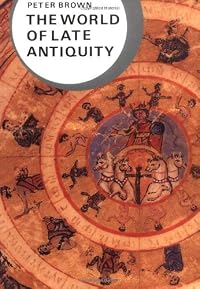
The World of Late Antiquity, AD 150–750
by Peter Brown
On This Page
Description
"A remarkable study in social and cultural change that explains how and why the late antique world (circa 150-750CE) came to differ from "classical civilization." The first century CE was one of momentous events: the end of the Roman Empire, the rise of Christianity across Western Europe, and the disappearance of Persia from the Near East. An era in which the most deep-rooted ancient institutions disappeared, creating divergent legacies that are still present today. Renowned historian Peter show more Brown examines these changes and the reactions to them to show that the late antiquity was an outstanding period of new beginnings with far-reaching impacts. The result is a lucid answer to a crucial question in world history: how the exceptionally homogenous Mediterranean world of the first century CE became divided into the three mutually estranged societies of the Middle Ages: Catholic Western Europe, Byzantium, and the Islamic world. Brown's remarkable study in social and cultural transformation explains how and why the late antique world came to differ from the "classical civilization" of the Greeks and Romans. Featuring a new preface and updated with color illustrations throughout, The World of Late Antiquity demonstrates that we still have much to learn from this enduring and intriguing period of history." -- show lessTags
Recommendations






Member Recommendations
Member Reviews
Peter Brown set out to describe how many changes converged to produce a very distinctive period of European civilization from about 200 C.E. to about 700 C.E.; how it differed from the classic period of Greek and Roman dominance; and how it helped shaped the Europe of the Middle Ages. Ancient institutions simply disappeared: the Roman Empire had vanished from western Europe by 476 and the Persian Empire had vanished by 655. Europe became Christian and the Near East became Muslim.
One of the main problems of the period was how to maintain a style of life and culture based on the slender coastline of the Mediterranean studded with classical city-states. It was a world always on the brink of starvation. It cost less to transport a cargo of show more grain from one end of the Mediterranean to the other than to carry it another 75 miles inland. Cultured men of any part of the empire felt more in common with others of their class than to their neighbors, an underdeveloped peasantry. The center of gravity of the empire gradually shifted from Rome eastward to Constantinople.
Even after the sack of Rome by Goths in 410, the western provinces remained a recognizably “sub-Roman” civilization for centuries. But when Islam overran the eastern provinces after 640, they took on an oriental flavor.
Between 240 and 300, the empire faced barbarian invasions and political instability. For many years prior, the area close to the Mediterranean was quite safe and peaceful. But after Persia rose in 224, the Goths in 248, and other war bands along the Rhine after 260, all frontiers of the empire collapsed. The empire was saved by a military revolution. The dead wood of the upper classes was excluded, and men of talent like Diocletian came to the fore.
After the conversion of Constantine to Christianity, most of the civil service was Christian. Notably, they instituted solid money, the solidus.
Christianity, the author posits, extended its appeal after 200 by helping to assuage the anxieties and uncertainties from increasing cosmopolitanism and social change that came with the Roman Empire. Most of all people felt a lack of belonging, and Christianity stepped aggressively into that gap. It filled the need for society so successfully that Christianity expanded exponentially rather than gradually. Christianity offered an exclusive cult, a sense of belonging, and a prescription for living. It offered steady relationships that were - at least professedly - egalitarian. It offered answers and stability where there were none, took on important social roles (such as food supplies for the needy and burial of the dead) and provided an assurance of loving kindness both on earth and for eternal life as a reward for faith. Importantly, Christianity also offered an enemy to explain the problem of evil and to provide a way to overcome it: i.e., the devil and his demon minions. The devil, as Christianity explained it, was “an all-embracing agent of evil in he human race; but he had been defeated by Christ and could be held in check by Christ’s human agents.” Thus, as the author asserts:
“However many sound social and cultural reasons the historian may find for the expansion of the Christian Church, the fact remains that in all Christian literature from the New Testament onwards, the Christian missionaries advanced principally by revealing the bankruptcy of men’s invisible enemies, the demons, through exorcisms and miracles of healing.” (p 55)
From 170 to 312 there was an active debate about religion. Christians were attacked because they neglected the rites of the old paganism. The new mood appealed to the concept of one God rather than to an array of lesser gods. Conversion was intimately connected to revelation. Revelation allowed the uneducated to “know” truths. Philosophers like Plotinus thought that bad because it skipped over serious education and allowed for second-rate counterfeit of traditional academic philosophy.
The 4th century was a time of revival. It is important to note that Christianity grew even more during prosperous times than catastrophic ones. More people participated in the empire in the East than in the West, so enthusiasm for the emperor was firmer.
Paganism survived much later in the East than in the West. The Hellenes in Athens and Alexandria “created the classical language of philosophy in the early Middle Ages, of which Christian, Jewish, and Islamic thought, up to the twelfth century, are but derivative vernaculars.”
Evaluation: This succinct and lucid account of social and cultural change in the Late Antique World maintains interest throughout. He is careful to explain that he cannot commit to “cause and effect” but only seeks to describe how “certain changes coincided in such a way that the one cannot be understood without reference to the other.” The book includes 130 illustrations.
(JAB) show less
One of the main problems of the period was how to maintain a style of life and culture based on the slender coastline of the Mediterranean studded with classical city-states. It was a world always on the brink of starvation. It cost less to transport a cargo of show more grain from one end of the Mediterranean to the other than to carry it another 75 miles inland. Cultured men of any part of the empire felt more in common with others of their class than to their neighbors, an underdeveloped peasantry. The center of gravity of the empire gradually shifted from Rome eastward to Constantinople.
Even after the sack of Rome by Goths in 410, the western provinces remained a recognizably “sub-Roman” civilization for centuries. But when Islam overran the eastern provinces after 640, they took on an oriental flavor.
Between 240 and 300, the empire faced barbarian invasions and political instability. For many years prior, the area close to the Mediterranean was quite safe and peaceful. But after Persia rose in 224, the Goths in 248, and other war bands along the Rhine after 260, all frontiers of the empire collapsed. The empire was saved by a military revolution. The dead wood of the upper classes was excluded, and men of talent like Diocletian came to the fore.
After the conversion of Constantine to Christianity, most of the civil service was Christian. Notably, they instituted solid money, the solidus.
Christianity, the author posits, extended its appeal after 200 by helping to assuage the anxieties and uncertainties from increasing cosmopolitanism and social change that came with the Roman Empire. Most of all people felt a lack of belonging, and Christianity stepped aggressively into that gap. It filled the need for society so successfully that Christianity expanded exponentially rather than gradually. Christianity offered an exclusive cult, a sense of belonging, and a prescription for living. It offered steady relationships that were - at least professedly - egalitarian. It offered answers and stability where there were none, took on important social roles (such as food supplies for the needy and burial of the dead) and provided an assurance of loving kindness both on earth and for eternal life as a reward for faith. Importantly, Christianity also offered an enemy to explain the problem of evil and to provide a way to overcome it: i.e., the devil and his demon minions. The devil, as Christianity explained it, was “an all-embracing agent of evil in he human race; but he had been defeated by Christ and could be held in check by Christ’s human agents.” Thus, as the author asserts:
“However many sound social and cultural reasons the historian may find for the expansion of the Christian Church, the fact remains that in all Christian literature from the New Testament onwards, the Christian missionaries advanced principally by revealing the bankruptcy of men’s invisible enemies, the demons, through exorcisms and miracles of healing.” (p 55)
From 170 to 312 there was an active debate about religion. Christians were attacked because they neglected the rites of the old paganism. The new mood appealed to the concept of one God rather than to an array of lesser gods. Conversion was intimately connected to revelation. Revelation allowed the uneducated to “know” truths. Philosophers like Plotinus thought that bad because it skipped over serious education and allowed for second-rate counterfeit of traditional academic philosophy.
The 4th century was a time of revival. It is important to note that Christianity grew even more during prosperous times than catastrophic ones. More people participated in the empire in the East than in the West, so enthusiasm for the emperor was firmer.
Paganism survived much later in the East than in the West. The Hellenes in Athens and Alexandria “created the classical language of philosophy in the early Middle Ages, of which Christian, Jewish, and Islamic thought, up to the twelfth century, are but derivative vernaculars.”
Evaluation: This succinct and lucid account of social and cultural change in the Late Antique World maintains interest throughout. He is careful to explain that he cannot commit to “cause and effect” but only seeks to describe how “certain changes coincided in such a way that the one cannot be understood without reference to the other.” The book includes 130 illustrations.
(JAB) show less
In The World of Late Antiquity, Peter Brown is as much an art historian as a historian generally speaking -- and it is his continuous interjection and interpretation of relevant art that differentiates it. The description of the photograph on page 199 of a hexagonal, floral relief ceiling rosette from Khirbat al-Mafjar is typical: "The triumph of the east. The late classical heads are already almost engulfed in the exuberant ornamentation that is derived directly from Persian models. It was this revival of Persian tastes and artistic traditions, rather than any original antipathy on the part of the Muslims, that smothered the Late Antique forms of representational art." Here Brown masterly intertwines art and architecture metaphorically show more into the historical continuum.
200 pages is just a brief overview of the 600 years of Brown's concern (especially considering the copious photos), but an excellent bibliography allows further study. There is also an excellent timeline. Brown has a fluid, easygoing style that enhances the storytelling aspect of the historian's job without, however, compromising any erudition. Highly recommended. show less
200 pages is just a brief overview of the 600 years of Brown's concern (especially considering the copious photos), but an excellent bibliography allows further study. There is also an excellent timeline. Brown has a fluid, easygoing style that enhances the storytelling aspect of the historian's job without, however, compromising any erudition. Highly recommended. show less
This is my favourite kind of history book: not a succession of wars and kings, but the tracing of changes in culture, ideas, social structures. The period in question (150 to 750 AD) is one of my favourites, too. The mediterranean world underwent the metamorphosis from antiquity into middle ages; a pagan Europe changed into a deeply Christian Europe; world views shifted, a way of life vanished; a huge, centrally governed empire shattered. What remained? What disappeared in the transition to the so-called Dark Ages? Peter Brown does a marvellous job in writing about this fascinating period. He does not give us an exhaustive survey of the age, but rather a vivid impression, a bold interpretation, for which some basic knowledge of the show more classical world is a prerequisite. Brown's writing is imaginative and literary, with beautiful metaphors. He is very good both at picking telling details and making interesting connections in the larger whole. He brings the period to life and provides it with relief. show less
A dense book for all its brevity, outlining a description of the transition from the Roman Empire of classical thought (Greek and Latin philosophy), which bulks large as the first Mediterranean Empire, through its decline and fragmentation, to create:
1 The West, which descended into local principalities (this is not explored in depth, as the author considers that it has already been written about extensively); and
2 The Eastern Byzantine Empire, which managed to maintain its connection to classical thought, although attacked by the Persian Empire and the first wave of Islamic expansion.
The author explains in his bibliography that this book was originally written as an essay trying to provide greater coverage of the creation of the show more Byzantine Empire from the Eastern Roman.
Although I do not have sufficient grounding in the history of these times to follow either the detail or test the arguments made, this book provided me with an exciting and dramatic sweeping story. I immediately started reading a book about the creation of Christianity to see how this fitted into the Late Antique story and that is what I ask of a history book, that it interests me and wants me to learn more.
The book was written in 1971 and I understand from other commentary has been subsequently overtaken in some areas by subsequent research, but it provides a great overview of a changing society and provides reasons for those changes. show less
1 The West, which descended into local principalities (this is not explored in depth, as the author considers that it has already been written about extensively); and
2 The Eastern Byzantine Empire, which managed to maintain its connection to classical thought, although attacked by the Persian Empire and the first wave of Islamic expansion.
The author explains in his bibliography that this book was originally written as an essay trying to provide greater coverage of the creation of the show more Byzantine Empire from the Eastern Roman.
Although I do not have sufficient grounding in the history of these times to follow either the detail or test the arguments made, this book provided me with an exciting and dramatic sweeping story. I immediately started reading a book about the creation of Christianity to see how this fitted into the Late Antique story and that is what I ask of a history book, that it interests me and wants me to learn more.
The book was written in 1971 and I understand from other commentary has been subsequently overtaken in some areas by subsequent research, but it provides a great overview of a changing society and provides reasons for those changes. show less
This is a relatively brief read compared to some of the other history books I've read (about 200 pages, with a good amount of pictures, some of them full-page) but it's a decent read on Late Antiquity/what used to be called the Dark Ages.
In elementary school, I remember being taught about the 3 great civilizations of the ancient world - Egypt, Greece, and Rome, and how after Rome fell, the West fell into the Dark Ages OMG OH NOEZ.
Nothing was said about Byzantium/the Eastern Roman Empire. I did learn about Byzantium later on, and wanted to read a history book about this era. This book came up when I was looking for history books focusing on this era, and I enjoyed it, but fair warning it is somewhat dated as this book was published in show more 1971.
There's useful information in the back of this book including several timelines, but as this book is now over 50 years old, I would love to see an updated edition. show less
In elementary school, I remember being taught about the 3 great civilizations of the ancient world - Egypt, Greece, and Rome, and how after Rome fell, the West fell into the Dark Ages OMG OH NOEZ.
Nothing was said about Byzantium/the Eastern Roman Empire. I did learn about Byzantium later on, and wanted to read a history book about this era. This book came up when I was looking for history books focusing on this era, and I enjoyed it, but fair warning it is somewhat dated as this book was published in show more 1971.
There's useful information in the back of this book including several timelines, but as this book is now over 50 years old, I would love to see an updated edition. show less
A fascinating exploration of how the differences in population between the West and East of the Roman Empire even during the second century AD led to very different outcomes up to the Arab conquests and beyond.
The author published this book in 1971, intended as an extended essay to bring attention to the late Roman Empire. He summarizes the complex history of this time in a very entertaining way, telling stories of priests, generals and ordinary people during times of warfare and peace, while explaining the great changes in thought, social structure and religion that occurred in this time. He explains why this period is so different that Medieval times.
Until the late 4th century, the western empire remained largely under the control of the senatorial classes who controlled great estates, and maintained the pagan traditions in Rome. (The vestal virgins were disestablished in 382 AD). They were patrons of the people and negotiated with the show more imperial tax collectors. In Greece, city states maintained schools of philosophers who studied Plato, and authors like Plotinus infused Christian doctrine with Platonic thought. Educated pagans believed in one high god, like the distant Roman emperor, with many local gods like provincial governors.
In the period around 250 AD all of empire’s frontiers collapsed, and the core of the empire was saved by emperors who started as soldiers on the Danube frontier (like Diocletian), and who remade the Roman army, but at great expense paid for by burdensome taxation.
Christianity continued to expand its power, with bishops taking over administration of cities, and nobleman increasingly moving into the administration of the Church. In the 4th century, Syrian monks and holy men like Simeon Stylites became arbiters and judges in disputes. The populace thought of them as a bulwark against the myriad of demons that caused illness and misfortune.
The gnostics were an early variant of Christianity, active in the second century AD. The name comes from their emphasis on “knowing” the truth of god without mediation by revelation or the Church. Their belief in a remote unapproachable God who spawned a lesser evil spirit resembled Manichaeism and Zoroastrianism active in the Persian empire.
In the early sixth century, the emperor Justinian and his general Belisarius reconquered much of North Africa, the Balkans and Ravenna, which had become the seat of the western empire and later an Ostrogothic kingdom in northern Italy. All these gains were lost with the revelation of Islam in the Arabian peninsula, and the Islamic armies that conquered Syria, Persian, North Africa and Persia. This essay claims that the Arabs left intact the mercantile Christian greek world of Syria and the Near East, although most people learned Arabic. Further east, in Iraq, Baghdad was founded in 752 within 50 miles of the ancient Persian capital Ctesiphon, and the eastern Arabs absorbed and became Persian. The nominally Islamic kings continued to worship Zoroaster and tolerated Nestorian christians
The Christian church in Italy and the west, in the 4th century, became more exclusive and aristocratic after suffering persecution for longer than the churches in Syria and Asia. The author writes: “Like many minorities they had reacted to this situation by treating themselves as a superior elite”
After the sack of Rome in 410, the emperor Theodosius erected a great wall around Constantinople. It was not breached until 1453. The emperor and his advisors decided political, military and religious matters in the Silenton, the Hall of Silence in Constantinople, and the people of the city continued to enjoy Imperial parades and staged combats. show less
Until the late 4th century, the western empire remained largely under the control of the senatorial classes who controlled great estates, and maintained the pagan traditions in Rome. (The vestal virgins were disestablished in 382 AD). They were patrons of the people and negotiated with the show more imperial tax collectors. In Greece, city states maintained schools of philosophers who studied Plato, and authors like Plotinus infused Christian doctrine with Platonic thought. Educated pagans believed in one high god, like the distant Roman emperor, with many local gods like provincial governors.
In the period around 250 AD all of empire’s frontiers collapsed, and the core of the empire was saved by emperors who started as soldiers on the Danube frontier (like Diocletian), and who remade the Roman army, but at great expense paid for by burdensome taxation.
Christianity continued to expand its power, with bishops taking over administration of cities, and nobleman increasingly moving into the administration of the Church. In the 4th century, Syrian monks and holy men like Simeon Stylites became arbiters and judges in disputes. The populace thought of them as a bulwark against the myriad of demons that caused illness and misfortune.
The gnostics were an early variant of Christianity, active in the second century AD. The name comes from their emphasis on “knowing” the truth of god without mediation by revelation or the Church. Their belief in a remote unapproachable God who spawned a lesser evil spirit resembled Manichaeism and Zoroastrianism active in the Persian empire.
In the early sixth century, the emperor Justinian and his general Belisarius reconquered much of North Africa, the Balkans and Ravenna, which had become the seat of the western empire and later an Ostrogothic kingdom in northern Italy. All these gains were lost with the revelation of Islam in the Arabian peninsula, and the Islamic armies that conquered Syria, Persian, North Africa and Persia. This essay claims that the Arabs left intact the mercantile Christian greek world of Syria and the Near East, although most people learned Arabic. Further east, in Iraq, Baghdad was founded in 752 within 50 miles of the ancient Persian capital Ctesiphon, and the eastern Arabs absorbed and became Persian. The nominally Islamic kings continued to worship Zoroaster and tolerated Nestorian christians
The Christian church in Italy and the west, in the 4th century, became more exclusive and aristocratic after suffering persecution for longer than the churches in Syria and Asia. The author writes: “Like many minorities they had reacted to this situation by treating themselves as a superior elite”
After the sack of Rome in 410, the emperor Theodosius erected a great wall around Constantinople. It was not breached until 1453. The emperor and his advisors decided political, military and religious matters in the Silenton, the Hall of Silence in Constantinople, and the people of the city continued to enjoy Imperial parades and staged combats. show less
Members
- Recently Added By
Lists

Top Five Books of 2013
1,562 works; 715 members

Top Five Books of 2018
802 works; 265 members

Antigua Roma
39 works; 2 members

Reading list
170 works; 1 member

r/AskHistorians' Recommended Books
1,068 works; 17 members

Pleasant Surprises: Books That Exceeded Our Expectations
418 works; 142 members

Books recommended in the history category on FiveBooks.com
329 works; 4 members
Author Information

33+ Works 8,837 Members
Some Editions
Series
Belongs to Publisher Series
Common Knowledge
- Canonical title
- The World of Late Antiquity, AD 150–750
- Original publication date
- 1971
- People/Characters
- Theodosius II; Anastasius; Justinian I, Emperor; Muhammad; Jerome, 331-420
- Important places
- Mediterranean area
- Epigraph
- [frontispiece] a family group of the fourth century. Gold glass inset in cross.
- First words
- This book is a study of social and cultural change.
- Last words
- (Click to show. Warning: May contain spoilers.)But the student of Late Antiquity, who realizes how much European culture owes to the fruitful interchange between the populations of the Fertile Crescent, open at one end to an empire based on the sea and, at the other, to the Iranian plateau, can estimate the cost of the chasm that yawned across the Mediterranean through the Middle Ages.
Classifications
- Genres
- History, Nonfiction, General Nonfiction, Religion & Spirituality
- DDC/MDS
- 937.06 — History & geography History of ancient world (to ca. 499) Italian Peninsula to 476 and adjacent territories to 476 Empire 31 B.C.-476 A.D.
- LCC
- DG77 .B73 — History of Europe, Asia, Africa and Oceania City History of Italy Ancient Italy. Rome to 476 Antiquities. Civilization. Culture. Ethnography
- BISAC
Statistics
- Members
- 1,265
- Popularity
- 19,259
- Reviews
- 15
- Rating
- (3.99)
- Languages
- English, French, Italian, Spanish
- Media
- Paper, Ebook
- ISBNs
- 15
- ASINs
- 9