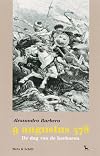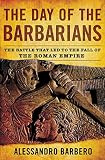
The Day of the Barbarians
by Alessandro Barbero
On This Page
Description
Offers a close-up look at the Battle of Adrianople in 378 A.D., which led to a disastrous defeat of the Roman army by a barbarian horde led by Fritigern, a battle that marked the beginning of the end for the Roman Empire.Tags
Recommendations



















Member Recommendations
Member Reviews
Historians love to identify "notably rare moments" in history - symbolic dates that mark the end of one era and the beginning of another, states author Alessandro Barbero. World War II had its D-Day. Napoleon had his Waterloo. Was the Battle of Adrianople that notably rare moment in Roman history? "The Day of the Barbarians - The Battle that Led to the Fall of the Roman Empire" is a tightly written, 146-page review of a key moment in ancient Roman history, but Barbero argues that it's not that "rare moment" that lends itself to such dramatic interpretations.
The Romans were soundly beaten by a barbarian army on August 9, 378. It was a turning point in Roman history, but according to Barbero much less of an earth-shattering, show more all-or-nothing moment in time as other key battles in history. Barbero's emphasis is that the Battle at Adrianople was a key point in time for the Empire more due to the context surrounding the event, rather than the event itself.
What ultimately became an invasion, started slowly and steadily over time as immigration. Barbero writes, "Before the battle of Adrianople, the barbarian invasions had already begun." Barbero reminds us that the "Roman Empire already was a multiethnic crucible of languages, races, and religions, and it was perfectly capable of absorbing massive immigration without becoming destabilized."
In autumn of 376, barbarians massed along the northern shores of the Danube. They wanted to cross into the Empire because a new threat was looming in the West - the Huns were moving closer and their violent and deadly reputation preceded them.
As citizens of the empire grew increasingly resistant to military enlistment, the Empire looked to fill out its ranks from the outside. Barbero writes that "the barbarians were increasingly seen as...abundant, low-cost manpower...a potential resource that should not be wasted"
So Valens ordered his troops to help the barbarians across the Danube. Except there were too many of them, and despite a reputation for superlative logistics, the Roman army wasn't prepared. Ultimately, the starving and horribly uncomfortable barbarians revolted.
In the face of these challenges, Fritigern, a Gothic tribal chief, had been able to centralize enough cross-tribal power to lead thousands of barbarians on a two year war within the Empire's own boundaries.
Near the walls of Adrianople on the morning of August 9, 378 Valens' armies had finally rallied and moved to face the barbarians whose own armies were positioned on a nearby hilltop. As the battle began, numerous barbarian cavalry, who had been foraging away from their camps, emerged amid the hills near the battle. This became a key moment, in a key battle, at a key point in Roman history. The Roman army was overwhelmed and surrounded by too many riders. Their fate was sealed.
"Day of the Barbarians" is a very readable, enjoyable and engaging book. I'm not an academic and I felt that it had the right mix of historical background, research and most importantly to me, narrative. The book also has its requisite descriptions and analysis of strategic army movements and lively battle scenes. It may not be academic enough for the hardcore scholar, however this is a terrific book for insights into an instrumental period in Roman history. show less
The Romans were soundly beaten by a barbarian army on August 9, 378. It was a turning point in Roman history, but according to Barbero much less of an earth-shattering, show more all-or-nothing moment in time as other key battles in history. Barbero's emphasis is that the Battle at Adrianople was a key point in time for the Empire more due to the context surrounding the event, rather than the event itself.
What ultimately became an invasion, started slowly and steadily over time as immigration. Barbero writes, "Before the battle of Adrianople, the barbarian invasions had already begun." Barbero reminds us that the "Roman Empire already was a multiethnic crucible of languages, races, and religions, and it was perfectly capable of absorbing massive immigration without becoming destabilized."
In autumn of 376, barbarians massed along the northern shores of the Danube. They wanted to cross into the Empire because a new threat was looming in the West - the Huns were moving closer and their violent and deadly reputation preceded them.
As citizens of the empire grew increasingly resistant to military enlistment, the Empire looked to fill out its ranks from the outside. Barbero writes that "the barbarians were increasingly seen as...abundant, low-cost manpower...a potential resource that should not be wasted"
So Valens ordered his troops to help the barbarians across the Danube. Except there were too many of them, and despite a reputation for superlative logistics, the Roman army wasn't prepared. Ultimately, the starving and horribly uncomfortable barbarians revolted.
In the face of these challenges, Fritigern, a Gothic tribal chief, had been able to centralize enough cross-tribal power to lead thousands of barbarians on a two year war within the Empire's own boundaries.
Near the walls of Adrianople on the morning of August 9, 378 Valens' armies had finally rallied and moved to face the barbarians whose own armies were positioned on a nearby hilltop. As the battle began, numerous barbarian cavalry, who had been foraging away from their camps, emerged amid the hills near the battle. This became a key moment, in a key battle, at a key point in Roman history. The Roman army was overwhelmed and surrounded by too many riders. Their fate was sealed.
"Day of the Barbarians" is a very readable, enjoyable and engaging book. I'm not an academic and I felt that it had the right mix of historical background, research and most importantly to me, narrative. The book also has its requisite descriptions and analysis of strategic army movements and lively battle scenes. It may not be academic enough for the hardcore scholar, however this is a terrific book for insights into an instrumental period in Roman history. show less
Here’s a book that held some promise, and for me came up short.
It’s about the slow fall of the Roman Empire, and seemed it would be predicated upon the loss of one decisive battle with Barbarian hordes … but upon reading, that’s not what happened at all.
So why does this title portray it as such?
This is much more the account of how the Romans allowed the Barbarians to take them over slowly – hiring them as soldiers when the Roman people wouldn’t fight, etc.
Conflict rose, the hired soldiers fought, joined with their brethren entering the empire (who were allowed in to farm), and then they won some key battles.
So was it all over for the empire then? No. The slide began (and had already begun), but it was hundreds of years show more before the Empire was done.
So why is it portrayed as a decisive, empire-ending battle? Maybe to get you to read the book!
It was short, and made me want to learn more about the Roman Empire. But this isn’t a great starting point if you want a deep dive into history.
Read more of my reviews at Ralphsbooks. Also, follow me on Instagram at @ralphandmainlybooks. show less
It’s about the slow fall of the Roman Empire, and seemed it would be predicated upon the loss of one decisive battle with Barbarian hordes … but upon reading, that’s not what happened at all.
So why does this title portray it as such?
This is much more the account of how the Romans allowed the Barbarians to take them over slowly – hiring them as soldiers when the Roman people wouldn’t fight, etc.
Conflict rose, the hired soldiers fought, joined with their brethren entering the empire (who were allowed in to farm), and then they won some key battles.
So was it all over for the empire then? No. The slide began (and had already begun), but it was hundreds of years show more before the Empire was done.
So why is it portrayed as a decisive, empire-ending battle? Maybe to get you to read the book!
It was short, and made me want to learn more about the Roman Empire. But this isn’t a great starting point if you want a deep dive into history.
Read more of my reviews at Ralphsbooks. Also, follow me on Instagram at @ralphandmainlybooks. show less
The story of the Gothic War and the famous Battle of Adrianople has often been re-constructed, for example by Gibbon (1776) and more recently by Peter Heather The Fall of the Roman Empire (2005) and Michael Kulikowski Rome's Gothic Wars (2006) - what makes this account special is not any new over-arching theory, but simply a well researched, reliable and very well told story - if writing history is a type of literature, this is literature at its best. Barbero has the ability to fire the imagination and make it all real - he can take a single sentence from Ammianus Marcellinus (the primary source for the events) and draw in other related material to fill in the details to make a book-length retelling where others have a chapter or two. show more As Steven Coats said, reviewing in the New York Times (April 29, 2007), this is an "elegant and pleasurable little account - what a joy it is to read about the ancient world in digestible portions." This is clearly a book for the general reader, but Barbero is a medieval scholar, it contains supporting footnotes (which are worthwhile) and references to further reading. I never tire of reading about this story, it brings together so many elements of the ancient and medieval worlds, it was one of the pivotal moments in world history and also one of the most dramatic.
With all the praise above and stars, a couple things about what the book is not: 1) this is a short book, 147 pages of actual text, the rest is footnotes 2) it is not for specialists or experts - Barbero does not go into too much chronological or geographic detail - it is not a definitive scientific study 3) the question if Adrianople was the dividing line between the Ancient and Medieval world is thankfully relegated to the Preface and last two pages, a "hook" I suppose. The books real value is in the skillful narration of events, and understanding the process of the 'barbarization' of the Roman Empire. show less
With all the praise above and stars, a couple things about what the book is not: 1) this is a short book, 147 pages of actual text, the rest is footnotes 2) it is not for specialists or experts - Barbero does not go into too much chronological or geographic detail - it is not a definitive scientific study 3) the question if Adrianople was the dividing line between the Ancient and Medieval world is thankfully relegated to the Preface and last two pages, a "hook" I suppose. The books real value is in the skillful narration of events, and understanding the process of the 'barbarization' of the Roman Empire. show less
This is a rather short book, but it covers the subject of the battle of Adrianople pretty well, including the events that instigated the initial fighting and the effect it had on the Roman empire afterward. No real technical details about the fighters or their equipment, but it does an excellent job explaining why the battle happened and why it was so significant.
Barbero has presented one of the most important battles in history (and one rather unknown in modern society) in a thorough, yet easily read and understood way. His approach is quite narrative and interesting.
If you have any interest in Ancient Rome, I fully recommend this volume. The Battle at Adrianople represented the beginning of the end for Rome as a barbarian army massacred a Roman one, and in so doing, killed Emperor Valens on the field of battle. Surely this was a great step toward the eventual sacking of Rome not long after.
If you have any interest in Ancient Rome, I fully recommend this volume. The Battle at Adrianople represented the beginning of the end for Rome as a barbarian army massacred a Roman one, and in so doing, killed Emperor Valens on the field of battle. Surely this was a great step toward the eventual sacking of Rome not long after.
I do not know who to attribute the excellent writing style to, since it was translated from the Italian, either it belongs to the author, or the translator, or to a combination of the two but the work is a readily accessible volume for an easily overlooked yet significant battle, Adrianople, which the author contends is crucial for understanding the beginning of the medieval era.
Clearly written. Makes a confusing dull era exciting and understandable. Battle of Adrianople 376 AD
Members
- Recently Added By
Lists

Best Military History Books
123 works; 21 members

Non-Fiction Worth Reading
1,015 works; 260 members
Author Information

Alessandro Barbero is Professor of Medieval History at the University of Piemonte Orientale, Italy.
Some Editions
Series
Belongs to Publisher Series
Economica [Laterza] (445)
Common Knowledge
- Canonical title
- The Day of the Barbarians
- Original title
- 9 Agosto 378: Il Giorno dei Barberi
- Original publication date
- 2005
- People/Characters
- Valens; Diocletian; Eunapius; Procopius; Theodosius; Fritigern (show all 7); Gratian
- Important places
- Adrianople, Thrace; Edirne, Turkey
- Important events
- Battle of Adrianople (378), (378)
- First words
- Prologue: "The subject of this book is a battle that changed the course of world history" p. 1.
Chapter 1: "In the year AD 378, the Roamn Empire had grown to immense proportions, with geographic horizons far different... (show all) from those of contemporary Europe" p. 3 - Last words
- (Click to show. Warning: May contain spoilers.)"And this really was an epochal turning point, because it marked the end of the ancient unity of the Roman and Mediterranean world. It also marked the birth of a new West, where Romans and Germans would have to learn, laboriously, to live together, and of a Greek east, whose history would be completely different. The consequences of that split can still be felt in Europe today." p.146
Classifications
- Genres
- History, Nonfiction, General Nonfiction
- DDC/MDS
- 937.08 — History & geography History of ancient world (to ca. 499) Italian Peninsula to 476 and adjacent territories to 476 Absolute 284-476 A.D.
- LCC
- DG326 .B3713 — History of Europe, Asia, Africa and Oceania City History of Italy Ancient Italy. Rome to 476 History By period Empire, 27 B.C. - 476 A.D. 284-476. Decline and fall
- BISAC
Statistics
- Members
- 386
- Popularity
- 80,096
- Reviews
- 19
- Rating
- (3.68)
- Languages
- 7 — Dutch, English, French, Italian, Portuguese, Spanish, Swedish
- Media
- Paper, Audiobook, Ebook
- ISBNs
- 18
- ASINs
- 6