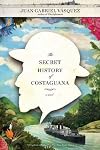
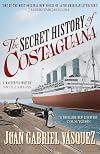
The Secret History of Costaguana
by Juan Gabriel Vásquez
On This Page
Description
From the author of The Sound of Things Falling, a "brilliant new novel" (New York Times Book Review) and one of the most buzzed about books of the year!"One of the most original new voices of Latin American literature." — Mario Vargas Llosa, winner of the Nobel Prize for Literature
“Unlike anything written by his Latin American contemporaries” (The Financial Times) The Informers secured Juan Gabriel Vásquez’s place as one of the most original and exuberantly talented novelist show more working today. Now he returns with an ingenious new novel of historical invention.
On the day of Joseph Conrad's death in 1924, the Colombian-born José Altamirano begins to write and cannot stop. Many years before, he confessed to Conrad his life's every delicious detail—from his country's heroic revolutions to his darkest solitary moments. Those intimate recollections became Nostromo, a novel that solidified Conrad’s fame and turned Altamirano’s reality into a work of fiction. Now Conrad is dead, but the slate is by no means clear—Nostromo will live on and Altamirano must write himself back into existence.
As the destinies of real empires collide with the murky realities of imagined ones, Vásquez takes us from a flourishing twentieth-century London to the lawless fury of a blooming Panama and back in a labyrinthine quest to reclaim the past—of both a country and a man. show less
Tags
Recommendations





Member Recommendations
Member Reviews
I was disappointed by this book and was tempted to quit reading it at almost every point. In retrospect, I guess I'm slightly glad I read it, but only slightly.
The first chapter promises a brilliant novel that intersperses the personal history of the fictional narrator, with the "true" history of end of nineteenth century Colombia and Panama and the "secret" history of Joseph Conrad and how he came to write Nostromo.
Unfortunately, it doesn't seem to work. Too much of the style seems like trite pastiche, the history is far too detailed with long sections that just list the generals and colonels who are fighting, and the "secret" history and Conrad portions never really come together in a satisfying matter and almost seem peripheral.
That show more said, some of the writing is very good, some of the characters are interesting, and the general tableau of Latin American political strife, American interference, and the early days of the canal are all interesting. show less
The first chapter promises a brilliant novel that intersperses the personal history of the fictional narrator, with the "true" history of end of nineteenth century Colombia and Panama and the "secret" history of Joseph Conrad and how he came to write Nostromo.
Unfortunately, it doesn't seem to work. Too much of the style seems like trite pastiche, the history is far too detailed with long sections that just list the generals and colonels who are fighting, and the "secret" history and Conrad portions never really come together in a satisfying matter and almost seem peripheral.
That show more said, some of the writing is very good, some of the characters are interesting, and the general tableau of Latin American political strife, American interference, and the early days of the canal are all interesting. show less
The famous writer Joseph Conrad struggles to provide for his young family in early 20th century London, and is plagued with self-doubt about his ability to become a successful writer. The novel he is working on is set in South America, where he briefly captained a ship along the Colombian coast, but he finds himself unable to recall details about the country or its people, as he spent very little time there. He seeks the assistance of a well connected Colombian émigré, who puts Conrad in touch with José Altamirano, who has recently arrived in the capital. Altamirano shares the troubled and tragic story of his life and country with Conrad, hoping that the great novelist will tell the world what he has experienced.
The following year show more the first segment of Conrad's novel Nostromo is published in a weekly literary magazine, which is set in the fictionalized country of Costaguana. Altamirano is infuriated, as the story is not about him at all, and confronts Conrad: "You've eliminated me from my own life. You, Joseph Conrad, have robbed me." The Colombian then decides that only he can tell his story, which serves as a retort to Conrad's life and work.
Vásquez uses the life of Altamirano and his father, who was intimately involved in the initial disastrous attempt to build the Panama Canal, to create a fictionalized history of post-independence Colombia and Panama, one filled with opportunistic but deeply flawed characters whose plans brought misery and death upon thousands of its citizens and continue to haunt the country to the present day.
The Secret History of Costaguana was an instructional and interesting novel. However, I found it to be a somewhat difficult read, as it was filled with far too many peripheral characters and too much inconsequential detail, which diluted the power of Altamirano's narrative. I would recommend this for anyone interested in the history of 19th century Colombia and Panama, and for anyone who has read Nostromo. show less
The following year show more the first segment of Conrad's novel Nostromo is published in a weekly literary magazine, which is set in the fictionalized country of Costaguana. Altamirano is infuriated, as the story is not about him at all, and confronts Conrad: "You've eliminated me from my own life. You, Joseph Conrad, have robbed me." The Colombian then decides that only he can tell his story, which serves as a retort to Conrad's life and work.
Vásquez uses the life of Altamirano and his father, who was intimately involved in the initial disastrous attempt to build the Panama Canal, to create a fictionalized history of post-independence Colombia and Panama, one filled with opportunistic but deeply flawed characters whose plans brought misery and death upon thousands of its citizens and continue to haunt the country to the present day.
The Secret History of Costaguana was an instructional and interesting novel. However, I found it to be a somewhat difficult read, as it was filled with far too many peripheral characters and too much inconsequential detail, which diluted the power of Altamirano's narrative. I would recommend this for anyone interested in the history of 19th century Colombia and Panama, and for anyone who has read Nostromo. show less
I was disappointed by this book and was tempted to quit reading it at almost every point. In retrospect, I guess I'm slightly glad I read it, but only slightly.
The first chapter promises a brilliant novel that intersperses the personal history of the fictional narrator, with the "true" history of end of nineteenth century Colombia and Panama and the "secret" history of Joseph Conrad and how he came to write Nostromo.
Unfortunately, it doesn't seem to work. Too much of the style seems like trite pastiche, the history is far too detailed with long sections that just list the generals and colonels who are fighting, and the "secret" history and Conrad portions never really come together in a satisfying matter and almost seem peripheral.
That show more said, some of the writing is very good, some of the characters are interesting, and the general tableau of Latin American political strife, American interference, and the early days of the canal are all interesting. show less
The first chapter promises a brilliant novel that intersperses the personal history of the fictional narrator, with the "true" history of end of nineteenth century Colombia and Panama and the "secret" history of Joseph Conrad and how he came to write Nostromo.
Unfortunately, it doesn't seem to work. Too much of the style seems like trite pastiche, the history is far too detailed with long sections that just list the generals and colonels who are fighting, and the "secret" history and Conrad portions never really come together in a satisfying matter and almost seem peripheral.
That show more said, some of the writing is very good, some of the characters are interesting, and the general tableau of Latin American political strife, American interference, and the early days of the canal are all interesting. show less
This review first appeared on my blog: http://www.knittingandsundries.com/2011/07/secret-history-of-costaguana-by-juan....
In this rather convoluted tale, the narrator, Jose Altamarano, the illegitimate son of a married cynic and an idealistic Renaissance man, poor, anonymous, exiled and Colombian, tells the reader how his story was hijacked by the Great Novelist (caps from the novel) Joseph Conrad, and twisted into Nostromo.
Through various anecdotes, scraps of history, and personal recollections, we read about an unconventional life from the son of an unconventional union: a journalist father who eventually becomes a propaganda machine for the building of the Panama Canal, and a married woman whose husband kills himself when he finds show more out that she is pregnant by another man.
There is a great mix of tragedy, history, and personal drama that should make this a wonderful historical tale. There are also flashes of brilliance in the writing that will probably land this one on one or more long-and-shortlists for a literary award. For THIS reader, however, the writing style was difficult to muddle through. More often than not, I found myself backtracking, because whatever I'd just read didn't 'gel' in my mind to something I could understand (and on a couple of these occasions, even reading it over didn't help). I must admit that I haven't read Nostromo, and I knew almost nothing of the history of Colombia and Panama, so someone with a deeper background may not have some of the same issues with it. It also simply may not have translated over very well.
This one is not for the casual reader; it's like certain movies - if you look away from them for a minute or two, you simply can't figure out what's going on. In this novel, you have to pay attention, or you'll find yourself scratching your head and going back a page or two to catch up. I've included some quotes that are illustrative of the writing style and may help guide you into knowing if this book is right for you. I think that some readers will LOVE it, and some, like me, will merely like it, feeling that it should have been a better reading experience for them.
QUOTES (from an ARC; may be different in final copy):
In other words, leave it all in my hands. I'll decide when and how to tell what I want to tell, when to hide, when to reveal, when to lose myself in the nooks and crannies of my memory for the mere pleasure of doing so. Here I shall tell you of implausible murders and unpredictable hangings, elegant declarations of war and slovenly peace accords, of fires and floods and intriguing ships and conspiratorial trains; but somehow all that I tell you will be aimed at explaining and explaining to myself, link by link, the chain of events that provoked the encounter for which my life was destined.
You'll see, with the passing of the years and the reflection on the subjects of this book, which I'm now writing, I have discovered what undoubtedly comes as no surprise to anyone: that stories in the world, all the stories that are known and told and remembered, all those little stories that for some reason matter to us and which gradually fit together without us noticing to compose the fearful fresco of Great History, they are juxtaposed, touching, intersecting: none of them exists on their own. How to wrest a linear tale from this? Impossible, I fear.
After the fire, "sixteen Panamanians were admitted to the hospital with breathing troubles," wrote my father (the breathing trouble consisted of the fact that they were not breathing, because the sixteen Panamanians were dead). In my father's article, the Canal workers were "true war heroes" who had defended the "Eighth Wonder" tooth and nail, and whose enemy was "fearsome nature" (no mention was made of fearsome democracies).
Writing: 3.5 out of 5 stars
Plot: 4.5 out of 5 stars
Characters: 3.5 out of 5 stars
Reading Immersion: 3 out 5 stars
BOOK RATING: 3.6 out of 5 stars show less
In this rather convoluted tale, the narrator, Jose Altamarano, the illegitimate son of a married cynic and an idealistic Renaissance man, poor, anonymous, exiled and Colombian, tells the reader how his story was hijacked by the Great Novelist (caps from the novel) Joseph Conrad, and twisted into Nostromo.
Through various anecdotes, scraps of history, and personal recollections, we read about an unconventional life from the son of an unconventional union: a journalist father who eventually becomes a propaganda machine for the building of the Panama Canal, and a married woman whose husband kills himself when he finds show more out that she is pregnant by another man.
There is a great mix of tragedy, history, and personal drama that should make this a wonderful historical tale. There are also flashes of brilliance in the writing that will probably land this one on one or more long-and-shortlists for a literary award. For THIS reader, however, the writing style was difficult to muddle through. More often than not, I found myself backtracking, because whatever I'd just read didn't 'gel' in my mind to something I could understand (and on a couple of these occasions, even reading it over didn't help). I must admit that I haven't read Nostromo, and I knew almost nothing of the history of Colombia and Panama, so someone with a deeper background may not have some of the same issues with it. It also simply may not have translated over very well.
This one is not for the casual reader; it's like certain movies - if you look away from them for a minute or two, you simply can't figure out what's going on. In this novel, you have to pay attention, or you'll find yourself scratching your head and going back a page or two to catch up. I've included some quotes that are illustrative of the writing style and may help guide you into knowing if this book is right for you. I think that some readers will LOVE it, and some, like me, will merely like it, feeling that it should have been a better reading experience for them.
QUOTES (from an ARC; may be different in final copy):
In other words, leave it all in my hands. I'll decide when and how to tell what I want to tell, when to hide, when to reveal, when to lose myself in the nooks and crannies of my memory for the mere pleasure of doing so. Here I shall tell you of implausible murders and unpredictable hangings, elegant declarations of war and slovenly peace accords, of fires and floods and intriguing ships and conspiratorial trains; but somehow all that I tell you will be aimed at explaining and explaining to myself, link by link, the chain of events that provoked the encounter for which my life was destined.
You'll see, with the passing of the years and the reflection on the subjects of this book, which I'm now writing, I have discovered what undoubtedly comes as no surprise to anyone: that stories in the world, all the stories that are known and told and remembered, all those little stories that for some reason matter to us and which gradually fit together without us noticing to compose the fearful fresco of Great History, they are juxtaposed, touching, intersecting: none of them exists on their own. How to wrest a linear tale from this? Impossible, I fear.
After the fire, "sixteen Panamanians were admitted to the hospital with breathing troubles," wrote my father (the breathing trouble consisted of the fact that they were not breathing, because the sixteen Panamanians were dead). In my father's article, the Canal workers were "true war heroes" who had defended the "Eighth Wonder" tooth and nail, and whose enemy was "fearsome nature" (no mention was made of fearsome democracies).
Writing: 3.5 out of 5 stars
Plot: 4.5 out of 5 stars
Characters: 3.5 out of 5 stars
Reading Immersion: 3 out 5 stars
BOOK RATING: 3.6 out of 5 stars show less
Set in Panama in the 19th Century, reflecting both the history of the Panama Canal and the intertwined ficionalized story of how Teodor Korzeniowski became Joseph Conrad.
total waste of time. couldn't finish it. I guess that the author and Vargas Llosa have discovered Conrad...
Nachdem Mitte des 19. Jahrhunderts der fortschrittsgläubige Journalist Miguel Altamirano zwischen die Fronten der kolumbischen Parteien gerät, muss er die Hauptstadt Bogota verlassen und lässt sich in Panama nieder, wo er sich in den Dienst von Lesseps Kanalgesellschaft stellt und die Idee des interozeanischen Kanals preist. Sein nicht-ehelicher Sohn José Altamirano folgt ihm nach, versucht jedoch- im Gegensatz zu seinem Vater - sich von den politischen Strömungen der Zeit fernzuhalten. Doch die Geschichte des Landes bestimmt auch sein Schicksal und so trägt er letztlich entscheidend zur Abspaltung Panamas bei.
Vásquez Werk besteht aus der in der Ich-Perspektive verfassten Lebensgeschichte (und -beichte) des José Altamirano, show more welche eng verbunden ist mit der Geschichte der Vereinigten Staaten von Kolumbien und deren panamaischen Provinz. Vásquez schildert die Wirren der kolumbianischen Politik, das Werden des panamaischen Staats, die nordamerikanische Intervention und vor allem die Wendungen bei Planung und Bau des Panamakanals von den ersten Ideen und den im Panamaskandal gegipfelten untauglichen Versuchen Ferdinand de Lesseps bishin zum heute existenten Meisterwerk der Ingenieurskunst zwischen Atlantik und Pazifik. Diese Wendungen verknüpft er meisterhaft mit dem Leben des Hauptprotagonisten und macht diesen sohin zu einem beredten Zeugen einer spannenden Epoche voller politischer, sozialer und wissenschaftlichen Umwälzungen.
Für Leser mit Interesse an lateinamerikanischer Geschichte, historischer Ingenieurskunst und Technik ist Vásquez Roman sohin ein Muss. Doch der Autor bietet zudem noch einen Kniff, der aus seiner Geschichte mehr als nur einen historischen Roman macht: Er lässt seiner Fabulierkunst insofern freien Lauf, als er José Altamiranos Lebensbeichte mit Joseph Conrads Abenteuerroman "Nostromo", welcher im fiktiven Costaguana spielt, verknüpft. Altamirano bezichtigt den berühmten polnisch-britischen Autor, seine Geschichte auf unlauterem Weg abgekupfert zu haben, was dazu führt, dass Vásquez Bericht von der geheimen Geschichte Costaguanas auch zu einer- stellenweise sehr humorvollen - Abrechnung mit Conrad wird, was dem Roman zusätzlichen Verve verleiht. show less
Vásquez Werk besteht aus der in der Ich-Perspektive verfassten Lebensgeschichte (und -beichte) des José Altamirano, show more welche eng verbunden ist mit der Geschichte der Vereinigten Staaten von Kolumbien und deren panamaischen Provinz. Vásquez schildert die Wirren der kolumbianischen Politik, das Werden des panamaischen Staats, die nordamerikanische Intervention und vor allem die Wendungen bei Planung und Bau des Panamakanals von den ersten Ideen und den im Panamaskandal gegipfelten untauglichen Versuchen Ferdinand de Lesseps bishin zum heute existenten Meisterwerk der Ingenieurskunst zwischen Atlantik und Pazifik. Diese Wendungen verknüpft er meisterhaft mit dem Leben des Hauptprotagonisten und macht diesen sohin zu einem beredten Zeugen einer spannenden Epoche voller politischer, sozialer und wissenschaftlichen Umwälzungen.
Für Leser mit Interesse an lateinamerikanischer Geschichte, historischer Ingenieurskunst und Technik ist Vásquez Roman sohin ein Muss. Doch der Autor bietet zudem noch einen Kniff, der aus seiner Geschichte mehr als nur einen historischen Roman macht: Er lässt seiner Fabulierkunst insofern freien Lauf, als er José Altamiranos Lebensbeichte mit Joseph Conrads Abenteuerroman "Nostromo", welcher im fiktiven Costaguana spielt, verknüpft. Altamirano bezichtigt den berühmten polnisch-britischen Autor, seine Geschichte auf unlauterem Weg abgekupfert zu haben, was dazu führt, dass Vásquez Bericht von der geheimen Geschichte Costaguanas auch zu einer- stellenweise sehr humorvollen - Abrechnung mit Conrad wird, was dem Roman zusätzlichen Verve verleiht. show less
Sep 13, 2023German
Members
- Recently Added By
Published Reviews
ThingScore 100
The Colombian Juan Gabriel Vásquez has set off on a mission to reclaim his country's territory from no less a giant than Joseph Conrad who, in the early 1900s, decided to write a novel about a South American republic to which he gave the name Costaguana. Though inspired by the geography and history of Colombia, Conrad's Nostromo, published in 1904, is not a faithful depiction of Vásquez's show more homeland, any more than Vásquez's Conrad is a faithful depiction of Conrad. Nor are they meant to be. With wonderful panache, Vásquez has reinvented Conrad and his literary geography, just as Conrad himself reinvented Theodor Josef Konrad Korzeniowski (the name under which he was born in 1857 in Russian-dominated Ukraine) and the landscapes of South America and Africa which he visited as a youngish sailor.
What emerges is a convoluted, complex, many-layered chronicle of a country whose corrupt and war-torn present is the all-too-obvious inheritance of its corrupt and war-torn past. Not a hopeless picture, however, but an enlightening one. "To be hopeful in an artistic sense it is not necessary to think that the world is good," wrote Conrad a year after publishing Nostromo. "It is enough to believe that there is no impossibility of its being made so." That belief permeates Vásquez's vivid, forceful, masterly book. show less
What emerges is a convoluted, complex, many-layered chronicle of a country whose corrupt and war-torn present is the all-too-obvious inheritance of its corrupt and war-torn past. Not a hopeless picture, however, but an enlightening one. "To be hopeful in an artistic sense it is not necessary to think that the world is good," wrote Conrad a year after publishing Nostromo. "It is enough to believe that there is no impossibility of its being made so." That belief permeates Vásquez's vivid, forceful, masterly book. show less
added by kidzdoc
Lists

Lives of the Poets (and Philosophers)
110 works; 5 members
Author Information

29+ Works 3,074 Members
Juan Gabriel Vásquez was born in Bogotá, Colombia in 1973. He studied law at the University of Rosario and received a doctorate in Latin American literature at the Sorbonne. He is the author of The Informants (Los Informantes), The Secret History of Costaguana (Historia Secreta de Costaguana), and The Sound of Things Falling (El Ruido de las show more Cosas al Caer), which won International Dublin Literary Award in 2014. (Bowker Author Biography) show less
Awards and Honors
Awards
Common Knowledge
- Canonical title*
- Storia segreta del Costaguana
- Original title
- Historia secreta de Costaguana
- Original publication date
- 2007
- People/Characters
- Joseph Conrad; Lucien Napoleón Bonaparte Wyse; José Altamirano; Antonia de Narváez; Miguel Altamirano; Ferdinand de Lesseps (show all 8); Charlotte Madinier; Manuela Saenz
- Important places
- Panama; Panama Canal
- Dedication
- For Martina and Carlota, who brought their own book with them when they arrived
- First words
- Let's just come right out and say it: the man has died.
*Some information comes from Common Knowledge in other languages. Click "Edit" for more information.
Classifications
- Genres
- Fiction and Literature, General Fiction, Historical Fiction
- DDC/MDS
- 863.7 — Literature & rhetoric Spanish Literature Spanish fiction 21st Century
- LCC
- PQ8180.32 .A797 .H5713 — Language and Literature French, Italian, Spanish and Portuguese literatures Spanish literature Provincial, local, colonial, etc. Spanish America
- BISAC
Statistics
- Members
- 238
- Popularity
- 137,002
- Reviews
- 8
- Rating
- (3.30)
- Languages
- 8 — Dutch, English, French, German, Italian, Portuguese, Spanish, Turkish
- Media
- Paper, Audiobook, Ebook
- ISBNs
- 24
- ASINs
- 13