On This Page
Description
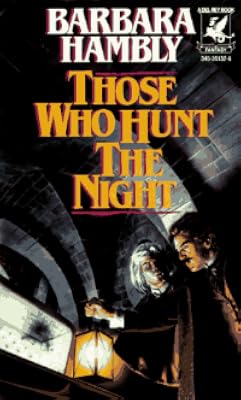
From a New York Times–bestselling author: A former spy is recruited to unmask a vampire hunter in this Locus Award Winner.James Asher, a retired member of the Queen's secret service in Edwardian England, has settled into quietude as an Oxford professor of philology with his physician wife, Lydia. But his peace is shattered when he's confronted by a pale aristocratic Spaniard named Don Simon Ysidro, who makes an outlandish claim that someone is killing his fellow vampires of London, and show more he needs James's help to ferret the culprit out. The request also comes with a threatening ultimatum: Should James fail, both he and his wife will die.
With James's talent for espionage and Lydia's scientific acumen and keen analytical mind, the couple begins an investigation that takes them from the crypts of London to the underworld circles of the unliving to the grisly depths of a charnel house in Paris. Now James and Lydia must believe in the unbelievable—if they're to survive another night in the shadow of Don Simon Ysidro.
This first book in the James Asher series is "one of the more memorable vampire novels of recent years—smoothly written, suspenseful, awash in moral ambiguity, and rich in vampire lore . . . a must-read for vampire fans" (Kirkus Reviews). Barbara Hambly gives "Anne Rice a run for her money" (Publishers Weekly) and "Don Simon is unforgettable" (Charlaine Harris).
This ebook features an illustrated biography of Hambly, including rare photos and never-before-seen documents from her personal collection.
. show less
Tags
Recommendations







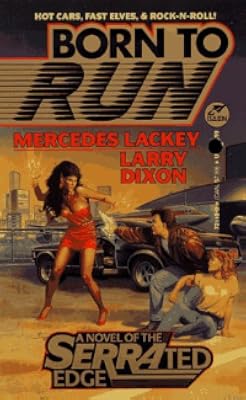
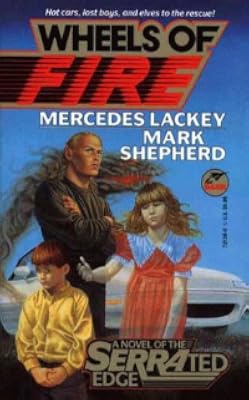
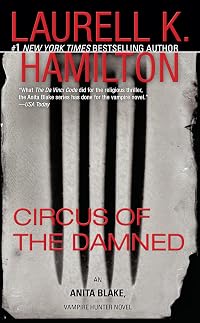
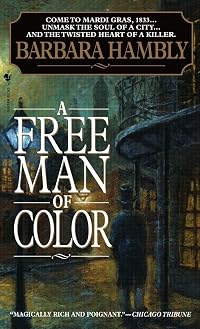






Member Recommendations


Member Reviews
I haven’t read a vampire novel in a while, and this was a good choice—atmospheric and original. Hambly’s descriptions were so vivid, I’m exhausted just thinking about all the time she must have spent researching this period.
James and Lydia make a great team, as do Simon and James, and I loved that there was no keep-the-wife-in-the-dark-for-her-own-protection foolishness in this plot. I loved Lydia’s medical interest and her perspective on vampirism.
Once the killer was revealed, the pace picked up considerably, but I was a little let down by the reveal. I certainly didn’t see it coming, but I’m not sure I liked it. His desire to make Lydia a vampire and his speeches that he would make her love him seemed kind of show more melodramatic.
I was excited to see how many books are in the series and that it’s still going. I’m definitely on board for more James, Lydia, and Simon. show less
James and Lydia make a great team,
Once the killer was revealed, the pace picked up considerably, but I was a little let down by the reveal. I certainly didn’t see it coming, but I’m not sure I liked it.
I was excited to see how many books are in the series and that it’s still going. I’m definitely on board for more James, Lydia, and Simon. show less
Hambly has come up with an interesting concept for Those Who Hunt the Night. Someone is killing vampires while they sleep in their coffins. It is as simple as lifting the lid to expose the sleepers to broad daylight. Each vampire is helpless to escape the bright sun's devastation, and if that doesn't work, a quick wooden stake to the heart should finish them off. When in doubt, maybe a little exposure to something silver would work. With four of his fellow vampires dead, Don Simon Xavier Christien Morado de la Cadena-Ysidro has no choice but solicit the help of mere mortal Professor James Asher with an offer he can't afford to refuse. Solve the mystery of the murders and Asher's wife will stay alive. It's blackmail, but what can the show more professor do? What Asher discovers is a variety of vampires who can grow tolerant of silver and daylight, at least partially. This means the serial killer of vampires could be one of their own. In addition to a thrilling murder mystery, Hambly manages to add a little romance to Those Who Hunt the Night. show less
REALLLY loved this book. The style is lyrical, the take on vampires is original, and everyone comes off as well rounded and authentic, even the villain, although at the end he is a bit over the top. I love Hambly's writing in this series, though I daresay some would find it too flowery. Her image evokes very visceral sensations, and the attention to detail, such as the vampire's antique Spanish, really stuck in mind. I've read this book three times over the past several years and it never loses its appeal.
from https://clsiewert.wordpress.com/2014/12/02/those-who-hunt-the-night-by-barbara-h...
There’s nothing like a soupcon of horror to keep you awake during a long, slow night, and Those Who Hunt the Night did the trick. It’s been a long time since I was fascinated by vampires, but Hambly goes old-school with this one (or perhaps it was ‘current-school,’ considering it won a Locus Award for horror in 1989) and imbues her Victorian tale with classic gothic horror themes.
Archer is an Oxford don who has done a little extra-curricular work for Queen and country under the guise of scholarly research in linguistics. He is returning home quite late one late one night when he has a sense of unease. Breaking into his own house, he discovers show more servants and wife asleep as if drugged, and a sinister visitor who persuades him to take on a very special investigation. He resentfully agrees, and he and his wife put their best powers of deduction to use in solving a series of murders for some unsavory clients.
Truthfully, Hambly surprised me; the Victorian time period isn’t one I’m naturally drawn too, but this is a captivating mix of mystery with old-school vampire, updated for the modern reader without too much compromise. There’s also an interesting exploration about the physical and psychic aspects of vampires that fits nicely with the time period’s gradual shift from spiritualism into rationalism. The language pleasantly complex, the characters appropriate for their time with a slightly more modern sensibility towards women and class issues. Hambly puts her Master’s in history to good use, creating a setting that feels realistic without overtaking the story (cough, cough--[b:The Diviners|7728889|The Diviners (The Diviners, #1)|Libba Bray|https://d.gr-assets.com/books/1336424966s/7728889.jpg|10501517]).
“The train came puffing in, steam roiling out to blend with the fog, while vague forms hurried onto the platform to meet it. A girl with a face like a pound of dough sprang from a third-clss carriage as it slowed, into the arms of a podgy young man in a shop clerk’s worn old coat, and they embraced with the delighted fervor of a knight welcoming his princess bride.“
The writing reminds me of the writing of [a:Martha Wells|87305|Martha Wells|https://d.gr-assets.com/authors/1397566224p2/87305.jpg]; they both develop a combination of action, description, dialogue and monologue that completely works for me. It’s probably worth noting that Hambly indulges in some period-like descriptive prose; one review I read complained about overblown similes. However, as I’ve been dipping my toes in [b:Three Men in a Boat|4921|Three Men in a Boat|Jerome K. Jerome|https://d.gr-assets.com/books/1392791656s/4921.jpg|4476508], I’ll note that there’s purple, and then there’s aubergine, and Hambly’s prose feels rather tongue-in-cheek at worst, and delightfully evocative at best.
“The pale eyes held his. There was no shift in them, no expression; only a remote calm, centuries deep… There was something almost hypnotic in that stillness, without nervous gesture, almost completely without movement, as if that had all been rinsed from him by the passing moons of time.“
This turned out to be one of those books where the farther in I read, the faster, and the more impatient I became with interruptions. (For heaven’s sake, people–can’t you see I’m reading here? Don’t bother me for anything less than an earthquake). I recommend it if you are a fan of any of its overlapping genres. show less
There’s nothing like a soupcon of horror to keep you awake during a long, slow night, and Those Who Hunt the Night did the trick. It’s been a long time since I was fascinated by vampires, but Hambly goes old-school with this one (or perhaps it was ‘current-school,’ considering it won a Locus Award for horror in 1989) and imbues her Victorian tale with classic gothic horror themes.
Archer is an Oxford don who has done a little extra-curricular work for Queen and country under the guise of scholarly research in linguistics. He is returning home quite late one late one night when he has a sense of unease. Breaking into his own house, he discovers show more servants and wife asleep as if drugged, and a sinister visitor who persuades him to take on a very special investigation. He resentfully agrees, and he and his wife put their best powers of deduction to use in solving a series of murders for some unsavory clients.
Truthfully, Hambly surprised me; the Victorian time period isn’t one I’m naturally drawn too, but this is a captivating mix of mystery with old-school vampire, updated for the modern reader without too much compromise. There’s also an interesting exploration about the physical and psychic aspects of vampires that fits nicely with the time period’s gradual shift from spiritualism into rationalism. The language pleasantly complex, the characters appropriate for their time with a slightly more modern sensibility towards women and class issues. Hambly puts her Master’s in history to good use, creating a setting that feels realistic without overtaking the story (cough, cough--[b:The Diviners|7728889|The Diviners (The Diviners, #1)|Libba Bray|https://d.gr-assets.com/books/1336424966s/7728889.jpg|10501517]).
“The train came puffing in, steam roiling out to blend with the fog, while vague forms hurried onto the platform to meet it. A girl with a face like a pound of dough sprang from a third-clss carriage as it slowed, into the arms of a podgy young man in a shop clerk’s worn old coat, and they embraced with the delighted fervor of a knight welcoming his princess bride.“
The writing reminds me of the writing of [a:Martha Wells|87305|Martha Wells|https://d.gr-assets.com/authors/1397566224p2/87305.jpg]; they both develop a combination of action, description, dialogue and monologue that completely works for me. It’s probably worth noting that Hambly indulges in some period-like descriptive prose; one review I read complained about overblown similes. However, as I’ve been dipping my toes in [b:Three Men in a Boat|4921|Three Men in a Boat|Jerome K. Jerome|https://d.gr-assets.com/books/1392791656s/4921.jpg|4476508], I’ll note that there’s purple, and then there’s aubergine, and Hambly’s prose feels rather tongue-in-cheek at worst, and delightfully evocative at best.
“The pale eyes held his. There was no shift in them, no expression; only a remote calm, centuries deep… There was something almost hypnotic in that stillness, without nervous gesture, almost completely without movement, as if that had all been rinsed from him by the passing moons of time.“
This turned out to be one of those books where the farther in I read, the faster, and the more impatient I became with interruptions. (For heaven’s sake, people–can’t you see I’m reading here? Don’t bother me for anything less than an earthquake). I recommend it if you are a fan of any of its overlapping genres. show less
3.5 stars
Vampires without the romance. Very refreshing. Well drawn historical setting in late 19th or early 20th century London and Paris.
James Asher, a professor of philology at Oxford, and his wife Lydia, also a doctor, but of medicine, are reluctantly coerced into investigating the case of a serial vampire killer. Don Simon Ysidro, a Spanish vampire old enough to remember (and barely survive) the great London fire of 1666, forces James into his service by threatening Lydia's life.
Rather than risking his wife's precarious safety and sending her into hiding, he recruits her help in tracking down both the vampire killer, and the vampire victims haunts and hidey-holes. Lydia pursues the research through probate courts, registrar of show more deed office, newspaper articles and other public records and resist's the siren call of the medical pathology mystery of vampirism while James accompanies Ysidro to interrogate London's undead citizens.
All their combined efforts turn up clues that lead to a revelation and twist which I didn't see coming. I even re-read some of the early relevant scenes and could not see a clear foreshadowing of the mystery's resolution.
Like all mysteries, I kept reading and turning pages because I wanted to know who did it, who the vampire stalker was. No terror gripped me, no character cried out to me, no scene compelled me yet good pacing and interesting characters led me down a path less travelled, especially by daylight.
One of my misgivings surrounded James Asher. Even though he played the mild-mannered professor, his former life as a spy for the British Empire nagged at me. Some of the jargon of the spy trade and of his previous escapades seemed too modern and out of place for the times portrayed. Oddly, I readily accepted Lydia's pursuit of the medical profession, even in a patriarchal society.
I've read many of Hambly's novels, and know she can make me shiver with goosebumps, the cold sweat of fear and visualize some truly horrific scenes and entities. This work just didn't quite reach that far, but I enjoyed the thrills of the ride nonetheless. show less
Vampires without the romance. Very refreshing. Well drawn historical setting in late 19th or early 20th century London and Paris.
James Asher, a professor of philology at Oxford, and his wife Lydia, also a doctor, but of medicine, are reluctantly coerced into investigating the case of a serial vampire killer. Don Simon Ysidro, a Spanish vampire old enough to remember (and barely survive) the great London fire of 1666, forces James into his service by threatening Lydia's life.
Rather than risking his wife's precarious safety and sending her into hiding, he recruits her help in tracking down both the vampire killer, and the vampire victims haunts and hidey-holes. Lydia pursues the research through probate courts, registrar of show more deed office, newspaper articles and other public records and resist's the siren call of the medical pathology mystery of vampirism while James accompanies Ysidro to interrogate London's undead citizens.
All their combined efforts turn up clues that lead to a revelation and twist which I didn't see coming. I even re-read some of the early relevant scenes and could not see a clear foreshadowing of the mystery's resolution.
Like all mysteries, I kept reading and turning pages because I wanted to know who did it, who the vampire stalker was. No terror gripped me, no character cried out to me, no scene compelled me yet good pacing and interesting characters led me down a path less travelled, especially by daylight.
One of my misgivings surrounded James Asher. Even though he played the mild-mannered professor, his former life as a spy for the British Empire nagged at me. Some of the jargon of the spy trade and of his previous escapades seemed too modern and out of place for the times portrayed. Oddly, I readily accepted Lydia's pursuit of the medical profession, even in a patriarchal society.
I've read many of Hambly's novels, and know she can make me shiver with goosebumps, the cold sweat of fear and visualize some truly horrific scenes and entities. This work just didn't quite reach that far, but I enjoyed the thrills of the ride nonetheless. show less
Oooh. Hambly is very good at characterization, and I always find myself intrigued by her characters. She seems to like taking fantasy tropes and twisting them a bit—not in an annoying, Piers Anthony way of punning and “ooh look how clever and cheeky we are, playing with these stereotypes,” but instead by adding a dash of realism and a spoonful of human emotion. Thus her 1900s spy gets PTSD and tries to retire to an academic life, only to be pulled back into violence by a vampiric threat to his lady love, a beautiful, wealthy and spunky woman. She also hates wearing glasses for her nearsightedness, burned many of her bridges in order to become a doctor, and doesn’t respond to the vampires threatening her life in a ladylike show more fashion. The plot is well-paced and exciting, and the evil is both insidious and horrifying. I would definitely recommend this to anyone, especially to people who enjoy AC Doyle or late Victorian England. show less
Still the absolute best vampire novel I have ever read.
And only part of it is the fact that I have a weakness for action heroes, like Dr. Asher, who in civilian life are - *ahem* - cunning linguists. Or the fact that I'm madly in love with Don Simon.
This book does a great job of balancing an Edwardian feel with modern storytelling methods - it's a bit more formal in diction and style and loose in pace than your average modern fantasy book, but not enough so to make it difficult for the modern reader, though it is a bit of a slow start.
The main thing that keeps me re-reading this, though, is her vampires. She has created the vampires who *must* exist - if vampires actually existed - who are believable, who are just tragic enough and just show more human enough and just *utterly terrifying* enough to take the concept of a vampire right to the edge of where it can go without ever chickening out on where that's leading her - or descending to sensationalism.
And the human characters' reactions to the vampires are exactly human enough, as well; the way a human can become accustomed to *any* sort of horror, simply by being around it long enough - and the characters' own self-disgust as they find themselves coming to respect the vampire characters, despite what they are - is all just perfectly drawn without ever going too far.
The murder mystery is fun, too. But this book's really about the characters and what necessity makes of men. show less
And only part of it is the fact that I have a weakness for action heroes, like Dr. Asher, who in civilian life are - *ahem* - cunning linguists. Or the fact that I'm madly in love with Don Simon.
This book does a great job of balancing an Edwardian feel with modern storytelling methods - it's a bit more formal in diction and style and loose in pace than your average modern fantasy book, but not enough so to make it difficult for the modern reader, though it is a bit of a slow start.
The main thing that keeps me re-reading this, though, is her vampires. She has created the vampires who *must* exist - if vampires actually existed - who are believable, who are just tragic enough and just show more human enough and just *utterly terrifying* enough to take the concept of a vampire right to the edge of where it can go without ever chickening out on where that's leading her - or descending to sensationalism.
And the human characters' reactions to the vampires are exactly human enough, as well; the way a human can become accustomed to *any* sort of horror, simply by being around it long enough - and the characters' own self-disgust as they find themselves coming to respect the vampire characters, despite what they are - is all just perfectly drawn without ever going too far.
The murder mystery is fun, too. But this book's really about the characters and what necessity makes of men. show less
Members
- Recently Added By
Published Reviews
suspense réglé au poil, décors superbement ciselés par une plume toute en finesse, personnage dont les relations sont crédibles et prenantes, et j'allais oublier, énigme “scientifique”, puisqu'il s'agit aussi de comprendre la vraie nature et origine des créatures en question. Aucune raison de se priver, donc, du plaisir de ce livre dont les vampires sont tels que je les conçois : show more des dandys immortels qui ont plus à voir avec les Danseurs de la fin des temps de Michael Moorcock qu'avec les brutes répugnantes de Newman. show less
added by Ariane65
Le Sang d'immortalité est à la fois un polar passionnant,(agréablement kitsch, comme il se doit quand on écrit dans un style à la Sherlock Holmes), et un roman d'horreur trés efficace : pas d'effets de Grand-Guignol, nulle trace de gore, Barbara Hambly joue sur du velours, bâtit l'angoisse par petites touches, sans avoir l'air d'y toucher. On avait déjà pu apprécier ses talents dans show more le domaine de la terreur avec la trilogie Darwath (en français au C.L.A. Opta), sorte d'alchimie entre Lovecraft et Tolkien. Cette fois on se trouve du côté de Bram Stoker et de Conan Doyle, et la réussite est encore plus éclatante ! show less
added by Ariane65
Lists

Best Urban Fantasy
634 works; 79 members

Bloody Good Vampire Books
394 works; 28 members

Gaslamp Fantasy
87 works; 15 members

Nightmare Magazine's Top 100 Horror Books
100 works; 7 members
Historical Fantasy
93 works; 14 members

Recommended Speculative Fiction by Women and People of Color
298 works; 45 members

Speculative Fiction to Read
706 works; 32 members

Readers Guide to Steampunk
65 works; 1 member

Books Read in 2016
4,666 works; 199 members

Books Read in 2019
4,052 works; 108 members

Genre Benders: Fantasy + Mystery
108 works; 16 members

Jones & Newman: Best Horror Books Further Recommended Reading
577 works; 4 members
Best Vampire & Werewolf Fiction
221 works; 146 members
Talk Discussions
Past Discussions
Vampire seeks help of Englishman with red haired wife in Name that Book (January 2020)
Author Information

Some Editions
Awards and Honors
Awards
Distinctions
Series

Belongs to Publisher Series
Common Knowledge
- Canonical title
- Those Who Hunt the Night
- Original title
- Those Who Hunt the Night
- Alternate titles
- Immortal Blood
- Original publication date
- 1988
- People/Characters
- Brother Anthony; James Claudius Asher; Lydia Asher; Dennis Blaydon; Horace Blaydon (Doctor); Valentin Calvaire (show all 22); Bully Joe Davies; Anthea Farren (Countess of Ernchester, Lady Ernchester); Charles Farren (Earl of Ernchester); Lionel Grippen (Doctor); Edward "Neddy" Hammersmith; Lotta Harshaw (Lotta Branhame); Hyacinthe; Danny King; Minette La Tour; Elysée de Montadour; Evelyn Westmoreland (the Honourable, the Equally Honourable); Chloé Winterdon; Don Simon Xavier Christian Morado de la Cadeña-Ysidro (Don Ysidro); Mrs. Wren; Celestine du Bois; Chloé Watermeade
- Important places
- London, England, UK; Paris, France; Oxford, Oxfordshire, England, UK
- Dedication
- For Adrian and Victoria
- First words
- "Lydia?"
- Quotations
- "The train departs at eight, and it is many years since public transportation has awaited the convenience of persons of breeding. Will you come?" (Don Ysidro, chapter 1, p.15)
Naturally, he reflected wryly, there wasn't a greengrocer open at this hour, and he would look fairly foolish investigating back-garden vegetable patches for garlic en route to the station ... totally aside from missing his t... (show all)rain. And given the general standard of British cookery, searching for garlic would be a futile task at best. (Asher's reflections, chapter 2, p.18)
He turned back to the tambour desk in one corner, its top, like everything else in the room, a foot and a half thick in books, in this case the collected works of Bulwer-Lytton -- by its appearance, well-thumbed, too. Asher s... (show all)huddered. The solitary vampire's evenings must have hung heavy indeed. (Asher's reflections, chapter 5, p.80)
"I have no sense of being at home here -- this sterile, inorganic town where everything is thrice washed before and after anyone touches it. It is the same everywhere, of course, but in Paris it seems particularly ironic. The... (show all)y seem to have taken this man Pasteur very seriously." (Don Ysidro, chapter 11, p.152) - Last words
- (Click to show. Warning: May contain spoilers.)At the corner of Harley Street, he hailed a cab to return him to his lodgings in Prince of Wales Colonnade, where Lydia would be lying curled up in bed, her red hair lying in swathes over the lace of her shoulders, reading a medical journal and waiting for his return.
- Publisher's editor*
- Duvic Patrick
- Original language
- English
- Disambiguation notice
- "Those Who Hunt the Night" was also published as "Immortal Blood" (in the UK).
"Gruselkabinett: Jagd der Vampire" is the title for the audio play, in German, of "Those Who Hunt the Night".
"Those Who Hunt the Night" was published as "Cazadores Nocturnos" in Spanish.
*Some information comes from Common Knowledge in other languages. Click "Edit" for more information.
Classifications
- Genres
- Fiction and Literature, Fantasy, Horror, Mystery, Historical Fiction
- DDC/MDS
- 813.54 — Literature & rhetoric American literature in English American fiction in English 1900-1999 1945-1999
- LCC
- PS3558 .A4215 .T45 — Language and Literature American literature American literature Individual authors 1961-
- BISAC
Statistics
- Members
- 1,600
- Popularity
- 14,278
- Reviews
- 36
- Rating
- (3.86)
- Languages
- 5 — English, French, German, Italian, Spanish
- Media
- Paper, Audiobook, Ebook
- ISBNs
- 15
- ASINs
- 10