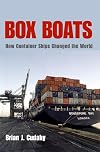
Box Boats: How Container Ships Changed the World
by Brian J. Cudahy
On This Page
Description
Brian Cudahy provides a vivid, fast-paced account of the container-ship revolutionGfrom the maiden voyage in 1956 of Ideal X to the entrepreneurial vision and technological breakthroughs that make it possible to ship more goods more cheaply than ever beforeGthe two hundred million containers shipped every year that are the lifeblood of the new global economy.Tags
Recommendations





































Member Recommendations

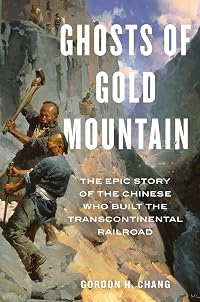
The Box: How the Shipping Container Made the World Smaller and the World Economy Bigger by Marc Levinson
alco261 Box Boats gives you a history of the container shipping industry, The Box gives you a history of the development of the artifact that permitted that industry to come into being.
Member Reviews
Box Boats is a technical/financial/general history of the first 50 years of the now ubiquitous container ship. The book opens with a chapter that outlines the history of U.S. shipping prior to 1956. The focus of the book then shifts to the development and deployment of Ideal X, the first container ship, the man behind her, Malcom McLean, and the rise of his company Sea-Land Services.
The success of Sea-Land did not go unnoticed and before long other shipping and ship building entities around the world entered the container shipping business. In the chapters following the rise of Sea-Land Mr. Cudahy details the rise, transition, and in some cases the fall/merging of Sea-Land and its competitors. In these chapters the author provides a show more mix of information about corporate finance and strategy, technical innovations, and geo-political issues that impacted the container industry.
In the final chapter of the book the author points out that, because his is a history of an economic entity that was still evolving and growing in 2006 (as it is today), there really can be no final chapter. Instead of a summation of events the author uses the final chapter to speculate on possible future trends, gives details of plans that were underway across to globe to accommodate even larger container ships, and provided information about theoretical calculations made by ship building firms concerning aspects of possible future container ship construction.
The book was published one year before Panama announced the beginning of construction of new locks to permit post-Panamax ships (ships that are too large to pass through the 1914 locks) to transit the canal. However, the author does speculate as to what such a change might mean (if it were to occur) to the container handling industry (ports, overland rail shipment, ship size, etc.). It is interesting to see that many of his speculations match what we have seen and are seeing in the aftermath of the opening of the new Panama Canal locks.
The book provides numerous tables which summarize all manner of container ship statistics (ship names, tonnage, ownership, ownership transfer, etc.) and these are effectively integrated into the text in the various chapters where they are presented.
Overall, the book does a very good job of balancing the presentation of technical, financial, and historical information. The balance is such that I think the book has equal appeal to the detail freak as well as to anyone who wishes to gain a general understanding of the history of the first 50 years of the container business.
(Text Length - 254 pages, Total Length - 338 pages. Includes several appendices, 20 pages of photographs, a bibliography, and an index) (Book Dimensions inches L x W x H – 6.5 x 1.25 x 9.25) show less
The success of Sea-Land did not go unnoticed and before long other shipping and ship building entities around the world entered the container shipping business. In the chapters following the rise of Sea-Land Mr. Cudahy details the rise, transition, and in some cases the fall/merging of Sea-Land and its competitors. In these chapters the author provides a show more mix of information about corporate finance and strategy, technical innovations, and geo-political issues that impacted the container industry.
In the final chapter of the book the author points out that, because his is a history of an economic entity that was still evolving and growing in 2006 (as it is today), there really can be no final chapter. Instead of a summation of events the author uses the final chapter to speculate on possible future trends, gives details of plans that were underway across to globe to accommodate even larger container ships, and provided information about theoretical calculations made by ship building firms concerning aspects of possible future container ship construction.
The book was published one year before Panama announced the beginning of construction of new locks to permit post-Panamax ships (ships that are too large to pass through the 1914 locks) to transit the canal. However, the author does speculate as to what such a change might mean (if it were to occur) to the container handling industry (ports, overland rail shipment, ship size, etc.). It is interesting to see that many of his speculations match what we have seen and are seeing in the aftermath of the opening of the new Panama Canal locks.
The book provides numerous tables which summarize all manner of container ship statistics (ship names, tonnage, ownership, ownership transfer, etc.) and these are effectively integrated into the text in the various chapters where they are presented.
Overall, the book does a very good job of balancing the presentation of technical, financial, and historical information. The balance is such that I think the book has equal appeal to the detail freak as well as to anyone who wishes to gain a general understanding of the history of the first 50 years of the container business.
(Text Length - 254 pages, Total Length - 338 pages. Includes several appendices, 20 pages of photographs, a bibliography, and an index) (Book Dimensions inches L x W x H – 6.5 x 1.25 x 9.25) show less
Ratings
Members
- Recently Added By
Author Information

15 Works 419 Members
Brian Cudahy has served as the director of the office of transit management with the Department of Transportation. He writes on Urban Architecture, focusing on the historical aspects of transit systems. In Under the Sidewalks of New York: The Story of the World's Greatest Subway System, he chronicled the development of the subway and provided a show more chronological overview of rapid transit. He has also written histories of the Boston subway, Hudson tubes, Pennsylvania railroad tunnels, and the Chicago rapid transit system. (Bowker Author Biography) show less
Common Knowledge
- Original publication date
- 2006
- First words
- The weather in New York was hardly auspicious on Thursday, April 26, 1956.
- Original language
- English
Classifications
- Genres
- Nonfiction, History, Business, General Nonfiction, Technology
- DDC/MDS
- 387.2 — Society, government, & culture Commerce, communications & transportation regulations Water, air, space transportation Ocean travel
- LCC
- HE566 .C6 .C83 — Social sciences Transportation and communications Transportation and communications Water transportation Shipping
- BISAC
Statistics
- Members
- 27
- Popularity
- 1,012,656
- Reviews
- 1
- Rating
- (4.13)
- Languages
- English
- Media
- Paper, Ebook
- ISBNs
- 5