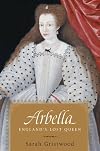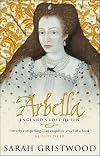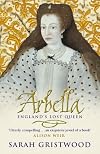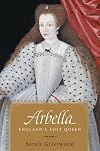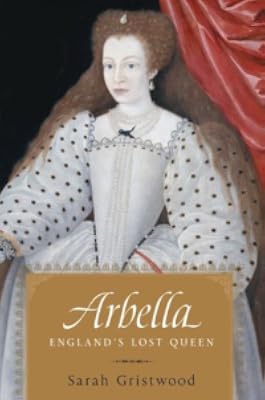
Arbella: England's Lost Queen
by Sarah Gristwood
On This Page
Description
'It is Arbella they would proclaim Queen if her mistress should happen to die' Sir William Stanley, 1592Niece to Mary, Queen of Scots, granddaughter to the great Tudor dynast Bess of Hardwick, Lady Arbella Stuart was brought up in the belief that she would inherit Elizabeth I's throne. Her very conception was dramatic- the result of an unsanctioned alliance that brought down the wrath of the authorities.Raised in restricted isolation at Hardwick, in the care- the 'custody'- of the forceful show more Bess, Arbella was twenty- seven before, in 1603, she made her own flamboyant bid for liberty. She may also have been making a bid for the throne. If so, she failed. But the accession of her cousin James thrust her into the colourful world of his court, and briefly gave her the independence she craved at the heart of Jacobean society.Then, aged thirty- five, Arbella risked everything to make her own forbidden marriage. An escape in disguise, a wild flight abroad and capture at sea led, in the end, to an agonizing death in the Tower in 1615. Along with the rumours about her sanity, her story influenced even Webster's The Duchess of Malfi. Yet perhaps nothing in her tale is as striking as the degree to which a woman so widely discussed in her own day has been written out of history. Nothing as remarkable as the almost modern freedom with which, in a series of extraordinary letters, Arbella Stuart revealed her own passionate and curiously accessible personality.Drawing on a wide variety of contemporary sources, Sarah Gristwood has painted a powerful and vivid portrait of a woman forced to carve a precarious path through the turbulent years when the Tudor gave way to the Stuart dynasty. But more remarkable still, the turmoils of Arbella's life never prevented her from claiming the right to love freely, to speak her wrongs loudly- and to control her own destiny. show lessTags
Recommendations






Member Reviews
A Christmas gift from the “Interesting Women” wishlist. Arbella Stuart (her name is often latinized to Arabella, but her contemporaries knew her as “Arbella” or “Arbel”) was Henry VIII’s great-grand niece, and in the confusing Tudor and Stuart lines of succession coupled with the early deaths of her father and mother, ended up second in line to the throne of England (after James VI of Scotland, who eventually did inherit as James I). You might think it’s romance novel fodder to be an heir to the throne, but the reality is more tragic than romantic; Arbella spent almost her entire life under house arrest or in the Tower, eventually dying there of self-starvation after an ill-advised marriage and an even more ill-advised show more escape attempt.
Unlike many of her contemporaries, Arbella left a considerable corpus of writing behind, probably because there wasn’t much else she could do for most of her life except write or embroider. Unfortunately, her letters are often disjointed or incoherent, leading author Sarah Gristwood to suggest she may have been mentally ill. Her existing portraits show her as attractive if a little dazed-looking, probably to be expected under the circumstances. Gristwood has a nicely readable style, and provides some interesting diversions on various topics, including the difficulty of writing history in an era where Robert Cecil, Sir Robert Cecil, Baron Cecil, Viscount Cranborne, and the Earl of Salisbury were all the same person; 16th century medicine (after you bled somebody, you forced several dried peas into the wound, then covered it with earthworm paste); and what was involved in dressing an Elizabethan lady for court.
In addition to the speculation that Arbella had mental problems, Gristwood offers a couple more interesting suggestions: that Arbella’s tutor “Morley”, who also acted as a spy to ensure that she wasn’t turning Catholic, was actually Christopher Marlowe; and that John Webster’s play The Duchess of Malfi is a disguised biography of Arbella. The jacket biography describes Sarah Gristwood as a journalist and broadcaster; I wonder how many Americans in those professions could turn out a book like this. Excellent index, excellent bibliography, good endnotes; could use a map or two, especially of London and south England (there’s contemporary illustrations of London and the Tower in the text and plates, but although interesting they don’t really serve to show who’s doing what where). show less
Unlike many of her contemporaries, Arbella left a considerable corpus of writing behind, probably because there wasn’t much else she could do for most of her life except write or embroider. Unfortunately, her letters are often disjointed or incoherent, leading author Sarah Gristwood to suggest she may have been mentally ill. Her existing portraits show her as attractive if a little dazed-looking, probably to be expected under the circumstances. Gristwood has a nicely readable style, and provides some interesting diversions on various topics, including the difficulty of writing history in an era where Robert Cecil, Sir Robert Cecil, Baron Cecil, Viscount Cranborne, and the Earl of Salisbury were all the same person; 16th century medicine (after you bled somebody, you forced several dried peas into the wound, then covered it with earthworm paste); and what was involved in dressing an Elizabethan lady for court.
In addition to the speculation that Arbella had mental problems, Gristwood offers a couple more interesting suggestions: that Arbella’s tutor “Morley”, who also acted as a spy to ensure that she wasn’t turning Catholic, was actually Christopher Marlowe; and that John Webster’s play The Duchess of Malfi is a disguised biography of Arbella. The jacket biography describes Sarah Gristwood as a journalist and broadcaster; I wonder how many Americans in those professions could turn out a book like this. Excellent index, excellent bibliography, good endnotes; could use a map or two, especially of London and south England (there’s contemporary illustrations of London and the Tower in the text and plates, but although interesting they don’t really serve to show who’s doing what where). show less
Taking what she can from the evidence this is an interesting account of the life and death of Arbella Stuart. A woman constrained by the fact that she was from the royal family and living in a period where her possible marriage would mean a contender for the throne.
Gristwood speculates about Porphyria being the cause of some of her issues, she had frequent bouts of illness and what would appear to be depression. I'm pretty sure these weren't helped by the constant suspicion that she was going to be the centre of a plot to take over the throne, willingly or unwillingly.
While Elizabeth willingly avoided marriage for politics sake, Arbella fell in love and her marriage was roundly condemned by James I, leading to her imprisonment in the show more Tower of London and subsequent to her escape and recapture, her death.
She's a woman about whom I had never heard before but I found quite interesting and had some pity for, she lived a very constrained, pressured life that had a continuous shadow of death.
I liked the story, the author seems to have a lot of sympathy for the character and her times. show less
Gristwood speculates about Porphyria being the cause of some of her issues, she had frequent bouts of illness and what would appear to be depression. I'm pretty sure these weren't helped by the constant suspicion that she was going to be the centre of a plot to take over the throne, willingly or unwillingly.
While Elizabeth willingly avoided marriage for politics sake, Arbella fell in love and her marriage was roundly condemned by James I, leading to her imprisonment in the show more Tower of London and subsequent to her escape and recapture, her death.
She's a woman about whom I had never heard before but I found quite interesting and had some pity for, she lived a very constrained, pressured life that had a continuous shadow of death.
I liked the story, the author seems to have a lot of sympathy for the character and her times. show less
It seems is was not easy to live under the shadow of Bess of Hardwick. Arbella's proximity to the throne was another hurdle she could not overcome. I enjoyed this book but do wish we knew more about her. One gets the impression she lived on the border of total hysteria for a good deal of her life. She honestly did have a "lost" life, and her story is quite sad.
This book is well written and seems a good deal of time was spent in research. For all that, Arbella's reasoning behind some of her behaviour is just not obvious, even with all her letter writing. She comes across as more of a drama queen, rather than revealing any deep insight into her personality.
This book is well written and seems a good deal of time was spent in research. For all that, Arbella's reasoning behind some of her behaviour is just not obvious, even with all her letter writing. She comes across as more of a drama queen, rather than revealing any deep insight into her personality.
2.75 stars
Arbella Stuart was the great-granddaughter of Margaret Tudor (Henry VIII’s oldest sister). She should have been a possibility to be queen, but was bypassed. Both Elizabeth I and James I kept her at bay, and wouldn’t even allow her to marry (in the line of succession, you need permission to marry since they will likely want a politically advantageous marriage). Eventually, she just gave up and chose who she wanted to marry and married in secret (to the great-great-grandson of Mary Tudor (Henry VIII’s youngest sister)). It wasn’t long before they were found out and imprisoned.
This was nonfiction and felt a bit dense through much of it. As I tend to often mention in my reviews of historical biographies of women, even if show more they were royalty, there often seems to be little information on them, so much of the “action” is actually what’s taking place around them. Arbella’s marriage and attempt to escape the Tower were the most interesting part (and likely where there was the most information to use for this biography). I feel like a fictional account of her life might make things a bit more interesting. show less
Arbella Stuart was the great-granddaughter of Margaret Tudor (Henry VIII’s oldest sister). She should have been a possibility to be queen, but was bypassed. Both Elizabeth I and James I kept her at bay, and wouldn’t even allow her to marry (in the line of succession, you need permission to marry since they will likely want a politically advantageous marriage). Eventually, she just gave up and chose who she wanted to marry and married in secret (to the great-great-grandson of Mary Tudor (Henry VIII’s youngest sister)). It wasn’t long before they were found out and imprisoned.
This was nonfiction and felt a bit dense through much of it. As I tend to often mention in my reviews of historical biographies of women, even if show more they were royalty, there often seems to be little information on them, so much of the “action” is actually what’s taking place around them. Arbella’s marriage and attempt to escape the Tower were the most interesting part (and likely where there was the most information to use for this biography). I feel like a fictional account of her life might make things a bit more interesting. show less
This is an interesting read, if it doesn't quite cover the slightly provocative sub title.
Arbella Stuart was the niece of Mary, Queen of Scots and a cousin of James I. She was, for much of her youth, touted as a possible successor to Elizabeth I. That never happened for an entire array of reasons, a lot of which seem to be Arbella doing exactly the wrong things at just the wrong moment. It seems that she spends quite a long time apologising and trying to present her actions in an alternative light.
A lot of the evidence comes from extensive letters, from Arbella herself as well as from those around her. She was of interest to the court, so appears in those records at various times. It, therefore, seems somewhat cruelt hat she ended her show more days in the Tower of London and there remains very little information about her time there. She was, it seems imprisoned for who she was, not so much as for what she had done.
It has a lot of possible interpretation of her actions and these remain speculative, although acknowledged as such they are well reasoned.
An interesting character at an interesting time in history who seems somehow out of step with her times. show less
Arbella Stuart was the niece of Mary, Queen of Scots and a cousin of James I. She was, for much of her youth, touted as a possible successor to Elizabeth I. That never happened for an entire array of reasons, a lot of which seem to be Arbella doing exactly the wrong things at just the wrong moment. It seems that she spends quite a long time apologising and trying to present her actions in an alternative light.
A lot of the evidence comes from extensive letters, from Arbella herself as well as from those around her. She was of interest to the court, so appears in those records at various times. It, therefore, seems somewhat cruelt hat she ended her show more days in the Tower of London and there remains very little information about her time there. She was, it seems imprisoned for who she was, not so much as for what she had done.
It has a lot of possible interpretation of her actions and these remain speculative, although acknowledged as such they are well reasoned.
An interesting character at an interesting time in history who seems somehow out of step with her times. show less
3.5 stars
This review was first published at the Just A Reader book review blog.
Arbella: England's Lost Queen by Sarah Gristwood is a biography of a less popularly known figure in the Elizabethan era. Arbella Stuart was third cousin (I think that's correct) to Elizabeth I and first cousin to James I. She was, at one time, a serious consideration as heir to Elizabeth's throne. For anyone interested in that era of British history, this biography is a good addition to the field and gives a great deal of detail on a person who hasn't been written about in as much detail as the more well known figures such as Elizabeth, James, Robert Dudley, and others whose names are recognizable to popular audiences even today.
Gristwood writes with an show more amazing amount of detail and uses a prodigious amount of source quotes. Arbella seems to have left a large number of letters from which to pull information and, as a possible contender to the throne, her name and events in her life were topics of gossip and letters by a variety of officials of the era - from Cecil to James to foreign ambassadors. Like most documentation from that time period, there are gaps in what has survived and conflicting information slanted by whoever wrote it for their own political purposes.
Arbella's life is a rollercoaster with seemingly more downs than ups. Her fate rests entirely in the hands of others and yet she attempts to take control of her own destiny several times. Her royal blood makes her both incredibly valuable and equally dangerous, cutting her off from both of the avenues for which she was raised - ruling and marriage. Her attempts to get won or the other are met with hostility by both Elizabeth and James. Arbella seems at all times to keep one eye on her political ambitions which can never help her marital cause. Her family member's ambition is an equal part of the problem as, much like Jane Grey, Arbella is blamed for the plots of others - though neither woman is without ambition.
Arbella: Englad's Lost Queen seems to be the first biography by Gristwood and she does a fair job of it - it's a well-written and engaging read but Alison Weir's works of the same time period remain my favorites to this point. It may simply be that Gristwood has not found her stride yet and I'm certainly going to read more of her work. show less
This review was first published at the Just A Reader book review blog.
Arbella: England's Lost Queen by Sarah Gristwood is a biography of a less popularly known figure in the Elizabethan era. Arbella Stuart was third cousin (I think that's correct) to Elizabeth I and first cousin to James I. She was, at one time, a serious consideration as heir to Elizabeth's throne. For anyone interested in that era of British history, this biography is a good addition to the field and gives a great deal of detail on a person who hasn't been written about in as much detail as the more well known figures such as Elizabeth, James, Robert Dudley, and others whose names are recognizable to popular audiences even today.
Gristwood writes with an show more amazing amount of detail and uses a prodigious amount of source quotes. Arbella seems to have left a large number of letters from which to pull information and, as a possible contender to the throne, her name and events in her life were topics of gossip and letters by a variety of officials of the era - from Cecil to James to foreign ambassadors. Like most documentation from that time period, there are gaps in what has survived and conflicting information slanted by whoever wrote it for their own political purposes.
Arbella's life is a rollercoaster with seemingly more downs than ups. Her fate rests entirely in the hands of others and yet she attempts to take control of her own destiny several times. Her royal blood makes her both incredibly valuable and equally dangerous, cutting her off from both of the avenues for which she was raised - ruling and marriage. Her attempts to get won or the other are met with hostility by both Elizabeth and James. Arbella seems at all times to keep one eye on her political ambitions which can never help her marital cause. Her family member's ambition is an equal part of the problem as, much like Jane Grey, Arbella is blamed for the plots of others - though neither woman is without ambition.
Arbella: Englad's Lost Queen seems to be the first biography by Gristwood and she does a fair job of it - it's a well-written and engaging read but Alison Weir's works of the same time period remain my favorites to this point. It may simply be that Gristwood has not found her stride yet and I'm certainly going to read more of her work. show less
A most enjoyable book on a woman I never heard of. Sarah Gristwood does a remarkable job of bringing Arbella's story to life complete with wonderful illustrations and pictures to really make the story come alive. She has does an enormous amount of research on a painstaking subject and weaves it all together in a terrific story. A nice break from the reading of the traditionally well known people of the Tudor era.
Members
- Recently Added By
Author Information

18 Works 1,900 Members
Biographer and journalist Sarah Gristwood attended Oxford University and is the author of seven books, including the best-selling Arbella and Elizabeth and Leicester. She lives in London and Kent.
Common Knowledge
- Original publication date
- 2003
- People/Characters
- Arbella Stuart; Bess of Hardwick; Elizabeth I, Queen of England; William Seymour, Duke of Somerset; Elizabeth Cavendish, Countess of Lennox; Anne of Denmark (show all 21); Henry Brounker; Charles Cavendish; Robert Cecil, 1st Earl of Salisbury; William Cecil, 1st Baron Burghley; Robert Devereux, 2nd Earl of Essex; James VI and I, King of Scots and King of England; Robert Dudley, 1st Earl of Leicester; Margaret Douglas, Countess of Lennox; Mary, Queen of Scots; Sir Walter Raleigh; Edward Seymour, 1st Earl of Hertford; George Talbot, 6th Earl of Shrewsbury; Gilbert Talbot, 7th Earl of Shrewsbury; Mary Talbot, Countess of Shrewsbury; Sir Francis Walsingham
- Important events
- Elizabethan Era; Tudor Era; Stuart Era; 16th century
- First words
- Preface
On a dark October day, under the eyes of the famous ravens -- and of the flocks of tourists -- a crowd a hundred strong has gathered to watch a moment from history, coming to life on the spot where it first ... (show all)took place. - Last words
- (Click to show. Warning: May contain spoilers.)Whatever the failings of Arbella Stuart, she fought the same fight for her identity.
- Blurbers
- Weir, Alison
Classifications
- Genres
- History, Nonfiction, Biography & Memoir, General Nonfiction
- DDC/MDS
- 942.061092 — History & geography History of Europe England and Wales England 1603–1714, House of Stuart and Commonwealth periods James I 1603-25
- LCC
- DA391.1 .S9 .G75 — History of Europe, Asia, Africa and Oceania Great Britain History of Great Britain England History By period Modern, 1485- Early Stuarts, 1603-1642
- BISAC
Statistics
- Members
- 419
- Popularity
- 73,610
- Reviews
- 13
- Rating
- (3.52)
- Languages
- English
- Media
- Paper, Ebook
- ISBNs
- 4
- UPCs
- 1
- ASINs
- 4