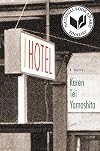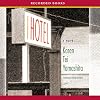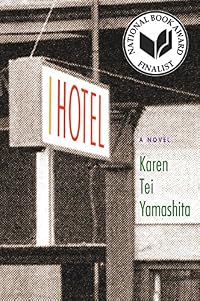
I Hotel
by Karen Tei Yamashita
On This Page
Description
""I Hotel"" is the third novella of I Hotel, a National Book Award finalist and epic of America's struggle for civil rights as it played out in San Francisco's Chinatown. Yamashita's cast of students, laborers, artists, revolutionaries, and provocateurs make their way through the history of the day, caught in riptides of politics and passion, clashing ideologies and personal turmoil.
Tags
Recommendations








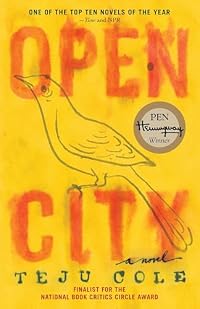

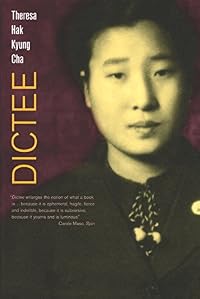
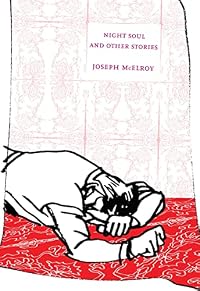

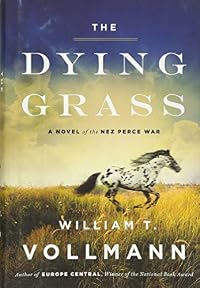







Member Recommendations
Member Reviews
This book is a masterpiece.
It's somewhat experimental fiction, and clearly not everyone likes that (see other reviews), but as a whole I have seen nothing that tackles the subject matter and time period with such attention to detail, spirit, and, well, affection. Not nostalgic -- if anything certain segments remind me too much of situations I'm glad I'm not in anymore -- but I Hotel distills the political time and place of SF in the '70s better than anything I have ever read.
This book makes the untold history of this time come alive. Best book I read in 2010.
It's somewhat experimental fiction, and clearly not everyone likes that (see other reviews), but as a whole I have seen nothing that tackles the subject matter and time period with such attention to detail, spirit, and, well, affection. Not nostalgic -- if anything certain segments remind me too much of situations I'm glad I'm not in anymore -- but I Hotel distills the political time and place of SF in the '70s better than anything I have ever read.
This book makes the untold history of this time come alive. Best book I read in 2010.
Just wow. A huge, sprawling, aimless and yet deadeye story of identity, resistance, success and failure, all that jazz (as in free, as in Rahsaan Roland Kirk's twin saxes blowing different melodies at the same time, as in Miles' electric phase fusing white-boy funk with black panther politics, as in Thomas P), ancient folk tales and pragmatic political actions, Mao vs Reagan, all scattered out over 600 pages, 10 years, the echo of billions and centuries in a few dozen people over 10 years, spoken in scores of voices and a new genre for every chapter. Written in every perspective and yet somehow ending in a clenched-fist first-person-plural. I'll try to write something more coherent about it, but I'm not sure I can.
The International Hotel (I-Hotel) was built a year after the devastating 1906 San Francisco earthquake in Manilatown, a community of some 20,000 Filipino immigrants on the edge of Chinatown. It was a residential hotel, which mainly housed Filipino and Chinese immigrant bachelors who worked in nearby businesses but couldn't afford homes, along with a smattering of artists and community and political activists that moved there in the 1960s. The I-Hotel sat in the shadow of the Financial District's famed Transamerica Pyramid, and as the area became more populated with gleaming office buildings the land adjacent to the hotel became more desirable while the building seemed more and more out of place. The hotel was purchased by a wealthy show more Chinese investor in 1968, who planned to tear down the building, evict its residents, and build a more profitable high-rise tower.
The residents of the hotel and community activists fought the developer and the city for years to prevent its demise. However, in 1977 the city's police department physically overpowered dozens of protesters and forcibly evicted its remaining residents, who were mostly elderly men who had lived there for decades, and the building was torn down immediately afterward. Ironically, the planned commercial development never took place, and a reincarnation of the I-Hotel for low- and middle-income residents was built on this site in 2005.
Karen Tei Yamashita, a professor of Literature and Creative Writing at UC Santa Cruz, uses the I-Hotel as the basis for this ambitious, sprawling, unique and successful novel about the Asian American civil rights movement, or Yellow Power movement, in San Francisco, Berkeley and other Bay Area cities in the 1960s and 1970s. The book is divided into 10 novellas, and each revolves around mostly fictional characters who are deeply involved in the burgeoning movement, including student protests at San Francisco State and UC Berkeley, the Native American takeover of Alcatraz Island, the efforts of farm workers to earn a decent wage and working conditions, and, of course, the unsuccessful efforts to save the I-Hotel. Yamashita uses a variety of tools to tell these stories, including poetry, portraits, graphic art, and government manuscripts.
Most of these novellas were very well done, and the book's ending was superb. Throughout the book I felt as if I was an observer being pulled along, sometimes breathlessly, from one story and one locale to another, in a whirlwind series of historical and personal narratives by a persistent and passionate guide. At the book's end I was somewhat fatigued, a bit overwhelmed, but ultimately grateful for the journey and what I learned along the way. show less
The residents of the hotel and community activists fought the developer and the city for years to prevent its demise. However, in 1977 the city's police department physically overpowered dozens of protesters and forcibly evicted its remaining residents, who were mostly elderly men who had lived there for decades, and the building was torn down immediately afterward. Ironically, the planned commercial development never took place, and a reincarnation of the I-Hotel for low- and middle-income residents was built on this site in 2005.
Karen Tei Yamashita, a professor of Literature and Creative Writing at UC Santa Cruz, uses the I-Hotel as the basis for this ambitious, sprawling, unique and successful novel about the Asian American civil rights movement, or Yellow Power movement, in San Francisco, Berkeley and other Bay Area cities in the 1960s and 1970s. The book is divided into 10 novellas, and each revolves around mostly fictional characters who are deeply involved in the burgeoning movement, including student protests at San Francisco State and UC Berkeley, the Native American takeover of Alcatraz Island, the efforts of farm workers to earn a decent wage and working conditions, and, of course, the unsuccessful efforts to save the I-Hotel. Yamashita uses a variety of tools to tell these stories, including poetry, portraits, graphic art, and government manuscripts.
Most of these novellas were very well done, and the book's ending was superb. Throughout the book I felt as if I was an observer being pulled along, sometimes breathlessly, from one story and one locale to another, in a whirlwind series of historical and personal narratives by a persistent and passionate guide. At the book's end I was somewhat fatigued, a bit overwhelmed, but ultimately grateful for the journey and what I learned along the way. show less
Relentlessly intelligent, both in terms of literary style and substance. Alternating poetry, prose, screenplay and line narrative, I Hotel runs the gamut from hip and light-hearted to horribly sad. Full of truths and insights into an explosively intense and volatile period of recent history - the life of the left in the late '60's and early '70's. The frame is the Asian American experience, particularly in NoCal, most particularly in San Francisco. Readers are treated to compelling historical fiction regarding Japanese, Filipino, Korean, Vietnamese and Chinese experiences including interments, human smuggling, sweatshops, and blatant discrimination. At the same time, diverse characters provide insight into a rich variety of political, show more cultural and intellectual traditions and achievements.
Told as a series of loosely interwoven stories, I Hotel can be a bit of a challenge at times. In fact, I decided to finally let go of trying to find threads between stories and characters. I found it more rewarding to enjoy each segment on its own. May be worth a re-read someday. show less
Told as a series of loosely interwoven stories, I Hotel can be a bit of a challenge at times. In fact, I decided to finally let go of trying to find threads between stories and characters. I found it more rewarding to enjoy each segment on its own. May be worth a re-read someday. show less
I felt this book was confusing and uneven, though that I think was the point. There are stories contained that were more engaging than others. Overall though, a complicated and multi-angled view of a very specific place and time emerges. Something like cubism, where you are seeing as many sides as possible at once. It is disorienting and there were parts where I wasn't really enjoying the book, but I can see how it works to tell a story in a fairly realistic way. Reality doesn't have clear plot lines and beginnings or ends.
This book, set primarily in San Francisco in the 1960s and 1970s, is actually a series of 10 novellas, each telling the story of the San Francisco Civil Rights scene through a different lens. It’s a compilation of events, some full of factual details, others containing just impressions, and each relying on the voice of its teller. Each novella represents a year, starting with 1968 and ending with 1977, but the action within each novella is not necessarily confined to that year. Each novella also includes some reference, both in the title and in the novella itself, to the I Hotel, a low-cost residential hotel located in the Manilatown area of Kearney Street.
Some of the novellas are traditional in structure and scope, following a show more handful of characters as they navigate some murky political and racial waters. Others are more like interlocking stories that explore the same themes from different perspectives. And some are almost entirely experimental, playing with art and narrative conventions and even the ways words are laid out on the page. There are transcripts and comics and poems and even a dance choreographed to a jazz tune.
Each novella can mostly stand on its own. A few characters appear in multiple novellas, and certain events are touched on several of them. There were points where Yamashita’s style was too experimental for my tastes. Plus, my ignorance of the historical and cultural references meant that I simply didn’t understand big chucks of the book. My curiosity was piqued about Asian American involvement in the Civil Rights movement, which is wonderful, but my current ignorance made some of the novellas incomprehensible.
There were a few times that my frustration got so great that I thought of putting the book down, but then I’d encounter some fabulous bit of writing or some keen insight that kept me interested. Yamashita can write in such a wonderful variety of voices. And some of the novellas would be absolutely amazing (albeit a little short) as stand-alone works. But I just couldn’t fall in love with the book as a whole. Too often, the style became the focus, when what I really wanted was to know these characters and understand their situation.
See my complete review on my blog. show less
Some of the novellas are traditional in structure and scope, following a show more handful of characters as they navigate some murky political and racial waters. Others are more like interlocking stories that explore the same themes from different perspectives. And some are almost entirely experimental, playing with art and narrative conventions and even the ways words are laid out on the page. There are transcripts and comics and poems and even a dance choreographed to a jazz tune.
Each novella can mostly stand on its own. A few characters appear in multiple novellas, and certain events are touched on several of them. There were points where Yamashita’s style was too experimental for my tastes. Plus, my ignorance of the historical and cultural references meant that I simply didn’t understand big chucks of the book. My curiosity was piqued about Asian American involvement in the Civil Rights movement, which is wonderful, but my current ignorance made some of the novellas incomprehensible.
There were a few times that my frustration got so great that I thought of putting the book down, but then I’d encounter some fabulous bit of writing or some keen insight that kept me interested. Yamashita can write in such a wonderful variety of voices. And some of the novellas would be absolutely amazing (albeit a little short) as stand-alone works. But I just couldn’t fall in love with the book as a whole. Too often, the style became the focus, when what I really wanted was to know these characters and understand their situation.
See my complete review on my blog. show less
As a San Francisco Bay Area resident, this book has special significance, since it fictionalizes/documents the Asian-American experience of the 1960's and 1970's in the region. It is a bold book, telling parallel narratives in a variety of styles, and while at times I was unable to make the connections across stories, I feel I now have a richer understanding of the fabric and history of my community.
Members
- Recently Added By
Published Reviews
ThingScore 100
It seems like every year brings a breakout indie hit in movie theaters; it's great to imagine a world where I Hotel is this year's bookstore equivalent. Published by one of the country's best independent publishers, Minnesota-based Coffee House Press, Yamashita's fifth novel is a sprawling, postmodern epic of Asian Americans in San Francisco in the civil rights era of the late 1960s and show more 1970s.
I Hotel is essentially a novel composed of 10 smaller novels, each set in a different year in Chinatown, and Yamashita incorporates photographs, comics, diagrams and screenplay excerpts into her prose. If all that sounds complicated, don't be scared — it's a stylistically wild ride, but it's smart, funny and entrancing. show less
I Hotel is essentially a novel composed of 10 smaller novels, each set in a different year in Chinatown, and Yamashita incorporates photographs, comics, diagrams and screenplay excerpts into her prose. If all that sounds complicated, don't be scared — it's a stylistically wild ride, but it's smart, funny and entrancing. show less
added by kidzdoc
The International Hotel, perched on the edge of San Francisco's Chinatown at Kearny and Jackson streets, became the center of the burgeoning Asian American civil rights movement in the 1960s after its tenants were threatened with eviction. For nearly a decade, activists fought to halt the redevelopment - including a dramatic standoff when thousands of protesters formed a human barricade around show more the building. Although they lost the battle, the community came into its own.
Karen Tei Yamashita's novel "I Hotel" is a dazzling depiction of those exhilarating, turbulent days, told through the multiple perspectives of a sprawling cast: a Chinese American poet, a Filipino American farmworker organizer and a Japanese-Russian American disability activist, among many others.
Just as diverse are the inventive forms in which Yamashita, who teaches at UC Santa Cruz, shapes her narrative. The 10 novellas include poems, myth, a dossier on the UC Berkeley criminology professor who sponsored the first Asian American studies course in the country, a dance script depicting Asian American memory, recipes for roast pig, and scores of hilarious quotations from Imelda Marcos, wife of the deposed president of the Philippines. That's in addition to delightful illustrations by Leland Wong and Sina Grace. show less
Karen Tei Yamashita's novel "I Hotel" is a dazzling depiction of those exhilarating, turbulent days, told through the multiple perspectives of a sprawling cast: a Chinese American poet, a Filipino American farmworker organizer and a Japanese-Russian American disability activist, among many others.
Just as diverse are the inventive forms in which Yamashita, who teaches at UC Santa Cruz, shapes her narrative. The 10 novellas include poems, myth, a dossier on the UC Berkeley criminology professor who sponsored the first Asian American studies course in the country, a dance script depicting Asian American memory, recipes for roast pig, and scores of hilarious quotations from Imelda Marcos, wife of the deposed president of the Philippines. That's in addition to delightful illustrations by Leland Wong and Sina Grace. show less
added by kidzdoc
Lists

National Book Award Finalists - Fiction
377 works; 12 members

The Atlantic's The Great American Novel
136 works; 12 members
Author Information

11+ Works 1,238 Members
Karen Tei Yamashita is the author of Through the Arc of the Rain Forest, Brazil-Maru, Tropic of Orange, Circle K Cycles, and I Hotel, all published by Coffee House Press. I Hotel was selected as a finalist for the National Book Award and awarded the California Book Award, the American Book Award, the Asian/Pacific American Librarians Association show more Award, and the Association for Asian American Studies Book Award. She has been a u.s. Artists Ford Foundation Fellow and is currently professor of literature and creative writing and the coholder of the University of California Presidential Chair in Feminist Critical Race and Ethnic Studies at the University of California, Santa Cruz. show less
Some Editions
Awards and Honors
Common Knowledge
- Original publication date
- 2010
- Important places
- San Francisco, California, USA
- Canonical DDC/MDS
- 813.54
- Canonical LCC
- PS3575.A44
Classifications
Statistics
- Members
- 359
- Popularity
- 87,378
- Reviews
- 9
- Rating
- (3.86)
- Languages
- English
- Media
- Paper, Audiobook, Ebook
- ISBNs
- 9
- ASINs
- 6