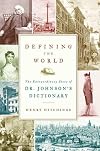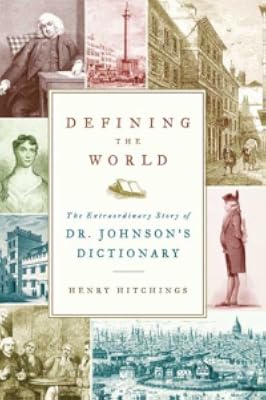
Defining the World: The Extraordinary Story of Dr Johnson's Dictionary
by Henry Hitchings
On This Page
Description
By the early eighteenth century, France and Italy had impressive lexicons, but there was no authoritative dictionary of English. Sensing the deficit, and impelled by a mixture of national pride and commercial expedience, the prodigious polymath Samuel Johnson embraced the task, turning over the garret of his London home to the creation of his own giant dictionary.Johnson imagined that he could complete the job in three years. But the complexity of English meant that his estimate was wildly show more inadequate. Only after he had expended nearly a decade of his prime on the task did the dictionary finally appear - magisterial yet quirky, dogmatic but generous of spirit, and steeped in the richness of English literature. It would come to be seen as the most important British cultural monument of the eighteenth century, and its influence fanned out across Europe and throughout Britain's colonies - including, crucially, America.Brilliantly entertaining and enlightening, Defining the World is the story of Johnson's heroic endeavor, 250 years after the first publication of the Dictionary. In alphabetically sequenced chapters, Henry Hitchings describes Johnson's adventure - his ambition and vision, his moments of despair, the mistakes he made along the way, and his ultimate triumph. show lessTags
Recommendations











Member Reviews
If, at the beginning of the 18th century, France and Italy already had their own dictionaries, England, on the contrary, was lagging behind. Never mind! One man, alone, will attempt
to remedy to that: Samuel Johnson.
The son of a book dealer, autodidact, married to a very sick wife, struggling his whole life against both financial problems and a poor mental health, Samuel Johnson, character with an amazing intellectual strength, will nevertheless write more than 42,000 definitions which will remain THE English language's lexicographical reference for more than 150 years. In fact, published in 1755, it won't be supplanted unless by the Oxford English Dictionary (OED) and, even then, the OED itself will keep more than 1,700 of his show more definitions, words for words! And what definitions!
A unique writing style, erudite, witty, funny at times, Samuel Johnson succeeded doing in 8 years what 40 French academicians had struggled to achieve in more than 55: to 'fix' a language in a dictionary, where words are not only defined and illustrated by quotations, but, also, have their etymology retraced (at a time when philology itself didn't exist yet!). The results would be remarkable:
'Dull': not exhilarating, not delightful; as in "to make dictionaries is dull work"
'Lexicographer': a writer of dictionaries; a harmless drudge.'
And on. And on. And on! Here was a monument, one which became since a national icon in England and to whom Henry Hitchings pays a great tribute here; showing not only the genius of a man and his work, but, also, putting such endeavour within the intellectual storm of the times, when English language itself was being standardised, Johnson himself being one of its fiercer 'purist'. An highly entertaining biography! show less
to remedy to that: Samuel Johnson.
The son of a book dealer, autodidact, married to a very sick wife, struggling his whole life against both financial problems and a poor mental health, Samuel Johnson, character with an amazing intellectual strength, will nevertheless write more than 42,000 definitions which will remain THE English language's lexicographical reference for more than 150 years. In fact, published in 1755, it won't be supplanted unless by the Oxford English Dictionary (OED) and, even then, the OED itself will keep more than 1,700 of his show more definitions, words for words! And what definitions!
A unique writing style, erudite, witty, funny at times, Samuel Johnson succeeded doing in 8 years what 40 French academicians had struggled to achieve in more than 55: to 'fix' a language in a dictionary, where words are not only defined and illustrated by quotations, but, also, have their etymology retraced (at a time when philology itself didn't exist yet!). The results would be remarkable:
'Dull': not exhilarating, not delightful; as in "to make dictionaries is dull work"
'Lexicographer': a writer of dictionaries; a harmless drudge.'
And on. And on. And on! Here was a monument, one which became since a national icon in England and to whom Henry Hitchings pays a great tribute here; showing not only the genius of a man and his work, but, also, putting such endeavour within the intellectual storm of the times, when English language itself was being standardised, Johnson himself being one of its fiercer 'purist'. An highly entertaining biography! show less
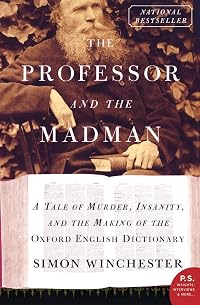
As someone who is currently working her way through the complete works of Samuel Johnson and who read and loved The Professor and the Madman: A Tale of Murder, Insanity, and the Making of the Oxford English Dictionary by Simon Winchester. this book about Dr. Johnson and the creation of his legendary dictionary seemed like a clear winner. While Hitchings' prose can be distractingly clever and often more in love with vocabulary than readability (you can tell he is a man who loves dictionaries) the book is well researched and nicely structured, and the fascinating story of the first definitive English dictionary and the man who wrote and compiled it wins out in the end. Even though he was active 250 years ago, Johnson's relationship to the show more written word is so modern and it is easy to get caught up in his desire to tease out meanings and origins of the written English language. There is a reason that biographies and stories about Samuel Johnson have become classics alongside his actual work -- he is a fascinating, flawed, personality filled writer, and as Hitchings shows us, that personality drives his epic years-long dictionary project. show less
Henry Hitchings' Defining the World: The Extraordinary Story of Dr. Johnson's Dictionary (FSG, 2005) is a lively and readable trek through the incredible feat that was the creation of Johnson's Dictionary of the English Language (1755). Hitchings ably guides his reader through Johnson's haphazard creative process, outlining the way in which the lexicographer culled his illustrative quotations (when not from memory, that is) and worked with his small coterie of amanuenses to make the projected dictionary a reality.
This book centers on the Dictionary from first to last; with Johnson it's easy to be distracted by the man himself, and there is just enough of the biography here to get a feel for the creator without losing sight of the show more creation. Hitchings discusses various aspects (quirks?) of the Dictionary, from Johnson's perennial defining words (interstices, morbid, e.g., which each appear several times) to his nationalistic, "middle-class, backward-looking, Anglocentric, male" biases to the few downright mistakes, and the more common vague or circular definitions. Among those oddities I enjoyed most: the definition of "defluxion" as "a defluxion," and the dismissal of "trolmydames" (used by Shakespeare in The Winter's Tale) with simply "Of this word I know not the meaning."
The definitions of "oats," and a few others notwithstanding, as Hitchings points out, the "real surprise of Johnson's Dictionary is that despite its author's reputation as a man of rather cramped sympathies, its entries are as clinical and unprejudiced as they are." The work was taken seriously, for all its wit.
Hitchings also includes some fascinating details about the printing and publication details of the Dictionary, from the type and paper used to the various later editions, abridgements and pirated versions which spread Johnson's reputation far and wide. These are important and interesting topics, and they were most welcome (to me, at least).
Well footnoted at least, this book's main fault is the lack of a full bibliography. But perhaps Johnson's quote about dictionaries can be extended more widely here: "The worst is better than none, and the best cannot be expected to go quite true."
http://philobiblos.blogspot.com/2007/03/book-review-defining-world.html show less
This book centers on the Dictionary from first to last; with Johnson it's easy to be distracted by the man himself, and there is just enough of the biography here to get a feel for the creator without losing sight of the show more creation. Hitchings discusses various aspects (quirks?) of the Dictionary, from Johnson's perennial defining words (interstices, morbid, e.g., which each appear several times) to his nationalistic, "middle-class, backward-looking, Anglocentric, male" biases to the few downright mistakes, and the more common vague or circular definitions. Among those oddities I enjoyed most: the definition of "defluxion" as "a defluxion," and the dismissal of "trolmydames" (used by Shakespeare in The Winter's Tale) with simply "Of this word I know not the meaning."
The definitions of "oats," and a few others notwithstanding, as Hitchings points out, the "real surprise of Johnson's Dictionary is that despite its author's reputation as a man of rather cramped sympathies, its entries are as clinical and unprejudiced as they are." The work was taken seriously, for all its wit.
Hitchings also includes some fascinating details about the printing and publication details of the Dictionary, from the type and paper used to the various later editions, abridgements and pirated versions which spread Johnson's reputation far and wide. These are important and interesting topics, and they were most welcome (to me, at least).
Well footnoted at least, this book's main fault is the lack of a full bibliography. But perhaps Johnson's quote about dictionaries can be extended more widely here: "The worst is better than none, and the best cannot be expected to go quite true."
http://philobiblos.blogspot.com/2007/03/book-review-defining-world.html show less
We all know the Dr Johnson portrayed in the classic Blackadder episode and we all use his book, the Dictionary, every day. This book explores the life and background of Johnson, as well as his struggle to write the world's first English dictionary. A great subject for a book but in places, quite boring and unreadable.
For readers who are linguists or lexicographers, you would probably give this book 5 stars, because a lot of the book examines the definitions that Johnson gave to words, its original Latin or Greek roots, arguments for and against Johnson's definitions and so on. For those of us who are not linguists or lexicographers, these pages come across as rather dry, pedantic, and downright boring. I wanted the book to be a show more straightforward history book / biography but instead we get a lesson in lingustics, word formation and quotes from literature.
I was however amused and perhaps a little impressed by Hitchings including the Blackadder episode in the book and I liked parts of the book where he wrote clearly, fluently and concisely. I also liked how he named each book chapter after a word in Johnson's dictionary along with Johnson's definition. That was rather clever.
This book is highly interesting and in places extremely fascinating. But the author has the tendency to ramble on and on in places which will make you start to flip pages. So only buy this if you are truly interested in the subject of linguistics, the history of the English language and a fan of biographies in general. Otherwise you may end up disappointed. show less
For readers who are linguists or lexicographers, you would probably give this book 5 stars, because a lot of the book examines the definitions that Johnson gave to words, its original Latin or Greek roots, arguments for and against Johnson's definitions and so on. For those of us who are not linguists or lexicographers, these pages come across as rather dry, pedantic, and downright boring. I wanted the book to be a show more straightforward history book / biography but instead we get a lesson in lingustics, word formation and quotes from literature.
I was however amused and perhaps a little impressed by Hitchings including the Blackadder episode in the book and I liked parts of the book where he wrote clearly, fluently and concisely. I also liked how he named each book chapter after a word in Johnson's dictionary along with Johnson's definition. That was rather clever.
This book is highly interesting and in places extremely fascinating. But the author has the tendency to ramble on and on in places which will make you start to flip pages. So only buy this if you are truly interested in the subject of linguistics, the history of the English language and a fan of biographies in general. Otherwise you may end up disappointed. show less
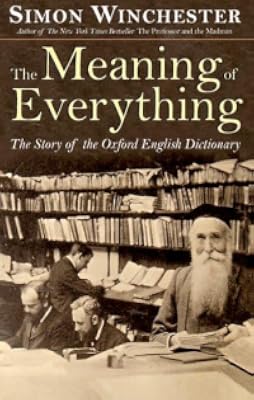
"Defining the World" does for Dr. Johnson's 18th century dictionary what Simon Winchester did in "The Meaning of Everything" for the Oxford English Dictionary. A popular, readable and enjoyable history. Hitchen's doesn't have the "spark" of Winchester's prose, he's only 30 and it's his first book, but he is well versed in his subject-he has a recent PhD on it in fact-the book is very well written. Most memorable for me were the descriptions of life in London in the middle to late 18th century and its many floppy characters. As befitting a book about a dictionary, there is substantial discussion of words and definitions and the many permutations-a seemingly dry subject but in the hands of Hitchings under the guidance of Johnson's raw show more material is really very funny and interesting. Unlike the OED, the Dictionary doesn't have a dramatic creation story, other than Johnson's colorful character which is as much mythology as reality. If for no other reason than I keep running into "Doctor Johnson" and his dictionary everywhere I turn, this book provided enjoyable context on what it's all about. As my studies will in the future focus on the 18th century, Dr Johnson has become an indispensable piece of culture to know about. show less
I think the subtitle of this book indulges in a bit of hyperbole, confusing an extraordinary volume with an extraordinary story about that volume. Though Samuel Johnson's A Dictionary of the English Language was a monumental effort requiring nine years of work and which, in many ways, became the standard against which all other English dictionaries were compared or contrasted, the story of its production is rather ordinary. Johnson set out to define the entire English language as it was actually used; he was not wealthy and had to find sponsors; he worked hard for nine years; the dictionary was finally published and successful.
This is the difficulty against which Hitchings has to struggle—how to keep interest alive in the reader show more through 259 pages. He manages, for the most part, by discussing the dictionary, itself, rather than the story of the dictionary. He shows how the definitions help the reader understand 18th century Britain. He talks about how Johnson's personal beliefs about Church and State color how he presents words. He shows how Johnson exacted revenge against those he disliked in his definitions of words like "patron". He even illustrates the relevance of the dictionary to our times, recounting that the Supreme Court has referenced it in the last decade in order to understand the Framers' intentions when they chose words for the U.S. Constitution.
At times he fails to maintain the interest. Mr. Hitchings does not yet (this is his first effort) have that gift of making even mundane history come alive. It is always informative. It is often slyly humorous. However, it is often very dry and a trifle repetitive. Many sections of the book are simply lists of words illustrating his point. The first two or three might be interesting, but then my eyes would begin to glaze over and I was anxious for him to move on to his next topic.
If you are keenly interested in lexicography, this volume may have a great deal of appeal for you. If, as I am, you are merely interested in a wide variety of subjects, this may prove to be a bit less enjoyable than one might hope. show less
This is the difficulty against which Hitchings has to struggle—how to keep interest alive in the reader show more through 259 pages. He manages, for the most part, by discussing the dictionary, itself, rather than the story of the dictionary. He shows how the definitions help the reader understand 18th century Britain. He talks about how Johnson's personal beliefs about Church and State color how he presents words. He shows how Johnson exacted revenge against those he disliked in his definitions of words like "patron". He even illustrates the relevance of the dictionary to our times, recounting that the Supreme Court has referenced it in the last decade in order to understand the Framers' intentions when they chose words for the U.S. Constitution.
At times he fails to maintain the interest. Mr. Hitchings does not yet (this is his first effort) have that gift of making even mundane history come alive. It is always informative. It is often slyly humorous. However, it is often very dry and a trifle repetitive. Many sections of the book are simply lists of words illustrating his point. The first two or three might be interesting, but then my eyes would begin to glaze over and I was anxious for him to move on to his next topic.
If you are keenly interested in lexicography, this volume may have a great deal of appeal for you. If, as I am, you are merely interested in a wide variety of subjects, this may prove to be a bit less enjoyable than one might hope. show less
Hitchings’s colorful descriptions of Johnson’s life and acquaintances lose their luster only when compared to the awesome feat of his dictionary. Not many people think of Samuel Johnson when their minds turns to dictionaries, but his eight-year effort paved the way for the likes of Webster and Murray. The author’s connection of Johnson’s Dictionary to the U.S. Constitution, while trivial, is rather unique in the world of lexicographical history.
Members
- Recently Added By
Author Information

13+ Works 1,854 Members
Awards and Honors
Common Knowledge
- Original publication date
- 2005
- People/Characters
- Samuel Johnson
- Canonical DDC/MDS
- 423
- Canonical LCC
- PE1617.J7H58
Classifications
Statistics
- Members
- 564
- Popularity
- 52,100
- Reviews
- 18
- Rating
- (3.88)
- Languages
- English
- Media
- Paper, Ebook
- ISBNs
- 7
- ASINs
- 4