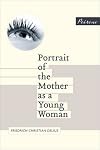
Portrait of the Mother as a Young Woman
by Friedrich Christian Delius
On This Page
Description
In Rome one January afternoon in 1943, a young German woman is on her way to listen to a Bach concert at the Lutheran church. The war is for her little more than a daydream, until she realizes that her husband might never return. Portrait of the Mother as a Young Woman, winner of the prestigious Georg Buchner prize, is a mesmerizing psychological portrait of the human need to safeguard innocence and integrity at any cost-even at the risk of excluding reality. More than just the story of this show more single woman, it is a compelling and credible description of a typical young German woman during the Nazi era. show lessTags
Recommendations








































Member Recommendations
Member Reviews
In Portrait Of The Mother, a young pregnant woman walks through Rome, on her way to a concert in a church. She is German, and it's January 1943. She is waiting in Rome for her husband to return from duty on the African front, and as she walks through the city her thoughts circle around in the way that they do when one is walking - new thoughts are sparked by the things you see or by memories linked to the place you're in, and old preoccupations return. The whole book is told in one long sentence, but with paragraph breaks, so it felt almost that I was reading at walking pace, with one paragraph per breath.
She's quite a naive young woman, self-conscious about the fact that she doesn't really understand anything about Italy, its history show more or culture, and wary of the Catholic/Mediterranean goings-on - as a result, she lives in a little bit of a bubble. Steeped in both her strong religious faith and all the wartime propaganda, she tries not to think about difficult things like food shortages, her possibly traitorous thoughts about wanting her husband to be with her, or indeed the hints that she's heard from both her father and husband that they don't truly support the Fuhrer. Instead she seeks out places which remind her of her husband or her faith, "little islands of reassurance" in "the dangerous sea of the hospitable and harsh, beautiful and uncanny city".
Despite her naivety, somehow she becomes a sympathetic character as we spend the morning with her. And the impact of the war is very well conveyed in small details - the espresso bar, tightly shuttered since coffee became unavailable except for those with connections; "the daily death announcements Fallen in action, which were printed ever smaller". The climax of the book - the concert - is an incredibly beautiful summation of all the emotions that have built up to this point.
and once again, before she continued on her way, she looked to the left of the twin churches into Via del Babuino, down which she had already walked four times this week, Monday and Tuesday, Thursday and Friday, the street of letters and packages, the street of the signs of life she hoped for, the street of happiness, from where she had returned yesterday with two letters from Gert, received at the Wehrmacht headquarters, full of gratitude after a first glance at his lines and the silent, short prayer: He's alive! Thank you, O benevolent God!, and this is why, of the three streets which ran radially between the domed churches towards the obelisk, she knew Babuino best of all, her street of happiness and gratitude, show less
She's quite a naive young woman, self-conscious about the fact that she doesn't really understand anything about Italy, its history show more or culture, and wary of the Catholic/Mediterranean goings-on - as a result, she lives in a little bit of a bubble. Steeped in both her strong religious faith and all the wartime propaganda, she tries not to think about difficult things like food shortages, her possibly traitorous thoughts about wanting her husband to be with her, or indeed the hints that she's heard from both her father and husband that they don't truly support the Fuhrer. Instead she seeks out places which remind her of her husband or her faith, "little islands of reassurance" in "the dangerous sea of the hospitable and harsh, beautiful and uncanny city".
Despite her naivety, somehow she becomes a sympathetic character as we spend the morning with her. And the impact of the war is very well conveyed in small details - the espresso bar, tightly shuttered since coffee became unavailable except for those with connections; "the daily death announcements Fallen in action, which were printed ever smaller". The climax of the book - the concert - is an incredibly beautiful summation of all the emotions that have built up to this point.
and once again, before she continued on her way, she looked to the left of the twin churches into Via del Babuino, down which she had already walked four times this week, Monday and Tuesday, Thursday and Friday, the street of letters and packages, the street of the signs of life she hoped for, the street of happiness, from where she had returned yesterday with two letters from Gert, received at the Wehrmacht headquarters, full of gratitude after a first glance at his lines and the silent, short prayer: He's alive! Thank you, O benevolent God!, and this is why, of the three streets which ran radially between the domed churches towards the obelisk, she knew Babuino best of all, her street of happiness and gratitude, show less
Evocative is the word I will use to describe this beautifully written story. Okay, I would use the word sublime as well. Introspective and observational in nature, Delius has captured the essence of a 19-year-old German woman, 8-months pregnant and adrift "in the dangerous sea of the hospitable and harsh, beautiful and uncanny city" of Rome. Margaret (the girl's name) does not speak the local language and as such, finds herself trying to explain the sights and sounds that surround her via her innocent, devout Protestant upbringing. Delius' portrayal of Rome, in particular Margaret's walk from the German-run mission hospital to the Lutheran Gospel on Via Sicilia is vividly descriptive but it is Margaret's attempts to dissuade new ideas show more that threaten to make her lower her shield of naivete and start to question the German point of view on things like the war, attitudes towards Jews and Italians, and even start to examine her station and circumstances. Emotionally, the reader is exposed to Margaret's fear of dissent and the repression she sees in the faces of the individuals passing by during her walk.
For me this story has the same quiet contemplation and examination found in Virginia Woolf's [Mrs. Dalloway]. This story is also written in the stream of consciousness style, comprising of an inner monologue. I tend to enjoy quiet, contemplative stories and like the stream of consciousness style, but I understand that this may not be another reader's idea of a good read. If you find a story written as one 119-page run-on sentence, this story may not appeal to you.
As one review has put it, "This is an absolutely beautiful meditation on life, love, war, cruelty, faith, humanity" and one that I highly recommend, if anything, to experience the wonderful poetic prose the story is written in. show less
For me this story has the same quiet contemplation and examination found in Virginia Woolf's [Mrs. Dalloway]. This story is also written in the stream of consciousness style, comprising of an inner monologue. I tend to enjoy quiet, contemplative stories and like the stream of consciousness style, but I understand that this may not be another reader's idea of a good read. If you find a story written as one 119-page run-on sentence, this story may not appeal to you.
As one review has put it, "This is an absolutely beautiful meditation on life, love, war, cruelty, faith, humanity" and one that I highly recommend, if anything, to experience the wonderful poetic prose the story is written in. show less
…it was nine weeks ago that she had arrived in Rome, so as to be with him for a while at last, with Gert, for the first time since their wedding, and when, the very next day, he had to tell her that he had been ordered back to the army, a sudden, immediate redeployment to Africa, and she had not been able to understand,
only just arrived and immediately alone again, highly pregnant in a dangerous, foreign place, it was a shock, at twenty-one almost herself like a child that cannot walk without help or stand on its own two feet, exposed in a totally alien country and a totally alien language… – from Portrait of the Mother as a Young Woman, page 14 -
The year is 1943; the place is Rome. A young woman on her way to a Bach concert show more observes the city and muses on faith, fate, war, and her future. Her new husband has been redeployed to Africa to fight Hitler’s battle there, while she is left alone and pregnant in a foreign city.
Portrait of the Mother as a Young Woman is a novella which consists of one long sentence over 125 pages. It is a quiet story which takes a look at WWII from the perspective of a young German woman living temporarily in Rome. Her husband has written to her and asked her to “absorb all the beautiful things Rome has to offer,” so as she walks she observes the beauty around her: the architecture, the art, the lovely weather, the people. But she cannot help thinking of the war and seeing the sharp contrast between its presence in Rome alongside all the wonder – the restriction of freedoms, the black outs, the lack of food and rationed goods. This reality draws her up short and she quickly pushes it away. The rhythm of the prose (which feels poetic in its style) compliments the push and pull rhythm of the young woman’s thoughts.
Friedrich Christian Delius is one of Germany’s most renowned contemporary writers. His background as a poet is evident in this translated work. In Portrait of the Mother as a Young Woman he explores the idea of God being in control vs. the idea of free will. Throughout the novella, the young woman vacillates between questioning the war and her current situation, and putting everything into God’s hands. Her naivete and innocence is emphasized by her situation – namely that of a foreigner in the city of Rome who does not speak the Italian language.
…she sensed something within her rebelling against the constant obligation to stifle the feeling of longing with her reason and faith, because feelings were forbidden in wartime, you were not allowed to rejoice with happiness, you had to swallow your sadness, and like a soldier you were forced to conceal the language of the heart… – from Portrait of the Mother as a Young Woman, page 84 -
…but she was not at home, she was in a foreign place, and carrying a child, she had thrown herself into an adventure, left her home and parents and followed her husband, without realizing that God had another plan for her, and nobody could expect her to stroll through this foreign place with a happy heart… – from Portrait of the Mother as a Young Woman, page 85 -
Delius manages to capture the mood of city during wartime, and touches on the horror which has now become synonymous with WWII – that of the fate of Jews under the iron will of Hitler while the world remained largely silent. He uses the young woman’s conflicted emotions to explore this theme. On the one hand, she is a German national and knows she should wish for victory; on the other hand, she holds strong moral and religious views which make her question the ultimate purpose of the Nazi regime.
…she would have been able to discuss the Jews and her Jewish thoughts with Gert, were he here, but not with anybody else, this was another reason she needed him beside her, so she could talk about something so awkward, about the danger of the ideas that came into her head,
on her own she could not work out what you were allowed and not allowed to say, what you should think and what you ought not to think, and how to cope with her ambivalent feelings, all she could do was to keep these things to herself until his return… - from Portrait of the Mother as a Young Woman, page 67 -
This is a brilliant and thought-provoking piece of literature. To be honest, I was not sure I could read a book which consisted of only one sentence – but, Delius manages to make this work. In fact, I came to feel this was the perfect format for the story. The flow and rhythm of the prose carries the reader forward effortlessly. The young woman’s circular thoughts, the ebb and flow of her reasoning, the need for her to protect her emotions despite the very real possibility that her husband may not survive…all of this fits with the style of the novella.
Readers who are interested in translated literature and who love literary fiction as well as poetry will find this to be a mesmerizing work.
Highly recommended. show less
only just arrived and immediately alone again, highly pregnant in a dangerous, foreign place, it was a shock, at twenty-one almost herself like a child that cannot walk without help or stand on its own two feet, exposed in a totally alien country and a totally alien language… – from Portrait of the Mother as a Young Woman, page 14 -
The year is 1943; the place is Rome. A young woman on her way to a Bach concert show more observes the city and muses on faith, fate, war, and her future. Her new husband has been redeployed to Africa to fight Hitler’s battle there, while she is left alone and pregnant in a foreign city.
Portrait of the Mother as a Young Woman is a novella which consists of one long sentence over 125 pages. It is a quiet story which takes a look at WWII from the perspective of a young German woman living temporarily in Rome. Her husband has written to her and asked her to “absorb all the beautiful things Rome has to offer,” so as she walks she observes the beauty around her: the architecture, the art, the lovely weather, the people. But she cannot help thinking of the war and seeing the sharp contrast between its presence in Rome alongside all the wonder – the restriction of freedoms, the black outs, the lack of food and rationed goods. This reality draws her up short and she quickly pushes it away. The rhythm of the prose (which feels poetic in its style) compliments the push and pull rhythm of the young woman’s thoughts.
Friedrich Christian Delius is one of Germany’s most renowned contemporary writers. His background as a poet is evident in this translated work. In Portrait of the Mother as a Young Woman he explores the idea of God being in control vs. the idea of free will. Throughout the novella, the young woman vacillates between questioning the war and her current situation, and putting everything into God’s hands. Her naivete and innocence is emphasized by her situation – namely that of a foreigner in the city of Rome who does not speak the Italian language.
…she sensed something within her rebelling against the constant obligation to stifle the feeling of longing with her reason and faith, because feelings were forbidden in wartime, you were not allowed to rejoice with happiness, you had to swallow your sadness, and like a soldier you were forced to conceal the language of the heart… – from Portrait of the Mother as a Young Woman, page 84 -
…but she was not at home, she was in a foreign place, and carrying a child, she had thrown herself into an adventure, left her home and parents and followed her husband, without realizing that God had another plan for her, and nobody could expect her to stroll through this foreign place with a happy heart… – from Portrait of the Mother as a Young Woman, page 85 -
Delius manages to capture the mood of city during wartime, and touches on the horror which has now become synonymous with WWII – that of the fate of Jews under the iron will of Hitler while the world remained largely silent. He uses the young woman’s conflicted emotions to explore this theme. On the one hand, she is a German national and knows she should wish for victory; on the other hand, she holds strong moral and religious views which make her question the ultimate purpose of the Nazi regime.
…she would have been able to discuss the Jews and her Jewish thoughts with Gert, were he here, but not with anybody else, this was another reason she needed him beside her, so she could talk about something so awkward, about the danger of the ideas that came into her head,
on her own she could not work out what you were allowed and not allowed to say, what you should think and what you ought not to think, and how to cope with her ambivalent feelings, all she could do was to keep these things to herself until his return… - from Portrait of the Mother as a Young Woman, page 67 -
This is a brilliant and thought-provoking piece of literature. To be honest, I was not sure I could read a book which consisted of only one sentence – but, Delius manages to make this work. In fact, I came to feel this was the perfect format for the story. The flow and rhythm of the prose carries the reader forward effortlessly. The young woman’s circular thoughts, the ebb and flow of her reasoning, the need for her to protect her emotions despite the very real possibility that her husband may not survive…all of this fits with the style of the novella.
Readers who are interested in translated literature and who love literary fiction as well as poetry will find this to be a mesmerizing work.
Highly recommended. show less
This enthralling story, kindly sent to me by the publishers, centres around a single afternoon in January 1943.
A heavily pregnant young woman is in the "eternal city" of Rome. We learn that she is German and is residing in the capital because her husband has returned from the war due to a leg injury. Cruelly, they have been only been together for a couple of days, when Gert is recalled to serve in Africa, following Germany's defeat at El Alamein.
The young woman is on her way to the Lutheran church to attend a Bach concert. Her bewilderment and sadness is palpable, as she tries to make sense of her situation and the strangeness of Germany's presence in their ally's country. It seems like an "occupation" rather than an invitation from show more willing hosts. There is a "protocol" which this young woman fails to grasp. Even the unfamiliar statues and artwork confuse her, and she longs for her husband's knowledge and company. Her whole life has been influenced by the Protestant Church, reinforced by her husband's calling as a minister. This also sits uncomfortably within the very centre of the Catholic church in Rome.
What persists throughout the narrative, unusual and compelling in it's single 117 page sentence,is her innocence,her utter belief that God will prevail and a sense that if she chooses not to confront her fears.......they will never come to be. I found this deeply moving. Her whole being is concerned with the baby she is carrying and the hope that child will bring. As the music of the concert swells and unites Germans and Italians, Protestants and Catholics alike and her tears flow freely.....yes there has to be hope......for what is left in this confusing and damaged world?
Another little masterpiece from Peirene. show less
A heavily pregnant young woman is in the "eternal city" of Rome. We learn that she is German and is residing in the capital because her husband has returned from the war due to a leg injury. Cruelly, they have been only been together for a couple of days, when Gert is recalled to serve in Africa, following Germany's defeat at El Alamein.
The young woman is on her way to the Lutheran church to attend a Bach concert. Her bewilderment and sadness is palpable, as she tries to make sense of her situation and the strangeness of Germany's presence in their ally's country. It seems like an "occupation" rather than an invitation from show more willing hosts. There is a "protocol" which this young woman fails to grasp. Even the unfamiliar statues and artwork confuse her, and she longs for her husband's knowledge and company. Her whole life has been influenced by the Protestant Church, reinforced by her husband's calling as a minister. This also sits uncomfortably within the very centre of the Catholic church in Rome.
What persists throughout the narrative, unusual and compelling in it's single 117 page sentence,is her innocence,her utter belief that God will prevail and a sense that if she chooses not to confront her fears.......they will never come to be. I found this deeply moving. Her whole being is concerned with the baby she is carrying and the hope that child will bring. As the music of the concert swells and unites Germans and Italians, Protestants and Catholics alike and her tears flow freely.....yes there has to be hope......for what is left in this confusing and damaged world?
Another little masterpiece from Peirene. show less
A novel in a single sentence. That was what intrigued me about this book. To be honest I generally avoid World War Two books - not because I don't think it's important, but just because I feel as if I have already overdosed on books, films, TV programmes etc etc exploring every angle of the war, and I'd need a really good reason to read about that again, rather than any of the infinite number of other places and times. The innovative narrative structure gave me that reason.
It turns out, however, that it's not really a single sentence. I mean, it's true that there are no full-stops, but the sentence doesn't really run on continuously for the whole book. In some places it does, but in many others the sentence basically ends, and the show more author goes on to a new thought in a new paragraph, just using a comma instead of a full-stop. For example, from a page opened at random:
"...this sort of thing happened more often in Catholic countries, he had written, but she had been right to get off the bus straight away,
since that incident she had kept as far away from crowds as possible...."
The phrase "Since that incident" should really be a new sentence - it's a new thought, and there's a grammatical break between it and what went before. The whole one-sentence thing quite quickly began to feel like a bit of a cheat.
But as I read the book more, the style grew on me. I began to think about why he had written it in this way, and realised it's not just a gimmick - it's a clever reflection of the way we think. The whole book is an interior monologue of a woman walking to church one day in 1943, and her thoughts meander around between present and past with a mesmerising fluidity. And this, really, is how we think when we're just walking along letting our thoughts wander. I went for a long walk on Hampstead Heath recently and did exactly the same thing. There was no break between the thoughts, no division between one thing and the next. Past, present and future all merged in my head, and I went from one thing to the next without a break or logical transition.
By the end of the book I was convinced that writing in a single sentence was an effective way of communicating this fluidity of thought processes. It's true that it's not technically a single sentence, but I suppose the only way to write for 125 pages in a single sentence would be to clutter up the book with a whole lot of ugly conjunctions. Maybe just having a comma and moving on to the next thing was the best way to do it.
The character interested me as well. She is very young, very innocent, very trusting, quite careful to avoid thinking about things she doesn't understand or want to think about, quite happy to trust in God or her husband or some other authority to work things out for her. She is wary of her friend Ilse, who raises uncomfortable questions such as why it was necessary to hate the British and Americans - just the question itself makes her feel "guilty, confused and horrified" and she decides to distance herself from Ilse or "at the very least stop getting into discussions with her". Another revealing passage, after saying she needed to discuss "her Jewish thoughts" with Gert:
"On her own she could not work out what you were allowed and not allowed to say, what you should think and what you ought not to think, and how to cope with her ambivalent feelings, all she could do was to keep these things to herself until his return"
There is a clear link between her religion and subservience - for her, religion is about faith to the point of fatalism, accepting God's will and not questioning anything, the effort "to bring your own will into harmony with the will of God, and thereby find the greatest freedom in obedience".
It's clear to see how this young woman, clearly a good person with a kind heart, would fall perfectly into line with the crimes of the Nazi government. By doing good she would be complicit in evil. It's a very compelling characterisation. This is the third book published by Peirene Press, and all three have been of a very high standard. Personally I'd recommend Beside the Sea as my favourite, but this book is also well worth a read. show less
It turns out, however, that it's not really a single sentence. I mean, it's true that there are no full-stops, but the sentence doesn't really run on continuously for the whole book. In some places it does, but in many others the sentence basically ends, and the show more author goes on to a new thought in a new paragraph, just using a comma instead of a full-stop. For example, from a page opened at random:
"...this sort of thing happened more often in Catholic countries, he had written, but she had been right to get off the bus straight away,
since that incident she had kept as far away from crowds as possible...."
The phrase "Since that incident" should really be a new sentence - it's a new thought, and there's a grammatical break between it and what went before. The whole one-sentence thing quite quickly began to feel like a bit of a cheat.
But as I read the book more, the style grew on me. I began to think about why he had written it in this way, and realised it's not just a gimmick - it's a clever reflection of the way we think. The whole book is an interior monologue of a woman walking to church one day in 1943, and her thoughts meander around between present and past with a mesmerising fluidity. And this, really, is how we think when we're just walking along letting our thoughts wander. I went for a long walk on Hampstead Heath recently and did exactly the same thing. There was no break between the thoughts, no division between one thing and the next. Past, present and future all merged in my head, and I went from one thing to the next without a break or logical transition.
By the end of the book I was convinced that writing in a single sentence was an effective way of communicating this fluidity of thought processes. It's true that it's not technically a single sentence, but I suppose the only way to write for 125 pages in a single sentence would be to clutter up the book with a whole lot of ugly conjunctions. Maybe just having a comma and moving on to the next thing was the best way to do it.
The character interested me as well. She is very young, very innocent, very trusting, quite careful to avoid thinking about things she doesn't understand or want to think about, quite happy to trust in God or her husband or some other authority to work things out for her. She is wary of her friend Ilse, who raises uncomfortable questions such as why it was necessary to hate the British and Americans - just the question itself makes her feel "guilty, confused and horrified" and she decides to distance herself from Ilse or "at the very least stop getting into discussions with her". Another revealing passage, after saying she needed to discuss "her Jewish thoughts" with Gert:
"On her own she could not work out what you were allowed and not allowed to say, what you should think and what you ought not to think, and how to cope with her ambivalent feelings, all she could do was to keep these things to herself until his return"
There is a clear link between her religion and subservience - for her, religion is about faith to the point of fatalism, accepting God's will and not questioning anything, the effort "to bring your own will into harmony with the will of God, and thereby find the greatest freedom in obedience".
It's clear to see how this young woman, clearly a good person with a kind heart, would fall perfectly into line with the crimes of the Nazi government. By doing good she would be complicit in evil. It's a very compelling characterisation. This is the third book published by Peirene Press, and all three have been of a very high standard. Personally I'd recommend Beside the Sea as my favourite, but this book is also well worth a read. show less
The thing about this isn't that I found the book to be bad - it's simply that I didn't enjoy or even really register the reading of it. It was a stone skipping across the pond of my literary experience: a few phrases or thoughts clip the surface here or there before gliding in smoothly and sinking out of sight, leaving little sign that anything ever occurred in the first place. There's a strong concept here, reflecting on the universality of how the individual person longed not for war but for peace, not for death but for family - but it feels so much more like an exercise than an actual meditation on those topics.
This book is one long sentence, a fairly accurate representation of the strange string of thoughts you have on a long walk, or the letters you begin to draft in your head to a loved one throughout the day. While I appreciate the novelty of the formatting (seriously, there is only one period in the entire text) I found it difficult to stay engaged because of the main character's tangential thoughts and only worked through it because I signed up for the Good Reads yearly book challenge.
My one positive take-away:
In "The Book of Laughter and Forgetting" Milan Kundera writes, "...beauty is a spark which flares up when two ages meet across the distance of time, that beauty is a clean sweep of chronology, a rebellion against time." show more (p52)
Friedrich Christian Delius reinforced this definition of beauty for me in this:
"she could almost sing along silently to the slow aria, and just as she took every word from the Bible as assistance and encouragement, this penetrated to the very depths of her soul, inspired by biblical and other powerful phrases and by the clear sight of a beseeching and thanking I,
which was also her I, which found its own thoughts expressed in every sung syllable, my Redeemer wipes my tears away, that is exactly how it had just been, but she could never have put it so beautifully, perhaps she might not have been able even to think it,
astonished at the miracle that, with a single cantata, this Johann Sebastian Bach, two hundred years after his time, could understand and express the feelings of a twenty-one-year-old woman, highly pregnant and alone, cast away from the Baltic to the Mediterranean, in limbo in the middle of a terrible war, and could soother her, but not just her," (p115-116) show less
My one positive take-away:
In "The Book of Laughter and Forgetting" Milan Kundera writes, "...beauty is a spark which flares up when two ages meet across the distance of time, that beauty is a clean sweep of chronology, a rebellion against time." show more (p52)
Friedrich Christian Delius reinforced this definition of beauty for me in this:
"she could almost sing along silently to the slow aria, and just as she took every word from the Bible as assistance and encouragement, this penetrated to the very depths of her soul, inspired by biblical and other powerful phrases and by the clear sight of a beseeching and thanking I,
which was also her I, which found its own thoughts expressed in every sung syllable, my Redeemer wipes my tears away, that is exactly how it had just been, but she could never have put it so beautifully, perhaps she might not have been able even to think it,
astonished at the miracle that, with a single cantata, this Johann Sebastian Bach, two hundred years after his time, could understand and express the feelings of a twenty-one-year-old woman, highly pregnant and alone, cast away from the Baltic to the Mediterranean, in limbo in the middle of a terrible war, and could soother her, but not just her," (p115-116) show less
Members
- Recently Added By
Lists

Top Five Books of 2013
1,562 works; 721 members

Short and Sweet
243 works; 23 members

Books Set in Rome
98 works; 2 members
Author Information

45+ Works 544 Members
Some Editions
Awards and Honors
Awards
Distinctions
Series
Belongs to Publisher Series
Peirene Press (Female Voice: Inner Realities, 3)
rororo (24344)
Common Knowledge
- Canonical title
- Portrait of the Mother as a Young Woman
- Original title
- Bildnis der Mutter als junge Frau
- Original publication date
- 2006
- Important places
- Rome, Italy
- Important events
- World War II
- Dedication
- For U.B.
- First words
- Walk, young lady, walk if you want to walk, the child will like it if you walk, Dr Roberto had said in his funny German with a strong Italian accent,
- Quotations
- on her own she could not work out what you were allowed and not allowed to say, what you should think and what you ought not to think, and how to cope with her ambivalent feelings, all she could do was to keep these things he... (show all)rself until his return
- Last words
- (Click to show. Warning: May contain spoilers.)and she resolved to write a letter that very evening, and to retain in her heart as much as possible of what she had seen on her walk and had felt beneath the heavenly vault of the music, and to relate it all to her beloved far away in Africa, today if possible, after supper, in a long letter.
- Original language
- German
Classifications
- Genres
- General Fiction, Fiction and Literature, Suspense & Thriller
- DDC/MDS
- 833.914 — Literature & rhetoric German & related literatures German fiction 1900- 1900-1990 1945-1990
- LCC
- PT2664 .E4 .B5513 — Language and Literature German, Dutch and Scandinavian literatures German literature Individual authors or works 1961-2000
- BISAC
Statistics
- Members
- 145
- Popularity
- 223,476
- Reviews
- 8
- Rating
- (3.63)
- Languages
- 5 — Dutch, English, German, Portuguese, Spanish
- Media
- Paper, Ebook
- ISBNs
- 10
- ASINs
- 5