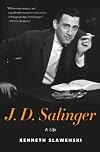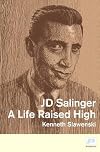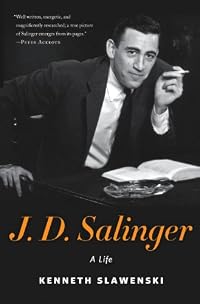
J.D. Salinger: A Life
by Kenneth Slawenski
On This Page
Description
One of the most popular and mysterious figures in American literary history, J.D. Salinger eluded fans and journalists for most of his life. Now comes a new biography. Filled with new information and revelations, garnered from countless interviews, letters, and public records, this work presents his extraordinary life that spanned nearly the entire twentieth century. The author explores Salinger's privileged youth, long obscured by misrepresentation and rumor, revealing the brilliant, show more sarcastic, vulnerable son of a disapproving father and doting mother and his entrance into a social world where Gloria Vanderbilt dismissively referred to him as a Jewish boy from New York. Here too are accounts of Salinger's first broken heart (Eugene O'Neill's daughter, Oona, left him for the much older Charlie Chaplin) and the devastating World War II service of which he never spoke and which haunted him forever. This work features all the dazzle of his early writing successes, his dramatic encounters with luminaries from Ernest Hemingway to Laurence Olivier to Elia Kazan, his surprising office intrigues with famous New Yorker editors and writers, and the stunning triumph of The Catcher in the Rye, which would both make him world famous and hasten his retreat into the hills of New Hampshire. Whether it is revealing the facts of his hasty, short lived first marriage or his lifelong commitment to Eastern religion, which would dictate his attitudes toward sex, nutrition, solitude, and creativity, this biography is Salinger's unforgettable story in full. show lessTags
Recommendations

















Member Reviews
Considering the extent to which J.D. Salinger withdrew from the public eye and guarded his privacy for most of his life, much is known about him, as Kenneth Slawenski proves in his 2010 biography “J.D. Salinger: A Life.”
Salinger wasn't always so withdrawn. As a young man he was popular with women and someone who went out for a drink with the guys. Slawenski identifies several factors that eventually led to his isolation in Cornish, N.H., and his decision to continue writing but to cease publishing his work. His experiences in Europe during World War II affected him greatly. He wasn't the only veteran who pulled back within himself after the war ended. Even on the front lines, Salinger worked on his short stories, and many of his show more stories, including "For Esme — With Love and Squalor," were heavily influenced by the war.
Then there was the The New Yorker, which for several years exclusively published his stories. The magazine has long emphasized the importance of the story over its author, something Salinger took to heart. Removing his photograph from “The Catcher in the Rye” in later editions was just one way he attempted to make himself secondary to his work.
Eventually he carried this to the extreme by writing his stories but then hiding them away. This decision was fueled by his devotion to Zen Buddhism and meditation. Prayer, Slawenski writes, became his primary ambition. The popularity of his books provided him with enough income to live on and support his family, but as a virtual hermit, especially after his wife (the second of three and the mother of his children) left him, he didn't need much money.
Yet for someone who tried to put his work ahead of himself, Salinger couldn't stop putting himself and his beliefs front and center in that work. His characters, from Holden Caulfield to Buddy Glass, speak for him, thus giving a biographer plenty to work with. Slawenski discusses in detail every published story. Many of these stories Salinger refused to have reprinted and thus are difficult for fans to find.
The writer's life intersected with those of other famous people in surprising ways. Salinger's first love, the daughter of playwright Eugene O'Neill, married Charlie Chaplin instead, During the war, Salinger would sometimes slip away to compare notes about writing with war correspondent Ernest Hemingway. His best friend in Cornish was the esteemed Judge Learned Hand. Jackie Kennedy once called him on the phone, trying to persuade him to come to the White House.
The irony of Salinger's withdrawal from the world is that it made him, not his fiction, the public's primary focus. Any Salinger sighting became news.
Salinger died just as Slawenski was wrapping up this biography. This was fortunate for the biographer in that it allowed him to tell a more complete story, but it also saved him, an obvious Salinger fan, from becoming another Salinger enemy, yet another person invading the privacy of someone who had had enough of fame and just wanted to be left alone. show less
Salinger wasn't always so withdrawn. As a young man he was popular with women and someone who went out for a drink with the guys. Slawenski identifies several factors that eventually led to his isolation in Cornish, N.H., and his decision to continue writing but to cease publishing his work. His experiences in Europe during World War II affected him greatly. He wasn't the only veteran who pulled back within himself after the war ended. Even on the front lines, Salinger worked on his short stories, and many of his show more stories, including "For Esme — With Love and Squalor," were heavily influenced by the war.
Then there was the The New Yorker, which for several years exclusively published his stories. The magazine has long emphasized the importance of the story over its author, something Salinger took to heart. Removing his photograph from “The Catcher in the Rye” in later editions was just one way he attempted to make himself secondary to his work.
Eventually he carried this to the extreme by writing his stories but then hiding them away. This decision was fueled by his devotion to Zen Buddhism and meditation. Prayer, Slawenski writes, became his primary ambition. The popularity of his books provided him with enough income to live on and support his family, but as a virtual hermit, especially after his wife (the second of three and the mother of his children) left him, he didn't need much money.
Yet for someone who tried to put his work ahead of himself, Salinger couldn't stop putting himself and his beliefs front and center in that work. His characters, from Holden Caulfield to Buddy Glass, speak for him, thus giving a biographer plenty to work with. Slawenski discusses in detail every published story. Many of these stories Salinger refused to have reprinted and thus are difficult for fans to find.
The writer's life intersected with those of other famous people in surprising ways. Salinger's first love, the daughter of playwright Eugene O'Neill, married Charlie Chaplin instead, During the war, Salinger would sometimes slip away to compare notes about writing with war correspondent Ernest Hemingway. His best friend in Cornish was the esteemed Judge Learned Hand. Jackie Kennedy once called him on the phone, trying to persuade him to come to the White House.
The irony of Salinger's withdrawal from the world is that it made him, not his fiction, the public's primary focus. Any Salinger sighting became news.
Salinger died just as Slawenski was wrapping up this biography. This was fortunate for the biographer in that it allowed him to tell a more complete story, but it also saved him, an obvious Salinger fan, from becoming another Salinger enemy, yet another person invading the privacy of someone who had had enough of fame and just wanted to be left alone. show less
Wow! This bio really grabbed me. I wasn't sure if I'd like it, because I generally prefer memoirs, which are so much more personal. Biographies are often too much the opposite - impersonal, scholarly, cold. But in the absence of a memoir from the always reclusive and now departed Salinger, I found Slawenski's biography to be the next best thing. Because Slawenski made it personal, warm, empathetic. There is certainly no doubt that he has been an avid fan of Salinger for most of his life. And fan-dom runs the obvious risk of getting in the way of effective biography-writing. And I'm not sure even Slawenski himself would argue that his treatment of Salinger is completely objective. Because it's not. The NY Times review of the book called show more it "reverent," which may be a bit too strong. I'd call it respectful.
I know there have been quite a few other biographies and critical studies written on Salinger and his work. Slawenski has probably read all of them, and cites several in his own book. But this is the first real bio of Salinger I've read, and I absolutely loved it, probably because the book comes across as a real labor of love. Whenever a writer is truly passionate about his subject, I think it adds something. I know others have called J.D. SALINGER: A LIFE "hagiography." But Salinger was no saint. I know that. (I've read the Maynard memoir, as well as Peggy Salinger's DREAM CATCHER, a memoir with plenty of unflattering dirt about her famous father.) And so does Slawenski. But his respect for the man and his work come through clearly. Slawenski has said he worked on the book for nearly eight years - while Salinger was still very much alive. Perhaps he was hoping, even if only subconsciously, for some sign of tacit approval from the famous recluse. Considering Salinger's litiginous reactions to previous biographies and books about him, it seems highly unlikely. In any case, Salinger died about the same time Slawenski's book was published.
Here are some of the things I really liked about the Slawenski bio. (1) The blow-by-blow accounts of Salinger's early attempts at fiction, as well as the detailed summaries of a couple dozen of the early uncollected stories, as well as mentions of other stories that were apparently lost. (2) The detailed tracing of Salinger's wartime experiences. (3) The astute and careful analyses of the books. CATCHER IN THE RYE I didn't need too much on, but those later ones about the oh-so-precocious Glass children were another matter entirely. I did read those books, but I never claimed to actually "get" what they were all about. Slawenski etrapolates them all and also gives an in-depth look at Salinger's nearly life-long fascination with Easter mysticism and philosophies. Stuff that made him, in the eyes of many, well, weird. I remember a grad school assignment back in 1970 of finding and reading "Hapworth 16, 1924." Well, I really did read the whole thing, but I can't say I liked it, or understood what Salinger was driving at. And I kinda got the impression even Slawenski - devoted fan that he is - was a bit flummoxed by that last work. He commented that even the critics pretty much ignored it when it was first published in The New Yorker. The thing is, I appreciated the way Slawenski did do the research and did explain what Salinger seemed to be saying in all those less-understandable pieces. And (4) he brought me back to Holden Caulfield again. Yes, I reread CATCHER yet again, while I was reading the bio. The two books make great bedfellows. Like millions of other people, I've always loved Holden Caulfield, and I've learned a little more about him - and about myself - every time I read the book, which has been around now, continuously in print, for an amazing sixty years! Liked Slawenski, I first read the book at the age of 14. I'm 67 now and have probably read it at least a half a dozen times since then. It keeps getting better. And that is Salinger's genius. If he had never written another book, his place in American literature would have been just as secure.
There are plenty of reasons to love this biography, but I'll let other people find their own reasons. Hagiography? Maybe. But so what? Kenneth Slawenski has done his homework, and has given us perhaps one of the most comprehensive looks at the life and work of J.D. Salinger yet written. I for one am grateful.
Long live Holden Caulfield! show less
I know there have been quite a few other biographies and critical studies written on Salinger and his work. Slawenski has probably read all of them, and cites several in his own book. But this is the first real bio of Salinger I've read, and I absolutely loved it, probably because the book comes across as a real labor of love. Whenever a writer is truly passionate about his subject, I think it adds something. I know others have called J.D. SALINGER: A LIFE "hagiography." But Salinger was no saint. I know that. (I've read the Maynard memoir, as well as Peggy Salinger's DREAM CATCHER, a memoir with plenty of unflattering dirt about her famous father.) And so does Slawenski. But his respect for the man and his work come through clearly. Slawenski has said he worked on the book for nearly eight years - while Salinger was still very much alive. Perhaps he was hoping, even if only subconsciously, for some sign of tacit approval from the famous recluse. Considering Salinger's litiginous reactions to previous biographies and books about him, it seems highly unlikely. In any case, Salinger died about the same time Slawenski's book was published.
Here are some of the things I really liked about the Slawenski bio. (1) The blow-by-blow accounts of Salinger's early attempts at fiction, as well as the detailed summaries of a couple dozen of the early uncollected stories, as well as mentions of other stories that were apparently lost. (2) The detailed tracing of Salinger's wartime experiences. (3) The astute and careful analyses of the books. CATCHER IN THE RYE I didn't need too much on, but those later ones about the oh-so-precocious Glass children were another matter entirely. I did read those books, but I never claimed to actually "get" what they were all about. Slawenski etrapolates them all and also gives an in-depth look at Salinger's nearly life-long fascination with Easter mysticism and philosophies. Stuff that made him, in the eyes of many, well, weird. I remember a grad school assignment back in 1970 of finding and reading "Hapworth 16, 1924." Well, I really did read the whole thing, but I can't say I liked it, or understood what Salinger was driving at. And I kinda got the impression even Slawenski - devoted fan that he is - was a bit flummoxed by that last work. He commented that even the critics pretty much ignored it when it was first published in The New Yorker. The thing is, I appreciated the way Slawenski did do the research and did explain what Salinger seemed to be saying in all those less-understandable pieces. And (4) he brought me back to Holden Caulfield again. Yes, I reread CATCHER yet again, while I was reading the bio. The two books make great bedfellows. Like millions of other people, I've always loved Holden Caulfield, and I've learned a little more about him - and about myself - every time I read the book, which has been around now, continuously in print, for an amazing sixty years! Liked Slawenski, I first read the book at the age of 14. I'm 67 now and have probably read it at least a half a dozen times since then. It keeps getting better. And that is Salinger's genius. If he had never written another book, his place in American literature would have been just as secure.
There are plenty of reasons to love this biography, but I'll let other people find their own reasons. Hagiography? Maybe. But so what? Kenneth Slawenski has done his homework, and has given us perhaps one of the most comprehensive looks at the life and work of J.D. Salinger yet written. I for one am grateful.
Long live Holden Caulfield! show less
When I saw this biography I thought of two things. How long ago has it been since I read "Catcher in the Rye"? Secondly what did I really know about J.D. Salinger? Not much for the second.
Slawenski goes in to to considerable depth in the biography revealing a man of intense principal and privacy. Salinger would no doubt have not approved to be so exposed to the public. Whether is was the man or his life experience that caused this protective lifestyle was not clear. His war experience certainly played into it.
What I found intriguing was the religious path he eventually took, one based in an Eastern theme coupled with a strong god centered principal.
Amazing to learn he did not publish anything in over 40 years living most of his career show more off the enormous success of his earliest novel "Catcher in the Rye" and to a lesser extent "Franny and Zooey."
Dedicating the remainder of his life to protect his privacy drove the adoring public to believe they needed to know more of what he cared not to divulge. show less
Slawenski goes in to to considerable depth in the biography revealing a man of intense principal and privacy. Salinger would no doubt have not approved to be so exposed to the public. Whether is was the man or his life experience that caused this protective lifestyle was not clear. His war experience certainly played into it.
What I found intriguing was the religious path he eventually took, one based in an Eastern theme coupled with a strong god centered principal.
Amazing to learn he did not publish anything in over 40 years living most of his career show more off the enormous success of his earliest novel "Catcher in the Rye" and to a lesser extent "Franny and Zooey."
Dedicating the remainder of his life to protect his privacy drove the adoring public to believe they needed to know more of what he cared not to divulge. show less
Who was J. D. Salinger? Few, if any, American writers have provoked the same manic level of curiosity about their personal lives as J. D. Salinger did, much to his perpetual dismay and despite his deliberate and often extreme efforts to withdraw from such curious scrutiny. In this riveting biography, Slawenski (a professed Salinger devotee) respectfully provides a balanced and unsensationalized account of Salinger's life and work. Even so, it's doubtful that Salinger would've approved of the book, given his unwavering belief that a writer's work alone should speak for the writer, and that the details of said writer's life are frankly no one else's business. Salinger has now passed on, though, and I think this book will go far in show more dispelling some of the myths surrounding the man. The arc of Salinger's published writing career and its abrupt end in the mid-1960s has always intrigued me, but I only had a surface understanding of why Salinger had acted the way that he did. Slawenski delves into Salinger's Army career, his work habits, his religious beliefs, his popularity and resulting gradual retreat from society, his relationship to both his characters and his fellow humans, and out of it all comes a sympathetic portrait of a gifted artist almost wrecked by his own fame. Here was a man who just wanted to write and be left alone to do it, who respected his readers but strove to maintain a professional distance from them, and who did not relate well to other people, yet in certain ways relied on them a lot. Salinger seemed to inherently trust people at first, and yet as they came to disappoint him he moved swiftly and viciously to excise them from his life. This happened over and over with editors, publishers, friends, and lovers. At the end of his life, there were few left. Perhaps Salinger's reactions to his sudden fame seem extreme, but it's really hard to say. Many people have been destroyed or nearly so by their own launches into the spotlight. It must be incredibly stressful to live under such a microscope. We live in a culture today where so many people expect to know, almost as a right, every last detail about the personal lives of public figures. And now the Web makes it even easier and faster for the floodgates of speculation and rumor to open and spill forth across the screens of eager fans (or birdwatchers, as Salinger called them). One can only guess that had the height of Salinger's fame occurred in current times, he would've been even more beside himself with rage at the world. In the end, however, it's Salinger's published works that now live on beyond the man himself. Given how enraptured he was by his own characters, how absorbed he was in the crafting of his fiction, it is in those printed words where we are likely to learn the most about Salinger. After all, those words are what he intended for us as readers to focus on all along. show less
Considering that Slawenski is an official fan and has run a Salinger fan site for years, it's better than expected. Funny thing, tho: I haven't closely followed Salinger news and haven't read the short stories or even Catcher in many years, yet there is very little new that I learned about Salinger's life from this book.
More than ten years ago, I read Ian Hamilton's book, so I recalled the essentials of his childhood. Slawenski fails to explain that while he heavily relies on Salinger letters--not that there are anywhere near enough footnotes--he can't quote extensively. Of course Hamilton explains that issue well because Salinger prevented initial publication and brought the publisher to court--leading to a groundbreaking copyright show more case; the resulting ruling: an author owns the copyright to his or her own letters. Yes, even when the recipients had deposited or sold letters to libraries. So Hamilton had to rewrite, paraphrasing and summarizing formerly quoted material.
Second source: I had read Peggy Salinger's book, Dreamcatcher, a few years ago. Hadn't read Maynard's memoir but it got enough coverage that I think I know the salient details.
Signs of fandom: Slawenski never mentions Peggy's book in the text (tho some of the footnotes lead to it) and her and her actor brother's post-childhood gets about one sentence. Even Matthew's acting career isn't mentioned. Similarly, just a few sentences about the Maynard interlude in Salinger's late middle age. Perhaps the pursuit of an 18 year-old virgin college freshman needs a little examination? Perhaps something of the substance of her NYT article that caught Salinger's attention? That she was still a virgin when she left Salinger after a few months or years? Peggy's memories of the slightly older Joyce? Nothing either about ex-wife Claire's period as a "Mrs. Robinson" while finally getting a degree at Dartmouth, as told by Peggy.
While I already knew from Peggy's book that Salinger had an especially gruesome war, Slawenski fills in some blanks. Whew: from D Day through the Battle of the Bulge: a straight year of horror. "During June 1944, the 12th Infantry Regiment lost 76 percent of its officers and 63 percent of its enlisted men." No wonder he had post-traumatic stress. And of course it illuminates Salinger's obsession with the innocence of childhood.
I don't suppose Slawenski devotes more than 20 pages to WW2 and the earlier year in Europe but it does add something. Slawenski's belief that Salinger probably hasn't written about his combat experiences seems about right. It does seem that there are/were still stories from that period about peripheral experiences. It is tempting to think about stories inspired by JDS's year, 1938, in Poland and Austria. There is an uncollected story (used to be on line), A Girl I Once Knew, that was inspired by Jewish girl and her family that he lived with in Vienna; they all perished.
We also learn a little more about Sylvia, the German woman Salinger was briefly married to and even brought home. (Despite Salinger's job as a German and French interrogator of suspected Nazis, collaborators, etc., rumors that Syvia was such a suspect don't appear to bear addressing.). An opthamologist, she eventually emigrated to Michigan and died a few years ago. Did Slawenski or anyone else ever attempt to interview her? How was she even "discovered"? That's the kind of detail Slawenski omits. Come to think of it, I don't think he has any primary sources but is diligent about tracking down all the secondary ones, like records of Salinger's regiment.
The Sylvia subject brings me to Peggy's book and why fans shouldn't write bios. You need some pretense of non-partisanship--that you can admire someone's work and still acknowledge severe flaws. Peggy is no literary writer. I'm not sure she had even read much of her father's work. Once picking up mail at the post office with her father, there was a letter from Sylvia: Salinger threw it away w/o reading it, explaining to young Peggy that when he was done with someone, he was done, Peggy says. She knew that would be true of her relationship with her father once Dreamcatcher was published: He would never speak to her again. In her 20s, working a blue-collar job, married to a karate instructor (a black guy, fwiw) ... she really had to make it on her own. Her father didn't believe in paying for college, she says. Slawenski notes, as Peggy did, that upon divorce her mother got $8,000 a year in alimony and, perhaps,a little additional child support. $8,000 even in the late 1960s?! Doesn't that suggest a skinflint? A vindictive man?
A better biography would point out the contrast with Salinger's supposedly life-long dedication to Vedanta. Where is the compassion? Peggy gave the impression that her father's spiritual pursuits changed over time. (Seems to me that neighbors recalled Salinger showing up for a public meat-eating event.) There should be more about Vedanta and Buddhism and how these beliefs permeate Nine Stories and the final published ones, but there is something to go on here. I will look at Nine Stories anew and perhaps even Raise High the Roofbeam, Carpenters. show less
More than ten years ago, I read Ian Hamilton's book, so I recalled the essentials of his childhood. Slawenski fails to explain that while he heavily relies on Salinger letters--not that there are anywhere near enough footnotes--he can't quote extensively. Of course Hamilton explains that issue well because Salinger prevented initial publication and brought the publisher to court--leading to a groundbreaking copyright show more case; the resulting ruling: an author owns the copyright to his or her own letters. Yes, even when the recipients had deposited or sold letters to libraries. So Hamilton had to rewrite, paraphrasing and summarizing formerly quoted material.
Second source: I had read Peggy Salinger's book, Dreamcatcher, a few years ago. Hadn't read Maynard's memoir but it got enough coverage that I think I know the salient details.
Signs of fandom: Slawenski never mentions Peggy's book in the text (tho some of the footnotes lead to it) and her and her actor brother's post-childhood gets about one sentence. Even Matthew's acting career isn't mentioned. Similarly, just a few sentences about the Maynard interlude in Salinger's late middle age. Perhaps the pursuit of an 18 year-old virgin college freshman needs a little examination? Perhaps something of the substance of her NYT article that caught Salinger's attention? That she was still a virgin when she left Salinger after a few months or years? Peggy's memories of the slightly older Joyce? Nothing either about ex-wife Claire's period as a "Mrs. Robinson" while finally getting a degree at Dartmouth, as told by Peggy.
While I already knew from Peggy's book that Salinger had an especially gruesome war, Slawenski fills in some blanks. Whew: from D Day through the Battle of the Bulge: a straight year of horror. "During June 1944, the 12th Infantry Regiment lost 76 percent of its officers and 63 percent of its enlisted men." No wonder he had post-traumatic stress. And of course it illuminates Salinger's obsession with the innocence of childhood.
I don't suppose Slawenski devotes more than 20 pages to WW2 and the earlier year in Europe but it does add something. Slawenski's belief that Salinger probably hasn't written about his combat experiences seems about right. It does seem that there are/were still stories from that period about peripheral experiences. It is tempting to think about stories inspired by JDS's year, 1938, in Poland and Austria. There is an uncollected story (used to be on line), A Girl I Once Knew, that was inspired by Jewish girl and her family that he lived with in Vienna; they all perished.
We also learn a little more about Sylvia, the German woman Salinger was briefly married to and even brought home. (Despite Salinger's job as a German and French interrogator of suspected Nazis, collaborators, etc., rumors that Syvia was such a suspect don't appear to bear addressing.). An opthamologist, she eventually emigrated to Michigan and died a few years ago. Did Slawenski or anyone else ever attempt to interview her? How was she even "discovered"? That's the kind of detail Slawenski omits. Come to think of it, I don't think he has any primary sources but is diligent about tracking down all the secondary ones, like records of Salinger's regiment.
The Sylvia subject brings me to Peggy's book and why fans shouldn't write bios. You need some pretense of non-partisanship--that you can admire someone's work and still acknowledge severe flaws. Peggy is no literary writer. I'm not sure she had even read much of her father's work. Once picking up mail at the post office with her father, there was a letter from Sylvia: Salinger threw it away w/o reading it, explaining to young Peggy that when he was done with someone, he was done, Peggy says. She knew that would be true of her relationship with her father once Dreamcatcher was published: He would never speak to her again. In her 20s, working a blue-collar job, married to a karate instructor (a black guy, fwiw) ... she really had to make it on her own. Her father didn't believe in paying for college, she says. Slawenski notes, as Peggy did, that upon divorce her mother got $8,000 a year in alimony and, perhaps,a little additional child support. $8,000 even in the late 1960s?! Doesn't that suggest a skinflint? A vindictive man?
A better biography would point out the contrast with Salinger's supposedly life-long dedication to Vedanta. Where is the compassion? Peggy gave the impression that her father's spiritual pursuits changed over time. (Seems to me that neighbors recalled Salinger showing up for a public meat-eating event.) There should be more about Vedanta and Buddhism and how these beliefs permeate Nine Stories and the final published ones, but there is something to go on here. I will look at Nine Stories anew and perhaps even Raise High the Roofbeam, Carpenters. show less
Kenneth Slawenski presents life events and artistic productions in a way that is consistent with J. D. Salinger’s idea that the writer should not get between the work and the reader’s experience. Slawenski does not attempt to reduce the creativity of the short stories, novellas, and novel by making amateur psychiatric interpretation of the relationship between the author’s personality and his publications. Slawenski makes connections in time: what Salinger was doing in school, in the Army, and in his social interactions and what he wrote during those times. The biography clearly separates Salinger’s experiences and memories from his imagination. For example, a short story about war is very different from Salinger’s specific show more memories of the battles in Hurtgen Forest, more emotionally powerful and less susceptible to rationality.
The increasing spirituality of Salinger described in the book as he developed as a person and an artist is embedded in his stories not explained by them. It is interesting that spirituality and creativity actually increased Salinger’s reclusiveness leaving what he considered to be almost perfect art as the communication between his readers and himself. Readers could be greatly affected by the art but not the man, his imagination not his personal thoughts and behaviors. When fans and journalists attempted to break through the lines of his work seeking the mystical man behind them, Salinger deliberately disillusioned them about himself and his characters with his final published work, Hapworth 16, 1924.
World War II greatly affected Salinger. He came ashore at Normandy on D-Day and served in the deadly battles in Hurtgen Forest embedded with the 4th Infantry Division. Most men in the division died, but Salinger managed to walk out of the combat area with the survivors. The important information here is that Salinger was protected because of his role in the Counter Intelligence Corps (CIC). His job was to find, arrest, and interrogate soldiers in his unit who were subversive to the war effort. Also, he was valuable as a CIC sergeant because of his language skills and training in interrogating suspected Nazis living secretly in Division captured areas. He certainly saw mayhem and experienced the constant fear of impending death in the 4th Division, but without the same level of fighting risk as his fellow combat infantrymen. He had the opportunity to observe the emotions and motives of people who were experiencing extreme stress.
Slawenski’s excellent biography indicates that there are personal letters and many pages of personal writing produced after Hapworth that were never meant for publication. As with his acquaintance Ernest Hemingway, perhaps such personal writing will be published and ultimately read by many a suitable period after his death. I read such letters and work of EH and I probably will do the same with the secret writing of JDS. show less
The increasing spirituality of Salinger described in the book as he developed as a person and an artist is embedded in his stories not explained by them. It is interesting that spirituality and creativity actually increased Salinger’s reclusiveness leaving what he considered to be almost perfect art as the communication between his readers and himself. Readers could be greatly affected by the art but not the man, his imagination not his personal thoughts and behaviors. When fans and journalists attempted to break through the lines of his work seeking the mystical man behind them, Salinger deliberately disillusioned them about himself and his characters with his final published work, Hapworth 16, 1924.
World War II greatly affected Salinger. He came ashore at Normandy on D-Day and served in the deadly battles in Hurtgen Forest embedded with the 4th Infantry Division. Most men in the division died, but Salinger managed to walk out of the combat area with the survivors. The important information here is that Salinger was protected because of his role in the Counter Intelligence Corps (CIC). His job was to find, arrest, and interrogate soldiers in his unit who were subversive to the war effort. Also, he was valuable as a CIC sergeant because of his language skills and training in interrogating suspected Nazis living secretly in Division captured areas. He certainly saw mayhem and experienced the constant fear of impending death in the 4th Division, but without the same level of fighting risk as his fellow combat infantrymen. He had the opportunity to observe the emotions and motives of people who were experiencing extreme stress.
Slawenski’s excellent biography indicates that there are personal letters and many pages of personal writing produced after Hapworth that were never meant for publication. As with his acquaintance Ernest Hemingway, perhaps such personal writing will be published and ultimately read by many a suitable period after his death. I read such letters and work of EH and I probably will do the same with the secret writing of JDS. show less
A reasonably competent biography, overall quite favorable in its view of Salinger. One major problem is that Slawenski is determined to summarize and explicate almost every Salinger work. This becomes tedious, and it is also questionable why one would want Slawenski's insights on all of these works. In a way, this is a Cliff's Notes of Salinger intermixed with Salinger's life story. Due to the paucity of direct sources for much of Salinger's life, Slawenski is forced in many cases to rely on what likely might have happened. This works fairly well in the extensive coverage of Salinger's WW II service. If we cannot know for sure Salinger's details, then knowledge about the campaigns his units were involved in is a reasonable substitute. show more But in many other events in Salinger's life, Slawenski claims a particular version is a myth, and then declares that the "likely" version was such and such, without presenting sufficient evidence for his stated alternative. Many details about certain publishers and editors, especially at the New Yorker, which may appeal to those interested in that subject. Although the index is quite well done, the book would have benefited from also including some appendices with publication lists and time lines. show less
Members
- Recently Added By
Published Reviews
ThingScore 64
Although sometimes careless with language and facts, Slawenski unearths new details and provides a coherent narrative and an in-depth reading of Salinger's work and its links to his life. [...] However, these are minor objections to a welcome picture of one of the most singular characters in American letters.
added by GYKM
For this reader, the great achievement of Slawenski’s biography is its evocation of the horror of Salinger’s wartime experience. Despite Salinger’s reticence, Slawenski admirably retraces his movements and recreates the savage battles, the grueling marches and frozen bivouacs of Salinger’s war. [...] Though Slawenski adds to the record, Paul Alexander’s biography is, to my mind, show more more dramatically vivid and psychologically astute. show less
added by GYKM
"This volume, “J. D. Salinger: A Life,” which draws liberally from Salinger’s letters and a memoir by his daughter, Margaret, is flawed by a tendency to assume direct correspondences between the author’s life and work. And it retraces a lot of ground covered in earlier books by Ian Hamilton and Paul Alexander. Still, it does so without the sort of condescending and at times voyeuristic show more speculation that hobbled those earlier biographies, and it does an evocative job of tracing the evolution of Salinger’s work and thinking. " show less
added by lorax
Lists

Bibliography for How to be a Heroine
148 works; 12 members
Author Information

2 Works 346 Members
Awards and Honors
Awards
Common Knowledge
- Canonical title
- J.D. Salinger: A Life
- Original publication date
- 2010
- People/Characters
- J. D. Salinger; Claire Douglas; Margaret Salinger; Matthew Salinger; Joyce Maynard
- Related movies
- Rebel in the Rye (2017 | IMDb)
- Dedication
- to my mother
- Blurbers
- Ackroyd, Peter; Atlas, James; Kinsella, W.P.
- Disambiguation notice
- The U.S./Canadian edition of "J. D. Salinger: A Life" published by Random House on January 24, 2011 is the same book as "J. D. Salinger: A Life Raised High" published by Pomona Books in the U.K. on March 15, 2010.
Classifications
Statistics
- Members
- 342
- Popularity
- 92,046
- Reviews
- 10
- Rating
- (3.63)
- Languages
- English, German, Portuguese, Spanish
- Media
- Paper, Audiobook, Ebook
- ISBNs
- 18
- ASINs
- 3