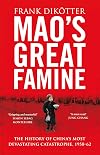
Mao's Great Famine: The History of China's Most Devastating Catastrophe, 1958-1962
by Frank Dikötter
People's Trilogy (2)
On This Page
Description
Between 1958 and 1962, China descended into hell. Mao Zedong threw his country into a frenzy with the Great Leap Forward, an attempt to catch up to and overtake Britain in less than 15 years The experiment ended in the greatest catastrophe the country had ever known, destroying tens of millions of lives. So opens Frank Dikötter's riveting, magnificently detailed chronicle of an era in Chinese history much speculated about but never before fully documented because access to Communist Party show more archives has long been restricted to all but the most trusted historians. A new archive law has opened up thousands of central and provincial documents that "fundamentally change the way one can study the Maoist era." Dikötter makes clear, as nobody has before, that far from being the program that would lift the country among the world's superpowers and prove the power of Communism, as Mao imagined, the Great Leap Forward transformed the country in the other direction. It became the site not only of "one of the most deadly mass killings of human history,"—at least 45 million people were worked, starved, or beaten to death—but also of "the greatest demolition of real estate in human history," as up to one-third of all housing was turned into rubble). The experiment was a catastrophe for the natural world as well, as the land was savaged in the maniacal pursuit of steel and other industrial accomplishments. In a powerful mesghing of exhaustive research in Chinese archives and narrative drive, Dikötter for the first time links up what happened in the corridors of power-the vicious backstabbing and bullying tactics that took place among party leaders-with the everyday experiences of ordinary people, giving voice to the dead and disenfranchised. His magisterial account recasts the history of the People's Republic of China. An unprecedented, groundbreaking history of China's Great Famine that recasts the era of Mao Zedong and the history of the People's Republic of China. Frank Dikötter is Chair Professor of Humanities at the University of Hong Kong and Professor of the Modern History of China at the School of Oriental and African Studies, University of London. He is a key proponent of studying the history of China in global perspective, and has published a series of innovative books, from his classic The Discourse of Race in Modern China (Univ. Stanford Press 1992) to the controversial Narcotic Culture: A History of Drugs in China (Univ. Chicago Press 2004). He lives in Hong Kong.. show less
Tags
Recommendations


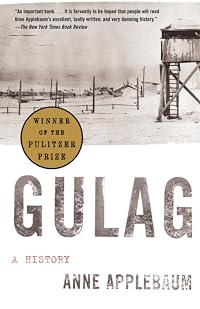

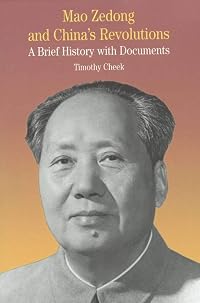
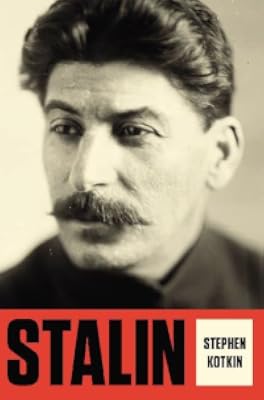
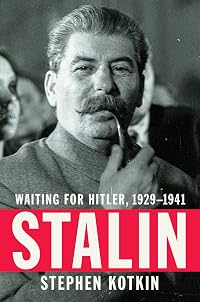










Member Recommendations
Member Reviews
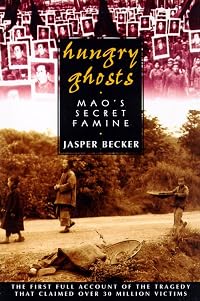
Historian Frank Dikötter is the author of a trilogy on the history of communism in China. This is the second volume and covers the years 1958-1962, the years of the Great Leap Forward and a devastating famine in which 45 million Chinese lost their lives. It is exceedingly well-researched and -documented, with a heavy reliance on provincial archives which were only recently opened at the time of his writing. It provides a very thorough and scholarly assessment and is a nice counterbalance to the journalistic history, Hungry Ghosts by Jasper Becker. Although the two books have few discrepancies, they approach the topic differently.
The first half of the book is a chronological step-by-step analysis of the Great Leap Forward and how it show more caused the massive famine. The second half of the book is organized by topic: agriculture, industry, housing, children, women, the elderly, accidents, disease, gulags, violence, etc. The last chapter discusses how the total number of deaths has been calculated and by whom. The epilogue discusses the author's sources, an important addition for those interested in the methodology. There is a 13 page bibliography and extensive endnote citations. The book won the Samuel Johnson Prize for Non-Fiction.
Despite it's scholarly nature, I found Mao's Great Famine compelling reading. Only twice did I find myself skimming due to dense statistical analysis. I would recommend it not only for it's authority on the subject, but for its readability. I intend to purchase the other two volumes of Dikötter's trilogy: Volume 1 on the Chinese Revolution and Volume 3 on the Cultural Revolution show less
The first half of the book is a chronological step-by-step analysis of the Great Leap Forward and how it show more caused the massive famine. The second half of the book is organized by topic: agriculture, industry, housing, children, women, the elderly, accidents, disease, gulags, violence, etc. The last chapter discusses how the total number of deaths has been calculated and by whom. The epilogue discusses the author's sources, an important addition for those interested in the methodology. There is a 13 page bibliography and extensive endnote citations. The book won the Samuel Johnson Prize for Non-Fiction.
Despite it's scholarly nature, I found Mao's Great Famine compelling reading. Only twice did I find myself skimming due to dense statistical analysis. I would recommend it not only for it's authority on the subject, but for its readability. I intend to purchase the other two volumes of Dikötter's trilogy: Volume 1 on the Chinese Revolution and Volume 3 on the Cultural Revolution show less
China’s government over the last decade or so has relaxed access restrictions to some of the county and provincial archives, allowing Dikotter to write this book. In it he tells the story of the Great Leap Forward.
In order to make China a major industrial super power, Mao Zedong conceived the idea of the Great Leap Forward. After overcoming opposition, this extreme, accelerated economic growth program of collectivism was implemented in late 1957/early 1958. The consequences were wide-ranging and completely disastrous.
The Great Leap Forward was not only an industrial and economic disaster, it was also an unprecedented catastrophe on a human level. Millions were left homeless, subject to violence, discrimination and forced labour. An show more estimated 40-45 million people died as a result of a 4 year long, man-made famine.
Mao’s Great Famine is extensively researched using party documents, which reveal the huge political pressure placed on cadres to achieve largely arbitrary party targets. These documents also show that the resultant violence to force villagers to work was routinely overlooked by higher ranking officials. Scattered throughout the book are anecdotes from surviving villagers, giving a human face to the mayhem.
Even after having read this book, I still can’t comprehend the magnitude of the famine, and the Great Leap Forward in general. The statistics are just massive. The refusal of Mao and the higher echelons of the party to see the realities of the situation meant that ill conceived and useless building projects went ahead, party members overrode traditional farming knowledge causing harvests to plummet, food commodities continued to be exported while the Chinese people starved. And even when there was grain to spare, there wasn’t enough transport, or even working transport to distribute it. Decision after decision snowballed into a series of events which only succeeded in compounding the situation and making it that much worse.
Children, the elderly, the sick or the disabled who were unable to work were not given their share of the allocated food rations. Neighbours, friends and families turned on each other, mothers had to choose which child to feed, mud and worse was eaten out of shear desperation. Living conditions often defied belief.
This is a harrowing book which focuses on the Great Leap Forward and the combination of decisions that lead to the famine and the unimaginable consequences for the ordinary Chinese people. But Dikotter also does a great job of placing this 4 year period into the context of Mao’s ambitions for China, the split in Sino-Soviet relations and the alliances within the communist countries, tracing the causes and resultant problems. He gives a sense of some of the personalities of main party leaders and writes in an accessible way.
Mao’s Great Famine highlights a part of Chinese history that seems to often get overlooked as it took place in the shadow of the Cultural Revolution. This is not easy read, but it is a worthwhile one. show less
In order to make China a major industrial super power, Mao Zedong conceived the idea of the Great Leap Forward. After overcoming opposition, this extreme, accelerated economic growth program of collectivism was implemented in late 1957/early 1958. The consequences were wide-ranging and completely disastrous.
The Great Leap Forward was not only an industrial and economic disaster, it was also an unprecedented catastrophe on a human level. Millions were left homeless, subject to violence, discrimination and forced labour. An show more estimated 40-45 million people died as a result of a 4 year long, man-made famine.
Mao’s Great Famine is extensively researched using party documents, which reveal the huge political pressure placed on cadres to achieve largely arbitrary party targets. These documents also show that the resultant violence to force villagers to work was routinely overlooked by higher ranking officials. Scattered throughout the book are anecdotes from surviving villagers, giving a human face to the mayhem.
Even after having read this book, I still can’t comprehend the magnitude of the famine, and the Great Leap Forward in general. The statistics are just massive. The refusal of Mao and the higher echelons of the party to see the realities of the situation meant that ill conceived and useless building projects went ahead, party members overrode traditional farming knowledge causing harvests to plummet, food commodities continued to be exported while the Chinese people starved. And even when there was grain to spare, there wasn’t enough transport, or even working transport to distribute it. Decision after decision snowballed into a series of events which only succeeded in compounding the situation and making it that much worse.
Children, the elderly, the sick or the disabled who were unable to work were not given their share of the allocated food rations. Neighbours, friends and families turned on each other, mothers had to choose which child to feed, mud and worse was eaten out of shear desperation. Living conditions often defied belief.
This is a harrowing book which focuses on the Great Leap Forward and the combination of decisions that lead to the famine and the unimaginable consequences for the ordinary Chinese people. But Dikotter also does a great job of placing this 4 year period into the context of Mao’s ambitions for China, the split in Sino-Soviet relations and the alliances within the communist countries, tracing the causes and resultant problems. He gives a sense of some of the personalities of main party leaders and writes in an accessible way.
Mao’s Great Famine highlights a part of Chinese history that seems to often get overlooked as it took place in the shadow of the Cultural Revolution. This is not easy read, but it is a worthwhile one. show less
This is goddamn terrifying.
The short narrative of the Great Leap Forward is that Mao enacted a series of policies from 1958-1962 which fostered crash industrial development on the Stalinist model. This led to communal farms, sale of all agricultural products, importing heavy machinery, and increasingly farfetched schemes such as 'backyard furnaces' to increase steel output, a 'pest-hunting campaign' which led millions of citizens chasing sparrows instead of planting crops, and the close-planting of crops to increase production - which as any farmer knows, leads to too many crops taking nutrients from the soil and a decrease in output.
All of these agricultural and industrial schemes contributed only to a part of the catastrophe. With show more the lack of food, civil society began to break down. Theft, violence, heavy-handed repression by local party cadres, black markets, massed refugees to Hong Kong, cannibalism, prison camps, executions for stealing food, and so forth. It is less a famine than a democide, a forced repression of the rural population at the expense of the cities, who lived on half rations and worked in filthy half-built polluting factories, to fulfill some mad dream, supported by a propaganda apparatus which sold 'The Big Lie'.
Propaganda promised fairy tales. Instead the Chinese people received nightmares.
A disaster on this sheer scale is incomprehensible. I should be feeling horror. Instead it is incomprehension. 18 million dead at the least, 70 million at the most. Just numbers. I can't imagine it. How. show less
The short narrative of the Great Leap Forward is that Mao enacted a series of policies from 1958-1962 which fostered crash industrial development on the Stalinist model. This led to communal farms, sale of all agricultural products, importing heavy machinery, and increasingly farfetched schemes such as 'backyard furnaces' to increase steel output, a 'pest-hunting campaign' which led millions of citizens chasing sparrows instead of planting crops, and the close-planting of crops to increase production - which as any farmer knows, leads to too many crops taking nutrients from the soil and a decrease in output.
All of these agricultural and industrial schemes contributed only to a part of the catastrophe. With show more the lack of food, civil society began to break down. Theft, violence, heavy-handed repression by local party cadres, black markets, massed refugees to Hong Kong, cannibalism, prison camps, executions for stealing food, and so forth. It is less a famine than a democide, a forced repression of the rural population at the expense of the cities, who lived on half rations and worked in filthy half-built polluting factories, to fulfill some mad dream, supported by a propaganda apparatus which sold 'The Big Lie'.
Propaganda promised fairy tales. Instead the Chinese people received nightmares.
A disaster on this sheer scale is incomprehensible. I should be feeling horror. Instead it is incomprehension. 18 million dead at the least, 70 million at the most. Just numbers. I can't imagine it. How. show less
I long refrained from picking up this book, not certain whether I could stomach the tales of horror and suffering. More than 45 million Chinese people died between 1958 and 1962, solely due to the mad superpower dreams of an uncaring dictator. This is a good account of one of the 20th century's largest human-induced catastrophes (ranking eleventh in Steven Pinker's historical atrocities rating).
The truly grizzly narrative thankfully only starts in part four. The first three parts of the book offer an introduction to how and why Mao pushed his country into this hasty and wasteful change. China had long been a Soviet client which supplied it with capital and technology. Mao wanted to break out of the Soviet embrace while continuing to show more develop China towards superpower status. As a measure to regain independence, China started to pay for Soviet technology with food. As China did not have a surplus of food, these exports deliberately triggered famine for millions of Chinese. A second source of hunger was the shift from agriculture to heavy industry. Lacking (foreign) experts, China started to build up an inefficient heavy industry that destroyed the environment and interrupted the Chinese food supply. The Chinese peasants, living in collective communes, were under the total control of the party bullies who controlled access to food. The level of violence willingly even eagerly inflicted on neighbors is a shocking testament to homo homini lupus, Chinese-style.
The perverse benchmarking of the party apparatchiks, fudging the numbers and hiding the truth, escalated and prolonged the disaster. The fault, however, rests with Mao who deliberately refused to listen and care. As Jung Chang argues, when the party finally forced him to stop, he designed the Cultural Revolution to punish them for their intervention. The suffering and death, as told in parts four to six, makes for an uncomfortable read as society's weakest suffered the most (part five: children, women, the elderly). Even the Soviets who knew about inflicting pain were shocked by the Chinese brutality and indifference to the plight of others. A truly dark chapter of human history that deserves wider acknowledgment. show less
The truly grizzly narrative thankfully only starts in part four. The first three parts of the book offer an introduction to how and why Mao pushed his country into this hasty and wasteful change. China had long been a Soviet client which supplied it with capital and technology. Mao wanted to break out of the Soviet embrace while continuing to show more develop China towards superpower status. As a measure to regain independence, China started to pay for Soviet technology with food. As China did not have a surplus of food, these exports deliberately triggered famine for millions of Chinese. A second source of hunger was the shift from agriculture to heavy industry. Lacking (foreign) experts, China started to build up an inefficient heavy industry that destroyed the environment and interrupted the Chinese food supply. The Chinese peasants, living in collective communes, were under the total control of the party bullies who controlled access to food. The level of violence willingly even eagerly inflicted on neighbors is a shocking testament to homo homini lupus, Chinese-style.
The perverse benchmarking of the party apparatchiks, fudging the numbers and hiding the truth, escalated and prolonged the disaster. The fault, however, rests with Mao who deliberately refused to listen and care. As Jung Chang argues, when the party finally forced him to stop, he designed the Cultural Revolution to punish them for their intervention. The suffering and death, as told in parts four to six, makes for an uncomfortable read as society's weakest suffered the most (part five: children, women, the elderly). Even the Soviets who knew about inflicting pain were shocked by the Chinese brutality and indifference to the plight of others. A truly dark chapter of human history that deserves wider acknowledgment. show less
This book chronicles the Great Leap Forward which in terms of casualties rivals the two world wars as the biggest man-made disaster in all of history. The author explains quite clearly just how dysfunctional Mao's communist dictatorship was. The party leadership had absolutely no grasp of how economic production could in practice be increased. Even worse, only a few of them (very slowly) came to understand the extent of their ignorance and the damage their absurd policies had wrought on the people. The mad dash for impressive statistics had no basis in reality. Massive amounts of grain were still being exported when the population was beginning to starve. Communist collectivization destroyed all work incentives, leaving violent coercion show more as the only means of getting anything done. And what was done usually made no economic sense whatsoever. Crops rotted in the fields while malnourished people dug canals and reservoirs. Tools and utensils were melted down to "produce" iron which was of such worthless quality that it had to be discarded immediately.
The general history of this period has been told many times before. What separates this account from previous ones is that the author has perused a huge number of detailed and even personal accounts of these years, especially in the countryside which suffered the most. Many chapters of this book are in fact nothing more than an extended list of stories about human suffering. This certainly brings home the extent of the catastrophe more vividly than a mere death toll, but I still thought the listing was a bit excessive. I would have preferred a shift in emphasis towards how the party machine guided this mad destruction. Nevertheless, this book is certainly worthwhile for anyone who wants to understand the realities of modern Chinese history. show less
The general history of this period has been told many times before. What separates this account from previous ones is that the author has perused a huge number of detailed and even personal accounts of these years, especially in the countryside which suffered the most. Many chapters of this book are in fact nothing more than an extended list of stories about human suffering. This certainly brings home the extent of the catastrophe more vividly than a mere death toll, but I still thought the listing was a bit excessive. I would have preferred a shift in emphasis towards how the party machine guided this mad destruction. Nevertheless, this book is certainly worthwhile for anyone who wants to understand the realities of modern Chinese history. show less
This book has some amazing sources and makes a horrific story sound even more horrific, but still fascinating. It tries to link the bureaucratic decisions from Beijing to local decisions made by cadres and individual decisions made by Chinese citizens. He argues that the Great Leap Forward was not just a bureaucratic overreach. It was aided and abetted by bullying cadres and by a near psychopathic Mao. Individual citizens were learning to game the system to survive, but in doing so they made the overall crisis worse.
This is the most comprehensive work on the Great Leap Forward I have read. It isn't an easy read because Dikotter has so much information, but it is convincing. And it fits in the recent trend of revising the image of Mao show more from a brutal dictator to a criminally inhumane monster that might actually have been worse than US propaganda about him suggested at the time.
There are several aspects of Dikotter's account that stand out. The first is how the GLF connects to international events. He places it squarely within the Sino-Soviet split, as both a cause and effect. The Soviets thought the GLF was a mistake and so were further alienated from the Chinese, while Mao thought this was his chance to show the world that China was developing more than the Soviets. To that end, he continued to export grain at lower than production cost even though there wasn't enough for the peasants to eat. He callously suggested that if they were loyal, they would want to protect China's prestige by honoring its commitments.
He also goes to great lengths, painful lengths in fact, to show the human suffering caused by the GLF. He shows that it wasn't just pressure from the top, but personal decisions at the bottom that enhance the catastrophe of the GLF. Reading this part of the book was a little like visiting the Holocaust Museum in DC. It was very emotionally draining.
I recommend this book for specialist in China or political scientists/economists interested in a totalitarian state trying to exercise its authority. But it might be a bit much for the average reader. show less
This is the most comprehensive work on the Great Leap Forward I have read. It isn't an easy read because Dikotter has so much information, but it is convincing. And it fits in the recent trend of revising the image of Mao show more from a brutal dictator to a criminally inhumane monster that might actually have been worse than US propaganda about him suggested at the time.
There are several aspects of Dikotter's account that stand out. The first is how the GLF connects to international events. He places it squarely within the Sino-Soviet split, as both a cause and effect. The Soviets thought the GLF was a mistake and so were further alienated from the Chinese, while Mao thought this was his chance to show the world that China was developing more than the Soviets. To that end, he continued to export grain at lower than production cost even though there wasn't enough for the peasants to eat. He callously suggested that if they were loyal, they would want to protect China's prestige by honoring its commitments.
He also goes to great lengths, painful lengths in fact, to show the human suffering caused by the GLF. He shows that it wasn't just pressure from the top, but personal decisions at the bottom that enhance the catastrophe of the GLF. Reading this part of the book was a little like visiting the Holocaust Museum in DC. It was very emotionally draining.
I recommend this book for specialist in China or political scientists/economists interested in a totalitarian state trying to exercise its authority. But it might be a bit much for the average reader. show less
One man’s utopia is another man’s dystopia. Utopia is a dream we aspire; an equilibrium that dignifies all human survival. When faultless notions embrace immorality and audacious obstinacy emitted from one solitary individual, an illusionary veil is fashioned camouflaging tyranny, torment and nightmarish endurance. On every occasion of my understanding Mao and his political explosion, I cannot help but to refer to my old frayed copy of Orwell’s 1984 blaring the ubiquitous caption:-"BIG BROTHER IS WATCHING YOU".
The Great Leap Forward or "China’s Economical Sputnik", whatever you may designate, was Mao’s calamitous infrastructure vehemently assembled on infinite human suffrage and radical collectivism. Mao reminds you of an show more overtly pushy anxious kid who would do anything just to get a pat on his back. The Great Famine paints a portrait of a murky hell endured by the Chinese for five uninterrupted years (1958-1962).The fact that one man can persuade a God-like authority to govern the free-will of individuals at the cost of their disintegrating corpses is enormously enraging. Mao’s obstinate pursuit to propel China into a superior industrial opulence uprooted the very essence of a country’s survival. A hallucination of profusion resulted not only in genocide but in cataclysmic damage to the agricultural, industrial and financial sectors of the country. Afflicted with starvation, dreadful diseases, disintegrated abodes and besmirched regulations; China became a mere crumb of existence laced with dreadfulness of boiling cadavers for fertilization purposes and impecunious villagers selling their offspring for a meager meal of steamed buns.
"Mass killings are not usually associated with Mao and the Great Leap Forward and China continues to benefit from a more favorable comparison with the devastation usually associated with Cambodia or the Soviet Russia."
Unofficial reports deduced a figure between 50-60 million deaths demarcating it to be communalist genocide. Amid the aftermath of the famine still claiming more lives Mao Zedong pronounced 'Cultural Revolution' in 1966.
Dikotter pens a transfixing and meticulous study of the demoralizing man-made tragedy that questions the authority of a single man and his right to vision himself as the redeemer beneath a garb of narcissist fanaticism and sycophancy. show less
The Great Leap Forward or "China’s Economical Sputnik", whatever you may designate, was Mao’s calamitous infrastructure vehemently assembled on infinite human suffrage and radical collectivism. Mao reminds you of an show more overtly pushy anxious kid who would do anything just to get a pat on his back. The Great Famine paints a portrait of a murky hell endured by the Chinese for five uninterrupted years (1958-1962).The fact that one man can persuade a God-like authority to govern the free-will of individuals at the cost of their disintegrating corpses is enormously enraging. Mao’s obstinate pursuit to propel China into a superior industrial opulence uprooted the very essence of a country’s survival. A hallucination of profusion resulted not only in genocide but in cataclysmic damage to the agricultural, industrial and financial sectors of the country. Afflicted with starvation, dreadful diseases, disintegrated abodes and besmirched regulations; China became a mere crumb of existence laced with dreadfulness of boiling cadavers for fertilization purposes and impecunious villagers selling their offspring for a meager meal of steamed buns.
"Mass killings are not usually associated with Mao and the Great Leap Forward and China continues to benefit from a more favorable comparison with the devastation usually associated with Cambodia or the Soviet Russia."
Unofficial reports deduced a figure between 50-60 million deaths demarcating it to be communalist genocide. Amid the aftermath of the famine still claiming more lives Mao Zedong pronounced 'Cultural Revolution' in 1966.
Dikotter pens a transfixing and meticulous study of the demoralizing man-made tragedy that questions the authority of a single man and his right to vision himself as the redeemer beneath a garb of narcissist fanaticism and sycophancy. show less
Members
- Recently Added By
Published Reviews
ThingScore 100
In the late 1950s, thousands of Chinese farmers starved to death while toiling on massive irrigation projects, under orders to meet Mao Zedong’s outlandish expectations for growth. Most laborers didn’t speak up because they feared the authorities would label them rightists.
Under the “Great Leap Forward,” as Mao called it, China was supposed to be able to catch up to Britain’s steel show more production in 15 years – an utterly unrealistic goal which led to a horrific famine and crisis. Villagers in one northern province called the projects “The Killings Fields,” an eerie presage of Pol Pot’s Cambodia. Heaps of bodies were dumped into ditches – as the world would later see done by the Khmer Rouge.
In Mao’s Great Famine, historian Frank Dikötter assembles a treasure chest of these historic facts, but more important, he strokes them together into a masterly and memorable story. He unearths astounding evidence of the violence carried out in the name of Maoism from 1958 to 1962 – a tragedy whose scope has been uncertain until recently, because the party had revealed its documents only to their most trusted historians. show less
Under the “Great Leap Forward,” as Mao called it, China was supposed to be able to catch up to Britain’s steel show more production in 15 years – an utterly unrealistic goal which led to a horrific famine and crisis. Villagers in one northern province called the projects “The Killings Fields,” an eerie presage of Pol Pot’s Cambodia. Heaps of bodies were dumped into ditches – as the world would later see done by the Khmer Rouge.
In Mao’s Great Famine, historian Frank Dikötter assembles a treasure chest of these historic facts, but more important, he strokes them together into a masterly and memorable story. He unearths astounding evidence of the violence carried out in the name of Maoism from 1958 to 1962 – a tragedy whose scope has been uncertain until recently, because the party had revealed its documents only to their most trusted historians. show less
added by kidzdoc
Frank Dikötter has written a masterly book that should be read not just by anybody interested in modern Chinese history but also by anybody concerned with the way in which a simple idea propagated by an autocratic national leader can lead a country to disaster, in this case to a degree that beggars the imagination.
The basic narrative of the great famine that hit the People's Republic around show more 1960 has been known outside China at least since Jasper Becker's groundbreaking 1996 account, Hungry Ghosts. Its claims were doubted by those who could not accept the sheer monstrous scale of the calamity visited on the Chinese people as a result of the Great Leap Forward launched by Mao in 1958 to propel China into the ranks of major industrial nations. But now Dikötter's painstaking research in newly opened local archives makes all too credible his estimate that the death toll reached 45 million people. show less
The basic narrative of the great famine that hit the People's Republic around show more 1960 has been known outside China at least since Jasper Becker's groundbreaking 1996 account, Hungry Ghosts. Its claims were doubted by those who could not accept the sheer monstrous scale of the calamity visited on the Chinese people as a result of the Great Leap Forward launched by Mao in 1958 to propel China into the ranks of major industrial nations. But now Dikötter's painstaking research in newly opened local archives makes all too credible his estimate that the death toll reached 45 million people. show less
added by kidzdoc
Lists

Books Read in 2019
4,052 works; 108 members

China / Hong Kong / Taiwan
25 works; 1 member
Author Information

Frank Dikotter is Professor of the Modern history of China at SOAS and Chair Professor of Humanities at the University of Hong Kong.
Awards and Honors
Awards
Distinctions
Notable Lists
Series

Common Knowledge
- Canonical title
- Mao's Great Famine: The History of China's Most Devastating Catastrophe, 1958-1962
- Original publication date
- 2010
- People/Characters
- Mao Zedong
- Important places
- China
- Important events
- Great Leap Forward; Cultural Revolution; Great Famine (China | 1959-1961)
- Epigraph
- 'Revolution is not a dinner party.'
Mao Zedong - First words
- Between 1958 and 1962, China descended into hell.
- Blurbers
- Chang, Jung; Montefiore, Simon Sebag
- Original language
- English
Classifications
- Genres
- History, Nonfiction, General Nonfiction, Politics and Government
- DDC/MDS
- 951.055 — History & geography History of Asia East Asia: China, Taiwan, Hong Kong, Korea History 1949- (People's Republic, 20th century) 1949-1959
- LCC
- HC430 .F3 .D55 — Social sciences Economic history and conditions Economic history and conditions By region or country
- BISAC
Statistics
- Members
- 987
- Popularity
- 26,619
- Reviews
- 20
- Rating
- (3.92)
- Languages
- 10 — Chinese, Danish, Dutch, English, Finnish, German, Korean, Portuguese (Portugal), Spanish, Swedish
- Media
- Paper, Audiobook, Ebook
- ISBNs
- 34
- ASINs
- 15