On This Page
Description
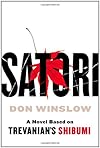
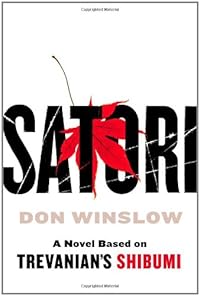
In a prequel to Trevanian's "Shibumi," amid the chaos of the Korean War, the CIA offers Nicholai Hel his freedom only if he kills the Soviet Union's Commissioner to China in Beijing, a mission that draws on all his strengths.Tags
Recommendations






















Member Reviews
Now, THIS is what I thought "Shibumi" was going to be like! All respect to Trevanian for creating Hel, but thanks to Winslow for using him correctly! This story comes after Nicholai has killed Kishikawa-san, his father figure, and is in prison for doing so. He makes a deal to get out, then his adventure begins in Japan, proceeds to China, and then ends up in Vietnam. (for me, China was my favorite part!) He has lots of people coming and going into his life, and he struggles to find out who is friend, who is foe, and who the heck Cobra is! All the while playing a dangerous game of Go in his mind! Nice, fast paced book with lots of action, suspense, and twists! I'd love to read another one of these - from Winslow!
In 1979 the then-mysterious Trevanian published Shibumi, which introduced the character of Nicholai Hel--assassin, Go master, world class lover, spelunker. Shibumi focuses on an incident that pulls Hel out of retirement for one last job and also tells the story of his unusual upbringing, but glosses over the years between. In 2007 Don Winslow, one of the most exciting and original voices in thrillers today, was approached by Hachette Books to take up the mantle of Trevanian and write the story of the beginning of Nicholai Hel's career, the portion of his life merely hinted at in the original book. The result is Satori.
Satori begins as Hel is released from the Japanese prison in which he's been held for three years by the Americans in show more solitary confinement. Hel, son of a German nobleman and a White Russian baroness in exile, is basically a man without a country. Although he had worked for the American government in the period immediately following the Second World War, he was later imprisoned by the Americans for killing--out of filial duty--his Japanese foster father, General Kishikawa, who was a prisoner of war. Hel was not imprisoned for the murder qua murder as much as for depriving the Americans of a vital--if still only theoretically potential--source of information. Hel is not being released because of his exemplary behavior as a prisoner (although, Hel, being Hel, has done nothing but put his time to good use, reading, meditating, exercising, teaching himself the Basque language, perfecting his mastery of Naked/Kill techniques) but rather, because he can be of use to U.S. covert operations.
They want to rebuild his face (horribly disfigured by a brutal beating received at the hands of frustrated American interrogators), give him a new identity, then send him out to assassinate the Soviet commissioner to Red China, Yuri Voroshenin. Cue the ominous music: Hel has a past connection to Voroshenin and long ago vowed revenge. He agrees to take the job, with the proviso that, in addition to the passport and monetary payment he's being offered, he also be provided with the names and addresses of the men who beat him so brutally at the beginning of his confinement.
The ensuing novel is as richly textured and erudite as its source. Winslow's mastery of the material--the philosophy and strategy of Go, international politics of the Cold War, and Japanese culture, to but skim the surface--is brilliant, and his depiction of the formative years of Nicholai Hel's professional life fits neatly into the mythology created for Hel by Trevanian. If Winslow's Hel is rather humorless as compared to Trevanian's, that can be attributed to his youth and callowness; the sort of humor exhibited by the mature Hel can only be gained with life experience.
Satori stands on its own merits, and can be read by a reader utterly unfamiliar with Shibumi (this reader, in fact, read the Winslow first). It gains so much more, however, when read in conjunction with Trevanian's great novel. And--dare I say?--Trevanian gains as well. show less
Satori begins as Hel is released from the Japanese prison in which he's been held for three years by the Americans in show more solitary confinement. Hel, son of a German nobleman and a White Russian baroness in exile, is basically a man without a country. Although he had worked for the American government in the period immediately following the Second World War, he was later imprisoned by the Americans for killing--out of filial duty--his Japanese foster father, General Kishikawa, who was a prisoner of war. Hel was not imprisoned for the murder qua murder as much as for depriving the Americans of a vital--if still only theoretically potential--source of information. Hel is not being released because of his exemplary behavior as a prisoner (although, Hel, being Hel, has done nothing but put his time to good use, reading, meditating, exercising, teaching himself the Basque language, perfecting his mastery of Naked/Kill techniques) but rather, because he can be of use to U.S. covert operations.
They want to rebuild his face (horribly disfigured by a brutal beating received at the hands of frustrated American interrogators), give him a new identity, then send him out to assassinate the Soviet commissioner to Red China, Yuri Voroshenin. Cue the ominous music: Hel has a past connection to Voroshenin and long ago vowed revenge. He agrees to take the job, with the proviso that, in addition to the passport and monetary payment he's being offered, he also be provided with the names and addresses of the men who beat him so brutally at the beginning of his confinement.
The ensuing novel is as richly textured and erudite as its source. Winslow's mastery of the material--the philosophy and strategy of Go, international politics of the Cold War, and Japanese culture, to but skim the surface--is brilliant, and his depiction of the formative years of Nicholai Hel's professional life fits neatly into the mythology created for Hel by Trevanian. If Winslow's Hel is rather humorless as compared to Trevanian's, that can be attributed to his youth and callowness; the sort of humor exhibited by the mature Hel can only be gained with life experience.
Satori stands on its own merits, and can be read by a reader utterly unfamiliar with Shibumi (this reader, in fact, read the Winslow first). It gains so much more, however, when read in conjunction with Trevanian's great novel. And--dare I say?--Trevanian gains as well. show less
In Shibumi, Trevanian’s masterwork, readers are introduced to Nicholai Hel, both being given his complex history as the son of a former Russian Countess, who fled the Reds during the 20’s to Shanghai, and there raised a son who eventually learned the martial arts and the game Go in Japan, and Hel’s later years as a retired recluse in the Basque provinces on the border of France and Spain. Trevanian, however, left a large gap in Hel’s history, specifically what happened to Hel between being incarcerated as a young man in an American prison and becoming the world’s greatest assassin for years prior to his retirement. Sartori fills in part of that lengthy gap. It was a project actually started by Trevanian’s daughter and show more literary executor, who sought out a writer to the task and was an idea floated to and sanctioned by Trevanian before he died.
Winslow does an absolutely fantastic job in Sartori, channeling Trevanian’s feel for the character of Nicholai Hel, much as Max Collins channeled Spillane’s spirit in completing the Mike Hammer series or that Lin Carter or L Sprague De Camp did in channeling Robert E Howard’s spirit. What Winslow offers the reader here is a focused story about the events surrounding Hel’s release from prison and his first job as a super-assassin. Winslow weaves Hel’s history into the story and creates a terrific novel that simply captures the essence of Hel and respects Hel’s spirit. The story focuses on China in the early fifties as conflicts with the Soviet Union begin to emerge and the America begins arming the French in their battle against the Viet Cong. To do a job in Red China, you need someone who can speak Mandarin like a native and understands the culture. Hel, who grew up in Shanghai, was perfect for the job. I highly recommend Sartori as a terrific thriller by itself and a welcome addition to the Nicholai Hel legend. show less
Winslow does an absolutely fantastic job in Sartori, channeling Trevanian’s feel for the character of Nicholai Hel, much as Max Collins channeled Spillane’s spirit in completing the Mike Hammer series or that Lin Carter or L Sprague De Camp did in channeling Robert E Howard’s spirit. What Winslow offers the reader here is a focused story about the events surrounding Hel’s release from prison and his first job as a super-assassin. Winslow weaves Hel’s history into the story and creates a terrific novel that simply captures the essence of Hel and respects Hel’s spirit. The story focuses on China in the early fifties as conflicts with the Soviet Union begin to emerge and the America begins arming the French in their battle against the Viet Cong. To do a job in Red China, you need someone who can speak Mandarin like a native and understands the culture. Hel, who grew up in Shanghai, was perfect for the job. I highly recommend Sartori as a terrific thriller by itself and a welcome addition to the Nicholai Hel legend. show less
Here I continue my new interest in all things Don Winslow. I was not disappointed by Satori. The main character is an interesting blend of contradictions. His name is Nicholas Hel, although he is western by appearance, he was raised in Japan and considers himself Asian by character and temperament.
He has all the usual spy skills – martial arts training and the ability to kill silently with his bare hands, speaks multiple languages and has the James Bond effect on women. But the most interesting thing he really has going for himself is that he is a master strategist who has gained this ability by playing the game of Go.
He is tasked with killing a high level Soviet in China and although his minders think they are sending him on a show more suicide mission, his ability to look ahead and strategize, means that he has a better than average chance of surviving his mission.
He spends time perfecting his cover as a French arms dealer and proceeds to travel through China, Cambodia and Vietnam as he moves across the live Go board and pits himself against players who are equally canny at strategizing themselves.
Winslow does a great job of researching his subjects and this means that the writing is highly detailed and believable. I am a huge James Bond fan, have read all of Ian Fleming’s books and several of the authors who picked up the Bond franchise.
I have also read the Bourne books and Satori stacks up well against both franchises. In fact, I will happily seek out more books with Nicholas Hel. I will happily read the rest of what Don Winslow has written.
For those interested, this novel is based on Trevanian’s Shibumi. Trevanian was also responsible for The Eiger Sanction, another favorite of mine. So in some sense, you get a two-fer – two good authors, one great character! Check them both out. 5 stars! show less
He has all the usual spy skills – martial arts training and the ability to kill silently with his bare hands, speaks multiple languages and has the James Bond effect on women. But the most interesting thing he really has going for himself is that he is a master strategist who has gained this ability by playing the game of Go.
He is tasked with killing a high level Soviet in China and although his minders think they are sending him on a show more suicide mission, his ability to look ahead and strategize, means that he has a better than average chance of surviving his mission.
He spends time perfecting his cover as a French arms dealer and proceeds to travel through China, Cambodia and Vietnam as he moves across the live Go board and pits himself against players who are equally canny at strategizing themselves.
Winslow does a great job of researching his subjects and this means that the writing is highly detailed and believable. I am a huge James Bond fan, have read all of Ian Fleming’s books and several of the authors who picked up the Bond franchise.
I have also read the Bourne books and Satori stacks up well against both franchises. In fact, I will happily seek out more books with Nicholas Hel. I will happily read the rest of what Don Winslow has written.
For those interested, this novel is based on Trevanian’s Shibumi. Trevanian was also responsible for The Eiger Sanction, another favorite of mine. So in some sense, you get a two-fer – two good authors, one great character! Check them both out. 5 stars! show less
It’s been over forty years since I read Shibumi, by Trevanian – the book that this novel is based on, but Satori is pretty good on its own. The allure of the outsider forced into an assassination that will also allow him to seek revenge. The exotic Asian locations. The fast-paced action. The love interest and high- stakes situations. It’s not literature, but a fun suspense story.
’Satori’ es una novela de encargo y Don Winslow el elegido para llevarla a cabo. Se trata de una precuela de ‘Shibumi’, que aprovecha un hueco de tres años que Trevanian dejó al escribir esta obra. Estamos en 1951, y tenemos a Nicholai Hel, el protagonista, al que tras tres años de encarcelamiento se le pone en libertad a cambio de realizar una misión para el gobierno americano: eliminar a Yuri Voroshenin, un delegado de la Unión Soviética que se encuentra en Pekín, y con el que curiosamente Hel tiene cuentas pendientes también. Este es el punto de partida de esta novela de espías, en la que entrará en juego más de un bando con sus propios intereses, y donde las traiciones no se harán esperar.
Don Winslow se aleja de show more la manera de narrar de Trevanian y opta por un estilo más acorde con los tiempos actuales. No he leído nada de Winslow, pero según tengo entendido tiene un estilo muy crudo, donde la violencia y el sexo se exponen sin tapujos. Este no es el caso de ’Satori’, si bien es verdad que estas no faltan. Supongo que Winslow ha optado por un punto intermedio. La narración es muy visual, trascurre como si de un guión cinematográfico se tratase (parece ser que habrá adaptación, con Leonardo di Caprio como protagonista). ‘Shibumi’ fue una novela que me gustó mucho en su momento, y de la que guardo un grato recuerdo. Sin embargo, ’Satori’ no me ha dejado ninguna huella. Es una novela que entretiene sin más, que supongo es lo que pretendía. show less
Don Winslow se aleja de show more la manera de narrar de Trevanian y opta por un estilo más acorde con los tiempos actuales. No he leído nada de Winslow, pero según tengo entendido tiene un estilo muy crudo, donde la violencia y el sexo se exponen sin tapujos. Este no es el caso de ’Satori’, si bien es verdad que estas no faltan. Supongo que Winslow ha optado por un punto intermedio. La narración es muy visual, trascurre como si de un guión cinematográfico se tratase (parece ser que habrá adaptación, con Leonardo di Caprio como protagonista). ‘Shibumi’ fue una novela que me gustó mucho en su momento, y de la que guardo un grato recuerdo. Sin embargo, ’Satori’ no me ha dejado ninguna huella. Es una novela que entretiene sin más, que supongo es lo que pretendía. show less
I read this with some trepidation since it is a sequel of [b:Shibumi|1059|Shibumi|Trevanian|http://d202m5krfqbpi5.cloudfront.net/books/1348781238s/1059.jpg|1326919] by [a:Trevanian|691|Trevanian|http://d202m5krfqbpi5.cloudfront.net/authors/1227586164p2/691.jpg]. It was quite good, a book I read back around 1980 once & still remembered fairly well 25 years later. It's rare that an author does a satisfying job writing in another's place, but I think Winslow did fine in this case. More to the point, it answered a lot of questions about Hel, the man - how he became so cynical & willing to be an assassin, his connections, & feuds. There is plenty of room for more such novels, too. I wonder if Winslow will ever do another? I'll read it if he show more does.
Winslow also carried over one of the more irritating aspects of Trevian's writing, the glossing over of details in order to make character intersections & action points stand out more. That made some of them too magical for my taste. Still, if you just go with it, the overall story is a good one, full of intrigue, subtle thinking, & clues. Character revelations toward the end weren't surprises, just inevitable & the more cynical, almost horrible for that. It's quite a web he weaved.
There is quite a bit of history & politics surrounding Vietnam, too. I found that aspect interesting, especially from the point of view of the book. show less
Winslow also carried over one of the more irritating aspects of Trevian's writing, the glossing over of details in order to make character intersections & action points stand out more. That made some of them too magical for my taste. Still, if you just go with it, the overall story is a good one, full of intrigue, subtle thinking, & clues. Character revelations toward the end weren't surprises, just inevitable & the more cynical, almost horrible for that. It's quite a web he weaved.
There is quite a bit of history & politics surrounding Vietnam, too. I found that aspect interesting, especially from the point of view of the book. show less
Members
- Recently Added By
Author Information

42+ Works 12,995 Members
Don Winslow was born in New York City on October 31, 1953. He received a degree in African history from the University of Nebraska. Before becoming a full-time writer, he worked as a movie theater manager, private investigator, safari guide, actor, theater director and consultant. His works include A Cool Breeze on the Underground, The Death and show more Life of Bobby Z, The Winter of Frankie Machine, Savages, The Kings of Cool, The Cartel, and the Neal Carey Mysteries series. His novel California Fire and Life won the Shamus Award. In 2016, he won the Ian Fleming Steel Dagger for best crime thriller of the year for The Cartel. He has also written for film and television. (Bowker Author Biography) show less

Don Winslow is a LibraryThing Author, an author who lists their personal library on LibraryThing.
Some Editions
Awards and Honors
Distinctions
Series

Belongs to Publisher Series
Work Relationships
Common Knowledge
- Canonical title*
- Satori
- Original title
- Satori
- Original publication date
- 2011
- People/Characters*
- Nicholaï Hel; Ellis Haverford; Solange Picardi; John Singleton; Major Diamond; Youri Andreovitch Voroshenine (show all 18); Vassili Leotov; Li Ar Chen; Liang Qishao; Liu Zhu De; Yu; Kang Sheng; Xue Xin (Ai Quoc); Wu Zhang; Tasser; Bay Vien; Maurice de Lhandes; Bao Dai
- Important places
- Tokyo, Japan; Peking, China; Monts Wuling, Yunnan Province, China
- Dedication*
- Pour Richard Pine
- First words
- Nicholai Hel watched the maple leaf drop from the branch, flutter in the slight breeze, then fall gently to the ground.
- Last words*
- (Click to show. Warning: May contain spoilers.)La feuille flotta jusqu'au sol, scintillante, dorée et verte dans la pluie. Satori.
*Some information comes from Common Knowledge in other languages. Click "Edit" for more information.
Classifications
Statistics
- Members
- 462
- Popularity
- 65,697
- Reviews
- 19
- Rating
- (3.51)
- Languages
- 9 — Czech, English, French, German, Italian, Polish, Russian, Spanish, Turkish
- Media
- Paper, Audiobook, Ebook
- ISBNs
- 38
- ASINs
- 11