On This Page
Description
The sheriff of a dusty western town rescues Sweetness, an unusually resourceful orphan, from nasty old Mrs. Sump and her terrible orphanage.Tags
Recommendations





Member Reviews
Summary:
Saving Sweetness is the story about a little girl who feels trapped in an orphanage with the meanest lady ever, Mrs. Sump. Sweetness hates it there and hates that Mrs. Sump makes her scrub the floor with toothbrushes, so one day she escapes. Once Mrs. Sump finds out that Sweetness is missing, she goes to the local saloon to find the sheriff. Mrs. Sump sends the sheriff out to look for Sweetness. Afraid that Sweetness will run into Coyote Pete, a local bandit, the sheriff goes looking for her in the desert. Although he is supposed to be rescuing Sweetness, the sheriff is the one who runs into a bunch of problems and actually gets saved multiple times by Sweetness herself. She saves him from thirst, from freezing and from Coyote show more Pete, but every time Sweetness still runs away. The sheriff finally figures out that Sweetness has no intention of being saved unless someone is willing to adopt her. All Sweetness wants is for someone to love and care for her and she has no intention of going back to the orphanage or Mrs. Sump. Finally the sheriff thinks about adopting her and Sweetness is ecstatic. She even convinces the sheriff to adopt the other seven orphans. So while Sweetness, her new dad and siblings live happily ever after, Mrs. Sump watches over Coyote Pete while he scrubs her floors.
Comments (opinions/arguments):
This short picture book is really quite a cute story! Taking place in Texas, the author does a great job at adding a southern dialect/accent to the dialogue, by using words such as, “somethin’, accounta’, seein’, costin’, havin’, lessen, gots, ain’t and etc. It really reflects the different culture that the author is trying to convey in the story. The illustrations are really unique as well. It’s a funky mix of cute cartoon drawings and actually pictures of old homes and buildings used almost like clipart. But more than the dialect and the illustrations, the message of the story is the cutest. The author did such a wonderful job at portraying a story about orphanage into something lighthearted, fun and humorous. I just love how the sheriff, whose been sent to rescue and bring little Sweetness back to the orphanage, actually ends up getting rescued by her instead. The entire story is a role reversal because the child ends up rescuing the adult when it’s actually the child who really needs rescuing from being an orphan. This story is meant to be humorous as to tread lightly on the lifestyle of being an orphan. Although being an orphan isn’t exactly how any child wants to grow up, sometimes it takes the child to teach adults to grow up. This story is really touching because in the end the sheriff adopts Sweetness and all the other children at the orphanage. In the end all of the children end up together in one big happy family and I hope it sends the message to other orphans out there that one day there day will come. show less
Saving Sweetness is the story about a little girl who feels trapped in an orphanage with the meanest lady ever, Mrs. Sump. Sweetness hates it there and hates that Mrs. Sump makes her scrub the floor with toothbrushes, so one day she escapes. Once Mrs. Sump finds out that Sweetness is missing, she goes to the local saloon to find the sheriff. Mrs. Sump sends the sheriff out to look for Sweetness. Afraid that Sweetness will run into Coyote Pete, a local bandit, the sheriff goes looking for her in the desert. Although he is supposed to be rescuing Sweetness, the sheriff is the one who runs into a bunch of problems and actually gets saved multiple times by Sweetness herself. She saves him from thirst, from freezing and from Coyote show more Pete, but every time Sweetness still runs away. The sheriff finally figures out that Sweetness has no intention of being saved unless someone is willing to adopt her. All Sweetness wants is for someone to love and care for her and she has no intention of going back to the orphanage or Mrs. Sump. Finally the sheriff thinks about adopting her and Sweetness is ecstatic. She even convinces the sheriff to adopt the other seven orphans. So while Sweetness, her new dad and siblings live happily ever after, Mrs. Sump watches over Coyote Pete while he scrubs her floors.
Comments (opinions/arguments):
This short picture book is really quite a cute story! Taking place in Texas, the author does a great job at adding a southern dialect/accent to the dialogue, by using words such as, “somethin’, accounta’, seein’, costin’, havin’, lessen, gots, ain’t and etc. It really reflects the different culture that the author is trying to convey in the story. The illustrations are really unique as well. It’s a funky mix of cute cartoon drawings and actually pictures of old homes and buildings used almost like clipart. But more than the dialect and the illustrations, the message of the story is the cutest. The author did such a wonderful job at portraying a story about orphanage into something lighthearted, fun and humorous. I just love how the sheriff, whose been sent to rescue and bring little Sweetness back to the orphanage, actually ends up getting rescued by her instead. The entire story is a role reversal because the child ends up rescuing the adult when it’s actually the child who really needs rescuing from being an orphan. This story is meant to be humorous as to tread lightly on the lifestyle of being an orphan. Although being an orphan isn’t exactly how any child wants to grow up, sometimes it takes the child to teach adults to grow up. This story is really touching because in the end the sheriff adopts Sweetness and all the other children at the orphanage. In the end all of the children end up together in one big happy family and I hope it sends the message to other orphans out there that one day there day will come. show less
When cute-as-a-button Sweetness - the youngest orphan at slave-driving Mrs. Sump's home for unwanted children - runs away, the local sheriff sets out to track her down, concerned that she might come to harm. With outlaws like Coyote Peter roaming around, you never know what might happen! Unfortunately, the sheriff (who is also the narrator) isn't quite as prepared as he thinks he is, and Sweetness has to rescue him a number of times, coming to his aid with water, food, and a timely intervention in his confrontation with Coyote Pete.
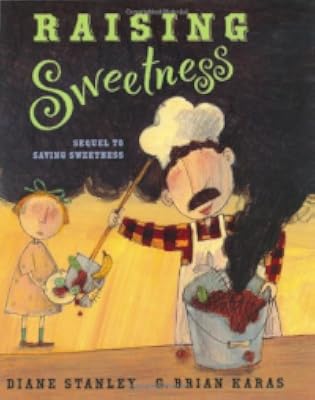
Told in a highly colloquial style, Saving Sweetness is an amusing tale whose humor rests on its role reversal - it is the child who must rescue the adult, and who must shepherd him to an understanding of how show more he could really rescue her - and on its narrator's generally clueless misreading of his role in the story. The sheriff remains convinced, throughout, that he is indeed saving Sweetness, something that young readers will undoubtedly find funny, as they witness the way that the actions of the two protagonists, as well as the illustrations, belie this. The artwork itself is very interesting, combining painted elements with old photographs. All in all, Saving Sweetness is an engaging tale, one I would recommend to young readers who enjoy silly stories, and/or orphan tales with happy endings. I'll have to see if I can track down the sequel, Raising Sweetness, to see what happens next with this spunky young heroine! show less
Told in a highly colloquial style, Saving Sweetness is an amusing tale whose humor rests on its role reversal - it is the child who must rescue the adult, and who must shepherd him to an understanding of how show more he could really rescue her - and on its narrator's generally clueless misreading of his role in the story. The sheriff remains convinced, throughout, that he is indeed saving Sweetness, something that young readers will undoubtedly find funny, as they witness the way that the actions of the two protagonists, as well as the illustrations, belie this. The artwork itself is very interesting, combining painted elements with old photographs. All in all, Saving Sweetness is an engaging tale, one I would recommend to young readers who enjoy silly stories, and/or orphan tales with happy endings. I'll have to see if I can track down the sequel, Raising Sweetness, to see what happens next with this spunky young heroine! show less
Saving Sweetness
A shining example of what a picture book should be: wherein the text tells us one story, but the pictures tell us quite a different story. Indeed, the fun and humor in this tale come from the “secret” shared by the reader and the main character, Sweetness, but to which the narrator is oblivious. This book would be an excellent model for teaching high school students about the essential elements of a story and how they are interrelated and purposeful: setting, voice, point of view, characterization, plot, conflict, climax, denouement, irony (especially irony!) – all of these are contained in the 29 pages of this amazing little book!
A shining example of what a picture book should be: wherein the text tells us one story, but the pictures tell us quite a different story. Indeed, the fun and humor in this tale come from the “secret” shared by the reader and the main character, Sweetness, but to which the narrator is oblivious. This book would be an excellent model for teaching high school students about the essential elements of a story and how they are interrelated and purposeful: setting, voice, point of view, characterization, plot, conflict, climax, denouement, irony (especially irony!) – all of these are contained in the 29 pages of this amazing little book!
Sweetness, an orphan with a hard-knock life, strikes out into the desert on her own, leaving it up to the sheriff to rescue her from the perils of the climate and notorious outlaw Coyote Pete. The trouble is, that’s not the kind of rescue Sweetness has in mind, and she just won’t stay saved! What’s a sheriff to do?
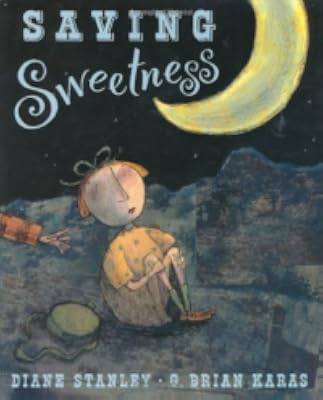
Set in the Texas desert, this story of one girl’s fierce independence and one sheriff’s stubborn call to duty is a delight. Told from the sheriff’s own voice, the storytelling is vivid, helped along by brilliant illustrations from G. Brian Karas, who traveled all over the American southwest taking photographs to include in his composite pictures (gouache, acrylic, pencil, and cyanotype photographs). Stanley’s show more bright characters show us that tough and gentle can go hand-in-hand, and that bad guys will always get what’s coming to them--even if it’s not how we first imagine it. Great for an older reader to read to a younger listener. show less
Set in the Texas desert, this story of one girl’s fierce independence and one sheriff’s stubborn call to duty is a delight. Told from the sheriff’s own voice, the storytelling is vivid, helped along by brilliant illustrations from G. Brian Karas, who traveled all over the American southwest taking photographs to include in his composite pictures (gouache, acrylic, pencil, and cyanotype photographs). Stanley’s show more bright characters show us that tough and gentle can go hand-in-hand, and that bad guys will always get what’s coming to them--even if it’s not how we first imagine it. Great for an older reader to read to a younger listener. show less
I loved this wonderfully illustrated book and the tale of spunky, intelligent Sweetness who resides in an orphanage. Rather than complain, she sets in action a plan for escape. Mrs. Stump is the nasty rotten lady who runs the orphanage. Sweetness sees through her and wants a better life.
funny & suspenseful story of orphan Sweetness in old-time Texas. The little darlin' won't scrub one more orphanage floor with a toothbrush. She's bustin' out.
Just as cute as the other reviewers say. Im glad to read it, and glad I was able to check out the sequel at the same time. Not that it needs a sequel, but so fun...."
Members
- Recently Added By
Published Reviews
ThingScore 100
Martha Davis Beck (The Five Owls, March/April 1997 (Vol. 11, No. 4))
With the plight of neglected children a persistent sore spot in our consciousness--and a frequent serious theme in children's books--this comic tale of a resourceful runaway orphan is sweet medicine. Written by the versatile Diane Stanley, Saving Sweetness is set in the Wild West and features a cast of types. The story's tone show more and the unambiguous character of its players are conveyed in colorful rural vernacular by the narrator, the kindhearted sheriff in the dusty Texas outpost where the action is set. Sweetness is the name of the "ittiest bittiest" resident of an orphanage run by mean old Mrs. Sump, a woman "nasty enough to scare night into day." She disciplines the children by having them scrub the floor with toothbrushes. When Sweetness runs away, the sheriff is called into pursuit, to rescue her from the desert and the likely clutches of the outlaw Coyote Pete, a character "as mean as an acre of rattlesnakes." The humor builds as the sheriff, an absentminded fellow, neglects to bring food or water along on his sojourn through the desert, and is repeatedly "saved" by the tyke he is seeking. She appears first with a canteen of water; later she toasts marshmallows for him on a fire; finally she knocks out Coyote Pete with a large rock, just as he is about to shoot the sheriff. Through all this, the sheriff appears not to realize who's doing the rescuing. But Sweetness has the last word: she convinces the sheriff to become her Pa. G. Brian Karas's distinctive artwork has a warmth and expressiveness here that provide a perfect match for the tale. The illustrations feature his trademark melon-headed angular figures, but the facial expressions and gestures convey precise emotions, and each page holds visual interest through the combination of soft pencil sketching, dramatic silhouettes, and atmospheric photo and cut-paper collage in earth tones of gold, sage green, and many satisfying shades of brown. Saving Sweetness is a tall tale shrunk down to a modest size, just right for relating the plight of a plucky little girl, and for tickling the funny bones of readers in the mood for a Wild West yarn. 1996, Putnam, 8 x 10, 32 pages, $15.95. Ages 5 to 8. show less
With the plight of neglected children a persistent sore spot in our consciousness--and a frequent serious theme in children's books--this comic tale of a resourceful runaway orphan is sweet medicine. Written by the versatile Diane Stanley, Saving Sweetness is set in the Wild West and features a cast of types. The story's tone show more and the unambiguous character of its players are conveyed in colorful rural vernacular by the narrator, the kindhearted sheriff in the dusty Texas outpost where the action is set. Sweetness is the name of the "ittiest bittiest" resident of an orphanage run by mean old Mrs. Sump, a woman "nasty enough to scare night into day." She disciplines the children by having them scrub the floor with toothbrushes. When Sweetness runs away, the sheriff is called into pursuit, to rescue her from the desert and the likely clutches of the outlaw Coyote Pete, a character "as mean as an acre of rattlesnakes." The humor builds as the sheriff, an absentminded fellow, neglects to bring food or water along on his sojourn through the desert, and is repeatedly "saved" by the tyke he is seeking. She appears first with a canteen of water; later she toasts marshmallows for him on a fire; finally she knocks out Coyote Pete with a large rock, just as he is about to shoot the sheriff. Through all this, the sheriff appears not to realize who's doing the rescuing. But Sweetness has the last word: she convinces the sheriff to become her Pa. G. Brian Karas's distinctive artwork has a warmth and expressiveness here that provide a perfect match for the tale. The illustrations feature his trademark melon-headed angular figures, but the facial expressions and gestures convey precise emotions, and each page holds visual interest through the combination of soft pencil sketching, dramatic silhouettes, and atmospheric photo and cut-paper collage in earth tones of gold, sage green, and many satisfying shades of brown. Saving Sweetness is a tall tale shrunk down to a modest size, just right for relating the plight of a plucky little girl, and for tickling the funny bones of readers in the mood for a Wild West yarn. 1996, Putnam, 8 x 10, 32 pages, $15.95. Ages 5 to 8. show less
added by kthomp25
Deborah Stevenson (The Bulletin of the Center for Children's Books, November 1996 (Vol. 50, No. 3))
Little orphan Sweetness has run away from Mrs. Sump's orphanage, and grim Mrs. Sump has enlisted the kindly sheriff's help in retrieving her. The sheriff plods along the cactus-studded plains in search of Sweetness, who keeps turning up whenever the sheriff is in dire need (short of water, hungry show more in the night, at the point of outlaw Coyote Pete's gun) and providing assistance. Each time the sheriff proudly proclaims he's saved her but doesn't quite get her drift when she complains about returning to the orphanage, so she takes off yet again, until finally he understands his duty and agrees to adopt her and the other seven orphans. This is tall-talin' western comedy, filled with sagebrush-flavored imagery ("She fell on me like Grandma on a chicken snake") and ridin'-the-range dialect ("Now you can't go around shootin' folks and scarin' orphans, and I's here to arrest you"). Even more amusing for young listeners will be the sheriff's blindness to Sweetness' total control over the situation: tying up Coyote Pete with her hair ribbons, she's reminiscent of Ogden Nash's Isabel. Karas' usual dot-eyed, spiky-featured figures here roam a range made vivid by subtle collagic inclusion of tinted and colored photographs, so that Sweetness lights out amid genuine scrubland and the hand-drawn townspeople frequent real buildings. An occasional youngster may wonder why the sheriff has no horse, but that's less important than the fact that he has Sweetness and her seven comrades, a comfy rocking chair, and a terrifically enjoyable story. R*--Highly recommended as a book of special distinction. (c) Copyright 1996, The Board of Trustees of the University of Illinois. 1996, Putnam, 32p, $15.95. Ages 5-8 yrs. show less
Little orphan Sweetness has run away from Mrs. Sump's orphanage, and grim Mrs. Sump has enlisted the kindly sheriff's help in retrieving her. The sheriff plods along the cactus-studded plains in search of Sweetness, who keeps turning up whenever the sheriff is in dire need (short of water, hungry show more in the night, at the point of outlaw Coyote Pete's gun) and providing assistance. Each time the sheriff proudly proclaims he's saved her but doesn't quite get her drift when she complains about returning to the orphanage, so she takes off yet again, until finally he understands his duty and agrees to adopt her and the other seven orphans. This is tall-talin' western comedy, filled with sagebrush-flavored imagery ("She fell on me like Grandma on a chicken snake") and ridin'-the-range dialect ("Now you can't go around shootin' folks and scarin' orphans, and I's here to arrest you"). Even more amusing for young listeners will be the sheriff's blindness to Sweetness' total control over the situation: tying up Coyote Pete with her hair ribbons, she's reminiscent of Ogden Nash's Isabel. Karas' usual dot-eyed, spiky-featured figures here roam a range made vivid by subtle collagic inclusion of tinted and colored photographs, so that Sweetness lights out amid genuine scrubland and the hand-drawn townspeople frequent real buildings. An occasional youngster may wonder why the sheriff has no horse, but that's less important than the fact that he has Sweetness and her seven comrades, a comfy rocking chair, and a terrifically enjoyable story. R*--Highly recommended as a book of special distinction. (c) Copyright 1996, The Board of Trustees of the University of Illinois. 1996, Putnam, 32p, $15.95. Ages 5-8 yrs. show less
added by kthomp25
Author Information

58+ Works 16,816 Members
Diane Stanley was born in 1943 and was raised in Abilene, Texas. She later attended both Trinity University and Johns Hopkins University. Her portfolio of children's book illustrations was creative enough for her to begin publication in 1978. She became an art director for G.P. Putnam & Sons and later began retelling and illustrating classic show more children's books. Stanley has revamped the fairy tale, Rumpelstiltskin's Daughter and has also researched the children's biographies Cleopatra and Leonardo Da Vinci. She also illustrated her mother's book, The Last Princess. (Bowker Author Biography) show less
All Editions
Some Editions
Awards and Honors
Awards
Series

Common Knowledge
- People/Characters
- Mrs. Sump, runs the orphanage and becomes a parole officer; Little Sweetness; Coyote Pete, outlaw
- First words
- Out in the hottest, dustiest part of town is an orphanage run by a female person nasty enough to scare night into day.
- Last words
- (Click to show. Warning: May contain spoilers.)And that's the truth.
Classifications
Statistics
- Members
- 275
- Popularity
- 117,241
- Reviews
- 16
- Rating
- (4.29)
- Languages
- English
- Media
- Paper, Audiobook, Ebook
- ISBNs
- 18
- ASINs
- 3