
G. Brian Karas
Author of The Seals on the Bus
About the Author
Children's author and illustrator, G. Brian Karas was born in Milford, Connecticut in 1957. After graduating from Paier School of Art, he worked as a greeting card artist and a commercial illustrator. Home on the Bayou, a Boston Globe-Horn Book Honor, was his first illustrated book. Since then, he show more has illustrated over seventy books for children. Titles authored and/or illustrated by Karas have won numerous other awards. Saving Sweetness written by Diane Stanley was a Capitol Choices Noteworthy Book for Children in 1996, received a Bulletin of the Center for Children's Books Blue Ribbon in 1996, and was a School Library Journal Best Book of 1996. Like Butter on Pancakes by Jonathan London was a School Library Journal Best Book of 1995. The Class Artist, written and illustrated by Karas, was a Smithsonian Magazine's Notable Book for Children in 2001 and received the Oppenheim Toy Portfolio 2002 Best Book Gold Award. (Bowker Author Biography) show less
Works by G. Brian Karas
Ivan: The Remarkable True Story of the Shopping Mall Gorilla (2014) — Illustrator — 523 copies, 28 reviews
Switching on the Moon: A Very First Book of Bedtime Poems (2010) — Illustrator — 61 copies, 5 reviews
Associated Works
Throw Your Tooth on the Roof: Tooth Traditions from Around the World (1998) — Illustrator — 972 copies, 22 reviews
If You're Not Here, Please Raise Your Hand: Poems About School (1990) — Illustrator — 659 copies, 19 reviews
[(Oh No, Gotta Go! )] [Author: Susan Middleton Elya] [Jun-2006] (2003) — Illustrator — 481 copies, 12 reviews
The High-Rise Private Eyes #1: The Case of the Missing Monkey (2000) — Illustrator — 405 copies, 2 reviews
A Hat for Mrs. Goldman: A Story About Knitting and Love (2016) — Illustrator — 298 copies, 16 reviews
The High-Rise Private Eyes #3: The Case of the Puzzling Possum (2001) — Illustrator — 213 copies, 3 reviews
Don't Read This Book, Whatever You Do!: More Poems About School (1993) — Illustrator — 202 copies, 12 reviews
The High-Rise Private Eyes #4: The Case of the Troublesome Turtle (2001) — Illustrator — 195 copies, 2 reviews
The High-Rise Private Eyes #7: The Case of the Baffled Bear (2004) — Illustrator — 124 copies, 1 review
The High-Rise Private Eyes #6: The Case of the Fidgety Fox (2003) — Illustrator — 96 copies, 3 reviews
The High-Rise Private Eyes #8: The Case of the Desperate Duck (2005) — Illustrator — 95 copies, 1 review
The High-Rise Private Eyes #5: The Case of the Sleepy Sloth (2002) — Illustrator — 80 copies, 2 reviews
Storms!/Carlita Ropes the Twister (Take Me Home-Pair-It Books) — Illustrator — 1 copy
Tagged
Common Knowledge
- Birthdate
- 1957-09
- Gender
- male
- Occupations
- writer of children's books
illustrator
artist - Nationality
- USA
- Places of residence
- Hudson Valley, New York, USA
- Associated Place (for map)
- New York, USA
Members
Reviews

A true story but also a kind of fable.
It begins with a happy baby gorilla living a happy gorilla life. Then suddenly is wickedly captured and sent far from his home. At first he is treated kindly, like a baby human. But then he begins to grow gorilla size and he is put in a dungeon. (Well, not a dungeon but a cement room with a tire and a TV and a window so that mall visitors could gawk.)
Years pass. Human parents and their children begin to realize it's not really fun to gawk at a show more mistreated sentient being. As a matter of fact, it's cruel.
More years pass. Newspapers write articles about Ivan's plight, children start petitions, and good people boycott and protest because they know now Ivan should not be caged.
After several decades of Ivan, a silverback gorilla, being mistreated at last he spends his last decades (he lived to be 50) in a preserve for gorillas. It wasn't the wild but his feet once again touched the ground and he was happy among fellow gorillas.
Interesting how attitudes can change so radically in a mere 50 years. Reading this to a child should help continue the lessons learned. Humans can be better humans and definitely better to our fellow sentient beings. We should ALL have a chance to live happily ever after. show less
It begins with a happy baby gorilla living a happy gorilla life. Then suddenly is wickedly captured and sent far from his home. At first he is treated kindly, like a baby human. But then he begins to grow gorilla size and he is put in a dungeon. (Well, not a dungeon but a cement room with a tire and a TV and a window so that mall visitors could gawk.)
Years pass. Human parents and their children begin to realize it's not really fun to gawk at a show more mistreated sentient being. As a matter of fact, it's cruel.
More years pass. Newspapers write articles about Ivan's plight, children start petitions, and good people boycott and protest because they know now Ivan should not be caged.
After several decades of Ivan, a silverback gorilla, being mistreated at last he spends his last decades (he lived to be 50) in a preserve for gorillas. It wasn't the wild but his feet once again touched the ground and he was happy among fellow gorillas.
Interesting how attitudes can change so radically in a mere 50 years. Reading this to a child should help continue the lessons learned. Humans can be better humans and definitely better to our fellow sentient beings. We should ALL have a chance to live happily ever after. show less
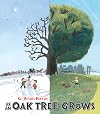
I've never been a really big fan of Karas' art (I know, I know, everybody else loves it) but this is one book I can really get behind.
The story begins long, long ago with a little Native American boy dropping an acorn into a whole. In 1775 (the date is neatly blocked out at the bottom left corner) the tree sprouts. The tree grows throughout history as farmers take over the land, through heavy winters and hot summers, the coming of the railway and electric light. Cars appear on the roads, and show more a treehouse is built in the tree. Finally, when the tree is 225 years old, a final great storm splits the tree in two and its life is over. The last spread shows a large stump against a bold green background and, next to the stump, a little sprout as the cycle begins again.
A final page includes some simple facts about the life cycle of an oak tree. A poster is included in the book as well. One side shows how different historical events correlate to the rings in the oak tree, the other side has various activities.
Karas' smudgy, detailed art has a wealth of diverse people featured throughout the story, from the original boy who planted the tree to the families living and working around the tree in the ensuing spreads. Having recently been reading several nonfiction books, specifically picture book biographies, that were not at all suited to their audience, it was like standing under a refreshing waterfall to see this book. On the face of it, it's a very simplistic approach to history through the growth and changes in a tree, perfectly suited to a very young audience. However, the genius of this lies in the detailed art that allows parents and teachers to initiate discussions on the historical events as they are occurring; why did the Native American boy leave? How is the land changed with the advent of various technologies? What different people do you see? How are they the same? How are they different?
Verdict: This is a great book, not just in literary and artistic quality, but in the connections it opens up for further discussion and research. This will be accessible for a wide variety of ages and interests. Highly recommended.
ISBN: 9780399252334; Published 2014 by Nancy Paulsen/Penguin; Borrowed from another library in my consortium; Purchased for the library show less
The story begins long, long ago with a little Native American boy dropping an acorn into a whole. In 1775 (the date is neatly blocked out at the bottom left corner) the tree sprouts. The tree grows throughout history as farmers take over the land, through heavy winters and hot summers, the coming of the railway and electric light. Cars appear on the roads, and show more a treehouse is built in the tree. Finally, when the tree is 225 years old, a final great storm splits the tree in two and its life is over. The last spread shows a large stump against a bold green background and, next to the stump, a little sprout as the cycle begins again.
A final page includes some simple facts about the life cycle of an oak tree. A poster is included in the book as well. One side shows how different historical events correlate to the rings in the oak tree, the other side has various activities.
Karas' smudgy, detailed art has a wealth of diverse people featured throughout the story, from the original boy who planted the tree to the families living and working around the tree in the ensuing spreads. Having recently been reading several nonfiction books, specifically picture book biographies, that were not at all suited to their audience, it was like standing under a refreshing waterfall to see this book. On the face of it, it's a very simplistic approach to history through the growth and changes in a tree, perfectly suited to a very young audience. However, the genius of this lies in the detailed art that allows parents and teachers to initiate discussions on the historical events as they are occurring; why did the Native American boy leave? How is the land changed with the advent of various technologies? What different people do you see? How are they the same? How are they different?
Verdict: This is a great book, not just in literary and artistic quality, but in the connections it opens up for further discussion and research. This will be accessible for a wide variety of ages and interests. Highly recommended.
ISBN: 9780399252334; Published 2014 by Nancy Paulsen/Penguin; Borrowed from another library in my consortium; Purchased for the library show less

Author/artist G. Brian Karas follows the process whereby food gets from the field to the table in this engaging celebration of small farms, farmers' markets, and the people who staff them and buy from them. The first section profiles three different farms - a general produce farm, a dairy farm where cheese is produced, and a mushroom farm - while the second follows the proprietor of a local cafe as she shops for what she needs to make that day's special.
A solid picture-book examination of show more how food is produced, On the Farm, At the Market is the first title I have read that is both written and illustrated by Karas, whose work illustrating other author's texts - including the similarly themed Anywhere Farm, by Phyllis Root - was already familiar to me. I appreciated the use of a fictional narrative (or narratives) to explore an informational topic, and although I wouldn't say this one was destined to be a particular favorite, I think it works very well, both as an introduction to farms and farm markets specifically, and more generally as a means of prompting young children to consider the source of their food. show less
A solid picture-book examination of show more how food is produced, On the Farm, At the Market is the first title I have read that is both written and illustrated by Karas, whose work illustrating other author's texts - including the similarly themed Anywhere Farm, by Phyllis Root - was already familiar to me. I appreciated the use of a fictional narrative (or narratives) to explore an informational topic, and although I wouldn't say this one was destined to be a particular favorite, I think it works very well, both as an introduction to farms and farm markets specifically, and more generally as a means of prompting young children to consider the source of their food. show less
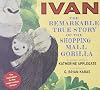
This is a picture book about Ivan, a gorilla poached as a baby and brought to the U.S. to live, first with a family until he was too big, then he lived for almost three decades in a mall by himself. From there, he was taken to a zoo to live the rest of his life with other gorillas in a more natural habitat.
I loved the YA book “The One and Only Ivan”. This is a really nice children’s story about the same gorilla with such a sad life. There are some really great illustrations. Despite show more it being so short and succinct (it’s a kid’s book, and no surprise, really), this one still had me crying a couple of times. There are a few pages at the end with a longer textual summary of Ivan’s life and a note from one of the zookeeper’s who took care of him in his last decade of life. show less
I loved the YA book “The One and Only Ivan”. This is a really nice children’s story about the same gorilla with such a sad life. There are some really great illustrations. Despite show more it being so short and succinct (it’s a kid’s book, and no surprise, really), this one still had me crying a couple of times. There are a few pages at the end with a longer textual summary of Ivan’s life and a note from one of the zookeeper’s who took care of him in his last decade of life. show less
Lists
Awards


You May Also Like


Associated Authors
Statistics
- Works
- 22
- Also by
- 103
- Members
- 3,996
- Popularity
- #6,315
- Rating
- 3.9
- Reviews
- 176
- ISBNs
- 82
- Languages
- 1