On This Page
Description
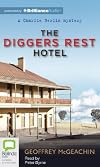
In 1947, two years after witnessing the death of a young Jewish woman in Poland, Charlie Berlin has rejoined the police force a different man. Sent to investigate a spate of robberies in rural Victoria, he soon discovers that World War II has changed even the most ordinary of places and people.When Berlin travels to Albury-Wodonga to track down the gang behind the robberies, he suspects he's a problem cop being set up to fail. Taking a room at the Diggers Rest Hotel in Wodonga, he sets about show more solving a case that no one else can--with the help of feisty, ambitious journalist Rebecca Green and rookie constable Rob Roberts, the only cop in town he can trust. Then the decapitated body of a young girl turns up in a back alley, and Berlin's investigations lead him ever further through layers of small-town fears, secrets and despair.The first Charlie Berlin mystery takes us into a world of secret alliances and loyalties--and a society dealing with the effects of a war that changed men forever. show lessTags
Recommendations




















Member Reviews
It's always interesting to see a favoured author head off in another direction, and THE DIGGERS REST HOTEL is a big directional switch for Geoffrey McGeachin. Moving away from the madcap all-Australian James Bond of the Alby Murdoch books, we are introduced to a new character, a new timeframe and a very different approach.
Set in post World War II Victoria THE DIGGERS REST HOTEL introduces Charlie Berlin. A pilot during the war, back to the police on his return, Charlie is deeply traumatised. Sent to Albury-Wodonga to investigate a series of robberies that have suddenly become violent, this is also a story of the after-affects of war. Alongside the robbery, a subsequent murder and Charlie's own story, there are glimpses of the damage show more done on the home-front as well. The man whose son was a victim of a brutal death, and the brother who survived. The young Australian photographer and would-be newspaper reporter, who has her own family tales of difficulty for her German-born parents.
The information that came with this book highlights how the author has used the stories of his own father's wartime experiences as both an airman and a POW in Europe, as well as his childhood recollections of growing up in country-town Australia. It's a very realistic portrayal of country Australia - be it in the late 1940's or even more recently (well in this reader's memory anyway). Balance that small-town, closed environment, and the changes that are coming over a society traumatised and profoundly changed by the war and those who did and didn't return, against the individual story of one man who was so profoundly affected by events in Europe, and well, you end up with something that's entertaining, moving and affecting.
THE DIGGERS REST HOTEL isn't a straight up police procedural, this book is about a man who, as damaged and fragile as he is, is an observationist. Along with the personal perspective that this book is built upon, there is also an investigation - finding the motorbike riding gang who have terrorised and robbed multiple Railway locations, and then the horrific murder of a young Chinese girl in the town. There is also a fragile and tentative love story. There is also some stark examples of the differences between acceptable social conventions then, and now. Domestic violence, racism, thuggery, sexism, double standards - they are all touched upon, displayed but not dwelled upon.
Undoubtedly the great strength of THE DIGGERS REST HOTEL is the character study of Charlie Berlin, followed very closely by the affects of war on everyone, even in a small country-town deep within Australia - on the border of New South Wales and Victoria. Charlie Berlin is a wonderfully flawed human policeman, doing his duty, falling apart and picking himself back up again. THE DIGGERS REST HOTEL really does remind you that in the days post World War II there wasn't counselling, there wasn't retraining, there wasn't support. There was just the demons, and the jobs that had to be done, and alcohol and there were those that found a way to fit back in, and those that never did. show less
Set in post World War II Victoria THE DIGGERS REST HOTEL introduces Charlie Berlin. A pilot during the war, back to the police on his return, Charlie is deeply traumatised. Sent to Albury-Wodonga to investigate a series of robberies that have suddenly become violent, this is also a story of the after-affects of war. Alongside the robbery, a subsequent murder and Charlie's own story, there are glimpses of the damage show more done on the home-front as well. The man whose son was a victim of a brutal death, and the brother who survived. The young Australian photographer and would-be newspaper reporter, who has her own family tales of difficulty for her German-born parents.
The information that came with this book highlights how the author has used the stories of his own father's wartime experiences as both an airman and a POW in Europe, as well as his childhood recollections of growing up in country-town Australia. It's a very realistic portrayal of country Australia - be it in the late 1940's or even more recently (well in this reader's memory anyway). Balance that small-town, closed environment, and the changes that are coming over a society traumatised and profoundly changed by the war and those who did and didn't return, against the individual story of one man who was so profoundly affected by events in Europe, and well, you end up with something that's entertaining, moving and affecting.
THE DIGGERS REST HOTEL isn't a straight up police procedural, this book is about a man who, as damaged and fragile as he is, is an observationist. Along with the personal perspective that this book is built upon, there is also an investigation - finding the motorbike riding gang who have terrorised and robbed multiple Railway locations, and then the horrific murder of a young Chinese girl in the town. There is also a fragile and tentative love story. There is also some stark examples of the differences between acceptable social conventions then, and now. Domestic violence, racism, thuggery, sexism, double standards - they are all touched upon, displayed but not dwelled upon.
Undoubtedly the great strength of THE DIGGERS REST HOTEL is the character study of Charlie Berlin, followed very closely by the affects of war on everyone, even in a small country-town deep within Australia - on the border of New South Wales and Victoria. Charlie Berlin is a wonderfully flawed human policeman, doing his duty, falling apart and picking himself back up again. THE DIGGERS REST HOTEL really does remind you that in the days post World War II there wasn't counselling, there wasn't retraining, there wasn't support. There was just the demons, and the jobs that had to be done, and alcohol and there were those that found a way to fit back in, and those that never did. show less
I am becoming addicted to Australian authors.
Have you read The Shepherds Hut yet?
Set in the late 40's around Melbourne, a country full of men back from the war, almost none of them untouched by what they experienced, trying to fit back in. And Australia with its endemic crime, corruption, and violence, what could possibly go wrong?
A crime procedural of the highest order. A sympathetic character in an unsympathetic land but nothing too soft, that's left to the dame!
It's not a gipping story as in the way of a suspense/thriller but it is a compelling story. Very evocative, you could smell the stale sweat on unwashed bodies, feel the bruises when you moved and craved that cigarette.
I think this is why I have gotten so enamoured of show more Australian authors. The land becomes a major character in all their novels, a brooding silence in the background, something that shapes every person whether they like it, know it, or not. They become the voice of the land is a weird but authentic way.
I've got the second and third in this series and am taking my time, savouring them. show less
Have you read The Shepherds Hut yet?
Set in the late 40's around Melbourne, a country full of men back from the war, almost none of them untouched by what they experienced, trying to fit back in. And Australia with its endemic crime, corruption, and violence, what could possibly go wrong?
A crime procedural of the highest order. A sympathetic character in an unsympathetic land but nothing too soft, that's left to the dame!
It's not a gipping story as in the way of a suspense/thriller but it is a compelling story. Very evocative, you could smell the stale sweat on unwashed bodies, feel the bruises when you moved and craved that cigarette.
I think this is why I have gotten so enamoured of show more Australian authors. The land becomes a major character in all their novels, a brooding silence in the background, something that shapes every person whether they like it, know it, or not. They become the voice of the land is a weird but authentic way.
I've got the second and third in this series and am taking my time, savouring them. show less
For me, Geoff McGeachin has hit on a winner with this new series and I hope we see more of Charlie Berlin. It appealed to me on several fronts - historical, crime fiction, Australia.
Set in post-war Australia, this time post World War Two, with a policeman returning to work in a world that will never be the same, THE DIGGERS REST HOTEL reminded me a lot of the Charles Todd series. Like Ian Rutledge in that series Charlie Berlin was in the police force before the war. Although the police force was an exempt trade he volunteered for service and was posted to the RAF in Britain. He took off on 30 missions over Germany, but, in his words, landed only 29 of them and ended up a P.O.W.
Now two years after the war he has returned to work, and show more found that those who didn't go are now in charge, in positions he should be occupying. He feels like a square peg in a round hole, and, like Rutledge, is sent from the city to the country to solve a crime. He is still suffering from post-war stress and has blackouts and nightmares. Like Rutledge too Charlie is met with local suspicion and hostility and demands for quick results from his superiors back in Melbourne.
McGeachin has taken care with the historical detail and it gives the novel a great feeling of authenticity. (You get the feeling that McGeachin is describing a world he knows well.) Berlin has come back to a world fractured by the war. Australian society is trying to absorb the returnees, women who took on men's jobs during the war are expected to relinquish them, and for some of the returned servicemen there is no work. There is no excitement either. Areas like Albury-Wodonga where THE DIGGERS REST HOTEL is set are littered with munitions and equipment from abandoned army camps and weapons stashes. Some of the ex-servicemen do not believe the government is doing what it should and private militias appear to provide an answer to many problems.
You can probably tell that I very much enjoyed Charlie Berlin's initial case and hope we see more. show less
Set in post-war Australia, this time post World War Two, with a policeman returning to work in a world that will never be the same, THE DIGGERS REST HOTEL reminded me a lot of the Charles Todd series. Like Ian Rutledge in that series Charlie Berlin was in the police force before the war. Although the police force was an exempt trade he volunteered for service and was posted to the RAF in Britain. He took off on 30 missions over Germany, but, in his words, landed only 29 of them and ended up a P.O.W.
Now two years after the war he has returned to work, and show more found that those who didn't go are now in charge, in positions he should be occupying. He feels like a square peg in a round hole, and, like Rutledge, is sent from the city to the country to solve a crime. He is still suffering from post-war stress and has blackouts and nightmares. Like Rutledge too Charlie is met with local suspicion and hostility and demands for quick results from his superiors back in Melbourne.
McGeachin has taken care with the historical detail and it gives the novel a great feeling of authenticity. (You get the feeling that McGeachin is describing a world he knows well.) Berlin has come back to a world fractured by the war. Australian society is trying to absorb the returnees, women who took on men's jobs during the war are expected to relinquish them, and for some of the returned servicemen there is no work. There is no excitement either. Areas like Albury-Wodonga where THE DIGGERS REST HOTEL is set are littered with munitions and equipment from abandoned army camps and weapons stashes. Some of the ex-servicemen do not believe the government is doing what it should and private militias appear to provide an answer to many problems.
You can probably tell that I very much enjoyed Charlie Berlin's initial case and hope we see more. show less
It’s two years since the end of the second World War and Charlie Berlin has returned to Australia, having been a bomber pilot in Europe then a POW in Poland. It’s fair to say Charlie’s was a grim wartime experience and he is still haunted by things he saw and did. Upon returning to work as a Detective Constable in Melbourne he learns that all the colleagues he started out with have moved up the hierarchy (the police force was exempt from the military draft and officers were discouraged from volunteering but Charlie had family reasons for joining up) and he gets all the worst assignments. Which is why he’s the one sent to rural Victoria, on the border with New South Wales, to investigate a spate of armed robberies, the latest of show more which resulted in a paymaster being badly injured. He arrives in town to be greeted by a young constable, Rob Roberts, who will drive him around (and report back to the local Sergeant who is not entirely happy to have someone from the city on his turf) and the two form a complementary team of investigators with Charlie supplying the experience and Roberts providing the local knowledge.
The historical aspects of the novel are extremely well done; feeling authentic through the use of interesting details but not overblown with evidence of the author’s research. Everything from the rationing that the country was still experiencing to the kinds of foods that might have been served in a country pub at that time to the photographic equipment and techniques utilised by the adventurous female photo-journalist that Charlie encounters during his investigation are both accurate and woven into the story seamlessly. Some of the less pleasant aspects of life during the time are also well depicted including the fairly shabby treatment of anyone who wasn’t white. It really did feel like I was transported back to the time, a factor helped I think by the excellent narration of the audio book in which the language and slang were pronounced to fit in with the period.
In that crime fiction has something of a plethora of men who have returned from war forever changed Charlie Berlin is not a particularly unique character. However his particular trials and tribulations are engagingly teased out and his character does have a solidly credible feel to it. Through his conversations with Rebecca Green, the photo-journalist, and the memories that sometimes stop him dead in his tracks (and send him reaching for the whisky bottle) we learn enough about his war time experiences to sympathise and feel sorrow for Charlie and the thousands of others like him. We see too through the investigation how the war has impacted on other returned soldiers and the families of those who didn’t make it back.
In the end it is Charlie’s understanding of these impacts on various people that enables him to work out not only who has been committing the robberies but also who isn’t (and then who is) responsible for the rather grim murder that takes place while he is in the town. The crime solving here at times appears to almost be an after thought but that would be too simplistic a way of looking at things. Charlie believes that you need to know a place and its people in order to solve a crime and his meandering from crime scene to crime scene and meetings with various people in the town all do have a purpose. The upside for readers is that we too get a sense that we’re really getting under the skin of the town at the same time as we meet all manner of poignant and intriguing characters. Like the wife of the Diggers Rest Hotel publican who is beaten sometimes because her husband is enraged at having been injured before he could go to war, or the retired WWI Captain who is so convinced that communists will be invading some time soon that he is raising his own militia.
A tiny part of me is, I admit, a trifle weary from reading about the horrible experiences of people returning from wars. No matter how many times the consequences are depicted in harrowing ways we seem, collectively, to jump at almost any chance to fight and kill and hate all over again so I do sometimes wonder if there is any point. But if it is going to be done then it should be done well, and McGeachin has done a first rate job here, capturing both the universal truths that are associated with the experiences and the peculiarly Australian, somewhat laconic way of dealing with the nightmares and other repercussions (a combination of beer, football and the occasional bit of pointless biffo). With down-to-earth, very believable characters and a strong, enveloping sense of place and time THE DIGGERS REST HOTEL is a top notch work of historical crime fiction. show less
The historical aspects of the novel are extremely well done; feeling authentic through the use of interesting details but not overblown with evidence of the author’s research. Everything from the rationing that the country was still experiencing to the kinds of foods that might have been served in a country pub at that time to the photographic equipment and techniques utilised by the adventurous female photo-journalist that Charlie encounters during his investigation are both accurate and woven into the story seamlessly. Some of the less pleasant aspects of life during the time are also well depicted including the fairly shabby treatment of anyone who wasn’t white. It really did feel like I was transported back to the time, a factor helped I think by the excellent narration of the audio book in which the language and slang were pronounced to fit in with the period.
In that crime fiction has something of a plethora of men who have returned from war forever changed Charlie Berlin is not a particularly unique character. However his particular trials and tribulations are engagingly teased out and his character does have a solidly credible feel to it. Through his conversations with Rebecca Green, the photo-journalist, and the memories that sometimes stop him dead in his tracks (and send him reaching for the whisky bottle) we learn enough about his war time experiences to sympathise and feel sorrow for Charlie and the thousands of others like him. We see too through the investigation how the war has impacted on other returned soldiers and the families of those who didn’t make it back.
In the end it is Charlie’s understanding of these impacts on various people that enables him to work out not only who has been committing the robberies but also who isn’t (and then who is) responsible for the rather grim murder that takes place while he is in the town. The crime solving here at times appears to almost be an after thought but that would be too simplistic a way of looking at things. Charlie believes that you need to know a place and its people in order to solve a crime and his meandering from crime scene to crime scene and meetings with various people in the town all do have a purpose. The upside for readers is that we too get a sense that we’re really getting under the skin of the town at the same time as we meet all manner of poignant and intriguing characters. Like the wife of the Diggers Rest Hotel publican who is beaten sometimes because her husband is enraged at having been injured before he could go to war, or the retired WWI Captain who is so convinced that communists will be invading some time soon that he is raising his own militia.
A tiny part of me is, I admit, a trifle weary from reading about the horrible experiences of people returning from wars. No matter how many times the consequences are depicted in harrowing ways we seem, collectively, to jump at almost any chance to fight and kill and hate all over again so I do sometimes wonder if there is any point. But if it is going to be done then it should be done well, and McGeachin has done a first rate job here, capturing both the universal truths that are associated with the experiences and the peculiarly Australian, somewhat laconic way of dealing with the nightmares and other repercussions (a combination of beer, football and the occasional bit of pointless biffo). With down-to-earth, very believable characters and a strong, enveloping sense of place and time THE DIGGERS REST HOTEL is a top notch work of historical crime fiction. show less
It took me a little while to get into this audio book, but I think it was just because I was unaccustomed to the Australian accent and lingo. Once I adjusted, I easily became absorbed in the story.
Charlie is a little rough around the edges, but I grew to like him. He was obviously damaged by his wartime experiences, but he was starting to work his way through it. In many ways, he seemed much older than his 29 years. I also liked Rebecca, who I could completely picture in my mind, Hepburn-esque in her boldness and independence. She was a good match to Charlie. I also liked Charlie’s escort, Roberts. Fresh-faced, but not nearly as naive as he appeared.
As far as the mystery is concerned, I had a hard time getting really invested in the show more bank robberies. But the murder was another matter. It was that mystery that really drove the rest of the book, and the outcome of that investigation was unexpected — the robberies, not so much. More than the mysteries, this book has a lot to do with the effects of World War II on soldiers and the ones that were left behind. It was interesting for me to see the war from another country’s perspective. I’d never thought much about Australia’s role in the war, even considering its proximity to Japan.
I certainly wouldn’t mind if other books in this series happened to cross my path. show less
Charlie is a little rough around the edges, but I grew to like him. He was obviously damaged by his wartime experiences, but he was starting to work his way through it. In many ways, he seemed much older than his 29 years. I also liked Rebecca, who I could completely picture in my mind, Hepburn-esque in her boldness and independence. She was a good match to Charlie. I also liked Charlie’s escort, Roberts. Fresh-faced, but not nearly as naive as he appeared.
As far as the mystery is concerned, I had a hard time getting really invested in the show more bank robberies. But the murder was another matter. It was that mystery that really drove the rest of the book, and the outcome of that investigation was unexpected — the robberies, not so much. More than the mysteries, this book has a lot to do with the effects of World War II on soldiers and the ones that were left behind. It was interesting for me to see the war from another country’s perspective. I’d never thought much about Australia’s role in the war, even considering its proximity to Japan.
I certainly wouldn’t mind if other books in this series happened to cross my path. show less
I first read this novel long enough ago for me to have forgotten the finer plot details. Peter Byrne's narration is solidly done, but it is the author's detailed descriptions that place the reader firmly in post-war rural Victoria. McGeachin takes great pains to mention items and events which put us just after World War II.
In some ways Charlie Berlin is still suffering post-war trauma - events from his experience as a P.O.W. and as a bomber pilot keep sending him reminders. Wodonga is a country town still on war alert even thought the war is long over - a squad of local militia still train "just in case" and there are plenty of reminders of the war, including an army camp or two full of discarded weaponry, tanks, trucks and other show more vehicles.
But they are not the problem - a bunch of armed Harley Davidson riders is - they conduct raids on banks and other places holding money. The latest is the Wodonga Post office, although this is the first one where someone has been hurt. Charlie Berlin is sent up from Melbourne to find out what is happening, but no-one expects him to succeed.
An excellent read, whether you tackle the audio book or a printed copy. And the start of an award winning Australian series. See below for the list of titles so far. show less
In some ways Charlie Berlin is still suffering post-war trauma - events from his experience as a P.O.W. and as a bomber pilot keep sending him reminders. Wodonga is a country town still on war alert even thought the war is long over - a squad of local militia still train "just in case" and there are plenty of reminders of the war, including an army camp or two full of discarded weaponry, tanks, trucks and other show more vehicles.
But they are not the problem - a bunch of armed Harley Davidson riders is - they conduct raids on banks and other places holding money. The latest is the Wodonga Post office, although this is the first one where someone has been hurt. Charlie Berlin is sent up from Melbourne to find out what is happening, but no-one expects him to succeed.
An excellent read, whether you tackle the audio book or a printed copy. And the start of an award winning Australian series. See below for the list of titles so far. show less
The 1940's era in Australia is well described in this crime novel, the first in a series about WWII returned POW Charlie Berlin.
The hero of The Diggers Rest Hotel, Charlie, is a detective and a flawed hero. He is barely coping with post-traumatic stress as a result of his war years. He was a bomber pilot then POW in Germany during World War II. Charlie works out of Russell Street police station and doesn't fit in with the rest of the detectives. When not at work he is a recluse, living in a rundown bedsit in Carlton, and on the way to becoming an alcoholic. His life changes when he is sent to rural Victoria to investigate a spate of robberies. No-one else wanted the job and he is given no time to even pack before being put on a plane show more to Albury.
Charlie is picked up by young constable, Rob Roberts and taken to the scene of the crime in Wodonga. The local police are wary of him and the locals not much better. After taking a room at the Diggers Rest Hotel, he sets about solving a case that no one else can. He has the help of a feisty and ambitious journalist, Rebecca Green and Roberts who seems to be the only cop in town he can trust.
All the characters in the story are well drawn. They are easily identifiable and seem very real to the reader. This is a well-researched historical crime fiction novel and the mood of the era was well captured. It was also a great story. show less
The hero of The Diggers Rest Hotel, Charlie, is a detective and a flawed hero. He is barely coping with post-traumatic stress as a result of his war years. He was a bomber pilot then POW in Germany during World War II. Charlie works out of Russell Street police station and doesn't fit in with the rest of the detectives. When not at work he is a recluse, living in a rundown bedsit in Carlton, and on the way to becoming an alcoholic. His life changes when he is sent to rural Victoria to investigate a spate of robberies. No-one else wanted the job and he is given no time to even pack before being put on a plane show more to Albury.
Charlie is picked up by young constable, Rob Roberts and taken to the scene of the crime in Wodonga. The local police are wary of him and the locals not much better. After taking a room at the Diggers Rest Hotel, he sets about solving a case that no one else can. He has the help of a feisty and ambitious journalist, Rebecca Green and Roberts who seems to be the only cop in town he can trust.
All the characters in the story are well drawn. They are easily identifiable and seem very real to the reader. This is a well-researched historical crime fiction novel and the mood of the era was well captured. It was also a great story. show less
Members
- Recently Added By
Lists

Books Read in 2018
4,360 works; 110 members
Author Information

7 Works 271 Members
Some Editions
Awards and Honors
Awards
Series

Classifications
Statistics
- Members
- 99
- Popularity
- 324,847
- Reviews
- 13
- Rating
- (3.87)
- Languages
- English
- Media
- Paper, Audiobook, Ebook
- ISBNs
- 14
- UPCs
- 1
- ASINs
- 5