

Marie Javins
Author of Iron Man Extremis
Series
Works by Marie Javins
Marvel's Captain America: The Winter Soldier: The Art of the Movie Slipcase (2014) 33 copies, 1 review
Associated Works
Blueberry 1: Chihuahua Pearl & The Half-a-Million Dollar Man (1989) — Editor, some editions — 55 copies, 1 review
Marshall Blueberry: The Lost Dutchman's Mine & The Ghost with the Golden Bullets (1991) — Editor, some editions — 27 copies
The Best in Tent Camping: Virginia: A Guide to Campers Who Hate RVs, Concrete Slabs, and Loud Portable Stereos (2000) 24 copies
Blueberry 5: The Last Card & The End of the Trail (1990) — Editor, some editions — 24 copies, 1 review
Lieutenant Blueberry 3 - The Trail of the Sioux & General Golden Mane (1991) — Editor, some editions — 15 copies, 2 reviews
Tagged
Common Knowledge
- Gender
- female
Members
Reviews

The Flashpoint volumes of Convergence strike me as distinct from the earlier ones. Almost all of the characters in the Crisis, Infinite Earths, and Zero Hour volumes continued to exist after the points where they were plucked from for these tales: the Earth-One Legion had many more adventures, so did the Justice Society, so did Aquaman and Kyle Rayner. Those stories mostly revisited old status quos that the characters had moved on from. But Convergence: Flashpoint picks its characters from show more around the time of Flashpoint: this is, from around the time they ceased to exist. After Flashpoint, the Superman we'd been following in DC Comics since 1985 was gone, so was Renee Montoya, so was Stephanie Brown, so was Nightwing and Oracle. DC brought them back in different forms, but these characters just stopped, without endings.
So Convergence: Flashpoint is different, in that many of its stories seek to give closure to characters whose stories never received it. How did Clark Kent's marriage to Lois Lane turn out? Did Barbara Gordon and Dick Grayson get over there will-they-won't-they thing? How did Stephanie Brown's tenure as Batgirl go? What ever came of Renee's weird relationship with Harvey Dent, the man who had outed her?
All of these questions (with the added complication that the characters spent a year in a domed Gotham) are answered in Convergence: Flashpoint. Unlike with some volumes of Convergence, these are character versions I'm familiar with: I know the post-Crisis, married Superman; I know Nightwing and Oracle from reading all of Birds of Prey; I know Renee Montoya from Gotham Central and 52. So these stories carried a lot more weight than the ones in, say, Infinite Earths or Zero Hour. Plus, in many cases, the writers in this volume worked on these characters themselves. Dan Jurgens wrote and drew the post-Crisis Superman a lot in the 1990s, Greg Rucka didn't create Renee but he may as well have, and Gail Simone defined Oracle in what's still the best Birds of Prey run.
All of this is to say that as exercises in nostalgia and loose ends, these stories mostly worked for me. The Superman tale, where Lois ends up giving birth to a super-baby, is a heartwarming one of how Superman stands for light against darkness. I liked that Rucka used the Convergence framework to have "our" Harvey Dent confront a version of himself who never became Two-Face in a city-to-city fight unlike any other in the series so far. I actually haven't read a lot of Stephanie Brown Batgirl stories, but this seemed a fitting and cute way of tying up her adventures, with her finally finding an identity of her own. And though I never was a Babs/Dick shipper, letting them both get married and be badasses one last time is a nice final story. There's some great art, too; both Lee Weeks and the Dan Jurgens/Norm Rapmund team draw a stunningly heroic Superman; and I was delighted to see Jan Duursema (who I know from decades of Star Wars comics for Dark Horse) doing her thing in the DC universe.
The book's not perfect. I've complained before that the rules for city battles are different in each story, and the ones in the Stephanie Brown story are in particular difficult to reconcile with other volumes-- Stephanie finds out she's Gotham's champion from watching tv (did Telos send them a news bulletin?) among other weirdnesses, and in the Nightwing/Oracle story, Telos has enforcer robots that appear in none other of the thirty-five Convergence battles I've read thus far. Also, I've never read the pre-Flashpoint Justice League, but Frank Tieri's take on it doesn't make me want to. They're obnoxious "strong female character" types, and they don't exactly acquit themselves well here.
The title has a double meaning. These are the versions of the characters from the time of Flashpoint, but in all of the stories, they're fighting Gotham from the "Flashpoint" universe. This actually worked surprisingly well, especially in the first story, where Jurgens extracts some pathos from having the Flashpoint Kal-El ("Subject One") meet the Earth-Zero Lois Lane, and having the Flashpoint Thomas Wayne (who realizes these characters come from the same world as the Flash he met) get to talk to Superman about the kind of man his son became. Wayne's sadness that his universe didn't vanish in a flash is a nice touch.
DC Comics Crises: « Previous in sequence | Next in sequence » show less
So Convergence: Flashpoint is different, in that many of its stories seek to give closure to characters whose stories never received it. How did Clark Kent's marriage to Lois Lane turn out? Did Barbara Gordon and Dick Grayson get over there will-they-won't-they thing? How did Stephanie Brown's tenure as Batgirl go? What ever came of Renee's weird relationship with Harvey Dent, the man who had outed her?
All of these questions (with the added complication that the characters spent a year in a domed Gotham) are answered in Convergence: Flashpoint. Unlike with some volumes of Convergence, these are character versions I'm familiar with: I know the post-Crisis, married Superman; I know Nightwing and Oracle from reading all of Birds of Prey; I know Renee Montoya from Gotham Central and 52. So these stories carried a lot more weight than the ones in, say, Infinite Earths or Zero Hour. Plus, in many cases, the writers in this volume worked on these characters themselves. Dan Jurgens wrote and drew the post-Crisis Superman a lot in the 1990s, Greg Rucka didn't create Renee but he may as well have, and Gail Simone defined Oracle in what's still the best Birds of Prey run.
All of this is to say that as exercises in nostalgia and loose ends, these stories mostly worked for me. The Superman tale, where Lois ends up giving birth to a super-baby, is a heartwarming one of how Superman stands for light against darkness. I liked that Rucka used the Convergence framework to have "our" Harvey Dent confront a version of himself who never became Two-Face in a city-to-city fight unlike any other in the series so far. I actually haven't read a lot of Stephanie Brown Batgirl stories, but this seemed a fitting and cute way of tying up her adventures, with her finally finding an identity of her own. And though I never was a Babs/Dick shipper, letting them both get married and be badasses one last time is a nice final story. There's some great art, too; both Lee Weeks and the Dan Jurgens/Norm Rapmund team draw a stunningly heroic Superman; and I was delighted to see Jan Duursema (who I know from decades of Star Wars comics for Dark Horse) doing her thing in the DC universe.
The book's not perfect. I've complained before that the rules for city battles are different in each story, and the ones in the Stephanie Brown story are in particular difficult to reconcile with other volumes-- Stephanie finds out she's Gotham's champion from watching tv (did Telos send them a news bulletin?) among other weirdnesses, and in the Nightwing/Oracle story, Telos has enforcer robots that appear in none other of the thirty-five Convergence battles I've read thus far. Also, I've never read the pre-Flashpoint Justice League, but Frank Tieri's take on it doesn't make me want to. They're obnoxious "strong female character" types, and they don't exactly acquit themselves well here.
The title has a double meaning. These are the versions of the characters from the time of Flashpoint, but in all of the stories, they're fighting Gotham from the "Flashpoint" universe. This actually worked surprisingly well, especially in the first story, where Jurgens extracts some pathos from having the Flashpoint Kal-El ("Subject One") meet the Earth-Zero Lois Lane, and having the Flashpoint Thomas Wayne (who realizes these characters come from the same world as the Flash he met) get to talk to Superman about the kind of man his son became. Wayne's sadness that his universe didn't vanish in a flash is a nice touch.
DC Comics Crises: « Previous in sequence | Next in sequence » show less

Access a version of the below that includes illustrations on my blog.
The basic premise of Convergence is that some as-yet-unknown foe has plucked cities out of time from all across the multiverse. Not out of the multiverse just explicated by Grant Morrison in The Multiversity, but from the continuities of bygone days. The series thus becomes a way to visit characters and premises that don't fit even within Morrison's meticulously mapped multiverse of 52 Earths. I actually picked up some of show more these stories in single issues as they came out: ones I had particular affection for, like the Legion of Super-Heroes, the Connor Hawke Green Arrow, the Justice League International, Oracle, the Renee Montoya Question, and the Ted Kord Blue Beetle.
This volume, for example, features characters from shortly before Crisis on Infinite Earths trapped in two different cities: the Giffen/Levitz-era Legion of Super-Heroes are in 30th-century Metropolis, while three different Green Lanterns, Batman and the Outsiders, Superman and Supergirl, and Hawkman and Hawkgirl are all trapped in Gotham. The stories are somewhat formulaic: the first issue establishes what the status quo has been beneath the dome (usually it has made folks mopey), then the dome comes down and the heroes have to fight it out with the denizens of another city, only one of which can survive. As a result, some of these tales prove forgettable-- I don't give a shit about the Outsiders or the Hawks, and the Superman/Supergirl story is only interesting as yet another attempt by Marv Wolfman to atone for the sins of Crisis on Infinite Earths.
But the best writers really make something of this. Like I said, I'd bought the Legion tale here, so it was a reread, but I was still surprised by how much I liked it. It starts a little on the mopey side, but as the Legion is forced into a battle with the Atomic Knights, from DC's postapocalyptic setting of the Great Disaster, there's a nice little affirmation of both groups' commitments to peace, and how difficult that can be in trying circumstances, yet it is no less important. Brainiac 5 gets some good jokes, and I like how the story discusses the transition of Superboy to Superman. The only thing to not like is that the artwork, especially that in the first issue by Gus Storms and Mark Farmer, is jarringly unlike the actual art of the era this story is replicating, too light and airy.
The other story I really liked was the Green Lantern one, which focuses on Guy Gardner, but also co-stars Hal Jordan and John Stewart. When Gotham was plucked out of time, Guy was in a coma; he woke up, but powerless like all the other residents of the dome-- and discovered that while he was asleep, Hal had tried to marry his fiancée! Guy is often a joke character, but Dave Gallaher and Steve Ellis take him completely seriously here, which makes him all the more awesome. He's a hothead, but that's because he's raging at the rough hand life has dealt him: here we see his nurturing side (he's working in athletics at an elementary school) and his attempts to heal (he's visiting Leslie Thompkins for regular therapy sessions). Sometimes he's too impulsive for his own good, but he means well, and all three Lanterns overcome their differences here to save the city from a dangerous adversary. It's a fun, well-executed comic that pays unexpected dividends of enjoyment and depth.
DC Comics Crises: « Previous in sequence | Next in sequence » show less
The basic premise of Convergence is that some as-yet-unknown foe has plucked cities out of time from all across the multiverse. Not out of the multiverse just explicated by Grant Morrison in The Multiversity, but from the continuities of bygone days. The series thus becomes a way to visit characters and premises that don't fit even within Morrison's meticulously mapped multiverse of 52 Earths. I actually picked up some of show more these stories in single issues as they came out: ones I had particular affection for, like the Legion of Super-Heroes, the Connor Hawke Green Arrow, the Justice League International, Oracle, the Renee Montoya Question, and the Ted Kord Blue Beetle.
This volume, for example, features characters from shortly before Crisis on Infinite Earths trapped in two different cities: the Giffen/Levitz-era Legion of Super-Heroes are in 30th-century Metropolis, while three different Green Lanterns, Batman and the Outsiders, Superman and Supergirl, and Hawkman and Hawkgirl are all trapped in Gotham. The stories are somewhat formulaic: the first issue establishes what the status quo has been beneath the dome (usually it has made folks mopey), then the dome comes down and the heroes have to fight it out with the denizens of another city, only one of which can survive. As a result, some of these tales prove forgettable-- I don't give a shit about the Outsiders or the Hawks, and the Superman/Supergirl story is only interesting as yet another attempt by Marv Wolfman to atone for the sins of Crisis on Infinite Earths.
But the best writers really make something of this. Like I said, I'd bought the Legion tale here, so it was a reread, but I was still surprised by how much I liked it. It starts a little on the mopey side, but as the Legion is forced into a battle with the Atomic Knights, from DC's postapocalyptic setting of the Great Disaster, there's a nice little affirmation of both groups' commitments to peace, and how difficult that can be in trying circumstances, yet it is no less important. Brainiac 5 gets some good jokes, and I like how the story discusses the transition of Superboy to Superman. The only thing to not like is that the artwork, especially that in the first issue by Gus Storms and Mark Farmer, is jarringly unlike the actual art of the era this story is replicating, too light and airy.
The other story I really liked was the Green Lantern one, which focuses on Guy Gardner, but also co-stars Hal Jordan and John Stewart. When Gotham was plucked out of time, Guy was in a coma; he woke up, but powerless like all the other residents of the dome-- and discovered that while he was asleep, Hal had tried to marry his fiancée! Guy is often a joke character, but Dave Gallaher and Steve Ellis take him completely seriously here, which makes him all the more awesome. He's a hothead, but that's because he's raging at the rough hand life has dealt him: here we see his nurturing side (he's working in athletics at an elementary school) and his attempts to heal (he's visiting Leslie Thompkins for regular therapy sessions). Sometimes he's too impulsive for his own good, but he means well, and all three Lanterns overcome their differences here to save the city from a dangerous adversary. It's a fun, well-executed comic that pays unexpected dividends of enjoyment and depth.
DC Comics Crises: « Previous in sequence | Next in sequence » show less

Access a version of the below that includes illustrations on my blog.
The very concept of Convergence is pretty goofy and not in a good way. Why bring these characters back but distort them by having them live in isolated cities for a year? Surely there must have been a more elegant option available. It doesn't help that no one seems to have told the writers of the tie-ins whether there were any rules for how the city battles worked: some characters are sent into each other's cities by Telos, show more others fly over on their own volition, some combats begin as soon as the domes go down, others have time to prepare, and this volume introduces (in just one story) the idea that the combats take place on a neutral ground.
Still, the best Convergence stories manage to do something worthwhile with the concept, usually by having some kind of emotional substrate to the battle being told. I don't think Zero Hour, Book 1 contains the best Convergence stories thus far, but it is one of the most consistent books, perhaps because the 1990s had characters with more emotional complexity than the 1970s/80s ones featured in earlier volumes. All five stories collected here cover characters from Metropolis around the time of the Zero Hour, though I'm not sure if from before or after the event itself, fighting the characters of Kingdom Come (published just two years after Zero Hour, so nice and era-appropriate).
So this volume has some nice moments: Catwoman flirting and bantering with the Kingdom Come Batman (with some well-done Jim Balent pastiche art); Connor Hawke getting acknowledgment from Oliver Queen, the father he never knew (and something that didn't actually happen in the comics of this era, as Oliver died almost immediately after meeting Connor), while Connor gets to have an alternate-future sister for a brief moment; Blue Beetle doing his best to be a man of peace in a time of war, and making an alliance with his alternate-future self; and the clone Superboy achieving the emotional maturity needed to sacrifice himself for the greater good. Only the Suicide Squad tale left me largely cold, and even that wasn't bad, just not my thing.
I enjoyed this set. The JLI one featuring Blue Beetle was definitely the best (Ron Marz turns out to be surprisingly adept at mixing comedy and tragedy), but on the whole it was a strong volume drawing on one of DC Comics's most creatively fertile periods.
DC Comics Crises: « Previous in sequence | Next in sequence » show less
The very concept of Convergence is pretty goofy and not in a good way. Why bring these characters back but distort them by having them live in isolated cities for a year? Surely there must have been a more elegant option available. It doesn't help that no one seems to have told the writers of the tie-ins whether there were any rules for how the city battles worked: some characters are sent into each other's cities by Telos, show more others fly over on their own volition, some combats begin as soon as the domes go down, others have time to prepare, and this volume introduces (in just one story) the idea that the combats take place on a neutral ground.
Still, the best Convergence stories manage to do something worthwhile with the concept, usually by having some kind of emotional substrate to the battle being told. I don't think Zero Hour, Book 1 contains the best Convergence stories thus far, but it is one of the most consistent books, perhaps because the 1990s had characters with more emotional complexity than the 1970s/80s ones featured in earlier volumes. All five stories collected here cover characters from Metropolis around the time of the Zero Hour, though I'm not sure if from before or after the event itself, fighting the characters of Kingdom Come (published just two years after Zero Hour, so nice and era-appropriate).
So this volume has some nice moments: Catwoman flirting and bantering with the Kingdom Come Batman (with some well-done Jim Balent pastiche art); Connor Hawke getting acknowledgment from Oliver Queen, the father he never knew (and something that didn't actually happen in the comics of this era, as Oliver died almost immediately after meeting Connor), while Connor gets to have an alternate-future sister for a brief moment; Blue Beetle doing his best to be a man of peace in a time of war, and making an alliance with his alternate-future self; and the clone Superboy achieving the emotional maturity needed to sacrifice himself for the greater good. Only the Suicide Squad tale left me largely cold, and even that wasn't bad, just not my thing.
I enjoyed this set. The JLI one featuring Blue Beetle was definitely the best (Ron Marz turns out to be surprisingly adept at mixing comedy and tragedy), but on the whole it was a strong volume drawing on one of DC Comics's most creatively fertile periods.
DC Comics Crises: « Previous in sequence | Next in sequence » show less
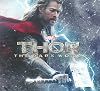
The Art of Thor the Dark World is a major improvement over "The Art of Thor the Movie", which had far too many pages of abstract designs for Jotunheim, and too few of the main characters and Asgard. TDW has more visually stimulating settings, and the Dark Elves are also more interesting than Jotuns. And here, the text enhances and expands upon the art in a meaningful way.
The book is laid out in a logical progression that mostly mirrors the film's narrative. All of the main characters have an show more updated look, but rather than just running through them all at once, they are covered as it relates to the story and settings. The movie opens with backstory narrative of the Dark Elves, and the Art book opens (after the introduction) with an overview of the Book of Yggdrasil, and how its design was based on illuminated texts. The film then jumps to our hero, Sif and the Warriors Three, engaged in battle. Thus, the book runs through their costume updates, as well as the development of Vanaheim, the look of its people and of the Marauders who are attacking them. The prose helps put the images in perspective by explaining the artists/filmmakers choices, and even how they tie back to the comic source. One of my favorite pages in this section is the evolution of Mjolnir, with a picture of each incarnation from the three films laid side by side. This made it much easier to see the subtle, but effective, differences.
The book then devotes a hefty section to the development of the Dark Elves, their technology and ships. It was time well spent. I thought the ships in the film were visually stunning and very creative, and it was interesting to see how they evolved and from where the artists drew inspiration. The editor discusses how Malekith was necessarily adapted from his comic book look and how the elves' masks came to be. When Jane comes to Asgard, the book follows her there. Most of the rest of the book is dedicated to Asgard's updated look. Alan Taylor had a specific vision to ground Asgard in reality, while still showing their advanced technology. The book goes through each of the major sets of Asgard, such as the Throne Room, Hall of Science, Medina, Frigga's chambers and the dungeons. The section then highlights the changes to characters as they relate to Asgard: Jane, Heimdall, Odin, Frigga and Loki.
The book closes with a very brief mention of the marketing for the film. Again, I feel Marvel should either expand on this or do a book specifically about the marketing for these films since it is so interesting.
The exterior covers mimic the design imagery of the Book of Yggdrasil and the book comes enclosed in slipcase, with full color wrap-around imagery. The front of the slipcase has Thor from the teaser poster, and the back has Loki as seen on his character poster in the destroyed throne room. Overall, this book is incredibly well done and quite beautiful. Highly recommended. show less
The book is laid out in a logical progression that mostly mirrors the film's narrative. All of the main characters have an show more updated look, but rather than just running through them all at once, they are covered as it relates to the story and settings. The movie opens with backstory narrative of the Dark Elves, and the Art book opens (after the introduction) with an overview of the Book of Yggdrasil, and how its design was based on illuminated texts. The film then jumps to our hero, Sif and the Warriors Three, engaged in battle. Thus, the book runs through their costume updates, as well as the development of Vanaheim, the look of its people and of the Marauders who are attacking them. The prose helps put the images in perspective by explaining the artists/filmmakers choices, and even how they tie back to the comic source. One of my favorite pages in this section is the evolution of Mjolnir, with a picture of each incarnation from the three films laid side by side. This made it much easier to see the subtle, but effective, differences.
The book then devotes a hefty section to the development of the Dark Elves, their technology and ships. It was time well spent. I thought the ships in the film were visually stunning and very creative, and it was interesting to see how they evolved and from where the artists drew inspiration. The editor discusses how Malekith was necessarily adapted from his comic book look and how the elves' masks came to be. When Jane comes to Asgard, the book follows her there. Most of the rest of the book is dedicated to Asgard's updated look. Alan Taylor had a specific vision to ground Asgard in reality, while still showing their advanced technology. The book goes through each of the major sets of Asgard, such as the Throne Room, Hall of Science, Medina, Frigga's chambers and the dungeons. The section then highlights the changes to characters as they relate to Asgard: Jane, Heimdall, Odin, Frigga and Loki.
The book closes with a very brief mention of the marketing for the film. Again, I feel Marvel should either expand on this or do a book specifically about the marketing for these films since it is so interesting.
The exterior covers mimic the design imagery of the Book of Yggdrasil and the book comes enclosed in slipcase, with full color wrap-around imagery. The front of the slipcase has Thor from the teaser poster, and the back has Loki as seen on his character poster in the destroyed throne room. Overall, this book is incredibly well done and quite beautiful. Highly recommended. show less
You May Also Like


Associated Authors
Statistics
- Works
- 31
- Also by
- 13
- Members
- 678
- Popularity
- #37,271
- Rating
- 3.8
- Reviews
- 16
- ISBNs
- 61
- Languages
- 3