
Liam Sharp
Author of Wonder Woman Vol. 1: The Lies (Rebirth)
Series
Works by Liam Sharp
Death's Head II, Volume 1 #2 - The Wild Hunt, Part 2: Reed Richards Dies Tonight! (1992) — Illustrator — 4 copies
Testament #16 — Illustrator — 3 copies
Death's Head II, Volume 2 #4 - The Lotus FX, Part Four: X-Terminations (1993) — Illustrator — 3 copies
Testament #14 — Illustrator — 2 copies
Testament #15 — Illustrator — 2 copies
Testament #13 — Illustrator — 2 copies
Testament #10 — Illustrator — 2 copies
Testament #17 — Illustrator — 2 copies
Testament #9 — Illustrator — 2 copies
Testament #19 — Illustrator — 2 copies
Testament #20 — Illustrator — 2 copies
Testament #21 — Illustrator — 2 copies
Testament #8 — Illustrator — 2 copies
Testament #22 — Illustrator — 2 copies
Starhenge #1 1 copy
Mono #1 1 copy
Event Horizon, Book Two 1 copy
Associated Works
The Batman Chronicles #2 — Penciler, some editions — 4 copies
Spawn: The Dark Ages #04 — Artist, Cover, some editions — 3 copies
Testament #12 — Cover artist — 2 copies
Testament #11 — Cover artist — 2 copies
Testament #7 — Cover artist — 2 copies
Testament #6 — Cover artist — 2 copies
Spawn: The Dark Ages #03 — Artist, Cover, some editions — 2 copies
Testament #18 — Cover artist — 2 copies
Tagged
Common Knowledge
- Birthdate
- 1968-05-02
- Gender
- male
- Occupations
- artist
writer
publisher - Nationality
- UK
- Birthplace
- Derby, England, UK
- Associated Place (for map)
- England, UK
Members
Reviews

So, I am as big a fan of Justice League Europe as you'll find. Years before I really got into comics collecting, I had complete runs of three series: Alpha Flight, Star Trek: Early Voyages, and Justice League Europe. Yeah, I have weird tastes. I was drawn to its seeming absurdity of premise (the Justice League... in Europe!), but I stayed because I loved the characters, especially Elongated Man, who remains a favorite to this day.
All this to say, is that I think the Extemists are dumb and show more probably the worse part of JLE. I think they appeared twice (in the storylines The Extremist Vector and Breakdowns), and as pompously serious dark and gritty genocidal villains, they were a complete mismatch for the fun tone of JLE. JLE could get serious when it needed to, but this was not the way to do it. Maybe they were intended as a commentary on the excesses of 1990s gritty comics, but then the commentary did not land. If as a hardcore fan of JLE, I don't give a crap about the Extremists... then who does?
Despite that, DC brought them back for Countdown to Final Crisis and even devoted a six-issue miniseries to their backstory! I can't fathom why. Countdown to Final Crisis is inexplicable enough; why does it have two six-issue miniseries that tie into it? Why would you pay money for this? What artistic purpose does this book serve? I don't mean "artistic" in a high-faluting way, I mean, "Why would anyone enjoy reading this?"
Answer: no one would. This is another Final Crisis tie-in that isn't worth the paper it's printed on.
DC Comics Crises: « Previous in sequence | Next in sequence » show less
All this to say, is that I think the Extemists are dumb and show more probably the worse part of JLE. I think they appeared twice (in the storylines The Extremist Vector and Breakdowns), and as pompously serious dark and gritty genocidal villains, they were a complete mismatch for the fun tone of JLE. JLE could get serious when it needed to, but this was not the way to do it. Maybe they were intended as a commentary on the excesses of 1990s gritty comics, but then the commentary did not land. If as a hardcore fan of JLE, I don't give a crap about the Extremists... then who does?
Despite that, DC brought them back for Countdown to Final Crisis and even devoted a six-issue miniseries to their backstory! I can't fathom why. Countdown to Final Crisis is inexplicable enough; why does it have two six-issue miniseries that tie into it? Why would you pay money for this? What artistic purpose does this book serve? I don't mean "artistic" in a high-faluting way, I mean, "Why would anyone enjoy reading this?"
Answer: no one would. This is another Final Crisis tie-in that isn't worth the paper it's printed on.
DC Comics Crises: « Previous in sequence | Next in sequence » show less
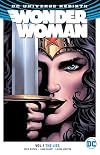
I really enjoyed this book. It was beautifully illustrated, promoted strong female friendship which are sorely lacking in a lot of comics I've read, and all out some serious toxic masculinity. Loved it
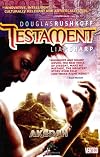
Strong start to a very interesting series.
I love the parallel ancient and modern storylines, and think he uses the visual separation between gods and humans very well indeed. I also appreciated the interaction between gods not generally believed in by the same sets of people - he has some really ambitious ideas in that respect and pulls them off pretty well.
The one thing that marred it was a certain amount of technobabble. Sometimes it would have been better to just leave the technology show more vague, rather than positing things that not only don't quite make sense, but also demystify the story a little too much. show less
I love the parallel ancient and modern storylines, and think he uses the visual separation between gods and humans very well indeed. I also appreciated the interaction between gods not generally believed in by the same sets of people - he has some really ambitious ideas in that respect and pulls them off pretty well.
The one thing that marred it was a certain amount of technobabble. Sometimes it would have been better to just leave the technology show more vague, rather than positing things that not only don't quite make sense, but also demystify the story a little too much. show less

Access a version of the below that includes illustrations on my blog here and here.
I had always intended to follow Death's Head out of A Cold Day in Hell! and into his solo series. If I had been smart, though, I would have picked up Panini's two-volume collection of his adventures; since Panini has (had?) the UK reprint rights to both Marvel and Doctor Who, they could include both Death's Head stories with Doctor Who elements and ones with Marvel elements. Alas, I did not, and that show more collection is now prohibitively expensive and/or just unavailable. Instead, I picked up this Marvel collection, which has to skip over, for example, Death's Head #8 because both the Doctor and Josiah W. Dogbolter appear in it.
So: in the Transformers storyline "The Legacy of Unicron!", Death's Head was lost in a time portal; in the Doctor Who Magazine story The Crossroads of Time, he emerged in the Doctor Who universe. At the end of that story, the Doctor sent him to Earth in the year 8162, setting up his appearances here. That means all the stories in the first half take place in the Doctor Who universe, and thus also Marvel UK's Dragon's Claws series must take place in the Who universe, though neither Lars Pearson's Ahistory nor the Tardis wiki seem to buy this argument. As I discussed in my review of A Cold Day in Hell!, the fact that Dragon's Claws is set in the 82nd century is actually what allows us to date a significant number of DWM stories: Dreamers of Death, The Free-Fall Warriors, The Moderator, The Shape Shifter, Polly the Glot, War-Game, the Kane's Story sequence, A Cold Day in Hell!, Redemption!, and many I haven't gotten to yet must take place in the 82nd century because Death's Head #8 established that Dogbolter was from the same era as Dragon's Claws. Yet, as far as I know, we never see Earth in DWM during what Lars Pearson calls "the Mazuma Era"; the status of humanity's homeworld in this time is only fleshed out in Dragon's Claws and in Death's Head #1-8. (I think? It may have appeared in passing in the Kane's Story sequence now that I think about it.)
Okay, okay, enough context, what about the stories? Reading this, at first I wondered if Death's Head could actually work as a solo character. What made him fun in The Transformers was the way he was above it all-- or rather, beneath it all. Here's this vast cosmic war happening, and especially in the 2006-set stories he originated in, it features titans of the universe. But Death's Head doesn't give a crap: he just cares about money, and if someone is going to call him a "bounty hunter" instead of a "freelance peacekeeping agent." The fun derives from the fact that Death's Head is basically operating in a totally different story to that of our usual protagonists and antagonists. But can that be maintained when he becomes the star of the show?
Most of the time, Simon Furman seemingly can't figure out how to do it. At first, this title really struggles because of Dragon's Claws. The first issue collected here is Dragon's Claws #5, and the story drops you right in, with no context for who these people are or why you should care about them. Which, okay, to be fair, it was their series and Death's Head was a guest star. Why should they be explained? But Death's Head was the breakout star of Marvel UK, and surely Death's Head fans followed him from The Transformers into this without picking up issues #1-4? Yet no concession is made for them. This is also true of some of the individual issues of the actual solo series once it gets started, especially #2, which really strongly assumes I understand who all these characters are and what they are doing when I just don't.
In issues #3-7, the series moves into its short-lived status quo, where Death's Head with his assistant Spratt set up a business in the Los Angeles Resettlement. There are two I particularly liked, two that make the format work. The first is #5, which brings back self-interested space trash Keepsake from the Doctor Who Magazine story Keepsake. Now, when I saw this, my reaction was, "uh, really?" because Keepsake wasn't exactly a noteworthy story where I was thinking, "let's bring back that guy." But when I read it, I finally saw what this series was doing and could do. In this one, Keepsake returns to L.A. to meet up with an old partner; between the two of them, they have a complete map to a buried treasure. Only Keepsake-- who now has a new girlfriend in tow-- ran out on his wife so that she wouldn't get part of his half, and so the wife hires Death's Head to get Keepsake. The result of this is a confusing panoply of Keepsake vs. ex-partner and Keepsake vs. ex-wife. But just like the Autobot/Decepticon war, Death's Head doesn't give a hoot, he just wants a payday. It's dumb, and it's fun because Death's Head agrees with us that it's dumb, and doesn't give the interpersonal dynamics any real thought if he gets his money.
Similarly, #7 is about Death's Head and Spratt chasing a mark-- but what they don't know is that two different bounty hunters are chasing down Death's Head. So these two bounty hunters are trying to kill him, which he doesn't know, and also trying to kill each other so that the other one doesn't get the credit. Again, this sense that Death's Head attitude means that he's just above it all is where these stories are the most fun.
But when they expect you to take these things seriously, they don't work, because much of the time, they are impossible to: a lot of macho early 1990s stuff, even though it's still the late 1980s. Too many stories are dependent on action, which I don't care about, or keeping track of a bunch of interchangeable nobodies. There are occasional flashes of wit and color, but overall the effect is drab.
(I did also like #1, where we get a series of flashbacks each of which ends with Death's Head laying down one of his principles of being a freelance peacekeeping agent.)
Still, I think the comic was getting somewhere and figuring itself out, which is why it's a bummer that #8 totally shifted the direction of the comic, though I'm sure there were good sales-related reasons for this. Due to rights issues, though, issue #8 can't be printed in this collection! Suffice it to say that the Doctor takes Death's Head out of the Doctor Who universe in 8162 and plops him in the Marvel universe in the present day; I will eventually read it when I pick up The Incomplete Death's Head. So now Death's Head is in his third universe thus far!
Issue #9 picks up with Death's Head on the roof of Four Freedoms Plaza, where the Fantastic Four live. At first they fight, of course, but then they must team up the Fantastic Four's security system goes haywire. At the end of this issue, the Fantastic Four try to send Death's Head back to 8162 (I guess no one knows he's in the wrong universe), but when Reed Richards realizes he's a paid killer, he switches it off, which ejects Death's Head in the far-off year of, um, 2020. (Iron Man 2020 had been a feature of some Marvel comics, so this was an established setting.) The set-up is a bit confusing, as Death's Head is already established, and trying to find money to fix up his spaceship... which didn't come with him... and which doesn't appear in 2020 until the issue's end!
These two issues are basically fine. There's some fun interplay between Death's Head and the FF, and the Iron Man 2020 has some great Death's Head moments, but on the other hand falls foul of the dull convolutions that bedevilled a number of the pre-time-jump stories. Overall though, one can sense a comic frantically searching for a new direction... and getting cancelled abruptly, as an obviously hastily final two pages in #10 sum up a lot.
After this, Death's Head doesn't have a status quo. The graphic novel The Body in Question (which has three parts; book one is set between the antepenultimate and penultimate pages of #10, and then books two and three after #10) makes the mistake of delving into the history of Death's Head, though it does reunite him with his supporting cast from his ongoing. No one cares about where Death's Head came from; what makes him interesting is what he does. Unfortunately this story gives us very little of that, instead spending time on a lot of cod mysticism. There is one good joke, though.
I don't know why Furman bothered bringing the supporting cast back, because they never appear again. We next follow Death's Head into Fantastic Four #338, when he's starting freelancing for the Time Variance Authority. This is not much of a Death's Head story; it's just a Fantastic Four one he happens to be in. Better use is made of him in Sensational She-Hulk #24; he's back in New York 2020... but in a grave for some reason. (He still has his TVA time-bike, though, because he never returned it.) The story is goofy, but enjoyable, and actually makes good use of the 2020 setting in that something She-Hulk does in 1991 has repercussions thirty years later... and vice versa. Then in 2011, he's being hired by aliens to fight on their behalf (against the Hulk, as Earth's champion). (I assume because of time travel again, but I don't think anyone says.) Each of these is probably fine as a guest appearance, but it is a pretty disappointing way for the character to go out. He's brought into the Marvel universe... and promptly amounts to nothing!
Part of the reason was that in 1992, he was killed off and replaced by Death's Head II, an "extreme" 1990s character. So Death's Head makes it into a new universe, and is killed off for his troubles. Simon Furman got the opportunity to kind of undo this in an issue of What If..., which has him uniting a team of 1992 superheroes to take down a villain in 2020. It probably would have been much more interesting if I was familiar with the story it was rewriting... but I also can't imagine I would enjoy reading that story either! Geoff Senior's usually solid art seems compromised in pursuit of the mediocre 1990s aesthetic, to boot.
So, I wish Furman had left Death's Head in Los Angeles 8162 and perfected that set-up instead. This was a pretty dismal way for a once-great character to go out. (Though, in my marathon at least, there is more Death's Head to come.)
(Also it seems like a bummer that this doesn't contain the 2011 Revolutionary War: Death's Head one-shot... I haven't read it, though, so maybe there's a good reason for that.)
Death's Head and Marvel UK: « Previous in sequence | Next in sequence » show less
I had always intended to follow Death's Head out of A Cold Day in Hell! and into his solo series. If I had been smart, though, I would have picked up Panini's two-volume collection of his adventures; since Panini has (had?) the UK reprint rights to both Marvel and Doctor Who, they could include both Death's Head stories with Doctor Who elements and ones with Marvel elements. Alas, I did not, and that show more collection is now prohibitively expensive and/or just unavailable. Instead, I picked up this Marvel collection, which has to skip over, for example, Death's Head #8 because both the Doctor and Josiah W. Dogbolter appear in it.
So: in the Transformers storyline "The Legacy of Unicron!", Death's Head was lost in a time portal; in the Doctor Who Magazine story The Crossroads of Time, he emerged in the Doctor Who universe. At the end of that story, the Doctor sent him to Earth in the year 8162, setting up his appearances here. That means all the stories in the first half take place in the Doctor Who universe, and thus also Marvel UK's Dragon's Claws series must take place in the Who universe, though neither Lars Pearson's Ahistory nor the Tardis wiki seem to buy this argument. As I discussed in my review of A Cold Day in Hell!, the fact that Dragon's Claws is set in the 82nd century is actually what allows us to date a significant number of DWM stories: Dreamers of Death, The Free-Fall Warriors, The Moderator, The Shape Shifter, Polly the Glot, War-Game, the Kane's Story sequence, A Cold Day in Hell!, Redemption!, and many I haven't gotten to yet must take place in the 82nd century because Death's Head #8 established that Dogbolter was from the same era as Dragon's Claws. Yet, as far as I know, we never see Earth in DWM during what Lars Pearson calls "the Mazuma Era"; the status of humanity's homeworld in this time is only fleshed out in Dragon's Claws and in Death's Head #1-8. (I think? It may have appeared in passing in the Kane's Story sequence now that I think about it.)
Okay, okay, enough context, what about the stories? Reading this, at first I wondered if Death's Head could actually work as a solo character. What made him fun in The Transformers was the way he was above it all-- or rather, beneath it all. Here's this vast cosmic war happening, and especially in the 2006-set stories he originated in, it features titans of the universe. But Death's Head doesn't give a crap: he just cares about money, and if someone is going to call him a "bounty hunter" instead of a "freelance peacekeeping agent." The fun derives from the fact that Death's Head is basically operating in a totally different story to that of our usual protagonists and antagonists. But can that be maintained when he becomes the star of the show?
Most of the time, Simon Furman seemingly can't figure out how to do it. At first, this title really struggles because of Dragon's Claws. The first issue collected here is Dragon's Claws #5, and the story drops you right in, with no context for who these people are or why you should care about them. Which, okay, to be fair, it was their series and Death's Head was a guest star. Why should they be explained? But Death's Head was the breakout star of Marvel UK, and surely Death's Head fans followed him from The Transformers into this without picking up issues #1-4? Yet no concession is made for them. This is also true of some of the individual issues of the actual solo series once it gets started, especially #2, which really strongly assumes I understand who all these characters are and what they are doing when I just don't.
In issues #3-7, the series moves into its short-lived status quo, where Death's Head with his assistant Spratt set up a business in the Los Angeles Resettlement. There are two I particularly liked, two that make the format work. The first is #5, which brings back self-interested space trash Keepsake from the Doctor Who Magazine story Keepsake. Now, when I saw this, my reaction was, "uh, really?" because Keepsake wasn't exactly a noteworthy story where I was thinking, "let's bring back that guy." But when I read it, I finally saw what this series was doing and could do. In this one, Keepsake returns to L.A. to meet up with an old partner; between the two of them, they have a complete map to a buried treasure. Only Keepsake-- who now has a new girlfriend in tow-- ran out on his wife so that she wouldn't get part of his half, and so the wife hires Death's Head to get Keepsake. The result of this is a confusing panoply of Keepsake vs. ex-partner and Keepsake vs. ex-wife. But just like the Autobot/Decepticon war, Death's Head doesn't give a hoot, he just wants a payday. It's dumb, and it's fun because Death's Head agrees with us that it's dumb, and doesn't give the interpersonal dynamics any real thought if he gets his money.
Similarly, #7 is about Death's Head and Spratt chasing a mark-- but what they don't know is that two different bounty hunters are chasing down Death's Head. So these two bounty hunters are trying to kill him, which he doesn't know, and also trying to kill each other so that the other one doesn't get the credit. Again, this sense that Death's Head attitude means that he's just above it all is where these stories are the most fun.
But when they expect you to take these things seriously, they don't work, because much of the time, they are impossible to: a lot of macho early 1990s stuff, even though it's still the late 1980s. Too many stories are dependent on action, which I don't care about, or keeping track of a bunch of interchangeable nobodies. There are occasional flashes of wit and color, but overall the effect is drab.
(I did also like #1, where we get a series of flashbacks each of which ends with Death's Head laying down one of his principles of being a freelance peacekeeping agent.)
Still, I think the comic was getting somewhere and figuring itself out, which is why it's a bummer that #8 totally shifted the direction of the comic, though I'm sure there were good sales-related reasons for this. Due to rights issues, though, issue #8 can't be printed in this collection! Suffice it to say that the Doctor takes Death's Head out of the Doctor Who universe in 8162 and plops him in the Marvel universe in the present day; I will eventually read it when I pick up The Incomplete Death's Head. So now Death's Head is in his third universe thus far!
Issue #9 picks up with Death's Head on the roof of Four Freedoms Plaza, where the Fantastic Four live. At first they fight, of course, but then they must team up the Fantastic Four's security system goes haywire. At the end of this issue, the Fantastic Four try to send Death's Head back to 8162 (I guess no one knows he's in the wrong universe), but when Reed Richards realizes he's a paid killer, he switches it off, which ejects Death's Head in the far-off year of, um, 2020. (Iron Man 2020 had been a feature of some Marvel comics, so this was an established setting.) The set-up is a bit confusing, as Death's Head is already established, and trying to find money to fix up his spaceship... which didn't come with him... and which doesn't appear in 2020 until the issue's end!
These two issues are basically fine. There's some fun interplay between Death's Head and the FF, and the Iron Man 2020 has some great Death's Head moments, but on the other hand falls foul of the dull convolutions that bedevilled a number of the pre-time-jump stories. Overall though, one can sense a comic frantically searching for a new direction... and getting cancelled abruptly, as an obviously hastily final two pages in #10 sum up a lot.
After this, Death's Head doesn't have a status quo. The graphic novel The Body in Question (which has three parts; book one is set between the antepenultimate and penultimate pages of #10, and then books two and three after #10) makes the mistake of delving into the history of Death's Head, though it does reunite him with his supporting cast from his ongoing. No one cares about where Death's Head came from; what makes him interesting is what he does. Unfortunately this story gives us very little of that, instead spending time on a lot of cod mysticism. There is one good joke, though.
I don't know why Furman bothered bringing the supporting cast back, because they never appear again. We next follow Death's Head into Fantastic Four #338, when he's starting freelancing for the Time Variance Authority. This is not much of a Death's Head story; it's just a Fantastic Four one he happens to be in. Better use is made of him in Sensational She-Hulk #24; he's back in New York 2020... but in a grave for some reason. (He still has his TVA time-bike, though, because he never returned it.) The story is goofy, but enjoyable, and actually makes good use of the 2020 setting in that something She-Hulk does in 1991 has repercussions thirty years later... and vice versa. Then in 2011, he's being hired by aliens to fight on their behalf (against the Hulk, as Earth's champion). (I assume because of time travel again, but I don't think anyone says.) Each of these is probably fine as a guest appearance, but it is a pretty disappointing way for the character to go out. He's brought into the Marvel universe... and promptly amounts to nothing!
Part of the reason was that in 1992, he was killed off and replaced by Death's Head II, an "extreme" 1990s character. So Death's Head makes it into a new universe, and is killed off for his troubles. Simon Furman got the opportunity to kind of undo this in an issue of What If..., which has him uniting a team of 1992 superheroes to take down a villain in 2020. It probably would have been much more interesting if I was familiar with the story it was rewriting... but I also can't imagine I would enjoy reading that story either! Geoff Senior's usually solid art seems compromised in pursuit of the mediocre 1990s aesthetic, to boot.
So, I wish Furman had left Death's Head in Los Angeles 8162 and perfected that set-up instead. This was a pretty dismal way for a once-great character to go out. (Though, in my marathon at least, there is more Death's Head to come.)
(Also it seems like a bummer that this doesn't contain the 2011 Revolutionary War: Death's Head one-shot... I haven't read it, though, so maybe there's a good reason for that.)
Death's Head and Marvel UK: « Previous in sequence | Next in sequence » show less
Lists
Awards

You May Also Like


Associated Authors
Statistics
- Works
- 77
- Also by
- 25
- Members
- 1,082
- Popularity
- #23,754
- Rating
- 3.6
- Reviews
- 60
- ISBNs
- 43
- Languages
- 6
- Favorited
- 1