
Jan Marsh
Author of Pre-Raphaelite Women: Images of Femininity in Pre-Raphaelite Art
About the Author
Jan Marsh was Leverhulme Fellow at the National Portrait Gallery, researching the Black presence in Britain in the nineteenth century.
Works by Jan Marsh
Visions of Love and Life: Pre-Raphaelite Art from the Birmingham Collection, England (1995) 44 copies, 1 review
Pre-Raphaelite Circle: NPG Insights, The Pre-Raphaelite Circle (National Portrait Gallery Insights) (2005) — Author — 33 copies
Associated Works
Tagged
Common Knowledge
- Birthdate
- 1942-10-05
- Gender
- female
- Occupations
- biographer
art curator
editor
scholar - Organizations
- Royal Historical Society
William Morris Society (president) - Awards and honors
- Fellow at Queen Mary, University of London ( [2001])
Fellow, Royal Historical Society - Nationality
- England
UK - Places of residence
- England, UK
- Map Location
- UK
Members
Reviews

"It is anyway pointless to try to suppress myth on the grounds of factual error." Allows that myth serves a purpose of its own. A sort of Serenity Prayer for scholars of people like the Pre-Raphs and Byron. "[M]yths...say more about the society that recyels them than about the figures that inhabit them."
A feminist reading that manages not to be a diatribe. (Some recent writers about B's women could have benefited from a study of this.) Helps tremendously that Marsh is a Rossetti biographer, show more knows him well, and doesn't just see him simplistically through the limited lens of his muses. show less
A feminist reading that manages not to be a diatribe. (Some recent writers about B's women could have benefited from a study of this.) Helps tremendously that Marsh is a Rossetti biographer, show more knows him well, and doesn't just see him simplistically through the limited lens of his muses. show less

Bloomsbury Women : Distinct Figures in Life and Art by Jan Marsh. Marsh has written a number of ground-breaking biographies, including PreRaphaelite Sisterhood, Jane and May Morris, The Legend of Elizabeth Siddal and her highly acclaimed work, Christina Rossetti. She has also scripted arts documentary programmes for radio and television, and has curated exhibitions of work by women painters of the PreRaphaelite movement. She is a contributor to the Dictionary of Women Artists and a frequent show more lecturer in Britain, North America and Japan. This is a reprint of the original 1995 book by Endeavour Press.
After reading Virginia Woolf's diaries and letters I thought I had everything I needed to know about the Bloomsbury Group. I also touched on Leonard Woolf's writing and dug into Vita Sackville-West. I knew of Vanessa Bell because of the care she gave Virginia Woolf during her breakdowns. I didn't know about Vanessa Bell and her relationship and child with Duncan Grant. It seems the group was very fluid in their sexual relationships as well as gender roles and identities. Acceptance was both hetero and homosexual. Their openness was unheard of at the time and much was done far from the prying eyes of society.
Marsh centers her study on Virginia Woolf and even more so on Vanessa Bell. Despite the title men are prominent in the reading; This is the first I noted David "Bunny" Garnett and a few others from the group. Bloomsbury was also important and unique in that women were treated as equals. Wealth and education seemed to not to play a major role either. It was a matter of art, writing, and painting, that showed one's worth to the group.
An interesting aspect that I picked up on in this book was in the style of both sisters. Vanessa was inspired by the post-impressionist painters of the group, Duncan Grant, and Roger Fry. Her heavy strokes and "blank faces" left the observer understanding from the color and shape rather than facial expressions. Virginia Woolf attempted to capture effect in her writing. She described her writing as visual impressionistic. Vanessa Bell chose not to use the most telling part of human emotion, the face. Virginia Woolf did the same by avoiding a narrative story in her writing.
A short, but very informative, book showing the inner workings and people of The Bloomsbury Group -- those who stayed, those who made it happen, and those who didn't measure up. Its demise is also shared by the tragedies experienced by the remaining members. Although there were children and members to carry on, the final loss of Virginia Woolf darkened the group and the remaining members went their own ways. show less
After reading Virginia Woolf's diaries and letters I thought I had everything I needed to know about the Bloomsbury Group. I also touched on Leonard Woolf's writing and dug into Vita Sackville-West. I knew of Vanessa Bell because of the care she gave Virginia Woolf during her breakdowns. I didn't know about Vanessa Bell and her relationship and child with Duncan Grant. It seems the group was very fluid in their sexual relationships as well as gender roles and identities. Acceptance was both hetero and homosexual. Their openness was unheard of at the time and much was done far from the prying eyes of society.
Marsh centers her study on Virginia Woolf and even more so on Vanessa Bell. Despite the title men are prominent in the reading; This is the first I noted David "Bunny" Garnett and a few others from the group. Bloomsbury was also important and unique in that women were treated as equals. Wealth and education seemed to not to play a major role either. It was a matter of art, writing, and painting, that showed one's worth to the group.
An interesting aspect that I picked up on in this book was in the style of both sisters. Vanessa was inspired by the post-impressionist painters of the group, Duncan Grant, and Roger Fry. Her heavy strokes and "blank faces" left the observer understanding from the color and shape rather than facial expressions. Virginia Woolf attempted to capture effect in her writing. She described her writing as visual impressionistic. Vanessa Bell chose not to use the most telling part of human emotion, the face. Virginia Woolf did the same by avoiding a narrative story in her writing.
A short, but very informative, book showing the inner workings and people of The Bloomsbury Group -- those who stayed, those who made it happen, and those who didn't measure up. Its demise is also shared by the tragedies experienced by the remaining members. Although there were children and members to carry on, the final loss of Virginia Woolf darkened the group and the remaining members went their own ways. show less

Jan Marsh is considered to be an expert in her research of the Pre-Raphaelites. This is an incredibly well written and beautiful book.
The Pre-Raphaelite Brotherhood began as a small group of artists who took the art world by storm in their unique subject matter and style.
Stoic, staid and rigid Victorian society did not quite know how to handle three men who began the Pre-Raphaelite Brotherhood and turned pre-conceived notions of beauty upside down. United in youth, talent and idealism, they show more created a movement representing incredible beauty.
Using models whom Dante Gabriel Rossetti, William Holden Hunt and John Everett Millais deemed "Stunners", at a time when modeling for artists was a step above prostitution, the choice to sit for the artists was risky for some. While some of the women were sisters, wives or daughters, others, such as Lizzie Siddal were of the poorer class.
Lizzie, who was the model of perhaps the most famous pre-raphaelite painting -- John Everett Millais' Opehlia, worked in a hat shop
Fanny Corthforth, the model for Dante Gabriel Rossetti's paintings
Fazio's Mistress and Bocca Baciata, was a prostitute.
William Holden Hunt's painting The Awakening Conscience, included Annie Miller as the model. Enamored by Annie, Hunt rescued her from life on the street and tried to school her in the ways of "respectable women."
The members of the Pre-Raphaelite brotherhood were obsessed with the subject mater of the fallen woman. Depicting the moment of the kept woman's remorse, Hunt's painting was a bold statement at a time when cherubs and angels were the theme of art.
I highly recommend this book to those interested in this incredible art. show less
The Pre-Raphaelite Brotherhood began as a small group of artists who took the art world by storm in their unique subject matter and style.
Stoic, staid and rigid Victorian society did not quite know how to handle three men who began the Pre-Raphaelite Brotherhood and turned pre-conceived notions of beauty upside down. United in youth, talent and idealism, they show more created a movement representing incredible beauty.
Using models whom Dante Gabriel Rossetti, William Holden Hunt and John Everett Millais deemed "Stunners", at a time when modeling for artists was a step above prostitution, the choice to sit for the artists was risky for some. While some of the women were sisters, wives or daughters, others, such as Lizzie Siddal were of the poorer class.
Lizzie, who was the model of perhaps the most famous pre-raphaelite painting -- John Everett Millais' Opehlia, worked in a hat shop
Fanny Corthforth, the model for Dante Gabriel Rossetti's paintings
Fazio's Mistress and Bocca Baciata, was a prostitute.
William Holden Hunt's painting The Awakening Conscience, included Annie Miller as the model. Enamored by Annie, Hunt rescued her from life on the street and tried to school her in the ways of "respectable women."
The members of the Pre-Raphaelite brotherhood were obsessed with the subject mater of the fallen woman. Depicting the moment of the kept woman's remorse, Hunt's painting was a bold statement at a time when cherubs and angels were the theme of art.
I highly recommend this book to those interested in this incredible art. show less
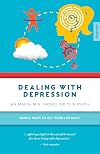
Dealing with Depression: Simple Ways to Get Your Life Back is written by clinical psychologist Jan Marsh. It offers strategies to be used either alone in milder forms of depression or in conjunction with medication or psychotherapy. Ideas from several therapeutic approaches are incorporated, including cognitive behavioural therapy, acceptance and commitment therapy, and compassion focused therapy.
The first part of the book covers information about depression and what its causes are, and show more there is a succinct overview of the complex contributing factors to depression. There is also a discussion around some of the possible purposes that depression may serve.
The majority of the book is focused on practical solutions that can be implemented in order to manage depression and improve your life. All of the suggestions are down to earth and accessible, even for someone new to managing depression.
Several case examples are given in the first chapter that represent different patterns of depression. These examples continue to be used throughout the book to illustrate how the different points may apply in different situations. Several of the examples involved depression that had situational contributing factors, but there was also one who had quite a biologically based depression, which I’m glad was incorporated.
Early on the book, the author cautions “If you are wondering whether you can survive the way you feel or are having thoughts of ending your life, this book is not for you yet.” I thought that was very well put, and showed awareness that not all interventions are going to be appropriate at particular times. It’s also refreshing when a book does not claim to be something that it’s not.
The author explains that knowledge is power in beating depression, which I really appreciated, since it’s certainly very consistent with the message that I try to spread.
One of the things that stuck out for me was the author’s comment that engaging in self-care involves moving big questions to the back burner and focusing on the hear and now. It can be easy to push self-care to the bottom of the priority list, but I thought this was a good way of capturing the purpose of self-care.
I also like this line: “A belief that worrying is necessary is not rational.” Worrying can inadvertently become a part of the job description with depression, and this was a good reminder that we need to shut those kind of thoughts down.
Various suggestions are offered for breathing exercises, sleep strategies, healthy eating, and exercise. Questions are given to help challenge negative thoughts, and there are tips on handling difficult emotions.
The chapter on spirituality touches briefly on religion but also covers a wide range of topics including values, mindfulness, gratitude, and forgiveness. There’s a helpful chapter of resilience that also touches on a number of different ideas, including knowing your strengths, celebrating your successes, and managing obstacles.
The book is written in clear, simple language, making it easy to read even if concentration is an issue. It’s concise, so it’s able to cover a lot of ground without being particularly lengthy. There’s a very practical focus, with exercises that the reader can actually use. The book probably has the most to offer to those who are early on in their depression journey, but it’s also relevant for people who have more experience with depression. And on an entirely superficial note, although the on-screen image doesn’t quite capture it, the cover is my favourite colour. 🙂
I received a copy of this book from the publisher in exchange for an honest review. show less
The first part of the book covers information about depression and what its causes are, and show more there is a succinct overview of the complex contributing factors to depression. There is also a discussion around some of the possible purposes that depression may serve.
The majority of the book is focused on practical solutions that can be implemented in order to manage depression and improve your life. All of the suggestions are down to earth and accessible, even for someone new to managing depression.
Several case examples are given in the first chapter that represent different patterns of depression. These examples continue to be used throughout the book to illustrate how the different points may apply in different situations. Several of the examples involved depression that had situational contributing factors, but there was also one who had quite a biologically based depression, which I’m glad was incorporated.
Early on the book, the author cautions “If you are wondering whether you can survive the way you feel or are having thoughts of ending your life, this book is not for you yet.” I thought that was very well put, and showed awareness that not all interventions are going to be appropriate at particular times. It’s also refreshing when a book does not claim to be something that it’s not.
The author explains that knowledge is power in beating depression, which I really appreciated, since it’s certainly very consistent with the message that I try to spread.
One of the things that stuck out for me was the author’s comment that engaging in self-care involves moving big questions to the back burner and focusing on the hear and now. It can be easy to push self-care to the bottom of the priority list, but I thought this was a good way of capturing the purpose of self-care.
I also like this line: “A belief that worrying is necessary is not rational.” Worrying can inadvertently become a part of the job description with depression, and this was a good reminder that we need to shut those kind of thoughts down.
Various suggestions are offered for breathing exercises, sleep strategies, healthy eating, and exercise. Questions are given to help challenge negative thoughts, and there are tips on handling difficult emotions.
The chapter on spirituality touches briefly on religion but also covers a wide range of topics including values, mindfulness, gratitude, and forgiveness. There’s a helpful chapter of resilience that also touches on a number of different ideas, including knowing your strengths, celebrating your successes, and managing obstacles.
The book is written in clear, simple language, making it easy to read even if concentration is an issue. It’s concise, so it’s able to cover a lot of ground without being particularly lengthy. There’s a very practical focus, with exercises that the reader can actually use. The book probably has the most to offer to those who are early on in their depression journey, but it’s also relevant for people who have more experience with depression. And on an entirely superficial note, although the on-screen image doesn’t quite capture it, the cover is my favourite colour. 🙂
I received a copy of this book from the publisher in exchange for an honest review. show less
You May Also Like


Associated Authors
Statistics
- Works
- 34
- Also by
- 1
- Members
- 1,038
- Popularity
- #24,806
- Rating
- 4.1
- Reviews
- 8
- ISBNs
- 72
- Favorited
- 2