
Lucinda Hawksley
Author of Essential Pre-Raphaelites
About the Author
Lucinda Hawksley is an author, broadcaster and public speaker. She has written more than twenty books, including critically acclaimed biographies, art history, social history, the history of London and travel writing. This is her third book about her great great great grandfather, Charles Dickens. show more Lucinda has appeared on television and radio programmes around the globe. She is a Patron of the Charles Dickens Museum in London. show less
Image credit: lucindahawksley.com
Works by Lucinda Hawksley
Bitten By Witch Fever: Wallpaper & Arsenic in the Nineteenth-Century Home (2016) 127 copies, 2 reviews
The Victorian Treasury: A Collection of Fascinating Facts and Insights About the Victorian Era (2016) 25 copies, 1 review
Victorian Christmas: Traditional Recipes, Decorations, Activities, and Carols (2024) 22 copies, 1 review
The London Treasury: A Collection of Cultural and Historical Insights into a Great City (2016) 17 copies
Letters of Great Women: Extraordinary Correspondence from History's Remarkable Women (2021) 12 copies
Associated Works
Tagged
Common Knowledge
- Canonical name
- Hawksley, Lucinda
- Legal name
- Hawksley, Lucinda Anne Dickens
- Birthdate
- 1970-11-17
- Gender
- female
- Occupations
- author
art historian
public speaker - Organizations
- Society of Authors
- Agent
- Christopher Sinclair Stevenson
- Relationships
- Dickens, Charles (great-great-great-grandfather)
- Short biography
- Great-great-great-granddaughter of Charles Dickens.
- Nationality
- UK
- Birthplace
- Sheffield, South Yorkshire, England, UK
- Places of residence
- London, England, UK
- Map Location
- England, UK
Members
Reviews
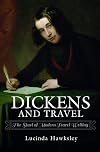
Travel writer and great-great-great-granddaughter of Charles Dickens, Lucinda Hawksley has written about her illustrious ancestor, including Dickens and Christmas. Her newest book explores Dickens as a travel writer. “Almost everywhere I have travelled,” she shares, “I have discovered a connection with my great-great-great grandfather.”
It’s been perhaps forty years since I read a biography on Dicken, and I had no recollection of his extensive travels across Europe. I was aware of show more his visits to America. I will admit, I have not read ALL of Dickens’ books, although a complete set has been on my shelf for almost fifty years. I was surprised to learn how many of his books reflect his experience abroad.
When depression hit him, his wanderlust inspired him to go abroad, not only on tours but to take up residence for a lengthy time in Italy and Paris. Hawksley draws from Dickens’ letters, articles, and books to provide quotes about his experiences. I loved reading them, enjoying Dickens’ humor and vivid descriptions.
Dickens traveling began in England when he was a journalist seeking to cover stories, “adrenaline-fueled travels,” Hawskely calls them. “Belated on miry by-roads, towards the small hours, forty or fifty miles from Long, in a wheelless carriage, with exhausted horses and drunken postboys,” Dickens wrote, arriving in time to turn in his story to the printers. The roads were muddy and rough, the countryside held robbers. His experiences informs The Posthumous Papers of the Pickwick Club.
What a prodigious walker Dickens was! Day-long walks in all kinds of weather. Consider Dickens’ description of one day in Scotland: “To-day we have had a journey of between 50 and 60 miles, though the bleakest and most desolate part of Scotland, where the hill-tops are still covered with great patches of snow, and the road winds over steep mountain-passes, and on the brink of deep brooks and precipices.” Another day it took four hours to walk sixteen miles in a gale, his wife Catherine’s timely removal from the carriage coming before it was caught up in a flood.
Everywhere he went, Dickens toured the prisons and noted the conditions of the poorest neighborhoods. He was particularly appalled by slavery. Southerners persisted in asking him his feelings about their ‘domestic institution,’ and he told them what he thought. He didn’t finish his American tour, turning back North.
“Party feeling runs high,” he wrote about 1842 America, “the great constitutional feature of this institution being, that directly the acrimony of the last election is over, the acrimony of the next one begins…” (Some things never change!)
One American custom that disgusted him was spitting. He describes floors slick with it, “the stone floor looks as if it were paved with open oysters.”
Dickens met many American writers, including a young Edgar Allan Poe, who was inspired by Dicken’s pet raven Grip when he wrote his famous poem The Raven. Grip ended up in the Philadelphia Free Library! In Washington D. C. he dined with John Quincy Adams, noting that “Adams is a fine old fellow-seventy-six years old, but with most surprising vigor, memory, readiness, and pluck.” He felt sympathy for the Native Americans, reduced to assimilation for survival, and he was appalled by the destruction of the country’s primal forests.
Dickens wrote, “Canada has held, and always will retain, a foremost place in my remembrance.”
Lengthy quotations from Dickens on Italy describes its beauty and the discomfort: “…but in the day you must keep the lattice-blinds close shut, or the sun would drive you mad; and when the sun goes down you must shut up all the windows or the mosquitoes would tempt you to commit suicide.” He also noted “the fleas, whose size is prodigious, and whose name is Legion, and who populate the coach-house to the extent that I daily expect to see the carriage going off bodily, drawn by myriads of industrious fleas in harness.”
He especially loved Paris, France, “the most extraordinary place in the world.” He met Victor Hugo, Alexander Dumas, and George Sand. He reveled in his fame, while Catherine became more unhappy. They had been happy for many years, but after many children, and becoming stout, she was losing him. Dickens fell in love with actress Ellen Ternan, who was his daughter’s age. Catherine moved out, and Dickens set Ellen up in an apartment with her mother.
He made a second trip to America to raise money, but his health was poor during this time, with a cough and a swollen foot, unable to sleep or eat, dependent on laudanum. His hoped for trip to Australia and New Zealand never happened; Dickens died at age 58.
I so enjoyed this book and I have to wonder why I never read his travel books. It is something to look forward to.
I received a free egalley from Pen & Sword History through NetGalley. My review is fair and unbiased. show less
It’s been perhaps forty years since I read a biography on Dicken, and I had no recollection of his extensive travels across Europe. I was aware of show more his visits to America. I will admit, I have not read ALL of Dickens’ books, although a complete set has been on my shelf for almost fifty years. I was surprised to learn how many of his books reflect his experience abroad.
When depression hit him, his wanderlust inspired him to go abroad, not only on tours but to take up residence for a lengthy time in Italy and Paris. Hawksley draws from Dickens’ letters, articles, and books to provide quotes about his experiences. I loved reading them, enjoying Dickens’ humor and vivid descriptions.
Dickens traveling began in England when he was a journalist seeking to cover stories, “adrenaline-fueled travels,” Hawskely calls them. “Belated on miry by-roads, towards the small hours, forty or fifty miles from Long, in a wheelless carriage, with exhausted horses and drunken postboys,” Dickens wrote, arriving in time to turn in his story to the printers. The roads were muddy and rough, the countryside held robbers. His experiences informs The Posthumous Papers of the Pickwick Club.
What a prodigious walker Dickens was! Day-long walks in all kinds of weather. Consider Dickens’ description of one day in Scotland: “To-day we have had a journey of between 50 and 60 miles, though the bleakest and most desolate part of Scotland, where the hill-tops are still covered with great patches of snow, and the road winds over steep mountain-passes, and on the brink of deep brooks and precipices.” Another day it took four hours to walk sixteen miles in a gale, his wife Catherine’s timely removal from the carriage coming before it was caught up in a flood.
Everywhere he went, Dickens toured the prisons and noted the conditions of the poorest neighborhoods. He was particularly appalled by slavery. Southerners persisted in asking him his feelings about their ‘domestic institution,’ and he told them what he thought. He didn’t finish his American tour, turning back North.
“Party feeling runs high,” he wrote about 1842 America, “the great constitutional feature of this institution being, that directly the acrimony of the last election is over, the acrimony of the next one begins…” (Some things never change!)
One American custom that disgusted him was spitting. He describes floors slick with it, “the stone floor looks as if it were paved with open oysters.”
Dickens met many American writers, including a young Edgar Allan Poe, who was inspired by Dicken’s pet raven Grip when he wrote his famous poem The Raven. Grip ended up in the Philadelphia Free Library! In Washington D. C. he dined with John Quincy Adams, noting that “Adams is a fine old fellow-seventy-six years old, but with most surprising vigor, memory, readiness, and pluck.” He felt sympathy for the Native Americans, reduced to assimilation for survival, and he was appalled by the destruction of the country’s primal forests.
Dickens wrote, “Canada has held, and always will retain, a foremost place in my remembrance.”
Lengthy quotations from Dickens on Italy describes its beauty and the discomfort: “…but in the day you must keep the lattice-blinds close shut, or the sun would drive you mad; and when the sun goes down you must shut up all the windows or the mosquitoes would tempt you to commit suicide.” He also noted “the fleas, whose size is prodigious, and whose name is Legion, and who populate the coach-house to the extent that I daily expect to see the carriage going off bodily, drawn by myriads of industrious fleas in harness.”
He especially loved Paris, France, “the most extraordinary place in the world.” He met Victor Hugo, Alexander Dumas, and George Sand. He reveled in his fame, while Catherine became more unhappy. They had been happy for many years, but after many children, and becoming stout, she was losing him. Dickens fell in love with actress Ellen Ternan, who was his daughter’s age. Catherine moved out, and Dickens set Ellen up in an apartment with her mother.
He made a second trip to America to raise money, but his health was poor during this time, with a cough and a swollen foot, unable to sleep or eat, dependent on laudanum. His hoped for trip to Australia and New Zealand never happened; Dickens died at age 58.
I so enjoyed this book and I have to wonder why I never read his travel books. It is something to look forward to.
I received a free egalley from Pen & Sword History through NetGalley. My review is fair and unbiased. show less
Victorian Christmas: Traditional Recipes, Decorations, Activities, and Carols by Lucinda Dickens Hawksley
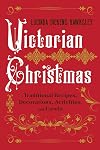
Won a hardback copy of this book in a Goodreads giveaway!
Really, really enjoyed this read. I especially appreciated the historical context provided for all of the sections. I learned a ton and found every bit of it fascinating. The color photos and illustrations were lovely and demonstrated just how much time and effort had gone into this book's making; the level of research was top-notch. The vegan and vegetarian versions were not only spot-on for me as a vegetarian who eats a bunch of show more vegan food, but in keeping with the Victorian period—in this way, the book's content and focus were in alignment, which was a nice parallel and inclusive to boot! The sections all included more basic and more complicated options (e.g., more extensive decorations and some very easy to make, quick carols and longer ones), which was wonderful to see depending on one's mood, availability, energy, etc. I've always wondered about facts like why Santa is generally dressed in red and white (hint: coca-cola) and who wrote what poems, stories, etc. (hint: a famous one was actually submitted anonymously, so it's impossible to say for certain!), and this book didn't disappoint in providing satisfactory answers. I could have read even more in fact, and wouldn't hesitate to pick up a volume two if ever Hawksley decided to write one.
Love this book and will likely happily gift multiple copies to friends. What a unique, fun and beautiful addition to the holidays! show less
Really, really enjoyed this read. I especially appreciated the historical context provided for all of the sections. I learned a ton and found every bit of it fascinating. The color photos and illustrations were lovely and demonstrated just how much time and effort had gone into this book's making; the level of research was top-notch. The vegan and vegetarian versions were not only spot-on for me as a vegetarian who eats a bunch of show more vegan food, but in keeping with the Victorian period—in this way, the book's content and focus were in alignment, which was a nice parallel and inclusive to boot! The sections all included more basic and more complicated options (e.g., more extensive decorations and some very easy to make, quick carols and longer ones), which was wonderful to see depending on one's mood, availability, energy, etc. I've always wondered about facts like why Santa is generally dressed in red and white (hint: coca-cola) and who wrote what poems, stories, etc. (hint: a famous one was actually submitted anonymously, so it's impossible to say for certain!), and this book didn't disappoint in providing satisfactory answers. I could have read even more in fact, and wouldn't hesitate to pick up a volume two if ever Hawksley decided to write one.
Love this book and will likely happily gift multiple copies to friends. What a unique, fun and beautiful addition to the holidays! show less
A Christmas Carol has been my favorite book since childhood. Something about the images of Cratchit skipping home to be with his family and Scrooge skulking along the darkened streets seeing ghostly funeral carriages and his dead partner just created such magic in my imagination. I have reread the book many times, watched many movies based on the story and enjoyed multiple theater productions (except the one I'd really really really love to see.....Patrick's Stewart's one man show as show more Scrooge). I love this book. I love its message. I love its humor. I love its dark portrait of the cruelty of man and the struggle for joy to remain where hope is fading. But most of all, I think I revere the message that redemption is possible. If even the most unemotional, greedy and covetous old geezer can be turned into a generous, happy and joyful person.....then all of us have a chance, right?
I have a degree in literature. I read every novel, every short story, every grocery list Dickens ever wrote and was forced to expound voluminously on the merits or disappointments of each. It wasn't like when I was growing up and enjoyed reading about Oliver Twist and the rest of his scores of characters just for the joy of reading. As an adult I had to read, examine and dissolve my brain into the story. It's a much more dismal trip when it's done for learning rather than imagination. Dickens' writing is dark, gloomy and mostly depressing....usually with some happy twist at the end, for a main character at least. Most side characters get left chin deep in their own mess or dead. As an adult A Christmas Carol still shone bright through the darkness for me. A beacon among the other writings of Dickens. It has the most joy, the most hope and the most kindness of anything I was (forced) required to read from Dickens. A classic book that can withstand the requirements of higher learning and adulting is truly a classic book. :) And it's still my favorite. That must be distinctly understood, or nothing wondrous can come of the book review I am about to relate.
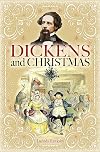
Dickens and Christmas. I knew I was going to love this book before I even started reading. And I wasn't disappointed.
This book is a wonderful mix of information about Dickens' life, Christmas traditions in his lifetime, and impressions of the holiday from his personal writings and novels. It also includes snippets from newspaper articles from the time, biographical information from family letters and his daughter's book. Everything from Twelfth Night cakes to house parties. :) I understand much more about how Dickens' rough childhood, his life experiences and his anger at how the poor were treated colored his writing, but yet made him love the Christmas season. And he made others love it, too.
Wonderful book!! Well-written, interesting and enjoyable to read! I loved how the book didn't focus only on A Christmas Carol but also included his Christmas stories and mentions of the holiday season from his other books as well. Quotes from his personal correspondence, diaries and family writings were wonderful to read. I didn't realize his daughter wrote a biography of her father in the late 1800s. I need to find a copy of that book, or a scan online, and read it. :)
I read an advance copy for this review, but I will be buying a copy for my keeper shelf. Beautiful book!
God bless us..every one! show less
I have a degree in literature. I read every novel, every short story, every grocery list Dickens ever wrote and was forced to expound voluminously on the merits or disappointments of each. It wasn't like when I was growing up and enjoyed reading about Oliver Twist and the rest of his scores of characters just for the joy of reading. As an adult I had to read, examine and dissolve my brain into the story. It's a much more dismal trip when it's done for learning rather than imagination. Dickens' writing is dark, gloomy and mostly depressing....usually with some happy twist at the end, for a main character at least. Most side characters get left chin deep in their own mess or dead. As an adult A Christmas Carol still shone bright through the darkness for me. A beacon among the other writings of Dickens. It has the most joy, the most hope and the most kindness of anything I was (forced) required to read from Dickens. A classic book that can withstand the requirements of higher learning and adulting is truly a classic book. :) And it's still my favorite. That must be distinctly understood, or nothing wondrous can come of the book review I am about to relate.
Dickens and Christmas. I knew I was going to love this book before I even started reading. And I wasn't disappointed.
This book is a wonderful mix of information about Dickens' life, Christmas traditions in his lifetime, and impressions of the holiday from his personal writings and novels. It also includes snippets from newspaper articles from the time, biographical information from family letters and his daughter's book. Everything from Twelfth Night cakes to house parties. :) I understand much more about how Dickens' rough childhood, his life experiences and his anger at how the poor were treated colored his writing, but yet made him love the Christmas season. And he made others love it, too.
Wonderful book!! Well-written, interesting and enjoyable to read! I loved how the book didn't focus only on A Christmas Carol but also included his Christmas stories and mentions of the holiday season from his other books as well. Quotes from his personal correspondence, diaries and family writings were wonderful to read. I didn't realize his daughter wrote a biography of her father in the late 1800s. I need to find a copy of that book, or a scan online, and read it. :)
I read an advance copy for this review, but I will be buying a copy for my keeper shelf. Beautiful book!
God bless us..every one! show less
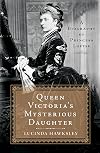
I thought the author did a tremendous job of digging, researching and sorting out what little information exists on Queen Victoria's oft-forgotten daughter, Louise.
Hawksley took a daughter that the queen basically shoved aside literally and figuratively, and made Princess Louise a woman of character. A caring, independent, feisty woman who lived life on her own terms.
Victoria wanted mini-me robots for kids, and Louise had the guts and determination to break the mold.
She was born a few show more generations too early.... show less
Hawksley took a daughter that the queen basically shoved aside literally and figuratively, and made Princess Louise a woman of character. A caring, independent, feisty woman who lived life on her own terms.
Victoria wanted mini-me robots for kids, and Louise had the guts and determination to break the mold.
She was born a few show more generations too early.... show less
Lists
You May Also Like


Associated Authors
Statistics
- Works
- 28
- Also by
- 3
- Members
- 1,620
- Popularity
- #15,894
- Rating
- 3.7
- Reviews
- 37
- ISBNs
- 82
- Languages
- 4
- Favorited
- 1