
G. Neri
Author of Yummy: The Last Days of a Southside Shorty
About the Author
Greg Neri is a storyteller, filmmaker, artist, and digital media producer. When Greg was in college he made an animated film with jazz legend Chick Corea called A Picasso on the Beach which became a student Academy Award finalist and aired on HBO and Bravo. Neri wrote, produced, and directed his show more first independent feature film called A Weekend with Barbara und Ingrid in 1994. He also taught animation and storytelling to inner city teens in Los Angeles with the group Animactio. They produced over 300 films dealing with issues like teen violence, gangs, and drugs. Greg also co-directed the documentary Fa'a Samoa which followed a 15-year-old Samoan gangbanger through the mean streets of Los Angeles. In 1999, Neri began writing and illustrating for kids and in 2004 started writing for teens. His young adult novels, Chess Rumble (2007 Lee & Low), Surf Mules (2009 Penguin Group), and Yummy (2010 Lee & Low) have garnered numerous awards and honors including American Library Association Quick Pick for Reluctant Readers, International Reading Association Young Adults Choice, American Library Association Notable Book, Society of School Librarians International Best Book in the Language Arts, Coretta Scott King Author Honor, and YALSA Top 10 Quick Picks. Neri currently lives off the Gulf Coast of Florida with his wife and daughter. (Bowker Author Biography) show less
Series
Works by G. Neri
My Antarctica: True Adventures in the Land of Mummified Seals, Space Robots, and So Much More (2024) 38 copies, 4 reviews
Christo and Jeanne-Claude Wrap the World: The Story of Two Groundbreaking Environmental Artists (2023) — Author — 29 copies, 4 reviews
My Bicentennial Summer: True Adventures from the Most Epic Family Road Trip of All Time (2026) 8 copies, 1 review
Associated Works
Open Mic: Riffs on Life Between Cultures in Ten Voices (2013) — Contributor — 145 copies, 11 reviews
No Voice Too Small: Fourteen Young Americans Making History (2020) — Contributor — 63 copies, 2 reviews
Tagged
Common Knowledge
- Legal name
- Neri, Gregory
- Other names
- Neri, Greg
- Birthdate
- 20th c.
- Gender
- male
- Organizations
- Antarctic Artists and Writers Collective
- Agent
- Edward Necarsulmer IV
- Nationality
- USA
- Places of residence
- Florida, USA
- Associated Place (for map)
- Florida, USA
Members
Reviews
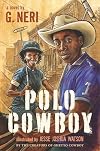
Excellent sequel. I loved learning more about the sport of polo, and having the book set in both the gritty streets of Philly from the first book, and the more rarified atmosphere of a private military prep school, was an interesting comparison. Once again Cole, or Train, the main character, is a young man whom you are rooting for to succeed. I enjoyed meeting the new character Ruthie, the fearless girl who introduces him to polo and to the toughness needed to live with vitiligo. And the show more illustrations are gorgeous. Great collaboration between author and illustrator, and a terrific subject for a middle grade/YA novel. Perfect to hand to horse-crazy kids as well as reluctant readers who may have never read a horse book in their lives. show less
 This review was written for LibraryThing Early Reviewers.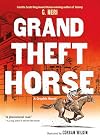
What a pleasant surprise!
Somehow, based on the cover's similarity to the disappointing One Trick Pony by Nathan Hale, I had subconsciously decided I was not going to like this book after I had picked it up from the library. I forced myself to start reading it this week because I had run out of renewals and the due date is looming. As I rarely look at the back cover copy for graphic novels, I had no idea what the hell I'd be reading when I turned to the introduction.
Turns out this is based show more on a true story about Gail Ruffu, a 57-year-old woman, who was tried in 2006 for horse theft. Ruffu comes off as a straight-up Quixotic figure, a colorful character who is wholly sympathetic in her desire to keep the horse safe from abuse but also has an unreliable quality as a narrator, exhibiting paranoia and allowing herself to devolve into a life of deprivation as she goes to extremes to keep to her ideals. She alternates between off-putting and admirable, but you cannot turn away from her.
The complicated events and legal matters are skillfully laid out by author (and Ruffo's cousin) G. Neri culminating in a criminal trial and then a civil case that escalated to the California Supreme Court. Corban Wilkin's cartoony art style keeps the tone light and gives the story energy even in talking heads sequences.
In the end, its a pretty damning expose of the horse racing industry.
Recommended. show less
Somehow, based on the cover's similarity to the disappointing One Trick Pony by Nathan Hale, I had subconsciously decided I was not going to like this book after I had picked it up from the library. I forced myself to start reading it this week because I had run out of renewals and the due date is looming. As I rarely look at the back cover copy for graphic novels, I had no idea what the hell I'd be reading when I turned to the introduction.
Turns out this is based show more on a true story about Gail Ruffu, a 57-year-old woman, who was tried in 2006 for horse theft. Ruffu comes off as a straight-up Quixotic figure, a colorful character who is wholly sympathetic in her desire to keep the horse safe from abuse but also has an unreliable quality as a narrator, exhibiting paranoia and allowing herself to devolve into a life of deprivation as she goes to extremes to keep to her ideals. She alternates between off-putting and admirable, but you cannot turn away from her.
The complicated events and legal matters are skillfully laid out by author (and Ruffo's cousin) G. Neri culminating in a criminal trial and then a civil case that escalated to the California Supreme Court. Corban Wilkin's cartoony art style keeps the tone light and gives the story energy even in talking heads sequences.
In the end, its a pretty damning expose of the horse racing industry.
Recommended. show less
The author writes in an afterword that he doesn’t like doing sequels, but what can you do when fans are clamoring to hear more about your characters and their stories? I felt the same way at the end of this book as I did at the end of the author’s preceding book on this subject, Ghetto Cowboy: i.e., keep going, please! I want to hear more!
Cole, 14, spent the summer with his dad Harp in Philadelphia. As the school year approached, he asked to stay with him rather than go back to Detroit show more where his mom was. It wasn't that he didn't love his mom; rather, he cherished spending time with his horse Boo and Philadelphia’s Black urban cowboys.
The cowboys in this story and in the previous book, Ghetto Cowboy, are based on an actual group of urban Black horsemen in North Philadelphia. This group saves horses from slaughterhouses, and uses them to teach neighborhood kids how to be responsible for the care of another life. In exchange for getting to ride, the kids groom and feed the horses, and help with the upkeep of the stables. As the founder of the Fletcher Street Urban Riding Club, Ellis Ferrell, said in an interview for Time Magazine:
“[The kids] always had the stables to come to after school instead of being on the street and getting in trouble. It taught them to have respect and responsibility: for the horses, their elders and themselves.”
Another story about these cowboys in "Pennsylvania Equestrian" noted:
“The men all talk about discipline and accountability. They're not abstract concepts. They are incorporated into rules that are strictly enforced. 'Once a kid comes around here, it's hard for them to detach themselves. . . . They look at this as another part of the world. You don't have anyone cursing, doing drugs, shouting. There's no tolerance of violence around here. And there's no tolerance for slacking off at school, either. The kids must bring their report cards. If they get bad grades, they can't ride until they bring their grades up. Beyond grades, there's another component. Kids can't ride unless they help out.”
Cole shared the difficulty, referred to in the above quote, of detaching himself from the horses. Harp agreed to let Cole stay, but predicated it on Cole working for his keep. He got Cole a job as a stable hand for the polo team at (fictional) George Washington Military Academy. It was difficult going at first - the players were “rich, white, and stuck-up” except for the one girl on the team, Ruthie, who was African American and Cole’s age. Ruthie had another obstacle besides race and gender: she had vitiligo, a disease that causes loss of skin color in patches. But Ruthie was a “chukkerhead,” or someone who loves polo, and she wouldn't let anything stand in her way of playing - not even the name-calling taunts of “Spots,” “Acid Face” and “Freak” she regularly had to endure. [Of course, as Cole gets to know Ruthie, he not only finds her talented and smart, but beautiful as well.]
Ruthie explains to Cole why polo is not “sissy stuff,” as he believes, but is actually considered the most dangerous sport in the world. This is how it works, she tells him:
“[Players are] trying to hit a tiny moving ball from a moving horse that weighs a thousand pounds, charging at forty miles per hour. Your head is eight feet off the ground, and your mallet is over four feet long, and you’re trying to aim at a ball as big as a baseball while you’re leaning halfway off, trying to punch it into a goal without being trampled to death as you’re being rushed by three other players, also on thousand-pound beasts, waving hammers at you!”
Ruthie started to teach Cole the basics of polo, and in turn, he showed Ruthie a thing or two about cowboy riding. When other neighborhood kids saw Ruthie and Cole doing their moves down by Fletcher Street, they wanted to join in. Soon, with improvised equipment like broom handles and tennis balls, and even improvised “horses” - i.e., bicycles, for example - they got a “cowboy polo” team going. The kids loved it, and Cole loved teaching them. Cole’s cousin Smush even joined in, although it wasn't enough to pull Smush away from his more dangerous activities on the street. Smush wanted to change his life, and was convinced he needed to be rich to do so. Thus he got involved with dangerous people in illegal transactions. He tried to pull Cole in, but Cole was fortunate to have a number of good role models in his life who encouraged him to focus on other paths to success. Still, Cole admired some things about Smush, and was inspired by him to stand up for himself.
The tense and action-packed culmination of the story includes a rough and tumble match between the academy team and the street team, and a reckoning for Smush.
Illustrations by Jesse Joshua Watson, intermittently placed throughout the book, definitely enrich the story. I was only sorry there weren’t more of them!
Discussion: It should be noted that not only is the Fletcher Street Urban Riding Club real, but so is Black polo in Philadelphia, the base for the only African American polo team in the United States. Like the Urban Riding Club, the organization Work to Ride uses horses to work with Philadelphia area disadvantaged children. After founder Lezlie Hiner got interested in polo, she added it to the Work to Ride program, and now kids from 7 to 19 can participate in the traditionally white sport.
Evaluation:: This book is geared to a middle grade audience, but I can’t recommend this book to all audiences highly enough! The only caveat I would add is that it doesn’t totally fill you in on the background of the first book, Ghetto Cowboy. It is better to read both of these excellent books in order. show less
Cole, 14, spent the summer with his dad Harp in Philadelphia. As the school year approached, he asked to stay with him rather than go back to Detroit show more where his mom was. It wasn't that he didn't love his mom; rather, he cherished spending time with his horse Boo and Philadelphia’s Black urban cowboys.
The cowboys in this story and in the previous book, Ghetto Cowboy, are based on an actual group of urban Black horsemen in North Philadelphia. This group saves horses from slaughterhouses, and uses them to teach neighborhood kids how to be responsible for the care of another life. In exchange for getting to ride, the kids groom and feed the horses, and help with the upkeep of the stables. As the founder of the Fletcher Street Urban Riding Club, Ellis Ferrell, said in an interview for Time Magazine:
“[The kids] always had the stables to come to after school instead of being on the street and getting in trouble. It taught them to have respect and responsibility: for the horses, their elders and themselves.”
Another story about these cowboys in "Pennsylvania Equestrian" noted:
“The men all talk about discipline and accountability. They're not abstract concepts. They are incorporated into rules that are strictly enforced. 'Once a kid comes around here, it's hard for them to detach themselves. . . . They look at this as another part of the world. You don't have anyone cursing, doing drugs, shouting. There's no tolerance of violence around here. And there's no tolerance for slacking off at school, either. The kids must bring their report cards. If they get bad grades, they can't ride until they bring their grades up. Beyond grades, there's another component. Kids can't ride unless they help out.”
Cole shared the difficulty, referred to in the above quote, of detaching himself from the horses. Harp agreed to let Cole stay, but predicated it on Cole working for his keep. He got Cole a job as a stable hand for the polo team at (fictional) George Washington Military Academy. It was difficult going at first - the players were “rich, white, and stuck-up” except for the one girl on the team, Ruthie, who was African American and Cole’s age. Ruthie had another obstacle besides race and gender: she had vitiligo, a disease that causes loss of skin color in patches. But Ruthie was a “chukkerhead,” or someone who loves polo, and she wouldn't let anything stand in her way of playing - not even the name-calling taunts of “Spots,” “Acid Face” and “Freak” she regularly had to endure. [Of course, as Cole gets to know Ruthie, he not only finds her talented and smart, but beautiful as well.]
Ruthie explains to Cole why polo is not “sissy stuff,” as he believes, but is actually considered the most dangerous sport in the world. This is how it works, she tells him:
“[Players are] trying to hit a tiny moving ball from a moving horse that weighs a thousand pounds, charging at forty miles per hour. Your head is eight feet off the ground, and your mallet is over four feet long, and you’re trying to aim at a ball as big as a baseball while you’re leaning halfway off, trying to punch it into a goal without being trampled to death as you’re being rushed by three other players, also on thousand-pound beasts, waving hammers at you!”
Ruthie started to teach Cole the basics of polo, and in turn, he showed Ruthie a thing or two about cowboy riding. When other neighborhood kids saw Ruthie and Cole doing their moves down by Fletcher Street, they wanted to join in. Soon, with improvised equipment like broom handles and tennis balls, and even improvised “horses” - i.e., bicycles, for example - they got a “cowboy polo” team going. The kids loved it, and Cole loved teaching them. Cole’s cousin Smush even joined in, although it wasn't enough to pull Smush away from his more dangerous activities on the street. Smush wanted to change his life, and was convinced he needed to be rich to do so. Thus he got involved with dangerous people in illegal transactions. He tried to pull Cole in, but Cole was fortunate to have a number of good role models in his life who encouraged him to focus on other paths to success. Still, Cole admired some things about Smush, and was inspired by him to stand up for himself.
The tense and action-packed culmination of the story includes a rough and tumble match between the academy team and the street team, and a reckoning for Smush.
Illustrations by Jesse Joshua Watson, intermittently placed throughout the book, definitely enrich the story. I was only sorry there weren’t more of them!
Discussion: It should be noted that not only is the Fletcher Street Urban Riding Club real, but so is Black polo in Philadelphia, the base for the only African American polo team in the United States. Like the Urban Riding Club, the organization Work to Ride uses horses to work with Philadelphia area disadvantaged children. After founder Lezlie Hiner got interested in polo, she added it to the Work to Ride program, and now kids from 7 to 19 can participate in the traditionally white sport.
Evaluation:: This book is geared to a middle grade audience, but I can’t recommend this book to all audiences highly enough! The only caveat I would add is that it doesn’t totally fill you in on the background of the first book, Ghetto Cowboy. It is better to read both of these excellent books in order. show less
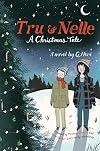
In the sequel to Tru & Nelle (2016), Christmas in tiny Monroeville, Alabama, is hardly jolly.
Drawing on real-life characters, places, and events to create a fictional world for Nelle Harper Lee and Truman Capote (Scout and Dill in To Kill a Mockingbird), Neri covers three different Christmases, a narrative arc allowing him to follow the two white children to adulthood. In the first scene, 10 days before Christmas in 1935, 11-year-old Truman returns home for a custody hearing that sends him show more right back to New York City with his parents. Two years later, he shows up again—having escaped from a military academy—and renews his friendship with Nelle, kisses her for the first time (though he reveals his first kiss was with a boy), antagonizes the son of the ex–Grand Dragon of the Ku Klux Klan, and witnesses racism firsthand when Nelle’s father, Amasa Coleman Lee, loses an unfair trial of black defendants unjustly accused. In the brief final section 19 years later, Truman is now a famous writer, and Nelle receives a financial gift that allows her time to write and, in time, also becomes a famous writer. Readers don’t need to know To Kill a Mockingbird to find themselves immersed in the goings-on in Monroeville.
An absorbing story of true friends in troubled times. (author’s note, acknowledgments, recipe) (Historical fiction. 10-12)
-Kirkus Review show less
Drawing on real-life characters, places, and events to create a fictional world for Nelle Harper Lee and Truman Capote (Scout and Dill in To Kill a Mockingbird), Neri covers three different Christmases, a narrative arc allowing him to follow the two white children to adulthood. In the first scene, 10 days before Christmas in 1935, 11-year-old Truman returns home for a custody hearing that sends him show more right back to New York City with his parents. Two years later, he shows up again—having escaped from a military academy—and renews his friendship with Nelle, kisses her for the first time (though he reveals his first kiss was with a boy), antagonizes the son of the ex–Grand Dragon of the Ku Klux Klan, and witnesses racism firsthand when Nelle’s father, Amasa Coleman Lee, loses an unfair trial of black defendants unjustly accused. In the brief final section 19 years later, Truman is now a famous writer, and Nelle receives a financial gift that allows her time to write and, in time, also becomes a famous writer. Readers don’t need to know To Kill a Mockingbird to find themselves immersed in the goings-on in Monroeville.
An absorbing story of true friends in troubled times. (author’s note, acknowledgments, recipe) (Historical fiction. 10-12)
-Kirkus Review show less
Lists
Awards


You May Also Like


Associated Authors
Statistics
- Works
- 15
- Also by
- 4
- Members
- 1,757
- Popularity
- #14,642
- Rating
- 3.9
- Reviews
- 135
- ISBNs
- 83
- Languages
- 2
