
Tony Benn (1925–2014)
Author of Free at Last!: Diaries 1990-2001
About the Author
Tony Benn, born in London in 1925, is a former Cabinet Minister and Chairman of the Labour Party. He served as an MP for over fifty years and is the author of fifteen books. He is now a visiting professor at the London School of Economics.
Image credit: Isujosh
Series
Works by Tony Benn
The international significance of the Levellers and the English democratic tradition (2000) 3 copies
The Spirit of '45 DVD 1 copy
The case for Party democracy 1 copy
The need for a free press 1 copy
Talking About Socialism 1 copy
Associated Works
The Assassin's Cloak: An Anthology of the World's Greatest Diarists (2000) — Contributor, some editions — 623 copies, 9 reviews
Tagged
Common Knowledge
- Legal name
- Benn, Anthony Neil Wedgwood
- Birthdate
- 1925-04-03
- Date of death
- 2014-03-14
- Gender
- male
- Education
- Westminster School, London
University of Oxford (New College) - Occupations
- Member of Parliament
Postmaster General
Secretary of State for Industry
Secretary of State for Energy
diarist - Organizations
- Labour Party (UK)
- Awards and honors
- 2nd Viscount Stansgate (Renounced)
Pipe Smoker of the Year (1992)
Paddy Power And Total Politics Political Book Award (lifetime achievement in political literature, 2012) - Relationships
- Benn, Sir Ernest (uncle)
Benn, David Wedgwood (brother)
Barraclough, June (sister-in-law)
Benn, Caroline (wife)
Benn, Hilary (son)
Benn, Sir John (grandfather) (show all 11)
Benn, Wedgwood (father)
Holmes, Daniel Turner (grandfather)
Stansgate, Margaret (mother)
Benn, Melissa (daughter)
Rutherford, Margaret (cousin) - Nationality
- UK
- Birthplace
- Marylebone, London, England, UK
- Places of residence
- London, England, UK
- Place of death
- London, England, UK
- Associated Place (for map)
- London, England, UK
Members
Reviews

Isn't it strange how the bete noire of British politics became the cuddly favourite uncle as a national outpouring of sorrow issued forth at his demise?
Margaret Thatcher was famous for saying that there was no such thing as 'society'; here, Tony Benn proves that there is and, I know which vision of reality I prefer to inhabit. Benn takes us from the origins of Socialism in the Old Testament to the 1980's, the decade after this book was written. The book oozes compassion and care for all his show more fellow men (men as the species, not just the sub-species). The difficulty with reading a book more than thirty-five years old, is that the issues have moved on. It is tempting to dismiss large sections of the book on this premise: there are chapters dedicated to the 1970's and 1980's. It would, however, be a pity so to do as there are nuggets of wisdom hidden within this history lesson.
After finishing this book, I found myself wondering how many of Labour's current leaders would find any point of contact with Benn's cogently argued defence of Socialism. The answer is sufficiently depressing that I immediately wished that I had not and felt that the only means of raising my sunken spirits was to firstly bring any reader's optimism to its knees and secondly to issue a peon of praise to the Green Party for taking on the mantle of a caring political grouping. It is good to realise that, plus ça change.....
Incidentally, I have been mean with my star allocation: deducting half a star for my tardiness in reading this work. show less
Margaret Thatcher was famous for saying that there was no such thing as 'society'; here, Tony Benn proves that there is and, I know which vision of reality I prefer to inhabit. Benn takes us from the origins of Socialism in the Old Testament to the 1980's, the decade after this book was written. The book oozes compassion and care for all his show more fellow men (men as the species, not just the sub-species). The difficulty with reading a book more than thirty-five years old, is that the issues have moved on. It is tempting to dismiss large sections of the book on this premise: there are chapters dedicated to the 1970's and 1980's. It would, however, be a pity so to do as there are nuggets of wisdom hidden within this history lesson.
After finishing this book, I found myself wondering how many of Labour's current leaders would find any point of contact with Benn's cogently argued defence of Socialism. The answer is sufficiently depressing that I immediately wished that I had not and felt that the only means of raising my sunken spirits was to firstly bring any reader's optimism to its knees and secondly to issue a peon of praise to the Green Party for taking on the mantle of a caring political grouping. It is good to realise that, plus ça change.....
Incidentally, I have been mean with my star allocation: deducting half a star for my tardiness in reading this work. show less
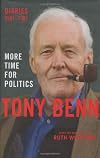
In his lifetime, Tony Benn was demonised as a dangerous left field politician but, since his demise, he has become a secular saint. This book probably shows more of the sanctified Tony than the demon, although, the spirit is still in evidence and sparks from time to time.
When one considers that TB was 76 years old at the start of this diary, it is amazing to read the amount of work that he still managed to achieve. He had left parliament by this stage, but pursued his belief in equality and show more peace to the very end: some weeks he was crisscrossing the country on a daily basis for meetings and always had time to help the less fortunate. This is all very praiseworthy, but the thing that I would most like to take from these pages is his ability to differentiate between the policies and the person of his political opponent. Benn has a good word for almost everybody he met and, those few for whom he struggled to be kind (mainly, Mrs Thatcher and Tony Blair), he tends to refrain from personal comment, rather than demean.
The diaries also make clear that Benn saw through Tony Blair whilst I, and many more, were trying desperately to give him the benefit of the doubt. Benn recognised that Blairism would, eventually, tear the party asunder. Benn had pushed off this mortal coil before the fiasco of Miliband's end and the election for a new leader, which is reaching its climax as I write, but his perspective upon the Blair years highlights the inevitability of the depths to which Labour has sunk.
So far, I have concentrated upon the political issues but, as someone who, like us all, is inevitably heading towards later life, Benn provides a wonderful series of vignettes of life as Father Time takes his toll. I much admire the manner in which TB recognises the passing of the years and regularly writes that he must begin to take life a little more easily. The next entry is, almost inevitably, a list of a dozen or more meetings to be attended in the next month - often with speeches to be written, journeys planned and, in many cases, diplomatic sanction acquired.
This book was a bitter sweet read and the knowledge that there will not be a further addition to the series gives much sadness, however, one must be grateful that he had the nouse to leave his story in the compelling immediacy of the diary format. show less
When one considers that TB was 76 years old at the start of this diary, it is amazing to read the amount of work that he still managed to achieve. He had left parliament by this stage, but pursued his belief in equality and show more peace to the very end: some weeks he was crisscrossing the country on a daily basis for meetings and always had time to help the less fortunate. This is all very praiseworthy, but the thing that I would most like to take from these pages is his ability to differentiate between the policies and the person of his political opponent. Benn has a good word for almost everybody he met and, those few for whom he struggled to be kind (mainly, Mrs Thatcher and Tony Blair), he tends to refrain from personal comment, rather than demean.
The diaries also make clear that Benn saw through Tony Blair whilst I, and many more, were trying desperately to give him the benefit of the doubt. Benn recognised that Blairism would, eventually, tear the party asunder. Benn had pushed off this mortal coil before the fiasco of Miliband's end and the election for a new leader, which is reaching its climax as I write, but his perspective upon the Blair years highlights the inevitability of the depths to which Labour has sunk.
So far, I have concentrated upon the political issues but, as someone who, like us all, is inevitably heading towards later life, Benn provides a wonderful series of vignettes of life as Father Time takes his toll. I much admire the manner in which TB recognises the passing of the years and regularly writes that he must begin to take life a little more easily. The next entry is, almost inevitably, a list of a dozen or more meetings to be attended in the next month - often with speeches to be written, journeys planned and, in many cases, diplomatic sanction acquired.
This book was a bitter sweet read and the knowledge that there will not be a further addition to the series gives much sadness, however, one must be grateful that he had the nouse to leave his story in the compelling immediacy of the diary format. show less

There is a long and tedious tradition in the British Labour Party of politicians starting out as socialist firebrands and ending up in the House of Lords. Tony Benn was a rare and refreshing example of someone who moved in the opposite direction. In the 1960s he was a sort of proto-spin doctor to Prime Minister Harold Wilson and a perfectly moderate cabinet minister (though, as the grandly titled Postmaster General, he did come up with a jolly wheeze to remove the monarch’s head from the show more postage stamps. Her Majesty was not amused). Benn says that he was radicalised by his experience of high office. By the mid ‘70s he was firmly on the Left and remained there over the following decades.
Benn was a compelling orator. He was also one of the great stand-up comedians. This might sound facetious but, as anyone who heard him speak will attest, he was extremely funny and clearly understood the effectiveness of humour as a weapon in the political armoury.
He was not, alas, a great writer. As this book demonstrates his prose is unremittingly flat and, on the page, the jokes have a tendency to fall flat also. The device of framing this collection of political essays as a sequence of letters to his grandchildren soon becomes strained, and then faintly embarrassing, as Benn shoehorns references to his grandchildren into discussions of imperialism or the global financial crisis.
Still, when Benn wrote this in 2009 the world was criminally unjust and going from bad to worse and, when I read it in 2022, nothing had changed. So everything Benn had to say then remains absolutely pertinent now. His hatred of injustice, distrust of the powerful, and faith in the capacity of ordinary people to create a better world continue to inspire. show less
Benn was a compelling orator. He was also one of the great stand-up comedians. This might sound facetious but, as anyone who heard him speak will attest, he was extremely funny and clearly understood the effectiveness of humour as a weapon in the political armoury.
He was not, alas, a great writer. As this book demonstrates his prose is unremittingly flat and, on the page, the jokes have a tendency to fall flat also. The device of framing this collection of political essays as a sequence of letters to his grandchildren soon becomes strained, and then faintly embarrassing, as Benn shoehorns references to his grandchildren into discussions of imperialism or the global financial crisis.
Still, when Benn wrote this in 2009 the world was criminally unjust and going from bad to worse and, when I read it in 2022, nothing had changed. So everything Benn had to say then remains absolutely pertinent now. His hatred of injustice, distrust of the powerful, and faith in the capacity of ordinary people to create a better world continue to inspire. show less

How can a book be dated and yet still very relevant? I don't know, but this one is.
Benn's search for a new way is, obviously, grounded in the circumstances of the early 1980's when Thatcher was just introducing the country to neoliberalism. We now know the devastation that caused and the pains of Technofeudalism.
This is still well worth the read.
Benn's search for a new way is, obviously, grounded in the circumstances of the early 1980's when Thatcher was just introducing the country to neoliberalism. We now know the devastation that caused and the pains of Technofeudalism.
This is still well worth the read.
Lists
Best Audiobooks (1)
Awards


You May Also Like


Associated Authors
Statistics
- Works
- 57
- Also by
- 11
- Members
- 1,369
- Popularity
- #18,785
- Rating
- 4.0
- Reviews
- 15
- ISBNs
- 91
- Favorited
- 2

