
Joseph Slate (1928–2020)
Author of Miss Bindergarten Gets Ready for Kindergarten
About the Author
Series
Works by Joseph Slate
Miss Bindergarten and the Best Friends (Penguin Young Readers, Level 2) (2014) 178 copies, 2 reviews
Tagged
Common Knowledge
- Legal name
- Slate, Joseph Frank
- Birthdate
- 1928-01-19
- Date of death
- 2020-01-20
- Gender
- male
- Education
- University of Washington (BA, Communication)
Yale University (BFA) - Occupations
- journalist
professor (art)
author
newspaper editor - Organizations
- Kenyon College
The Daily (University of Washington)
Seattle Times
Foreign Broadcast Intelligence Service - Awards and honors
- Outstanding Educator of America Award
Outstanding Maryland Author Award - Nationality
- USA
- Birthplace
- Hollidays Cove, West Virginia, USA
- Places of residence
- Seattle, Washington, USA
Tokyo, Japan
New Haven, Connecticut, USA
Gambier, Ohio, USA
Silver Spring, Maryland, USA
Santa Rosa, California, USA - Place of death
- Nashville, Tennessee, USA
- Associated Place (for map)
- USA
Members
Reviews
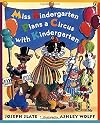
I liked this book for two reasons, the first being that its illustrations are incredibly detailed and colorful, just as a circus should be. There are a variety of animals and their expressions are appropriate to the story. The second reason I liked this book is because of its writing. The author keeps the reader engaged by mixing up his style of writing throughout the book. The text is written in a wavy pattern on some pages, and rhymes in the end of the book. There is also a page in the show more back titled, “We Love Circus Colors!” and the pictures of each character are labeled with the color of a certain item of clothing they are wearing. For example, the character Noah is wearing a red top, so the picture of Noah is labeled stating that he is wearing a red shirt, and the color red is written in red. I also liked that this page included mathematic equations about colors that mix to make an entirely new color. For example, Blue+Yellow=Green. The main message of this book is to teach young children about colors, clothing articles and animals. This book also teaches about teamwork because the animals all have a job in preparing for the circus that takes place in the end of the story. show less

A fun way to review the ABCs and the preparation for the first day of school (although I laughed at how they portray a teacher getting an entire classroom ready for the school year in just one morning before the kids arrive!)
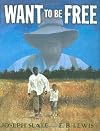
This is a rather intense story, which appropriately matches the intensity of the history it tells. Especially if used in elementary classrooms, this is a book that will most likely need to be sandwiched between contextual introduction and directed 'debrief'. This story and its illustrations will illicit questions, and especially if used for young children, should involve some adult guidance.
The plot uses a poetic structure to tell the experience of an adolescent slave who escapes in search show more of freedom. Along the way, he meets other runaway slaves, through which he finds and rescues an orphaned child slave who stays with him throughout the story. The adolescent made the choice to risk his success to save the child; in the end, the child manages to break the iron clasp still attached to the adolescent's ankle.
Potential uses:
- Open a conversation about the reality of slavery.
- Provide context for understanding the effect of slavery on black bodies (which is not actually and/or directly spoken about too effectively in classrooms. Though it may seem redundant to adults, it's an issue that warrants teacher-directed instruction for kids and adolescents.)
- Teach archetypes and thematics of stories and their capacity to connect story-telling through a space-time continuum. (The author is essentially retelling the story of Budha and his disciple, as told by Richard Kipling in Kim. The author explains, "I moved its setting and language to another time, as I believe its themes to be universal." The thematic imagery insinuates that love is that which sets us free.)
***I think there are other books more appropriate for teaching archetype and theme. While I agree that the story undoubtedly incorporates a universally relevant theme, I do not think that teachers, whose sole agenda is to teach story thematics and/or archetype, should opt to do so with a story that very blatantly engages with an African American slave narrative.*** show less
The plot uses a poetic structure to tell the experience of an adolescent slave who escapes in search show more of freedom. Along the way, he meets other runaway slaves, through which he finds and rescues an orphaned child slave who stays with him throughout the story. The adolescent made the choice to risk his success to save the child; in the end, the child manages to break the iron clasp still attached to the adolescent's ankle.
Potential uses:
- Open a conversation about the reality of slavery.
- Provide context for understanding the effect of slavery on black bodies (which is not actually and/or directly spoken about too effectively in classrooms. Though it may seem redundant to adults, it's an issue that warrants teacher-directed instruction for kids and adolescents.)
- Teach archetypes and thematics of stories and their capacity to connect story-telling through a space-time continuum. (The author is essentially retelling the story of Budha and his disciple, as told by Richard Kipling in Kim. The author explains, "I moved its setting and language to another time, as I believe its themes to be universal." The thematic imagery insinuates that love is that which sets us free.)
***I think there are other books more appropriate for teaching archetype and theme. While I agree that the story undoubtedly incorporates a universally relevant theme, I do not think that teachers, whose sole agenda is to teach story thematics and/or archetype, should opt to do so with a story that very blatantly engages with an African American slave narrative.*** show less
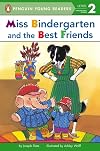
This book continues the trend of rewriting or expanding popular picture book series into easy readers. Miss Bindergarten's alphabetical and colorful kindergarten adventures would have made no sense as an easy reader back when they were originally written, but now that many schools and parents are pushing kids to read at ages 4 and 5, there's definitely a market for them.
This story features two of Miss Bindergarten's students, Emily the elephant and Vicky the...muskrat? I'm going with show more muskrat. Each day they find more and more things that match; on the first day they wear blue coats, on the next yellow boots, etc. Miss Bindergarten remarks that they look like twins and the two happily proclaim that they are, indeed twins. When some of their classmates point out all their physical differences, they admit that they are not twins; but they are best friends!
Wolff's illustrations, like the picture books, feature a plethora of bright, cheerful colors and patterns. I think she did a really good job of simplifying the illustrations for the easy readers, since the books tend to be rather crowded in that respect (not the kind of classroom I'd personally like to work in, but a lot of teachers do have a similar design).
Penguin's level 2 readers are rather easier than some publisher's, and suitable for a strong, beginning reader. It's not unrealistic to expect some five year olds to be at this point, although they will probably be in the minority. Older readers will probably find the art and storyline a little too young for them.
Verdict: This is a colorful, simple book that nicely blends a message about friendship and differences with the concept of same and different. It's not likely to find a really broad audience, due to the combination of a slightly more complex text and younger plot-line and setting, but if you have a lot of fans of the series and/or a population of very young, strong readers, it would be a good purchase.
ISBN: 9780803739895; Published 2014 by Penguin; Borrowed from another library in my consortium; Added to a backlist of easy readers to order at some point show less
This story features two of Miss Bindergarten's students, Emily the elephant and Vicky the...muskrat? I'm going with show more muskrat. Each day they find more and more things that match; on the first day they wear blue coats, on the next yellow boots, etc. Miss Bindergarten remarks that they look like twins and the two happily proclaim that they are, indeed twins. When some of their classmates point out all their physical differences, they admit that they are not twins; but they are best friends!
Wolff's illustrations, like the picture books, feature a plethora of bright, cheerful colors and patterns. I think she did a really good job of simplifying the illustrations for the easy readers, since the books tend to be rather crowded in that respect (not the kind of classroom I'd personally like to work in, but a lot of teachers do have a similar design).
Penguin's level 2 readers are rather easier than some publisher's, and suitable for a strong, beginning reader. It's not unrealistic to expect some five year olds to be at this point, although they will probably be in the minority. Older readers will probably find the art and storyline a little too young for them.
Verdict: This is a colorful, simple book that nicely blends a message about friendship and differences with the concept of same and different. It's not likely to find a really broad audience, due to the combination of a slightly more complex text and younger plot-line and setting, but if you have a lot of fans of the series and/or a population of very young, strong readers, it would be a good purchase.
ISBN: 9780803739895; Published 2014 by Penguin; Borrowed from another library in my consortium; Added to a backlist of easy readers to order at some point show less
Lists
Awards


You May Also Like


Associated Authors
Statistics
- Works
- 26
- Members
- 10,027
- Popularity
- #2,373
- Rating
- 4.1
- Reviews
- 120
- ISBNs
- 149
- Languages
- 2
- Favorited
- 1
