
David Hurst Thomas
Author of The Native Americans: An Illustrated History
About the Author
David Hurst Thomas is Curator of Anthropology at the American Museum of Natural History in New York.
Image credit: via American Museum of Natural History
Works by David Hurst Thomas
Skull Wars: Kennewick Man, Archaeology, And The Battle For Native American Identity (2000) 264 copies, 4 reviews
New World and Pacific Civilizations: Cultures of America, Asia, and the Pacific (1994) — Editor; Editor — 85 copies, 1 review
Predicting the Past: An Introduction to Anthropological Archaeology (Basic Anthropology Units) (1974) 37 copies
Columbian Consequences, Vol. 2: Archaeological and Historical Perspectives on the Spanish Borderlands East (1990) 29 copies
The Spanish Borderlands in Pan-American Perspective (Columbian Consequences, Vol. 3) (1991) 19 copies
Columbian Consequences, Volume 1. Archaeological and Historical Perspectives on the Spanish Borderlands West (1989) 12 copies
Native American Landscapes of St. Catherines Island, Georgia: I. The Theoretical Framework (Anthropological Papers, Number 88) (2008) 11 copies
Trend, Tradition, and Turmoil: What Happened to the Southeastern Archaic? (American Museum of Natural History Anthropological Papers) (2010) 8 copies
Archaeology of Mission Santa Catalina De Guale: Search and Discovery (Anthropological Papers, Vol 63, Part 2) (1987) 5 copies
Rich man, poor men : observations on three antebellum burials from the Georgia coast (1977) 4 copies
Native American landscapes of St. Catherines Island, Georgia, II. The Data (AMNH Anthropological Papers No. 88, Part 2) (2008) 4 copies
The anthropology of St. Catherines Island (Anthropological papers of the American Museum of Natural History) 1. Natural and Cultural History (1978) 3 copies
"Western Shoshone," 1 copy
Associated Works
Wetland Adaptations in the Great Basin: Papers from the Twenty-First Great Basin Anthopological Conference (1990) — Contributor — 3 copies
Tagged
Common Knowledge
- Legal name
- Thomas, David Hurst
- Birthdate
- 1945
- Gender
- male
- Education
- University of California at Davis (BA|1967|MA|1968|Ph.C|1970|Ph.D|1971)
- Occupations
- anthropologist
archaeologist
curator
professor - Organizations
- American Museum of Natural History
Society for American Archaeology - Awards and honors
- National Academy of Sciences (1989)
Franciscan Medal (1992) - Nationality
- USA
- Associated Place (for map)
- USA
Members
Reviews
Skull Wars: Kennewick Man, Archaeology, And The Battle For Native American Identity by David Hurst Thomas
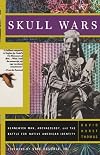
This book uses the controversy over the Kennewick Man as an entry point to a discussion about the different ways that Native Americans and non-native Americans understand and control American history.
In the 1990s, human remains were discovered in Kennewick, Washington. The archaeologist who first assessed the remains was certain, based on the shape of the skull, that they belonged to a white man, and the remains were assumed to be relatively recent. But the further discovery of an arrowhead show more embedded in the skeleton, and carbon dating of the skeleton to almost 9000 years ago, threw the scientific community into crisis. Was he white, and if so, what was he doing here so long ago? Does that mean that white people have been in the Americans for far longer than we thought? If so, what does that mean for Native American claims to be the first peoples of the Americas? This discovery happened not long after legislation was passed that gave Native Americans control over remains of any Native American bodies found in archaeological excavations, and the Kennewick Man put those laws to the test: could the contemporary tribes of the area claim kinship with a 9,000-year-old skeleton? White archaeologists and historians wanted access to the skeleton, and thought that the scientific value of what we might learn from the remains was more important than Native American control of their own heritage.
There are a lot of complex issues at stake here. Thomas provides a history of anthropology and archaeology in the US and Canada, showing the deeply racist history of these fields. He provides an overview of relationships between Native Americans and Europeans, focusing on how Europeans have perceived Indians and the political uses of Native American culture.
In the final chapters, Thomas gives examples of situations where Native Americans and European descendants have been able to work together on archaeological sites, to both learn about the past and be respectful of the culture of the people involved. He also explores situations where Native American oral tradition, generally scoffed at by "science", has been proven to be correct by archaeological evidence. show less
In the 1990s, human remains were discovered in Kennewick, Washington. The archaeologist who first assessed the remains was certain, based on the shape of the skull, that they belonged to a white man, and the remains were assumed to be relatively recent. But the further discovery of an arrowhead show more embedded in the skeleton, and carbon dating of the skeleton to almost 9000 years ago, threw the scientific community into crisis. Was he white, and if so, what was he doing here so long ago? Does that mean that white people have been in the Americans for far longer than we thought? If so, what does that mean for Native American claims to be the first peoples of the Americas? This discovery happened not long after legislation was passed that gave Native Americans control over remains of any Native American bodies found in archaeological excavations, and the Kennewick Man put those laws to the test: could the contemporary tribes of the area claim kinship with a 9,000-year-old skeleton? White archaeologists and historians wanted access to the skeleton, and thought that the scientific value of what we might learn from the remains was more important than Native American control of their own heritage.
There are a lot of complex issues at stake here. Thomas provides a history of anthropology and archaeology in the US and Canada, showing the deeply racist history of these fields. He provides an overview of relationships between Native Americans and Europeans, focusing on how Europeans have perceived Indians and the political uses of Native American culture.
In the final chapters, Thomas gives examples of situations where Native Americans and European descendants have been able to work together on archaeological sites, to both learn about the past and be respectful of the culture of the people involved. He also explores situations where Native American oral tradition, generally scoffed at by "science", has been proven to be correct by archaeological evidence. show less
Skull Wars: Kennewick Man, Archaeology, and the Battle for Native American Identity by David Hurst Thomas
In July 1996, a human skeleton washed out of a bank of the Columbia River and reignited a 500 year controversy about the handling of human remains in this country. Archaeologists dubbed the skeleton "Kennewick Man" and advocated scientific analysis with the goal of tracking the origins of Native Americans. Many Native Americans are adamant that such analysis constitutes desecration and disrespect for their ancestors and cultures. David Hurst Thomas, an archaeologist sympathetic to both show more sides, traces the roots of the Kennewick Man debate, exposing the prejudices that have dominated American anthropology since its inception. Thomas is a fine writer and his subject matter is fascinating. Expect to be astounded, angry, inspired and, ultimately, hopeful that all parties in the debate can proceed with mutual respect
Reviewed by: Cathy show less
Reviewed by: Cathy show less

TBD - draft review:
Compare to modern historians, in the 1970s, Axtell, Neal Salisbury, Francis Jennings, dissatisfied with the view of either primitive cultures or "balanced with Nature".
“Indians were seen as trivial, ineffectual patsies,” Salisbury, a historian at Smith College, says of the history actual taught to susceptible children in the United States.
But does a whole continent of patsies make sense, really?
By the 1990s, we have witnessed a tsunami of inquiry into the show more interactions between natives and newcomers in the era when they faced each other as relative equals. “No other field in American history has grown as fast,” according to Joyce Chaplin, a Harvard historian, in 2003. This 1994 volume is part of that tsunami.
It is true that Indian societies collapsed in the "Colonial Period". This had everything to do with the natives themselves, and with geography, and pathology. It was certainly to religiously ordained or technologically determined.
I like how Salisbury put it: “When you look at the historical record, it’s clear that Indians were trying to control their own destinies.” Even though neither the Indians nor the Colonials and Kings predicted the consequences. show less
Compare to modern historians, in the 1970s, Axtell, Neal Salisbury, Francis Jennings, dissatisfied with the view of either primitive cultures or "balanced with Nature".
“Indians were seen as trivial, ineffectual patsies,” Salisbury, a historian at Smith College, says of the history actual taught to susceptible children in the United States.
But does a whole continent of patsies make sense, really?
By the 1990s, we have witnessed a tsunami of inquiry into the show more interactions between natives and newcomers in the era when they faced each other as relative equals. “No other field in American history has grown as fast,” according to Joyce Chaplin, a Harvard historian, in 2003. This 1994 volume is part of that tsunami.
It is true that Indian societies collapsed in the "Colonial Period". This had everything to do with the natives themselves, and with geography, and pathology. It was certainly to religiously ordained or technologically determined.
I like how Salisbury put it: “When you look at the historical record, it’s clear that Indians were trying to control their own destinies.” Even though neither the Indians nor the Colonials and Kings predicted the consequences. show less
Skull wars : Kennewick Man, archaeology, and the battle for Native American identity by David Hurst Thomas

An excellent overview of the history of the archaeology and anthropology of American Indians, inspired by the controversy over Kennewick Man. This is an embarrassing history for white scientists, but it's one that needs to be told, and this is a creditable effort, for all that it's seventeen years old now.
Lists
You May Also Like


Associated Authors
Statistics
- Works
- 42
- Also by
- 1
- Members
- 2,233
- Popularity
- #11,487
- Rating
- 4.1
- Reviews
- 9
- ISBNs
- 77
- Languages
- 8