
Heidi Ayarbe
Author of Freeze Frame
Works by Heidi Ayarbe
Associated Works
Tagged
Common Knowledge
- Gender
- female
- Education
- University of Nevada at Reno (BA|English Education)
- Nationality
- USA
- Birthplace
- Carson City, Nevada, USA
- Places of residence
- Carson City, Nevada, USA
Colombia - Associated Place (for map)
- Nevada, USA
Members
Reviews
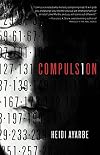
In Compulsion, Jake Martin is gearing up for his third state soccer championship when his OCD ramps into high gear, forcing him to struggle to hold it together until after the big game. His life is already a challenge, given that his mother suffers from mental illness, his father is emotionally aloof, and his younger sister is focused on improving her social status in school. But when the spiders (as he describes the compulsive thoughts) get a hold of his brain, he has to follow the show more patterns, add the numbers to make primes, and do everything absolutely perfectly to keep the “magic” intact.
Author Heidi Ayarbe sets herself a difficult challenge in writing in Jake’s voice, because everything is filtered through his compulsion. It gives the reader a powerful take on the overwhelming constrictions that a person endures, but unfortunately a little of it goes a long way. The problem with seeing the world solely through Jake’s eyes is that reality and illusion blur, so sometimes the narrative gets muddy, and it’s hard to understand exactly what is happening in particular scenes. When Jake is one step away from falling apart, somehow the people around him don’t seem to suspect, and given the enormity of his emotional reaction, it’s hard to imagine that people would overlook his anxiety. No one speaks about it. They go through their lives as though everything is normal. And what is normal, anyway?
Ayarbe gives hints about the private lives of the other characters – Jake’s best friend Luc, his teammates, his pseudo-girlfriend. They all have their secrets. Luc’s father beat him, Tanya may be anorexic, a teammate may be gay, but these hidden worlds are much like Jake’s own efforts to mask his compulsion. He hopes that if he can create the perfect magic to win the soccer championship, all the spiders will disappear. But life doesn’t work that neatly.
The novel’s greatest impact is the glimpse of Jake’s internal life, but the storytelling suffers. Perhaps by giving the reader a little more time with pre-spider, pre-OCD Jake (before the anxieties becoming so overwhelming), Ayarbe could better set the foundation of the story and the relationships of the characters. Another possibility is to allow one of the other characters, such as Luc, tell some of the story so that the reader gets a broader view of events. show less
Author Heidi Ayarbe sets herself a difficult challenge in writing in Jake’s voice, because everything is filtered through his compulsion. It gives the reader a powerful take on the overwhelming constrictions that a person endures, but unfortunately a little of it goes a long way. The problem with seeing the world solely through Jake’s eyes is that reality and illusion blur, so sometimes the narrative gets muddy, and it’s hard to understand exactly what is happening in particular scenes. When Jake is one step away from falling apart, somehow the people around him don’t seem to suspect, and given the enormity of his emotional reaction, it’s hard to imagine that people would overlook his anxiety. No one speaks about it. They go through their lives as though everything is normal. And what is normal, anyway?
Ayarbe gives hints about the private lives of the other characters – Jake’s best friend Luc, his teammates, his pseudo-girlfriend. They all have their secrets. Luc’s father beat him, Tanya may be anorexic, a teammate may be gay, but these hidden worlds are much like Jake’s own efforts to mask his compulsion. He hopes that if he can create the perfect magic to win the soccer championship, all the spiders will disappear. But life doesn’t work that neatly.
The novel’s greatest impact is the glimpse of Jake’s internal life, but the storytelling suffers. Perhaps by giving the reader a little more time with pre-spider, pre-OCD Jake (before the anxieties becoming so overwhelming), Ayarbe could better set the foundation of the story and the relationships of the characters. Another possibility is to allow one of the other characters, such as Luc, tell some of the story so that the reader gets a broader view of events. show less
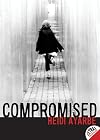
“The plan? It’s totally ad hoc. Every time I try to create a hypothesis and procedure, anomalies come up and I’m scrambling to make sense of everything. Maybe a good scientist would be able to come up with methods to work with the change in elements. Maybe I’m a really bad scientist.”
“If there is a God, he must be a scientist and we’re lab rats. I look up. What if the sky is the lens of God’s monocle? And nighttime is the blink of His eye? ‘The data has been compromised!’ show more I want to shout.”
15-year-old Maya Sorenson comes home from school one day to discover that her house in an upscale Reno, Nevada neighbourhood is being emptied of furniture and appliances. The next day, the repo men come for her dad’s Beamer . . . and the police for Mr. Sorenson himself. He is cuffed and taken into police custody for tax evasion, fraud, and embezzlement. Maya is not surprised. She’s been through something like this many times before, but until now her scam artist, con-man father has been prescient enough to get them out of town before the authorities catch up. Also, she’s never before had to deal with leaving a nice house at such a respectable address.
Because Maya’s mother died years before and there is no family to care for the teenager, she’s taken to a temporary children’s shelter until her case can be sorted out and longer term foster care arranged. With her relentless brainiac “vomiting” of scientific facts, the whip-smart girl quickly makes enemies at the home, but she does not scare easily. She also shows she has the conscience and moral centre her father lacks. She looks out for a younger boy, new prey for the meanest three group-home kids, and she monitors her possibly suicidal roommate Nicole’s Prozac bottle, fearing that the girl is at risk of overdosing.
The children’s shelter staff are eager to hand off Maya to a Bible-thumping foster family, but before they do so, Maya has a last visit with her imprisoned father. During that meeting her dad reveals that he has relinquished legal responsibility for her. His situation is “complex”, he says; it’s in his daughter’s best interests that he does this. He also reveals that Maya has an aunt: her mother’s sister, Sarah. In order to locate this woman, Maya needs to find the shoebox containing her mum’s personal effects and letters. (It was left in the house that the two Sorensons were forced to vacate).
The plot thickens when Maya leaves the children’s home early one morning to retrieve the shoebox, only to discover that her roommate has followed her. Nicole has been in foster care for nine years; her mum was a meth-head, and her absent father’s life has apparently been dictated by the mob. He seems to have sent the girl post cards, however, and she’s pretty sure he’s in Chicago. If Maya knows science, the bright, illiterate, and street-smart Nicole is a veritable walking encyclopedia of organized crime. She can give her new roommate as good as she gets, and she quickly convinces Maya that she is in need of someone with common sense, not to mention a sense of direction. From the contents of the shoe box, Maya has determined that her aunt is likely in Boise, Idaho. Two girls travelling together, Nicole points out, are much safer than one entirely on her own.
It’s not easy getting to Boise. First, there is the problem of how and what they will eat. The two have next to no money. Luckily, Nicole is a skilled shoplifter. Second, there’s the question of where they can rest and sleep. It’s November and unseasonably cold. And then, of course, there’s the matter of travelling itself; walking and hitchhiking are both fraught with difficulty, especially for young girls. Maya and Nicole’s challenges multiply when they gain an additional travelling companion: Klondike, a ten-year-old disfigured boy with Tourette’s. At the mercy of his tics and a brain that has him endlessly spewing profanity, he is fleeing trauma of his own.
Ayarbe’s is a gritty but engaging young adult novel. There are rough situations and some pretty rough language as well. The author leavens the dark subject matter with a fair bit of snappy, humorous—if not always believable—dialogue. There are a few other problems, too. Although the novel is mostly realistic, some elements of the plot are not plausible. (The group home’s allowing Nicole, a suicidal teen, to be responsible for her own psychoactive medication doesn’t ring at all true. The degree of the girl’s illiteracy and the plot development that hinges on it are also hard to credit.) Nevertheless, the basic details the author provides about the chaos, squalor, and dangers faced by homeless kids (fleeing dysfunctional families and institutionalized care) are convincing.
The book is overly long, and I think the author could’ve tightened it up by reining in Nicole’s stories of gangsters. Ayarbe might also have refrained from reporting Maya’s every sigh, and the author could have toned down her protagonist’s obsessive use of the scientific method to solve problems. Both became tedious reading after a while, On the whole, however, this is a satisfying novel, with an appropriately open-ended conclusion. It is fairly fast paced, and it explores many themes of interest to young adults. show less
“If there is a God, he must be a scientist and we’re lab rats. I look up. What if the sky is the lens of God’s monocle? And nighttime is the blink of His eye? ‘The data has been compromised!’ show more I want to shout.”
15-year-old Maya Sorenson comes home from school one day to discover that her house in an upscale Reno, Nevada neighbourhood is being emptied of furniture and appliances. The next day, the repo men come for her dad’s Beamer . . . and the police for Mr. Sorenson himself. He is cuffed and taken into police custody for tax evasion, fraud, and embezzlement. Maya is not surprised. She’s been through something like this many times before, but until now her scam artist, con-man father has been prescient enough to get them out of town before the authorities catch up. Also, she’s never before had to deal with leaving a nice house at such a respectable address.
Because Maya’s mother died years before and there is no family to care for the teenager, she’s taken to a temporary children’s shelter until her case can be sorted out and longer term foster care arranged. With her relentless brainiac “vomiting” of scientific facts, the whip-smart girl quickly makes enemies at the home, but she does not scare easily. She also shows she has the conscience and moral centre her father lacks. She looks out for a younger boy, new prey for the meanest three group-home kids, and she monitors her possibly suicidal roommate Nicole’s Prozac bottle, fearing that the girl is at risk of overdosing.
The children’s shelter staff are eager to hand off Maya to a Bible-thumping foster family, but before they do so, Maya has a last visit with her imprisoned father. During that meeting her dad reveals that he has relinquished legal responsibility for her. His situation is “complex”, he says; it’s in his daughter’s best interests that he does this. He also reveals that Maya has an aunt: her mother’s sister, Sarah. In order to locate this woman, Maya needs to find the shoebox containing her mum’s personal effects and letters. (It was left in the house that the two Sorensons were forced to vacate).
The plot thickens when Maya leaves the children’s home early one morning to retrieve the shoebox, only to discover that her roommate has followed her. Nicole has been in foster care for nine years; her mum was a meth-head, and her absent father’s life has apparently been dictated by the mob. He seems to have sent the girl post cards, however, and she’s pretty sure he’s in Chicago. If Maya knows science, the bright, illiterate, and street-smart Nicole is a veritable walking encyclopedia of organized crime. She can give her new roommate as good as she gets, and she quickly convinces Maya that she is in need of someone with common sense, not to mention a sense of direction. From the contents of the shoe box, Maya has determined that her aunt is likely in Boise, Idaho. Two girls travelling together, Nicole points out, are much safer than one entirely on her own.
It’s not easy getting to Boise. First, there is the problem of how and what they will eat. The two have next to no money. Luckily, Nicole is a skilled shoplifter. Second, there’s the question of where they can rest and sleep. It’s November and unseasonably cold. And then, of course, there’s the matter of travelling itself; walking and hitchhiking are both fraught with difficulty, especially for young girls. Maya and Nicole’s challenges multiply when they gain an additional travelling companion: Klondike, a ten-year-old disfigured boy with Tourette’s. At the mercy of his tics and a brain that has him endlessly spewing profanity, he is fleeing trauma of his own.
Ayarbe’s is a gritty but engaging young adult novel. There are rough situations and some pretty rough language as well. The author leavens the dark subject matter with a fair bit of snappy, humorous—if not always believable—dialogue. There are a few other problems, too. Although the novel is mostly realistic, some elements of the plot are not plausible. (The group home’s allowing Nicole, a suicidal teen, to be responsible for her own psychoactive medication doesn’t ring at all true. The degree of the girl’s illiteracy and the plot development that hinges on it are also hard to credit.) Nevertheless, the basic details the author provides about the chaos, squalor, and dangers faced by homeless kids (fleeing dysfunctional families and institutionalized care) are convincing.
The book is overly long, and I think the author could’ve tightened it up by reining in Nicole’s stories of gangsters. Ayarbe might also have refrained from reporting Maya’s every sigh, and the author could have toned down her protagonist’s obsessive use of the scientific method to solve problems. Both became tedious reading after a while, On the whole, however, this is a satisfying novel, with an appropriately open-ended conclusion. It is fairly fast paced, and it explores many themes of interest to young adults. show less
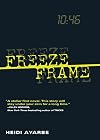
Losing your best friend hurts, when you lose him twice, as Kyle does, its so painful his mind refuses to allow him to remember what really happened the second time. He and Jason were besties, living less than a block from each other. Jason longed to become an artist, drawing ever more detailed comic characters. Both his little brother Chase and Kyle were drawn as super heroes, Chase as Kite Rider and Jason as Freeze Frame. Kyle's dream was to become a movie maker and he was obsessed with show more watching videos and trying to dissect them so he could understand how directors worked.
When Jason started hanging out with new friends, Kyle didn't know how to deal with it. On the surface, the friendship was still solid, but the less time they spent together, the more he started hurting inside. Jason comes over for a weekend visit and something terrible happens in the shed behind the house. Kyle snaps out of a shocked daze to see blood everywhere and Jason lying on the shed floor. He can't remember exactly what happened. One thing does become clear to him. Jason is dying and he's responsible.
What unfolds after this is painful to read at times, while sucking you in a bit more on almost every page. It made me feel intensely for Kyle. He doesn't question his responsibility, but his guilt and grief lead him to numerous choices and actions that upset others and make those who care for him question what's going on in his head. Lost hardly begins to describe how he feels and every time he attempts to recreate the events, switching from movie director to movie director, he ends up in freeze frame at the critical moment.
It takes his promise to protect Chase from bullying at the elementary school, the friendship of Mr. Cordoba, a most unlikely high school librarian, the friendship of Kohana, another teen who understands the role of outcast better than almost anyone and numerous talks to Jason in the graveyard for Kyle to put the pieces together. The result is healing, not only for him, but for almost everyone affected by this tragedy.
It's an excellent book for teens who have, or are grappling with guilt or remorse as well as those who like a book that hits the reader with an emotional body blow. show less
When Jason started hanging out with new friends, Kyle didn't know how to deal with it. On the surface, the friendship was still solid, but the less time they spent together, the more he started hurting inside. Jason comes over for a weekend visit and something terrible happens in the shed behind the house. Kyle snaps out of a shocked daze to see blood everywhere and Jason lying on the shed floor. He can't remember exactly what happened. One thing does become clear to him. Jason is dying and he's responsible.
What unfolds after this is painful to read at times, while sucking you in a bit more on almost every page. It made me feel intensely for Kyle. He doesn't question his responsibility, but his guilt and grief lead him to numerous choices and actions that upset others and make those who care for him question what's going on in his head. Lost hardly begins to describe how he feels and every time he attempts to recreate the events, switching from movie director to movie director, he ends up in freeze frame at the critical moment.
It takes his promise to protect Chase from bullying at the elementary school, the friendship of Mr. Cordoba, a most unlikely high school librarian, the friendship of Kohana, another teen who understands the role of outcast better than almost anyone and numerous talks to Jason in the graveyard for Kyle to put the pieces together. The result is healing, not only for him, but for almost everyone affected by this tragedy.
It's an excellent book for teens who have, or are grappling with guilt or remorse as well as those who like a book that hits the reader with an emotional body blow. show less
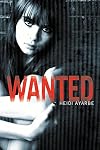
Let me start by saying that Wanted turned out to be so different from everything else that I've read this year, that I was simply blown away from the start. As soon as I was introduced to Michal, a young girl turned bookie, there was no turning back. I'm not very familiar with the betting world, but Ayarbe makes it easy to understand the life that Michal has placed herself in. Her honest voice sucked me in, and her inability to see how important she was kept me coming back for more. I was show more rooting for her.
I'll admit that I personally connected with Michal instantly. For me, it was based on the fact that both she and I are stuck in the middle of two very different worlds. For Michal, her Mexican heritage is something that was stripped away from her long ago. I won't spoil anything, but this makes things very interesting for her during her high school life. Ayarbe tackles some ideas in this book that will be sure to make some readers squirm a bit. Illegal immigrants, unfair health care, gang violence and so much more are all addressed in black and white.
However there is so much more in Wanted than just messages about equality and humanity. At its core, this is a story about looking for the purpose in your life. Michal, Josh, all the students at the high school, are just trapped in the roles that society has set out for them. Stereotypes and labels hold them in one spot, unable to find their true potential. There are characters in this story that you just can't help cheering for. Despite how messed up they might seem, or the choices they make, you know there is some good under that tough exterior.
Wanted has a last chapter that tore my heart out. I'll warn you now. However the ending was so perfect that it is still hard for me to wrap my mind around. I guarantee you'll be thinking about this book well past finishing it. If you are a fan of Heidi Ayarbe's books, this is one you won't want to miss. If you're just entering her world of fantastic writing, welcome. Wanted is great place to start. show less
I'll admit that I personally connected with Michal instantly. For me, it was based on the fact that both she and I are stuck in the middle of two very different worlds. For Michal, her Mexican heritage is something that was stripped away from her long ago. I won't spoil anything, but this makes things very interesting for her during her high school life. Ayarbe tackles some ideas in this book that will be sure to make some readers squirm a bit. Illegal immigrants, unfair health care, gang violence and so much more are all addressed in black and white.
However there is so much more in Wanted than just messages about equality and humanity. At its core, this is a story about looking for the purpose in your life. Michal, Josh, all the students at the high school, are just trapped in the roles that society has set out for them. Stereotypes and labels hold them in one spot, unable to find their true potential. There are characters in this story that you just can't help cheering for. Despite how messed up they might seem, or the choices they make, you know there is some good under that tough exterior.
Wanted has a last chapter that tore my heart out. I'll warn you now. However the ending was so perfect that it is still hard for me to wrap my mind around. I guarantee you'll be thinking about this book well past finishing it. If you are a fan of Heidi Ayarbe's books, this is one you won't want to miss. If you're just entering her world of fantastic writing, welcome. Wanted is great place to start. show less
Awards


You May Also Like


Associated Authors
Statistics
- Works
- 8
- Also by
- 1
- Members
- 413
- Popularity
- #58,990
- Rating
- 4.0
- Reviews
- 26
- ISBNs
- 26
- Languages
- 1