
Paul Griffin
Author of When Friendship Followed Me Home
About the Author
Image credit: Edgewood Pictures
Series
Works by Paul Griffin
Associated Works
How to Become Ridiculously Well-read in One Evening: A Collection of Literary Encapsulations (1985) — Contributor, some editions — 272 copies, 4 reviews
ABC, Adoption & Me -- a Multi-cultural Picture Book for Adoptive Families (2013) — Illustrator — 4 copies, 1 review
Tagged
Common Knowledge
Members
Reviews
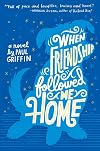
Periodically a book comes along that seems to jump off the library shelf and into my heart. This was such a story. Ben is an orphan who has had his share of bad knocks. Ben's favorite place is the local library. His favorite person is his adoptive mom who suddenly dies. Flip is a stray dog whose owner sold him for $40 and then Flip became a stray. Halley is the librarian's daughter. She reads a lot in between chemo treatments for a rare form of cancer. Halley's mother mentors Ben and places show more books aside that she knows he would like.
Ben meets Flip when he followed him home from the library. Ben met Halley when she was also at the library.
Some might call this book syrupy sweet, and it is, but the author makes it work like magic. And, speaking of magic, Halley's father is a successful magician who only wishes he could wave a magic wand to take away his precious daughter's cancer.
When Ben's Aunt tries to take him in after her sister died, His Uncle proves lacking in the parental kindness department. Ben is taken in by Halley's parents, and magic occurs.
This is a wonderful book, filled with joy and sorrow -- just like life.
4.5 Stars. show less
Ben meets Flip when he followed him home from the library. Ben met Halley when she was also at the library.
Some might call this book syrupy sweet, and it is, but the author makes it work like magic. And, speaking of magic, Halley's father is a successful magician who only wishes he could wave a magic wand to take away his precious daughter's cancer.
When Ben's Aunt tries to take him in after her sister died, His Uncle proves lacking in the parental kindness department. Ben is taken in by Halley's parents, and magic occurs.
This is a wonderful book, filled with joy and sorrow -- just like life.
4.5 Stars. show less

Oh. My. Goodness. This book had me laughing and crying all at once. It was so believable. I don't even know where to start...
CeCe and Mark are great. But then, so are Vic, Tony and CeCe's mom. Every character was so well written. I felt like I knew them-- like CeCe and Mack could have been my students. All of the characters are broken in some way, which makes them that much more amazing. They all deal with real issues and have to learn to live with their imperfections. It was so honest and show more heart breaking.
Mack has a record and has dropped out of school at 15. CeCe is a genius with a lunatic alcoholic for a mother. Together, they are to epitome of young, star-crossed lovers.
Let's start with why Mack is amazing. He's honest. He loves dogs. Despite what others' think, he is gifted. He has a loser father and a mom that has been AWOL since he was 8 or so. He is stereotyped by most of the people he meets and labeled "retarded" because he has a neurological processing disorder. Oh how my heart breaks for this kid because I knew a boy like this once. Reading this story was like reading his life story. Tragic and full of hope at the same time.
Then there is CeCe... she's a riot. Brutally honest and insecure. Plus she has a love of cheesecake that I can relate to. Her favorite book to movie adaptation is The Outsiders, which makes her awesome. Her relationship with her mother is "different." The mom seems like the child at times, which leaves CeCe having to take care of her. I know that child too.
I could talk about the plot, but it's complicated. Every character has a vital role in the story. On the surface you think the story is about CeCe and Mack (and it is), but it's more than that. Tony's role is HUGE-- and heartbreaking. I really am having a hard time finding words for this review. It was so beautiful.
Obviously, I think everyone should read this one. That should be a given at this point. Why should you read it? Why break out of your normal genre(s) of choice to pick up this book? The answer is simple. It's a beautiful story of love, loss, and redemption. I wish I had enough copies of the book so I could loan it out to everyone I know. But, I only have one and I'm guarding it with my life. This book will be a treasure for one of "those kids" that are hard to reach. I know I'll get them hooked with this book. show less
CeCe and Mark are great. But then, so are Vic, Tony and CeCe's mom. Every character was so well written. I felt like I knew them-- like CeCe and Mack could have been my students. All of the characters are broken in some way, which makes them that much more amazing. They all deal with real issues and have to learn to live with their imperfections. It was so honest and show more heart breaking.
Mack has a record and has dropped out of school at 15. CeCe is a genius with a lunatic alcoholic for a mother. Together, they are to epitome of young, star-crossed lovers.
Let's start with why Mack is amazing. He's honest. He loves dogs. Despite what others' think, he is gifted. He has a loser father and a mom that has been AWOL since he was 8 or so. He is stereotyped by most of the people he meets and labeled "retarded" because he has a neurological processing disorder. Oh how my heart breaks for this kid because I knew a boy like this once. Reading this story was like reading his life story. Tragic and full of hope at the same time.
Then there is CeCe... she's a riot. Brutally honest and insecure. Plus she has a love of cheesecake that I can relate to. Her favorite book to movie adaptation is The Outsiders, which makes her awesome. Her relationship with her mother is "different." The mom seems like the child at times, which leaves CeCe having to take care of her. I know that child too.
I could talk about the plot, but it's complicated. Every character has a vital role in the story. On the surface you think the story is about CeCe and Mack (and it is), but it's more than that. Tony's role is HUGE-- and heartbreaking. I really am having a hard time finding words for this review. It was so beautiful.
Obviously, I think everyone should read this one. That should be a given at this point. Why should you read it? Why break out of your normal genre(s) of choice to pick up this book? The answer is simple. It's a beautiful story of love, loss, and redemption. I wish I had enough copies of the book so I could loan it out to everyone I know. But, I only have one and I'm guarding it with my life. This book will be a treasure for one of "those kids" that are hard to reach. I know I'll get them hooked with this book. show less
 This review was written for LibraryThing Early Reviewers.
Ok, I'll admit it - I don't understand how this book is receiving such good reviews I loved the premise, but the actual story left me cold. I never connected with the main characters, Ben and Halley. They were not very likeable and they never felt authentic. The only person I really liked was Mrs Lorentz, Halley's mum and Ben's school librarian. I found her caring and warm-hearted. Even Flip, the stray dog who adopted Ben didn't totally win me over which is unusual as I usually love the show more animals featuring in books.
I felt the author tried to fit too much into his novel, determined to pull at his readers' heart strings. However, the book ended up being totally unrealistic and formulaic. Yes, I did finish "When Friendship Followed Me Home", but not a single tear was shed; just a big sigh of relief that I had finally reached the last page. show less
I felt the author tried to fit too much into his novel, determined to pull at his readers' heart strings. However, the book ended up being totally unrealistic and formulaic. Yes, I did finish "When Friendship Followed Me Home", but not a single tear was shed; just a big sigh of relief that I had finally reached the last page. show less
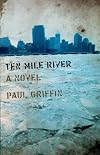
Paul Griffin’s gritty 2008 young adult debut focuses on 14-year-old Ray and 15-year-old José, a couple of Puerto Rican youths who consider themselves brothers, although unrelated by blood. The two bonded while in juvenile detention and foster care. They’ve been on the lam for some time, hiding out in a run-down old railway station house in West Harlem’s Ten Mile River Park, on the banks of the Hudson River, ten miles up from the southern tip of Manhattan.
While José is the show more leader—the coordinator of criminal gigs that the two boys carry out for Jerry, the low-life owner of an auto glass repair shop in the Bronx—it is Ray, the 6’ 3”, 260-pound kid who is the moral centre of the novel. Even though he’s addled by the same testosterone that surges through his wily and conscience-free friend and just as prone to objectifying and fantasizing about women, the ungainly Ray comes across as inherently virtuous. He’s kind to a pack of abandoned dogs living in the woods; he worries about the poor people whose windshields the boys shatter to bring in business for Jerry, and he seizes any chance to make an honest buck. José regularly calls him “a girl”.
Ray is also extremely bright, evidently gifted, and responsible. He takes advantage of do-it-yourself workshops at Home Depot. These classes allow him to solve multiple practical problems of everyday life. We’re asked to believe, for example, that he knows how to tap into local energy sources to power a couple of old appliances the two have trundled to their shack in the woods. He reads extensively—physics, philosophy, and even Buddhism—and is troubled by the apparent meaninglessness of existence. The only thing he doesn’t seem to have scruples about is stealing the occasional book from Barnes & Noble.
The novel’s plot turns on Ray’s friendship with Trini, a 16-year-old Puerto Rican girl staying with her aunt, who owns a hair-braiding business in Washington Heights, a Latino neighborhood. Trini cuts Ray’s hair, or attempts to, one afternoon and the two have an immediate connection. For Ray, of course, it’s more than that, but he recognizes his disadvantage in the looks and weight department. Trini does indeed fall for José, the charmer. Learning of the boys’ parent-less state and seeing their squalid living conditions—but knowing nothing of their survival by crime—she’s determined to help them. In particular, she would like to see Ray attend school. Further turning points in the novel come when the two are apprehended after a job for Jerry goes very wrong and when an inebriated José is on the brink of sexually assaulting Trini.
One of the strengths of Griffin’s novel—the first of eight young adult titles he’s produced over the years—is the depiction of the relationship between the two young men. Another is that Ray, who is perhaps a little too good to be true, is lovable. The reader ends up willingly suspending disbelief and rooting for him. This is no small feat. The plot is brisk and occasionally tense, which I suspect would keep Griffin’s male high school audience engaged. Having said this, I found a number of plot points improbable. One of the boys’ criminal outings, for example, is foiled by a squirrel on the road at night, a highly unlikely event. I often joke that I live in “Squirrelville”—squirrels are everywhere and one must be ever vigilant when driving. Never but never in my 26 years here have I seen them dashing across roads at night. A further point: in spite of its having an engaging female character in Trini, I cannot see this book working for girls. Finally, based on my experience with adolescent readers, Griffin’s open ending would likely appeal to neither sex. The complete lack of a back story for the boys is another weakness. What events initially pushed both into crime, confrontations with the law, and foster care? We are given no clues whatsoever.
Ten Mile River received critical praise when it was first published. I purchased it back then based on the blurb, thinking it might engage some of the reluctant 14-year old boy readers I taught at the time. Reading the first few chapters years ago and seeing some of the language and mature content, I knew the novel wasn’t suitable for upper middle-school. In spite of my students being quite familiar with the matters within, I was sure I’d see some parents objecting. That’s never a fun thing. Sure I’ll go to bat for some books, but others aren’t worth the energy.
Now I’ve finally completed the novel. My view is that it’s a debut which showed promise but doesn’t quite live up to the accolades. With some reservations, I can recommend it for mature high school students. show less
While José is the show more leader—the coordinator of criminal gigs that the two boys carry out for Jerry, the low-life owner of an auto glass repair shop in the Bronx—it is Ray, the 6’ 3”, 260-pound kid who is the moral centre of the novel. Even though he’s addled by the same testosterone that surges through his wily and conscience-free friend and just as prone to objectifying and fantasizing about women, the ungainly Ray comes across as inherently virtuous. He’s kind to a pack of abandoned dogs living in the woods; he worries about the poor people whose windshields the boys shatter to bring in business for Jerry, and he seizes any chance to make an honest buck. José regularly calls him “a girl”.
Ray is also extremely bright, evidently gifted, and responsible. He takes advantage of do-it-yourself workshops at Home Depot. These classes allow him to solve multiple practical problems of everyday life. We’re asked to believe, for example, that he knows how to tap into local energy sources to power a couple of old appliances the two have trundled to their shack in the woods. He reads extensively—physics, philosophy, and even Buddhism—and is troubled by the apparent meaninglessness of existence. The only thing he doesn’t seem to have scruples about is stealing the occasional book from Barnes & Noble.
The novel’s plot turns on Ray’s friendship with Trini, a 16-year-old Puerto Rican girl staying with her aunt, who owns a hair-braiding business in Washington Heights, a Latino neighborhood. Trini cuts Ray’s hair, or attempts to, one afternoon and the two have an immediate connection. For Ray, of course, it’s more than that, but he recognizes his disadvantage in the looks and weight department. Trini does indeed fall for José, the charmer. Learning of the boys’ parent-less state and seeing their squalid living conditions—but knowing nothing of their survival by crime—she’s determined to help them. In particular, she would like to see Ray attend school. Further turning points in the novel come when the two are apprehended after a job for Jerry goes very wrong and when an inebriated José is on the brink of sexually assaulting Trini.
One of the strengths of Griffin’s novel—the first of eight young adult titles he’s produced over the years—is the depiction of the relationship between the two young men. Another is that Ray, who is perhaps a little too good to be true, is lovable. The reader ends up willingly suspending disbelief and rooting for him. This is no small feat. The plot is brisk and occasionally tense, which I suspect would keep Griffin’s male high school audience engaged. Having said this, I found a number of plot points improbable. One of the boys’ criminal outings, for example, is foiled by a squirrel on the road at night, a highly unlikely event. I often joke that I live in “Squirrelville”—squirrels are everywhere and one must be ever vigilant when driving. Never but never in my 26 years here have I seen them dashing across roads at night. A further point: in spite of its having an engaging female character in Trini, I cannot see this book working for girls. Finally, based on my experience with adolescent readers, Griffin’s open ending would likely appeal to neither sex. The complete lack of a back story for the boys is another weakness. What events initially pushed both into crime, confrontations with the law, and foster care? We are given no clues whatsoever.
Ten Mile River received critical praise when it was first published. I purchased it back then based on the blurb, thinking it might engage some of the reluctant 14-year old boy readers I taught at the time. Reading the first few chapters years ago and seeing some of the language and mature content, I knew the novel wasn’t suitable for upper middle-school. In spite of my students being quite familiar with the matters within, I was sure I’d see some parents objecting. That’s never a fun thing. Sure I’ll go to bat for some books, but others aren’t worth the energy.
Now I’ve finally completed the novel. My view is that it’s a debut which showed promise but doesn’t quite live up to the accolades. With some reservations, I can recommend it for mature high school students. show less
Lists
Awards


You May Also Like


Associated Authors
Statistics
- Works
- 23
- Also by
- 2
- Members
- 1,707
- Popularity
- #15,030
- Rating
- 3.7
- Reviews
- 76
- ISBNs
- 110
- Languages
- 5
- Favorited
- 1
